Chapitre 1
The Future is Human: Navigating Work in the Age of Automation
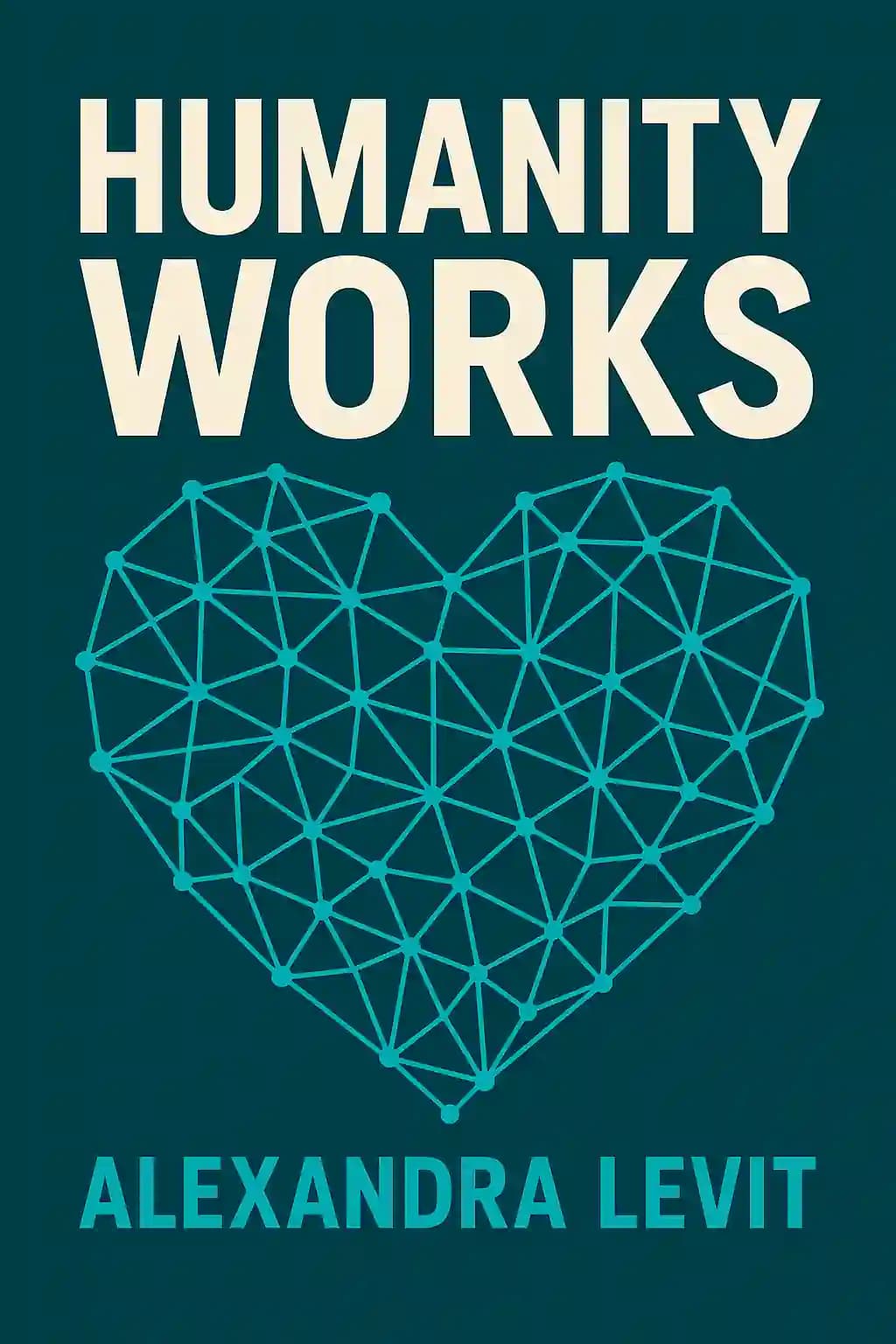
When Alexandra Levit's "Humanity Works" hit bookshelves, it arrived at a pivotal moment in our relationship with technology. As robots and AI systems began demonstrating capabilities once thought uniquely human-from diagnosing diseases to beating world champions at complex games-many feared the imminent obsolescence of human workers. The book quickly became required reading in Silicon Valley boardrooms and university business programs alike, with tech leaders like Reid Hoffman praising its balanced perspective on human-machine collaboration. Unlike many contemporaries predicting workplace apocalypse, Levit offers something more nuanced: a roadmap for the immediate future where human creativity, judgment, and interpersonal skills become more valuable, not less, alongside advancing technology. As Melinda Gates noted in her 2019 reading list, "This isn't just another book about robots taking our jobs-it's a thoughtful exploration of how we'll work with machines, not against them."
Chapitre 2
The Shifting Demographics of Tomorrow's Workforce
The global workforce is undergoing seismic demographic shifts that will fundamentally reshape organizations by 2030. Population growth in industrialized nations has slowed dramatically-the United States is experiencing its lowest growth rate since the Great Depression-while developing nations see explosive growth due to improved healthcare and living standards. Immigration patterns are changing too; by 2055, the U.S. will have no single racial or ethnic majority, with Asia replacing Latin America as the largest source of new immigrants.
Against this backdrop, millennials (born 1980-1995) now comprise the workforce majority, and their reality differs significantly from common stereotypes. Research across eight countries revealed that 50% of employed millennials already hold leadership positions with decision-making authority, despite having only 3-5 years of experience. These young leaders are assuming responsibilities far earlier than previous generations, yet organizations have largely failed to prepare them adequately-only 36% felt ready when entering leadership roles.
Meanwhile, nearly 20% of Americans 65 and older remain in the workforce-the largest percentage since the 1960s. This extended career trend stems from financial necessity after the 2008 crisis devastated retirement savings, increased longevity, and genuine desire to remain productive. Rush University research shows that maintaining purpose through work reduces susceptibility to stroke, dementia, and premature death.
Organizations are responding with "tailor-made retirement" programs that allow reduced hours while maintaining benefits. Ford's phased retirement exemplifies this approach, allowing prospective retirees to work part-time for six months at full-time pay while training replacements and documenting critical knowledge.
These demographic shifts coincide with growing labor shortages in key sectors. Healthcare faces massive shortfalls, with some job categories growing 40% by 2024. STEM occupations and skilled trades face critical shortages as workers retire and few younger people enter these fields. Despite technology enabling global recruitment, geographic skills mismatches persist as most companies still prefer local hires.
The solution lies in harnessing global talent pools more effectively. Online platforms have replaced provincial job listings, though hiring manager bias and logistical challenges remain. Organizations are shifting from talent ownership to talent attraction, using external, technology-based strategies with contract workers and crowdsourcing. However, migration policies often obstruct talent access, with issues like insufficient H-1B visa caps in the U.S. and Brexit's impact on EU workers in the UK creating artificial barriers to optimal workforce distribution.
Chapitre 3
Technology's Transformation of Work and Industry
Standing inside a modern power tool manufacturing plant, the most striking observation is how few humans are present-just six individuals in a football field-sized space. The rest operate from a control room, overseeing production lines controlled by the Internet of Things (IoT). Within five years, at least 50 billion devices will connect via IoT, with potential economic impact of $3.9-11.1 trillion by 2025.
This transformation represents Industry 4.0-Germany's vision for post-information manufacturing-built on nine technological pillars: industrial IoT, cybersecurity, cloud computing, additive manufacturing, integrated systems, Big Data analytics, autonomous robots, simulation, and augmented reality. PwC's global survey shows promising adoption, with one-third of companies already achieving advanced integration and 72% expecting to reach that point by 2020. Most anticipate 20% improvements in costs and revenues within five years.
Big Data applications are expanding rapidly across all operations. Initially focused on HR applications, future mainstream uses will include identifying passive job candidates, reducing hiring bias, predicting employee success through video analysis, optimizing task assignments using wearable data, refining training approaches, predicting fraud vulnerability, understanding customer behavior, flagging service issues, identifying reputation crises, and calibrating automation.
By 2030, personal bots will evolve from simple assistants to sophisticated digital companions. Starting with basic functions like scheduling meetings, they'll advance to become central hubs of our digital presence. Google's developing "MasterBot" will coordinate all your information and summon specialized bots when needed. Unlike traditional software, bots operate through existing communication platforms, making tedious tasks more engaging through conversational interfaces.
Deep learning represents AI's new frontier, training computers to recognize patterns and classify information like the human brain. The journey began with Google Brain in 2011, an artificial neural network of 16,000 computers that taught itself to recognize cats from YouTube videos in just three days. By the 2020s, deep learning machines will handle complex operational functions including project scoping, risk analysis, resource allocation, and outcome assessment.
However, the most accurate systems follow a "human-in-the-loop" paradigm where humans provide guidance and correct mistakes. As Algorithmia CEO Diego Oppenheimer notes, purely machine-driven systems still fall short of acceptable accuracy rates, while human-enhanced systems deliver superior results.
Humanoid robots are beginning to enter workplaces, like JiLL, the Sydney-based robot receptionist. Yet Moravec's Paradox persists: computers can easily perform high-level intelligence tasks but struggle with the perception and mobility skills of a one-year-old child. While automation has dramatically reduced demand for routine jobs, non-routine jobs requiring human-like perception have remained resilient.
The emerging field of affective computing focuses on enabling machines to recognize and interpret human emotions. Companies like Beyond Verbal analyze voice intonations to detect feelings, while Hanson Robotics builds incredibly expressive faces with 60+ simulated muscles covered in skin-like "Frubber." Following Moore's Law and Kurzweil's Law of Accelerating Returns, we're approaching what mathematician Vernor Vinge called the "technological singularity"-a point beyond which technological advancement becomes unpredictable.
As we approach 2030, the rationale for combining human and machine capabilities will shift from repair to augmentation. Eventually, we may not be able to tell where humans end and machines begin-we'll become hybrids. The machines in our professional lives won't be "others"-they will be us, and we will be them.
Chapitre 4
Humans as Irreplaceable Assets in the Age of AI
Attorney Erica demonstrates how human professionals can thrive alongside technology. While e-discovery software efficiently scans millions of case documents, Erica's uniquely human abilities-visiting traumatized clients, sensing subtle courtroom mood shifts, arguing passionately before juries-remain irreplaceable. This illustrates the successful "human-in-the-loop" business process that leverages both human and machine strengths.
The traditional professional model is being dismantled as technology enables new ways to organize work. Professional services are moving from craft to standardization to systemization, with tasks being broken down into component parts-some automatable, others performable by paraprofessionals. In this new economy, clients pay for value delivered rather than effort expended.
Three emerging human job categories will facilitate AI: trainers who teach systems how to perform, explainers who bridge the gap between technology and business leaders, and sustainers who uphold organizational values when AI results might threaten them.
While machines may eventually surpass humans in knowledge, they'll struggle with the art of motivation and persuasion essential to leadership. Effective leaders succeed by understanding individual motivations, customizing approaches, and maintaining relationships built on trust. Teams increasingly produce better work than individuals, with human groups offering unique benefits machines can't replicate-like the brain's release of opioids that motivate team-oriented behavior.
While AI can create derivative works, it can't reliably produce original creations that touch the human soul without human guidance. Many consumers still value and pay more for human-crafted products. Human creativity thrives through face-to-face interaction, with team members building on each other's ideas through eye contact and mutual trust. Leaders can cultivate creativity by encouraging quiet reflection time, whole-brain activities, and institutionalizing intrapreneurship through hackathons and dedicated time for passion projects.
AlphaGo's victory over Go grandmaster Lee Sedol revealed AI's limitations regarding intuition-the ability to understand based on instinct rather than conscious reasoning. Despite its sophistication, AlphaGo showed weaknesses that would be problematic in business: it focused only on winning individual games rather than building strategic advantage, used consistent time per move regardless of complexity, and struggled with novel situations outside its playbook.
While robots like Japan's Robear can assist hospital patients physically, they lack the interpersonal sensitivity nurses need to assess pain, read subtle cues, and respond appropriately to emotional states. This human trait explains why childcare may be the last profession to be automated-robots can physically supervise but can't provide love and bonding. Research with diabetes patients showed those treated by empathetic physicians had better health outcomes.
Despite humans' natural capacity for soft skills, hiring managers report these abilities are sorely lacking in job candidates. Today's employees must embrace continuous learning and "learning agility"-the ability to quickly assimilate information and apply insights across diverse situations. Studies show C-suite leaders with high learning agility outperform less-agile peers in revenue growth.
While humans have advantages over machines in many areas, our unconscious biases remain our Achilles heel. These automatic attitudes about gender, age, race and other characteristics prevent us from seeing people as individuals. The famous Columbia Business School study of "Heidi/Howard" demonstrates this perfectly-when presented with identical accomplishments, students rated a male ("Howard") as more appealing while viewing the female ("Heidi") as selfish and undesirable as a boss.
Chapitre 5
Evolving Work Structures Beyond Traditional Offices
Traditional office buildings are becoming increasingly obsolete. Research shows commuting decreases productivity and retention, making traditional workplaces impractical for many organizations. Instead, co-working-bringing diverse employees from different organizations together in shared spaces-has exploded by 700% in recent years to 37,000 locations worldwide.
WeWork, now the world's sixth most valuable private company, hosts R&D teams from Fortune 500 companies alongside entrepreneurs. Organizations are adopting co-working in multiple ways: launching satellite offices in existing spaces, encouraging remote workers to join co-working communities, and creating specialized spaces like Civic Hall that connect business, government and academia.
Nearly 45% of U.S. workers now work remotely at least part-time, with proven benefits. An American Sociological Association study using a randomized controlled trial showed IT workers in a flexibility program reported higher job satisfaction and less burnout than colleagues under traditional policies. These workers implemented practices focused on results rather than face time-adjusting schedules, working from home, reducing meetings, and using instant messaging more effectively.
Flexwork takes many forms: Apervita uses distributed teams nationwide, healthcare facilities employ compressed 4-day/10-hour workweeks, and companies like FlexJobs are entirely time-agnostic, focusing solely on results. The U.S. federal government promotes job-sharing, where two professionals partner to perform one job, reducing absenteeism while increasing productivity and business continuity.
Virtual teams are becoming standard, connecting employees across global locations through technology. Success requires team members with the "Three A's": assertiveness, accountability and ability to work independently. Highly effective virtual teams have clearly defined expectations, roles and protocols; access to sophisticated collaboration tools; occasional in-person interaction; visible management; strong interpersonal relationships; and well-structured meetings.
By mid-century, teams will become increasingly temporary "swarms"-groups forming rapidly for specific projects before disbanding. These swarms create exciting variety but challenge traditional mentoring and relationship-building. The concept draws from "swarm intelligence" in nature, where self-organizing teams like honeybees achieve remarkable results without management hierarchies.
Nearly 80 percent of millennial professionals are eager to adopt virtual and augmented collaboration technologies. Virtual reality creates fully computer-generated environments that immerse users, while augmented reality enhances real-world experiences by layering digital components over them. Both technologies promise to transform remote collaboration-imagine meeting teammates as digital avatars in customizable virtual spaces, with improved eye contact and non-verbal cues compared to traditional videoconferencing.
Telepresence robots offer another solution, allowing remote workers to physically "project" themselves into office environments. At MIT, Paul McDonagh-Smith uses telepresence to attend meetings across multiple continents in a single day. However, current implementations face significant challenges: VR/AR systems remain bulky with connectivity issues, while telepresence robots create security concerns with their mobile cameras and microphones.
Chapitre 6
The Mechanics of Tomorrow's Gig Economy
In America's farm country, a credit union faces a looming workforce crisis with half its employees retiring within five years and difficulty attracting young professionals to rural locations. When advised to consider alternative work arrangements, leadership resists: "We don't have any contract workers now. It's too complicated... contract workers aren't as committed as full-timers."
This outdated perspective threatens sustainability in the 21st-century business world, where the contract workforce-freelancers, independent professionals, temporary workers, and consultants-has more than doubled in the past decade. Today, 51 percent of employers plan to hire contract workers (up from 47 percent last year), with 63 percent intending to transition some into permanent roles.
When considering contract workers, organizations must weigh several factors. The benefits include cost savings (even with higher hourly rates, you avoid benefits, taxes and overhead that typically increase payroll by 25% or more), on-demand staffing flexibility for unpredictable workloads, and reduced legal exposure since contractors can't sue for issues like overtime violations or harassment. However, drawbacks exist: maintaining a stable culture becomes challenging with a revolving workforce, employers can't dictate how work gets done as strictly as with employees, and government agencies may scrutinize contractor classifications.
Before implementing a contract workforce strategy, organizations must build a convincing financial case by analyzing several factors: whether using a contract company's services plus worker costs compares favorably to full-time salaries and benefits; calculating the unit labor cost per worker; assessing training requirements; and comparing time-to-productivity between contractors and employees performing similar tasks.
Most organizations either treat contractors exactly like employees or ignore them completely-both approaches are mistakes. Successful contractor integration requires strategic planning, beginning with thoughtful recruitment through specialized firms or platforms like TaskRabbit or Upwork. Candidates should interview with future managers and colleagues who clearly communicate expectations while reinforcing organizational mission and values. Despite legal distinctions, contractors should be treated as team members-recognized for achievements, included in relevant meetings, invited to team-building activities, paid fairly, and shown the same respect as employees.
Rather than hiding the reality of future contract work from employees, organizations should prepare their teams for this eventuality. This preparation benefits both parties: employees gain skills for future independence while organizations ensure a stronger pool of potential contractors. Key preparation areas include developing autonomous work habits, providing sales and marketing experience, encouraging self-directed learning, introducing them to professional collectives, teaching relationship-building skills, and offering financial/legal education about consulting businesses.
As organizations increasingly favor contract workers and automation reduces traditional employment, universal basic income (UBI) may provide a safety net for those unable to thrive in the gig economy. Finland has pioneered a pilot program giving 2,000 citizens 560 monthly regardless of employment status. Historical experiments like Canada's MINCOME (1974-79) showed promising results-recipients didn't quit working but experienced reduced anxiety and improved life planning.
Chapitre 7
Career Customization: The New Normal
In 2030's workplace, career customization will be the norm rather than the exception. The story of Wing, a young programmer in Shanghai who nearly left her tech employer before finding her true fit in marketing, illustrates how rigid career paths fail today's workforce. Research shows employees who stagnate in roles are significantly more likely to leave, while sideways moves across functions help retain talent.
Deloitte's "corporate lattice" model replaces the traditional ladder with multi-directional career paths that allow employees to gain diverse experience while staying with one organization. This approach has proven to double employee engagement compared to traditional career paths.
The tour of duty concept structures employment as finite two-to-five-year commitments where both employer and employee acknowledge the relationship may end afterward. The best tours involve mastery of new skills or entrepreneurial opportunities like launching products or re-engineering processes. Tours can complement other transitions like parental leave, sabbaticals, and phased retirement.
Cross-functional expertise has become increasingly valuable as organizations become less siloed. Major corporations like Nestle Purina, Raytheon, and General Motors have implemented structured rotational programs to develop well-rounded leaders. Nestle Purina's Management Training Program exposes university students to critical factory functions before they become subject matter experts. Raytheon's two-year program rotates participants through eight functions while providing executive mentorship and team exercises.
Many organizations now provide wearable fitness trackers to employees, encouraging health monitoring and sometimes creating competitive wellness initiatives. Beyond simple step counting, wearable technologies are evolving to track metrics directly relevant to workplace performance. Companies like Hitachi use sensors to measure employee happiness based on movement patterns, while Bank of America reported 10% productivity improvements after using badge sensors to analyze employee interaction.
By 2030, most professionals will likely wear badges that customize roles to maximize productivity, potentially analyzing which tasks each person performs most efficiently. While these technologies offer significant benefits, they raise serious privacy concerns about data collection, ownership, and usage that organizations must carefully navigate with transparency and employee input.
Chapitre 8
The Future of Workplace Culture and Leadership
Culture is the emotional foundation of any organization, creating immediate impressions that influence how people feel about working there. While many companies focus on superficial perks like free lunches or foosball tables, future professionals will expect fully customized, mindful experiences comparable to consumer apps like Netflix and Amazon.
The organizational cultures that will thrive in 2030 must be purpose-driven, extending beyond profit to express what the company is passionate about, excels at, and what drives it economically. These cultures will demonstrate care for employees, communities and global causes through actions permeating every aspect of the organization.
Once you've assessed your current organizational culture, preparing for the 2030 business world requires implementing specific shifts. To become purpose-driven, organizations must understand their heritage, refine mission statements, and question current practices. Flexibility demands continuously evolving processes, avoiding micromanagement, and prioritizing people's well-being over hierarchy. Transparency requires openly sharing strategy, explaining new processes, and creating an environment of trust.
Employee experience-what people encounter, observe or feel throughout their organizational tenure-has become central to workplace culture. This has led to the "consumerization of human resources," creating social and mobile interfaces that serve as entry points into company culture. Journey Mapping helps organizations design experiences across stages including Apply and Evaluate (attracting candidates), Join (personalized onboarding), Learn (delivering right-sized content), and Contribute and Grow (fostering innovation and development).
Design thinking-an investigative methodology traditionally used by designers-has become increasingly valuable for solving business problems. Toyota's Customer Contact Center successfully employed this approach when facing major call center issues, including 20-40 minute wait times and service representatives struggling with fragmented systems. By engaging reps in identifying frustrations and developing solutions, Toyota created a blended approach of new training, streamlined processes and better software tools.
The traditional performance review system, rooted in early 1900s management practices, has become increasingly problematic. Within the next decade, agile performance management-rapid-fire and collaborative-will become the workplace norm, focusing on regular coaching rather than forced ratings distributions.
Google adopted Objectives and Key Results (OKRs) from Intel early in its history. This system sets definitive, measurable objectives with quantifiable results at company, team, and individual levels. Objectives are memorable qualitative descriptions of achievements, while Key Results are quantitative measures of progress. Effective OKRs are transparent and public, increasing productivity with a 78% greater achievement rate.
The millennial leadership style exemplifies the dramatic cultural shifts underway. Research with 1,200 millennial professionals across eight countries revealed they're anti-hierarchy by nature and value contribution and inspiration over traditional authority. Millennial leaders care less about titles and more about how their skills can inspire others and advance organizational goals.
Command-and-control leadership is giving way to citizen development, where regular employees create business applications using IT-sanctioned development environments without specialized programming knowledge. This self-service culture encourages experimentation and distributes IT power broadly, reducing backlogs and enabling faster application development.
Research confirms the business case for female leadership: companies with 30% female leadership add six percentage points to net margins, while those in the top quartile for gender diversity are 22% more likely to outperform on profitability. The Athena Doctrine's research across 13 countries reveals why-women often excel at transformational leadership qualities like empathy, open expression and collaboration.
Chapitre 9
Navigating the Future: The Organizational Puzzle
As organizations transition from established, long-term business models to agile, short-term approaches, leaders often feel they're losing control amid chaos. Mid-21st century branding has evolved beyond one-way messaging to become a continuous dialogue with consumers through real-time social channels. Today's brands must be authentic, clearly communicate their identity, and maintain consistency between internal and external messaging.
The digital age has transformed reputation management from a contained process to a constant vulnerability. A single misstep-whether an insensitive social media post, data breach, or embarrassing customer interaction-can instantly damage an organization's global reputation. PepsiCo's disastrous "Live for Now Moments Anthem" campaign featuring Kendall Jenner demonstrates how quickly reputation can collapse in the digital age. Despite Pepsi's intention to project "unity, peace, and understanding," the internet unanimously condemned the ad for trivializing serious social movements.
The 21st century has seen numerous corporate ethics disasters-from Enron's accounting scandal to the 2008 financial crisis-eroding public trust in businesses. Creating holistic cultures of integrity has become a leadership priority, though implementation remains challenging. Organizations struggle with enforcing ethical practices when costly, determining which departments should safeguard ethics, and establishing effective collaboration between these groups.
As new technologies fit poorly into existing legal frameworks, future intellectual property issues will center on ownership, privacy, and freedoms. Thomas Frey identifies several factors reshaping IP: accelerating product timelines, dematerialization of innovations into digital forms, shrinking timeframes of value, shifts from ownership to licensing rights, borderless economies challenging jurisdictional authority, and expanding power of tech companies to influence data markets.
Digital transformation-converting operations to online or computerized mediums-is typically a long and disruptive process requiring strategic leadership to overcome resistance. Effective approaches include opening dialogues about technology disruption, attending forward-thinking industry events, hiring outside consultants who can provide objective market perspectives, and conducting regular market disruptor analyses.
Modern technologies are revolutionizing talent acquisition while helping overcome unconscious bias. Innovative solutions include Scoutible's adventure-themed assessment games, GapJumpers' blind-audition process, Textio's AI language analysis, and Blendoor's "blendorized" candidate profiles that display information without identity markers. Employee rights are evolving too, with countries like France implementing "right to disconnect" laws that limit required communication outside work hours to combat the negative effects of constant connectivity.
By mid-century, few organizations will operate in just one nation. When expanding globally, start slowly with similar markets that have fewer complications like travel distance or trade restrictions. Research business customs and communication styles in target countries-Americans may be more direct, Chinese more deferential, and Brazilians more collaborative. When staffing overseas offices, recruit locals with international experience who speak your language and can guide your entry into new markets.
The future of work isn't something that happens to us; it's something we create through every choice, interaction, and workday. With thoughtful planning and human-centered approaches, organizations can navigate the coming decades successfully, leveraging technology while preserving and enhancing the uniquely human capabilities that will always remain essential to meaningful work.