Chapitre 1
Breaking Free From Your Past Self
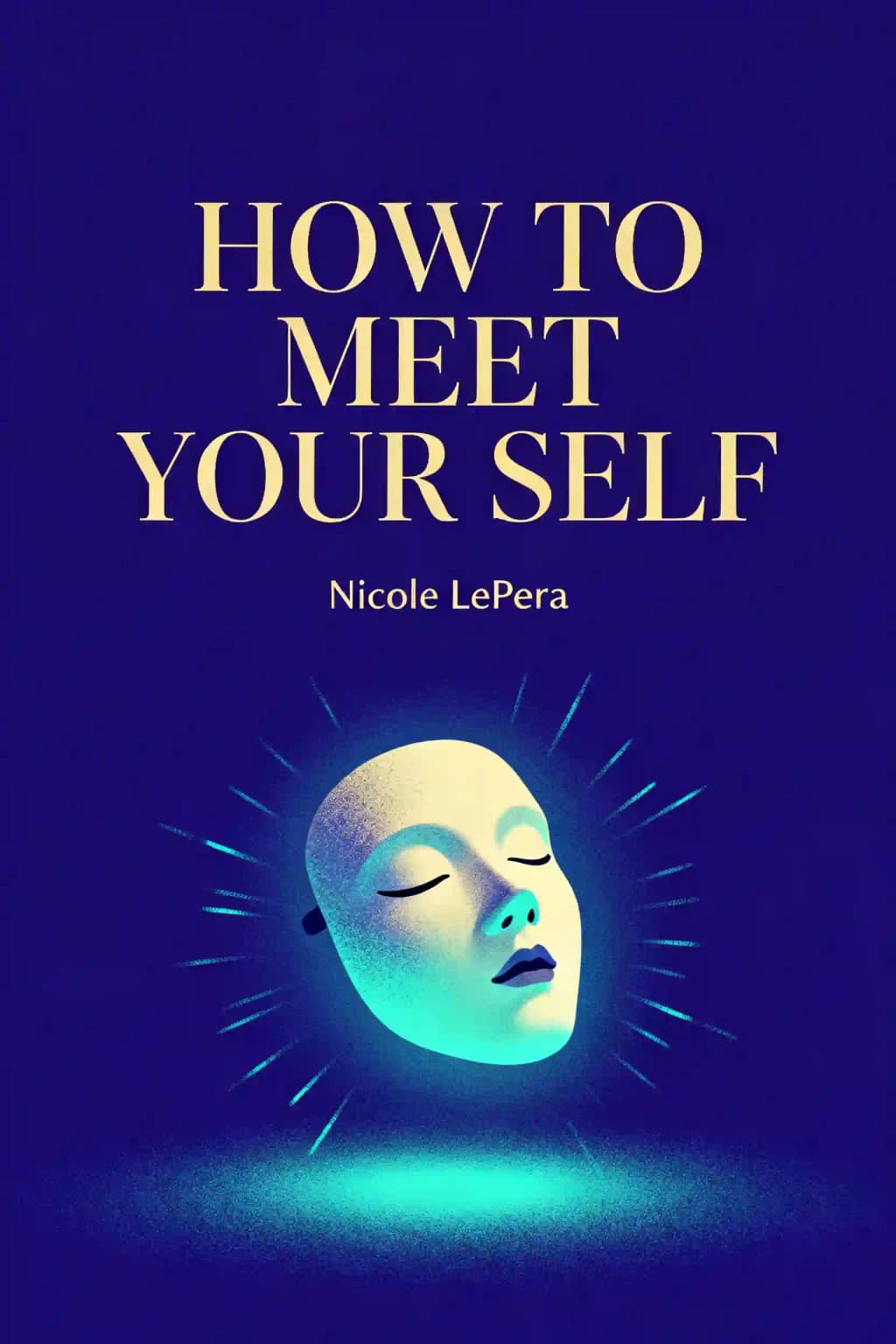
Have you ever felt like you're living someone else's life? Like you're on autopilot, making choices based on old programming rather than conscious decisions? You're not alone. Dr. Nicole LePera's transformative workbook "How to Meet Your Self" has become a cultural phenomenon for good reason. This New York Times bestseller has garnered praise from celebrities like Selena Gomez and Gwyneth Paltrow, who credit it with fundamentally changing their approach to self-understanding. Beyond Hollywood, millions of readers in the #SelfHealers movement have embraced LePera's revolutionary framework for reconnecting with their authentic selves. What makes this work so powerful is that it doesn't just explain why we get stuck in patterns-it provides a practical roadmap for breaking free from conditioning that no longer serves us, allowing us to discover who we truly are beneath layers of adaptation.
Chapitre 2
The Journey to Self-Discovery Begins With Awareness
Most of us live on autopilot, allowing our past conditioning to determine who we are rather than making conscious choices aligned with our authentic selves. This conditioning-the collection of beliefs, coping mechanisms, and behaviors we've developed since childhood-becomes biologically imprinted into our brain and nervous system, creating what LePera calls our "habit self." These deeply ingrained patterns affect everything from our emotional responses to our decision-making processes, often without our awareness.
These patterns developed based on what we needed to do as children to feel approved, safe, and loved. Since we depended on others for survival, we adapted to our environment-perhaps becoming people-pleasers, emotional micromanagers, or emotionally distant based on our early experiences. For example, a child with an emotionally volatile parent might learn to become hypervigilant and constantly monitor others' moods, while one with distant caregivers might learn to suppress their own emotional needs. The problem isn't that we developed these adaptations; they helped us survive. The problem is that we continue operating from these patterns unconsciously, even when they no longer serve us in adult relationships and professional settings.
Breaking free from autopilot requires consciousness-awareness of our internal and external experience. Many of us believe we are the voice within our mind, but we're actually the thinker observing those thoughts. Without consciousness, we sleepwalk through life in a state of reactivity where things just happen to us. Living consciously allows us to experience the present moment and choose our responses rather than automatically reacting. This might mean pausing before responding to a triggering email, noticing physical tension during difficult conversations, or catching ourselves falling into familiar patterns of behavior.
Building consciousness requires consistent practice, much like physical exercise. Simple daily practices help develop nonjudgmental awareness of who we are now-which is essential before becoming who we want to be. These practices include:
• Body scans: Taking 5-10 minutes to systematically notice physical sensations from head to toe
• Conscious movement: Paying attention to bodily sensations during walking, stretching, or exercise
• Savoring: Fully experiencing moments through all five senses, like really tasting your morning coffee
• Conscious breathing: Regular check-ins with your breath throughout the day
• Conscious listening: Focusing entirely on what others are saying without planning your response
The science behind this transformation is neuroplasticity-our brain's ability to change throughout our lives by creating new neural connections. While stress can alter brain structure, these changes aren't permanent. Our brain constantly rewires itself, strengthening frequently used neural pathways while pruning unused ones. Research shows that consistent mindfulness practices can actually increase gray matter density in areas associated with self-awareness, emotional regulation, and memory. Though we've created our current neurological structure through repeated thoughts and behaviors, we can intentionally develop new neural connections through consistent daily practice. This process requires patience and persistence, as new neural pathways typically take 66 days or more to become automatic habits.
Chapitre 3
Reconnecting With Your Physical Self
Many of us have abandoned our bodies due to stress, trauma, or shame. Reconnecting with our physical self creates a foundation for tolerating stress and emotional experiences. When physical needs are met, our body signals safety to our brain, allowing present-moment relaxation.
Our approach to self-care stems from childhood experiences. When parents cared for us with love and compassion, we internalized worthiness of care. Conversely, if raised with hostility or neglect, we may believe we're unworthy of having needs met. Five typical family self-care styles include: Neglectful/Absent (physical needs unmet, resulting in self-neglect), Emotionally Withdrawn (physical needs met but emotional needs ignored), Over-Involved (hypervigilance around physical needs creating dependency), Crisis Care (needs met only during illness, creating emotional entanglement), and Violating/Abusive (safety needs actively violated, forcing survival-only focus).
Our bodies also hold deep conditioning from childhood experiences. Beyond direct comments about our appearance, many of us grew up with limited representation of diverse bodies in media, sending subconscious messages about who is acceptable or desirable in society. These often subconscious beliefs impact our relationship with our bodies, behaviors, and self-worth.
Before creating new self-care habits, we must become aware of our current patterns without judgment. The goal is simply to witness our current reality, not to fix or change anything immediately. This awareness creates the foundation for developing habits that better support our authentic self.
Understanding our nervous system's role in physical well-being is crucial. While trauma was once viewed as purely psychological, new research shows how it affects our bodies. Our vagus nerve, which connects our brain to our organs, should signal safety after stress passes, but when we lack emotional support, nervous system dysregulation persists. This creates a "trauma body"-a chronic state of dysregulation that manifests as dissociation, hypervigilance, people-pleasing, or depression-like states.
Our bodies constantly assess our environment through neuroception-an unconscious process that determines whether we're safe or in danger. When threats are detected, our nervous system initiates stress responses that continue until the perceived threat ends. These responses include the regulated "Safe and Social Response" where we feel connected and balanced; the "Fight-or-Flight Response" where we mobilize against threats; the "Freeze or Dissociate Response" where we shut down; and the "Fawn Response" where we people-please to avoid threats.
Even if you've existed in a dysregulated state for years, you can bring your nervous system back into balance through safety-signaling exercises like self-soothing touch, bilateral brain stimulation, and sensory safety techniques that engage each sense to create presence and calm.
Chapitre 4
Unraveling Your Emotional Conditioning
Our emotions profoundly shape our experience of the world, connecting mind and body. They manifest as physical sensations and mental thoughts-fear might feel like chest tightness or manifest as anxious "what if" scenarios. Most of what we think, feel, and do reflects past conditioning rather than our authentic selves.
Our subconscious conditioning holds all the stories about who we think we are. This conditioned mind operates habitually, recycling the same thoughts, feelings, and reactions daily. Through neuroplasticity, these patterns become cemented neural networks that run on autopilot. Beginning at birth, our developing brains absorbed everything around us without the maturity to process it properly. As children in an egocentric developmental state, we personalized experiences-a busy parent's absence became "I'm not worthy of attention," a critical parent's behavior became "I'm bad and deserve punishment."
Our mind constantly creates meaning to make sense of uncertainty. These interpretations form our ego-the story of who we think we are. The ego filters experiences to confirm existing beliefs. If we believe we're unworthy, we'll interpret relationship silence as rejection despite chemistry. These ego stories help navigate uncertainty, which feels unsafe to the mind.
Our countless core beliefs reside in our subconscious, mostly formed before we could consciously choose them. We inherited them from parents, schools, friends, community, religious institutions, and media. Our ego fiercely protects these beliefs, responding with emotional reactivity when they're challenged. Because beliefs become intertwined with identity, challenges feel like threats to who we are.
To begin unraveling this conditioning, we must connect with our inner child-the part that carries unmet childhood needs, suppressed emotions, creativity, intuition, and wounds from shameful or traumatic experiences. These wounds don't disappear as we grow-they continue influencing our subconscious behaviors. As adults, we must become our own wise, loving inner parents who meet needs that weren't consistently fulfilled in childhood.
As children, we had access to our authentic selves-free, wonder-filled, and connected to inner wisdom. Over time, conditioning led us to disown these authentic parts to play roles that helped us receive available love. Common archetypes reflect inner-child patterns: The Caretaker (gains identity through neglecting own needs), The Overachiever (seeks validation through success), The Underachiever (stays small to avoid criticism), The Rescuer/Protector (views others as helpless), The Life of the Party (hides vulnerability behind happiness), The Yes Person (neglects own needs to serve others), and The Hero Worshiper (follows others while rejecting own intuition).
Chapitre 5
Confronting Your Inner Critic and Shadow Self
Everyone has an inner critic that judges and shames-no one is harder on us than ourselves. This voice focuses on negativity, viewing life through a lens of failure and dissatisfaction. Though seemingly harmful, the inner critic serves an adaptive purpose-like our ego, it protects us from uncertainty and unfamiliarity by reminding us of potential pain and past disappointments. However, a highly active inner critic damages emotional and physical wellbeing.
Our wise inner parent is the nurturing voice that our inner child may have lacked. We can become our own wise inner parent by meeting our inner child's unmet needs. When faced with criticism or shame, our inner child may feel rejected or unlovable, but our wise inner parent reminds us that behavior doesn't determine lovability. For job rejections, the wise parent counters feelings of unworthiness with reminders that achievements don't affect our value.
The ego isn't inherently negative but rather the part of our mind that holds our identity-who we believe we are, who we believe others are, and what we believe about the world. It's a collection of stories inherited from childhood that helps us make sense of our experiences. Problems arise when we're unconscious of our ego, letting it drive our experiences from the metaphorical driver's seat while we sit blindfolded in the passenger seat.
Your shadow self contains parts of you denied or repressed since childhood based on messages about what's "good" or "bad." As children, we internalize these judgments literally, believing we are bad when our behaviors are labeled as such. Our shadow includes not only "negative" traits but also positive qualities that weren't socially rewarded-like creative talents dismissed as "wasting time." When unaware of our shadow, we project it onto others, quickly judging them with labels that reflect disowned parts of ourselves.
Limiting beliefs, inherited in childhood and reinforced throughout adulthood, keep us stuck in unconscious cycles. They typically fall into three categories: beliefs about ourselves that make us feel inherently flawed or incapable; beliefs about others that create a sense of powerlessness; and beliefs about life that restrict our possibilities.
Chapitre 6
Understanding Your Emotional Landscape
Emotions are evolutionary signals designed to help us navigate our surroundings safely. They manifest as physiological sensations-changes in heart rate, breathing patterns, muscular tension, and hormone levels-that provide information about our present experience. While emotions are these bodily reactions, feelings are our conscious experience of these physiological responses.
Our bodies constantly communicate with us through emotional sensations, picking up on environmental cues like tension in a room. These bodily signals provide valuable guidance, especially about potential danger. Many of us have become disconnected from how emotions impact our bodies. Each person experiences the six core emotions (joy/happiness, anger, sadness, fear, disgust, and surprise) slightly differently, making it important to become familiar with how your unique body registers each emotion.
A 2014 study using heat maps revealed distinct physiological patterns for the six core emotions in the body: anger activates the upper body and arms; sadness concentrates in the chest and head with decreased activity in extremities; fear activates the upper body except arms with some activation in feet; joy/happiness activates the entire body; disgust activates the upper body and arms; and surprise activates the chest and head with decreased leg activation.
Our relationship with emotions is shaped by our earliest experiences-how our emotions were tended to and how we witnessed others managing theirs. As children, we're wired to connect and rely on co-regulation from caregivers. When parents are attuned to our emotions, we feel safe to remain open to our full emotional range. Without this attunement, we learn to shut down or disconnect from certain feelings.
As adults, we often cope with emotions using strategies developed in childhood. Common coping mechanisms include: avoidance, repression or denial (burying painful thoughts); idealization or fantasy (exaggerating positive traits rather than acknowledging reality); intellectualization or rationalization (avoiding feelings through analysis); projection or externalization (blaming others for our feelings); dissociation or shutdown (separating from painful experiences); substance use or addictive behaviors; and fawning or people-pleasing (hypervigilance to others' needs).
When we can actually feel our feelings, we're less likely to act out or distract ourselves. This process begins with witnessing our feelings without judgment, remaining objective and loving toward all parts of ourselves. This witnessing practice involves shifting our language from "I am sad" to "A part of me feels sad," acknowledging that we are not our emotions but rather the being experiencing them.
Chapitre 7
Breaking Free From Emotional Addiction
Our nervous system can become stuck in stress responses, creating powerful biochemical reactions that include cortisol and adrenaline release. This physiological pattern develops gradually through repeated exposure to stress, much like how athletes' bodies adapt to regular training. When accustomed to these intense hormonal spikes, we may unconsciously seek situations that recreate this internal biochemical rush, similar to how someone might chase the excitement of extreme sports or high-stakes gambling. Those raised with attachment trauma often become trapped in emotional addiction cycles, with minds subconsciously creating situations matching their body's stress response, whether through choosing volatile relationships or engaging in risk-taking behaviors.
Without this stimulation, we feel bored or unmotivated, drawing us to drama, unpredictable relationships, or adrenaline-filled entertainment. Some people might constantly check social media for emotional hits, while others might create workplace conflicts or maintain toxic friendships. The emotional addiction cycle operates as a closed loop: our nervous system perceives threats, we soothe reactivity in unhealthy ways (such as through substance use, overworking, or seeking validation), then experience shame and self-betrayal. Breaking this cycle requires rewiring our nervous system through consistent practice and patience, though initially we might feel bored or experience intense sensations as we learn to live without constant stress stimuli.
Our nervous system responds constantly to internal and external environments through interoception (awareness of internal bodily sensations) and neuroception (unconscious assessment of environmental safety). Stress responses activate when current experiences mirror past unsafe or overwhelming situations, often without conscious awareness. Understanding our personal triggers becomes essential for rewiring our responses. These triggers can be time-related (anniversaries of losses, holiday seasons), environmental (crowded spaces, specific buildings), internal (hunger, fatigue, muscle tension), sensory (sudden loud noises, particular scents), or relational (feeling ignored in meetings, perceived criticism from authority figures).
The vagus nerve, often called the body's master regulator, plays a crucial role in transitioning between stress and calm states. We can influence its functioning through "glimmers" or "safety signals" - experiences that naturally prompt the vagus nerve to send safety cues to our body. These include nature signals (sunlight on skin, rustling leaves, bird songs), environmental signals (vanilla scents, soft blankets, warm baths), and relational signals through self-regulation (rhythmic breathing, progressive muscle relaxation) or co-regulation with others (synchronized walking, gentle touch, shared laughter).
Emotional resilience-our ability to cope with and adapt to stress-can be strengthened by gently stressing our nervous system and then helping it return to safety. This process widens our "window of tolerance" by teaching our bodies and minds to handle discomfort, similar to how gradually increasing exercise intensity builds physical endurance. Simple practices like cold therapy (starting with brief cold showers or ice-water hand immersion while practicing self-soothing), gentle stretching (holding challenging poses while maintaining calm breathing), and partner sharing (revealing vulnerabilities in safe relationships) help build this resilience. Regular practice of these techniques creates new neural pathways that support healthier stress responses and emotional regulation.
Chapitre 8
Discovering Your Authentic Self
Everyone is born connected to their authentic Self-that wise, accepting, compassionate part we call soul, spirit, or essence. While naturally connected at birth, many become disconnected through conditioning, adapting to receive love by seeking external validation rather than listening to their intuitive voice. This disconnection leads to burnout and confusion, as happened to LePera in her thirties when she wondered whose life she was actually living.
Your authentic Self emerges during flow states-those moments when you're fully immersed in an activity, losing track of time while your mind remains present and engaged. In this state of beingness, you experience reality as it is, open to the mysteries beyond scientific understanding. These moments often elicit awe-that indescribable feeling when witnessing something profound like a breathtaking sunset.
Your authentic Self is your unique energetic signature that creates and animates your life experience, guiding you through intuition. This intuitive voice often manifests as bodily sensations rather than actual words-perhaps a pull on the back of your mind, inner knowing, gut feeling, or heart whisper. Most people miss these signals because their attention is consumed by the thinking mind rather than the body's messages.
To hear your authentic Self, you must create space to listen without the endless distractions of the external world. Many have been conditioned away from spending time in silence or solitude, preventing access to intuition. Shifting attention from your thinking mind to your physical body helps reconnect with intuition residing in your heart space. Your heart constantly emits energetic signals and communicates with your brain, influencing mental, emotional, and physical health.
Flow states occur when we're aligned with our mind, body, and soul, fully immersed in whatever we're doing in the present moment. In flow, we don't overthink or try to change our internal or external world-we feel safe enough to immerse ourselves in the present. Your flow state is unique to you, emerging from your soul's inner self-expression. We all have authentic "soul gifts"-natural talents like making others laugh, having patience with children, or communicating in other languages.
Chapitre 9
Building Authentic Relationships and Embracing the Unknown
In interdependent relationships, we fully express ourselves while allowing others to do the same. Our self-worth doesn't derive from others, and we release the need to control their behaviors because we trust ourselves to navigate the relationship. The key differences between codependency and interdependence include: codependency features lack of boundaries, chronic people-pleasing, and unhealthy communication, while interdependence involves healthy boundaries, self-expression, and open communication.
We can only truly connect with another person when our nervous system feels safe. Physical touch is a powerful way to create safety, as it triggers our parasympathetic nervous system and releases oxytocin, dopamine, and serotonin. However, everyone has different relationships with touch based on past experiences.
Boundaries form the foundation of every relationship, including the one with yourself. There are three boundary styles: rigid (having few intimate relationships, difficulty asking for help), loose (people-pleasing, oversharing), and flexible (aware of values, comfortable communicating needs). Three types of boundaries exist: physical (comfort with physical contact and personal space), mental/emotional (sharing thoughts without changing to match others), and resource (how time is spent, avoiding responsibility for others' emotions).
Your thoughts and feelings create an energy field affecting both yourself and your environment. When your mind, heart, and bodily systems operate in alignment (coherence), you naturally become more compassionate, cooperative, and accepting toward others. Research by the HeartMath Institute shows that personal coherence impacts relationships by enhancing kindness and harmonious problem-solving. Most remarkably, your coherence can activate social coherence in others.
Many people struggle with uncertainty and the unknown, preferring definitive knowledge despite discomfort. Uncertainty is an inevitable part of life, and rather than fearing what we don't know, we can learn to embrace mystery and remain receptive to life's uncertainties. Intentionally creating small unfamiliar experiences daily helps expand your comfort zone-changing routines, taking different routes, trying new classes or foods, connecting with strangers, exploring nature, joining communities, asking for help, having difficult conversations, or dancing freely at home.
When connected to our authentic Self, we can feel our intrinsic connection to something greater-whether nature, the universe, or divine source. This connection manifests through religion, honoring ancestors, childbirth, time outdoors, or immersion in moving art forms. The experience of connection or oneness can be appreciated through moments of awe-experiences that exceed expectations and feel vast compared to ourselves.
While the journey of self-discovery may conclude in these pages, it continues evolving in your life. Return to these tools whenever you feel stuck, stressed, sad, or unhappy with yourself. Transformation doesn't need to be scary or overwhelming-setting small daily promises to yourself creates internal grounding that helps you rediscover your authentic Self even as life circumstances change. Remember that self-discovery is an ongoing process of growth and evolution. Regardless of what happens, we possess the power to create change each day and continuously unwrap our greatest gift: our authentic Self.