Chapitre 1
Navigating Tomorrow: The Art of Future-Making in a World of Hyperchange
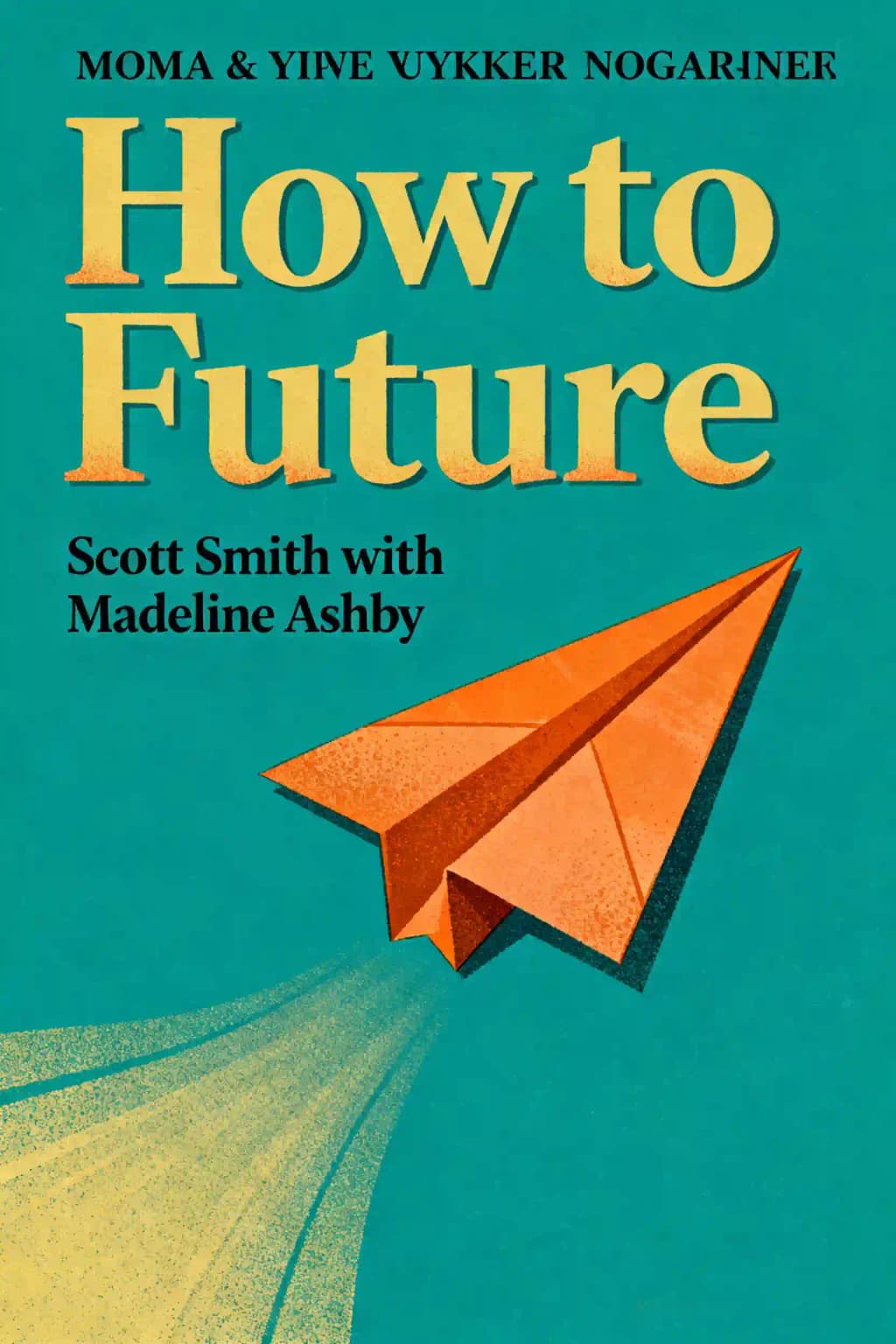
In a world where "the future" has become its own franchise-plastered across magazine covers, streaming platforms, and even rubbish bins-we face a curious paradox. Despite our obsession with what comes next, most of us feel powerless to shape it. Scott Smith and Madeline Ashby's "How to Future" arrives as a practical antidote to this paradox, offering not another set of predictions but a toolkit for anyone seeking to navigate uncertainty. The book has garnered praise from innovation leaders across industries, with Google AI's Matt Jones calling it essential for "engaging communities and building resilient futures." What makes this work particularly timely is its rejection of pre-packaged "flat-pack futures" in favor of empowering readers to probe possible futures themselves. Drawing from their work with organizations ranging from UNICEF to global corporations across 15+ countries, Smith and Ashby distill decades of practical experience into accessible methods that transform future thinking from an occasional exercise into an "always-on" behavior-a crucial skill in our age of accelerating change.
Chapitre 2
The Many Languages of Tomorrow
When we think about the future, we're not all speaking the same language. Our cognitive frameworks, cultural backgrounds, and personal experiences create fundamentally different approaches to anticipating what comes next. Some people process future information through what Kahneman and Lovallo call "inside views"-extrapolating directly from known information-while others take "outside views" that consider broader factors and references. The latter typically produces better forecasts.
Our perception of time itself varies dramatically across cultures. Western societies often view time as linear and monochronic, marching forward in a straight line. Other cultures-prevalent in the Middle East, Latin America, and Africa-see time as cyclical or multi-threaded (polychronic). These fundamental differences shape how we frame possibility, probability, and causality when thinking about future scenarios.
The language we use to express "the future" varies wildly too. Technology marketing increasingly co-opts future language by claiming "tomorrow, today"-what researcher Sam Kinsley calls "the future present." Our cultural iconography has become circular, with new developments constantly compared to science fiction references like "Blade Runner" or "Black Mirror." This tendency, exemplified by Kanye West calling it "The Futch," reduces the complex future to a cultural commodity to be designed and traded.
Most concerning is how modern life punishes uncertainty. Data-driven business demands metrics for everything, making "I don't know" an unacceptable answer. Design-driven environments often misapply "diverge, then converge" thinking by rushing toward singular outcomes rather than productively exploring multiple possibilities. Organizations rely on "official futures" as north stars-like Moore's Law in computing-that become barriers to exploring alternatives. Breaking free from these constraints requires recognizing that futuring isn't about eliminating uncertainty but productively engaging with it.
Chapitre 3
Futuring as Structured Practice
The essence of futuring isn't prediction but preparation. Four varieties of futuring intention include anticipation (extending what we know to see immediate risks or rewards), envisioning (exploring possibilities by filling uncertainty with tangible models), discovery (finding unexpected ways to overcome constraints), and shaping (actively working to bring preferred futures into existence).
Organizations are increasingly recognizing the strategic value of future readiness. Two major shifts mark the current moment: first, strategic foresight practices have moved from boardrooms into departments where products and services are designed, introducing new tools and approaches. Second, there's greater use of material design and communication tools to prototype possible futures and engage others with them.
Rather than requiring years of specialized training, effective futuring can be practiced by almost anyone with accessible frameworks and tools. The authors' approach follows phases of collecting, learning, understanding, communicating and assessing-treating possible futures as unknown landscapes to navigate. This repeatable cycle includes sensing (collecting signals and observations), sense-making (finding patterns in noise), scenario development (forming narratives from patterns), storytelling (creating engagement through prototypes), and assessment (learning from the process).
This structured yet flexible approach has been taught in over 20 countries across diverse cultures. The most effective futuring tools are powerful yet flexible and light-enabling the process without driving it, with agility more akin to rapid software development than protracted exploration. The goal isn't to create professional futurists but to equip anyone facing change with better orientation and insight.
Chapitre 4
Setting the Stage: The Art of Proper Scoping
Futuring is not merely an intellectual exercise but a profoundly political, social, cultural and psychological process. Unlike design or policy development, it rarely produces immediate tangible outputs, making careful framing all the more crucial. Effective futuring begins with thoughtful scoping across three distinct tiers: practical project management questions, functional use that shapes project design, and deeper-level drivers of demand.
Understanding the context behind a futures exploration reveals crucial information. Who initiated the exercise? Is it driven by economic, political, cultural or legal motivations? Is the funding from spare budget, public funds, or self-funded exploration? Why explore this particular slice of the future now? These contextual factors directly influence tool selection, communication approaches, and project design.
Futures have dimensions-length, width and depth-that require careful consideration. Time horizons must match both the topic and purpose. Some futures require longer views-the UAE explores 50-year horizons for national planning, while complex systems like ocean economies might need 20-year timeframes to reveal meaningful transformations. The breadth of a futures exploration depends on interconnections between domains. Topics like mobility connect with technology, politics, economics and numerous sub-domains, each expanding the scope. Geographic considerations are equally crucial-futures evolve differently across regions due to behaviors, laws and innovations.
Before getting up from the scoping table, consider important issues about internal futuring culture. How does your organization talk to itself? Does it deal only in certainties, or is it comfortable discussing possibilities? Understanding the language of knowledge your organization traffics in-whether quantitative data or qualitative insight-is crucial. Conflict often emerges between teams steeped in sciences or law and futures that are "plural, undecided, and contingent" by nature.
Effective scoping requires an accurate assessment of both the project's needs and your abilities. Have an honest conversation about time, money, energy, training and expertise. Like in Ocean's Eleven, you need team members who have your implicit trust, can adapt to new environments, and stay focused even when tactics change.
Chapitre 5
Finding Signals of the Future in the Present
Most of us start our day by checking our phones-we're driven to stay aware, to gather signals of change or stasis. This natural human tendency to monitor our environment is the foundation of futures work. Sensing-finding new meanings, relationships, patterns and implications-is the fuel that drives futuring. While scanning is a discrete professional research activity with defined boundaries, sensing is a more personal, internal habit of mind that creates richer awareness.
Good sensors demonstrate five key characteristics: active noticing (staying "switched on" to environmental details), staying with the flow (regularly revisiting stimuli), maintaining curiosity (seeking new signals and contrarian analyses), holding strong insights weakly (treating beliefs as hypotheses to be tested), and keeping a safe distance (maintaining objectivity rather than becoming advocates for particular futures).
Horizon scanning forms the backbone of futures work-it's the systematic process of detecting weak signals, trends and driving forces embedded in the world around us. In futures work, we scan for three key building blocks: signals, trends, and drivers. These form a hierarchy where weak signals aggregate into stronger ones, signals support trends, and trends coalesce into drivers.
Signals provide insight or evidence that illuminates possible futures. Weak signals represent the earliest indicators of change, often before patterns become evident-the curious, out-of-place items that catch your eye as potentially noteworthy. Examples include a Welsh town being relocated due to climate damage, Indonesian coders developing AI for pollution detection, or brain-chemical reset fasting. These seemingly random signals might later prove relevant to projects on climate change, populism, or computational shifts.
Trends represent patterns of directional change that can be shaped over time. Unlike fleeting "trendy" items, meaningful trends have duration-typically lasting more than a year but less than a decade. Drivers are the long-term, fundamental forces that shape futures-the "glaciers" of the futures world. Demographics, governance systems, economic ideologies and ecosystem behaviors exemplify drivers, as they progress slowly over decades, creating stable underlying dynamics.
Effective horizon scanning requires sources with breadth (diverse viewpoints), appropriate timing (publication frequency matched to topic needs), and "zoomability" (mixing macro and micro perspectives). Sources generally fall into two categories: secondary (professional journals, official reports, sector news, databases) and primary research (expert interviews, observational research, future ethnography). Primary research brings the futurer closer to emerging futures, requiring more direct interpretation and synthesis.
Managing the vast flow of information requires effective collection and organization methods. Modern cloud-based tools have transformed collaborative scanning, allowing teams across continents to see emerging patterns in real time. The scanning process flows from collection through curation to sense-making. The constant exposure to information can trigger stress responses and affect physical health. Strategic futuring requires establishing boundaries to prevent information overload while maintaining sensitivity to meaningful signals.
Chapitre 6
Making Sense of Complexity: From Data to Patterns
The critical transition in futuring occurs when shifting from collecting information to understanding it. While sensing and scanning provide raw materials, sense-making transforms this unstructured data into meaningful insights about possible futures. The STEEP framework (Social, Technological, Economic, Environmental, Political) provides a structured approach for categorizing and analyzing trends. This framework helps ensure comprehensive scanning across domains and reveals potential blind spots in your research.
Beyond basic categorization, trends and drivers can be further analyzed using additional criteria such as time horizon, certainty and potential impact. Time horizons provide crucial context-understanding when trends might have significant impact allows for better planning, with horizons typically divided into near-term (0-3 years), mid-term (3-7 years) and long-term (7-10 years).
Dealing with uncertainty is fundamental to futuring, which isn't about perfect prediction but about understanding potential futures to guide present decisions. Rather than attempting to eliminate uncertainty, practitioners can use simple frameworks to categorize relative certainty. The "Three Ps" framework distinguishes between Probable (continuation of current trends likely to happen), Plausible (trends that could happen based on current understanding), and Possible (trends that aren't impossible given current knowledge). These categories function like concentric layers in a cone of possibility that fades with distance-similar to how headlights penetrate fog on a highway, with clarity diminishing at greater distances.
Impact provides a third crucial dimension for evaluating trends. Since quantitative measures (dollars, people affected) aren't always feasible without detailed modeling, a simple high-to-low scale or 1-10 ranking often suffices for generating comparative assessments.
After assembling and categorizing an inventory of trends and drivers, the next step is transforming this list into a visual map-a crucial shift from individual cognition to shared understanding. This mapping process typically begins with time and certainty as primary axes, providing visualization of how clear your current view of potential futures is based on your scanning work. Once you've created your first draft map, step back and evaluate it. Are there large empty patches? Is your map heavily concentrated in the near future and high certainty?
A case study with Comcast's VIPER team illustrates how even a seemingly narrow focus-the future of internet protocol video over a 10-15 year horizon-required expansive scanning and mapping. The project demonstrated how changes in media consumption impact everything from living room arrangements to social interactions to economic models. With imagination, connections emerge between seemingly disparate trends-like how divergent development paths between personalized home media environments versus large-scale outdoor collective experiences could drastically impact engineering and investment plans.
Chapitre 7
Crafting Future Narratives: The Power of Scenarios
After collecting information through sensing and scanning, and making sense of it through analysis, we now shift to a more creative, interpretive mode. This stage combines trends and drivers into narrative threads that form platforms for considering how preferable futures might unfold. The mapping process has provided the raw materials from which we can discover patterns and chart possible evolutionary pathways as scenarios.
Rough draft roadmapping generates non-exclusive futures that could coexist, providing platforms for later prototype development. Future roadmaps typically contain three horizons with distinct characteristics. Horizon 1 (0-3 years) appears familiar, containing established drivers and trends with high certainty. Horizon 2 (3-7 years) introduces real uncertainties where fringe possibilities materialize and pathways fork, often containing more tension than Horizon 1. Horizon 3 (7-10 years) expresses the most optimistic or pessimistic projections, with fewer substantive trends and more speculative "stakes in the ground."
Clarifying assumptions is crucial when building future stories. Without acknowledging assumptions, they can unconsciously skew narratives in unhelpful ways. Useful reflection questions include: What do we think the future will be like in 5-10 years? What major changes do we anticipate across STEEP sectors? What has to happen for these changes to occur or not occur?
Storytelling has deep roots in futuring practice. First-generation futurists like Herman Kahn discovered that dry computational outputs couldn't convey urgent human stories effectively. In the 1960s, Kahn borrowed the term "scenario" from Hollywood screenwriting to describe "a hypothetical sequence of events that could lead plausibly to the situation envisaged." Effective scenarios depict plausible slices of a future world that audiences can reasonably accept. They aren't predictions but subjective depictions based on accepted assumptions.
Threads of related trends can be woven together to create narrative "wireframes" that suggest shape and meaning. These simple scenarios function like creative vignettes, providing a narrative space where different trends can interact and demonstrate their relevance while surfacing useful tensions. The length and detail should be calibrated to purpose-some scenarios might fit on an index card while others require a book chapter.
While some scenarios might contain thousands of words and intricate details, most practical futuring relies on more concise exposition. This skill improves with practice-like athletic training or improv comedy-as practitioners learn to weave useful future narratives quickly and creatively. Written narratives engage imagination quickly without requiring elaborate production, functioning as what researcher Keith Oatley calls "the mind's flight simulator." Reading activates our mirror neurons and "theory of mind," allowing us to simulate others' perspectives.
Chapitre 8
Bringing Futures to Life: From Stories to Experiences
Futuring offers a toolkit for cutting complexity into manageable pieces and unpicking knotty systems. Many organizations struggle to grapple with shifts that would benefit them-whether a media conglomerate hamstrung by traditional economic models or a telecommunications company blind to data management futures. In these cases, experiencing alternative futures that lie beyond current barriers proves valuable for moving forward. Active engagement with possible futures shifts thinking more effectively than passive consumption of presentations or reports.
Just as scenarios borrow from Hollywood's framing conventions, prototyping future possibilities adopts design concepting methods to quickly fabricate models that engage audiences through immersive experiences. This convergence of design with foresight offers a tangible language that makes the practice both expressive and accessible. Like movie props, these prototypes function as diegetic objects that evoke broader worlds-"puzzles" and "totems through which a larger story can be told" that invite audiences to consider their meanings.
The Experiential Futures Ladder, developed by Stuart Candy and Jake Dunagan, helps calibrate by capturing different levels at which a scenario can be approached: from the broadest "setting" (world), through "scenario" (specific future history), "situation" (context), "people" (users/stakeholders), down to "stuff" (products/services/policies). This tool visualizes the iterative process of refining artifacts of engagement.
Within scenarios lie multiple "situations" or scenes that can be prototyped. Effective situations need not be dramatic-they might simply show someone onboarding for an unusual service, waiting in a future business, or finding a parking ticket for a new mobility device. Nick Foster calls this "the Future Mundane"-bringing familiar settings together with "new normal" experiences to remove distancing shock.
Adding personas to situations aids familiarity and aligns with experiential design processes. These characters-not necessarily human-help frame the action by sketching their needs, wants, and required intelligence levels. Importantly, personas shouldn't seamlessly solve scenario issues or be ideal customers; rather, they should challenge or flex the speculative world to deepen understanding.
Artifacts-the interfaces, media and material representations of a future-do the heavy lifting of carrying context and complexity, providing "handles" that allow audiences to grasp insights and spark curiosity. When creating impactful artifacts, consider the metaphors and familiar objects your audience uses. For a project exploring big data's impact on culture in Manchester and Barcelona, the team chose a sports tabloid from four years in the future as their artifact, featuring match scores and previews. This familiar format allowed residents to engage with future stories more comfortably than a seminar on data futures would have.
When communicating futures, you don't need Hollywood-level production design. "Lossy futures" work because human brains naturally fill in blanks-just as we do when reading books or watching films. By strategically leaving elements out, you create space for audience engagement and imagination.
Chapitre 9
Measuring What Matters: Assessing Futures Work
Having created scenarios and artifacts, the next step isn't just to imagine futures but to understand how to proceed from the present. This requires asking two key questions: what does a specific futuring exercise tell you about your current situation, and what does the overall experience reveal about your view of the future? The goal is to better understand risks and opportunities that different scenarios present, and determine which should be mined for value or considered potential hazards.
To evaluate scenario impacts, examine five organizational layers: People (talent/skills needed), Knowledge (information/data required), Tools (technology/processes necessary), Rules (regulations/frameworks needed), and Networks (partnerships/alliances required). For each layer, conduct a gap analysis by asking "What do we have?" and "What will we need?" Teams can collaboratively complete worksheets for each scenario, rating organizational readiness on a scale and discussing broader strategic implications.
Self-assessment often reveals gaps not just in resources but in language and communication. You may discover that proper terminology for future needs doesn't exist yet, or that you can't advertise for skills without established descriptions. These "prehearsals" help you become comfortable communicating unexpected futures before they arrive.
Measuring progress toward futures is challenging, especially for emergent or unprecedented developments. While traditional metrics work well for things with historical data, novel futures require different approaches. Breaking down the future into smaller, measurable components helps-examining trend maturity, rate of change, and establishing waymarkers through backcasting. Rather than trying to assess everything at once, track definable points along the path and adjust understanding as you proceed.
In performance-driven cultures, measurement dominates strategic planning through benchmarks and KPIs. While traditional metrics work for immediate futures, they struggle with long-term projections. The metrics landscape is evolving-some nations now measure "wellbeing" instead of GDP, and Wales has appointed a Commissioner for Future Generations. The challenge remains: how do you judge impacts for futures decades away?
Measuring specific future scenarios presents unique challenges with no universal standard beyond thoughtfulness, dialogue, and serious consideration of questions in your local context. Consider both strategic impact and audience impact-have you shifted discussions among decision-makers or reached your target audience? Collecting appropriate feedback through interviews, forms or digital methods helps tune your efforts, though care should be taken not to reduce futures experiences to mere brand impressions.
Chapitre 10
Cultivating Tomorrow's Mindset: Building a Futuring Culture
When futuring courses end, participants often ask how to bring these capabilities back to their teams. This highlights a central paradox: futures awareness thrives in cultures that accept uncertainty and welcome critical questioning, but isolated individuals with new mindsets face limits in what is inherently a social practice. When uncertainty is treated as risk and weakness, shifting values becomes difficult, even when leadership supports future-thinking approaches.
How do we measure a futurist's effectiveness? This question reveals a fundamental misunderstanding about futuring work. At Changeist, the most traceable impacts came from how projects changed organizational conversations, often with effects emerging months or years later. Their guidance acts like lighting a slow fuse rather than producing immediate, measurable outcomes.
Practically tracking futuring progress requires both tactical and long-term strategic measures. Tactically, futuring tools enhance strategy by providing research-backed methods for considering long-term possibilities while maintaining strategic fit. They help organizations develop both short and long focus, feeding innovation processes by structuring exploration of opportunities. A common language about the future helps teams avoid divergent understandings and dangerous assumptions, while creating spaces for important conversations that might otherwise happen behind closed doors.
Strategically, consistent futuring builds influence with stakeholders, puts new topics on the strategic map, shifts organizations from reactive to anticipatory postures, and expands what's considered possible over time. The interconnected challenges of energy, mobility, food systems, healthcare, and social equality require constant assessment and strategic design, not just isolated "Future of X" explorations.
Madeline Ashby shares practical wisdom for better futuring beyond academic study. She emphasizes starting and ending engagements with gratitude, recognizing participants are often facing uncomfortable information. Like detectives, futurists must uncover the true nature of questions by hearing contradictory narratives without judgment. Thorough background research and clear process roadmaps build trust, which enables vulnerability and deeper insights.
The authors conclude by emphasizing that futuring isn't about one-off explorations but constant applied assessment and strategic design to navigate major transitions. They reiterate that the book aims not to create professional futurists but to equip anyone facing change with better orientation and insight. Futuring becomes integrated into daily work-from solo reflections with pen and paper to team workshops tackling hardened problems. Leadership in this context isn't about disruption or wealth creation through innovation, but finding complex paths toward collectively preferred futures.
As Dr. Genevieve Bell reminds us through her anthropologist mother's wisdom: "If you see a better world, you are morally obligated to go and make it happen." The tools of futuring equip us not just to anticipate change, but to shape it toward futures we collectively prefer.