Chapitre 4
The Art and Science of Flirtation
Flirting is a delicate game of giving and interpreting signals that sustains entire rom-coms and brunches. While it's important to start gently and become progressively more direct, deciphering early signals is nearly impossible because they're either too subtle or entirely imagined. We're motivated to see signals that don't exist, partly because society bases women's worth on desirability and partly because we view ourselves as protagonists.
Women are socialized to read emotional cues while men often miss them entirely. With age and experience, interpreting signals improves, but uncertainty remains. This uncertainty can be thrillingly addictive - like Kate Bolick notes in Spinster, this brief period of romantic possibility was historically the only exciting year in a woman's life.
Barthes wrote about agonizing over signals, suggesting language as the solution to ambiguity. But language itself is insufficient to express the complexity of human emotion, and texting provides no respite from analysis paralysis. If you need to analyze someone's texts to find hidden interest, they probably aren't into you. People who genuinely like you simply ask to hang out or say yes when you do.
Yet an English degree trains you to interpret texts through countless theoretical lenses - close reading, biographical reading, semiotics, psychoanalytic criticism, deconstruction - giving you the dubious superpower to analyze any message as either profound interest or complete rejection.
It's nearly impossible to definitively prove someone was flirting with you, as discovered when a man who'd been flirting for three months insisted he'd never once flirted. Despite evidence including witch store visits, dog-watching, tarot readings, online state trivia quizzes, "chilling" in offices daily, doing crosswords by candlelight at 1am, actually listening when spoken to, and awkward head-patting, he denied any flirtation.
Like Supreme Court Justice Potter Stewart's famous "I know it when I see it" obscenity ruling, flirting can't be precisely defined but is certain when it occurs. When confronted, men often retreat to save their pride, denying flirtation in ways that make women feel "relationship crazy."
Touch is the most fundamental flirt - a gentle preview of potential physical intimacy. When discussing touching, three critical rules apply for respectful flirting: First, only initiate touch in appropriate contexts where both parties are open to romantic exploration. Second, follow an escalation pattern, starting with non-threatening touches before moving to more intimate ones. Third, consider power dynamics - "flirt up" rather than using structural privilege to make less-privileged people uncomfortable.
Chapitre 5
Dating in the Digital Age
The quintessential question of our generation remains: "Was it a date?" While not as important as dismantling white-supremacist capitalist patriarchy or addressing climate change, this question has become genuinely more difficult to answer in contemporary times than at previous points in history.
Smartphones and casual sex culture have blurred the lines between dating and hanging out. People either meet explicitly through apps or "slide sideways" into romantic situations with friends. Obsessing over whether something was a "date" is ultimately pointless - the word itself has become meaningless through shifting definitions. Better to communicate feelings directly than agonize over labels.
Dating as a concept has been rapidly evolving since Americans first started doing it around 1900, and perhaps the uncertainty is part of what makes new relationships thrilling. If clarity is needed, extremely direct approaches work best: explicitly saying "Thank you for meeting me here for our date," declaring "It's a romantic date!" when finalizing plans, or announcing "What a fun date we are already having!" fifteen minutes in.
Dating apps offer the primary advantage of establishing upfront that you're definitely on a date. However, they also create problems: time constraints, the commodification of self, and the psychological burden of being judged primarily on appearance. Research shows too many choices make people less satisfied with their decisions, and endless swiping creates the illusion that a perfect match is always just one more profile away.
Alternative places to meet potential partners include jury duty ("legally forced to hang out with people who haven't dated your friends"), staying at a friend's house on vacation, art museums (specifically near David Hockney paintings), ceramics classes, artist collectives, cafes, concerts, and even church.
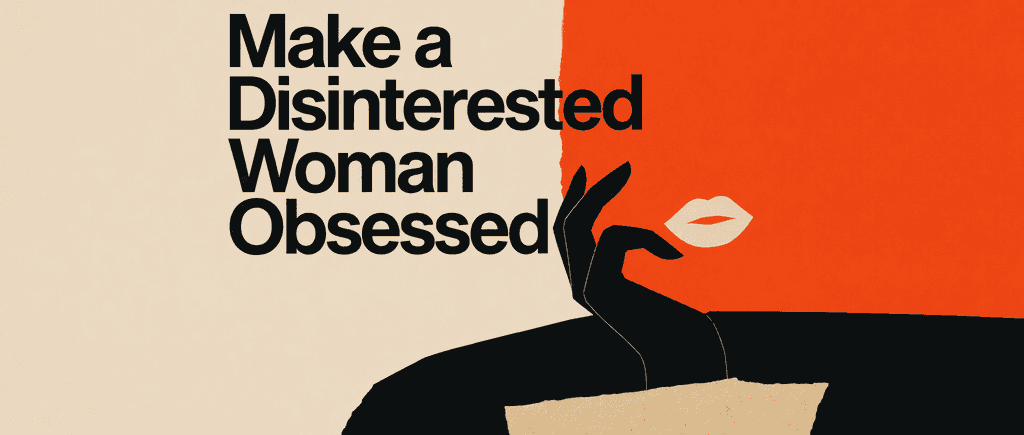
The modern dating expectation of "being chill" - acting disinterested while actually obsessing - creates an absurd situation where anything that isn't "chill" becomes disproportionately significant. Playing hard to get rarely works, and when men do it, it's just annoying. Women adopting "chill" behavior are essentially taking on traditionally masculine traits of emotional suppression - a pitfall of feminism that adopts failed masculine structures rather than creating new, more honest approaches.
Chapitre 6
Navigating Relationships Under Patriarchy
The concept of dating someone you aspire to be like rather than just admire reveals how women have historically been socialized to watch men do things rather than participate themselves. Claire Vaye Watkins' essay "On Pandering" explores this "watching boys do stuff" phenomenon - a deeply ingrained gendered dynamic where women often confuse artistic admiration with romantic interest. This pattern appears across creative fields, from literature to music to film, where women frequently find themselves drawn to men who embody the creative pursuits they themselves desire. Nora Ephron's famous questioning of whether she wanted to be a journalist or date one exemplifies this common confusion, highlighting how women's ambitions can become tangled with their romantic attractions.
While men occasionally date women they want to emulate, societal conditioning often leads insecure men to actively avoid successful women. This manifests in various ways, from "professionally insecure woke boys" who openly admit they could never date women more professionally successful than themselves, to subtle forms of sabotage in relationships where women begin to outpace their partners. After Trump's election, what some had dismissed as mere quirky insecurity revealed itself as straightforward sexism - a systemic pattern that effectively punishes ambitious women by limiting their romantic options. This dynamic plays out across industries, with particularly stark examples in tech, academia, and corporate leadership.
When even self-proclaimed progressive men feel uncomfortable with successful female partners, women face a dramatically reduced dating pool. These insecure men might deploy various justifications - claiming they just want to feel masculine, avoid social judgment, or maintain traditional dynamics - but their behavior ultimately enforces patriarchal norms. The impact extends beyond individual relationships to shape workplace dynamics, social networks, and professional advancement opportunities.
Long-term relationships present even more complex challenges. Marriage statistics paint an alarming picture: while marriage significantly benefits men, it often proves detrimental to women. Elizabeth Gilbert's research reveals that married men live longer, accumulate more wealth, advance more quickly in their careers, experience less addiction and depression, and report higher levels of happiness. For women, the data shows the opposite trajectory: married women earn 7% less than their unmarried counterparts, face increased risks of depression and anxiety, and are more likely to die violently - with a significant portion of that violence coming from their husbands. Studies show married women perform an average of seven more hours of unpaid domestic labor per week than single women.
No woman would logically choose to clean a man's house, raise his children, and serve as his unpaid therapist, yet persistent cultural narratives continue to tell girls that life lacks meaning without romantic love. Society reinforces this through media, family expectations, and institutional structures that privilege married couples. Despite these concerning realities, there remain compelling reasons why women pursue partnership: society has defined relationship success primarily through the marriage path, marriage provides massive external validation and social acceptance, and many people naturally crave romantic stability and companionship. The challenge lies in navigating these desires while maintaining awareness of the systemic inequities that shape modern relationships.
Chapitre 7
The Aftermath: Breakups and Moving Forward
Breakups reveal how love might be a sham serving capitalism and patriarchy. It sells greeting cards, chocolates, and diamond rings (just weird-looking rocks that weren't even traditional until a century ago). It enforces patriarchy by tethering women to men long enough to legally bind their lives together.
The problem with dismissing love as fake is that most people experience it. Though subjective like pain, love clearly exists. But is it sustainable? Evolutionary biology suggests love might be a reproductive strategy keeping couples together just long enough to raise a child through infancy - about three to four years, which coincides with worldwide divorce peaks.
Should we bother with love knowing it won't last? Nothing in life lasts - fruit rots, TV shows end, everyone dies, the universe faces heat death. Yet experiences are meaningful while they last. As Kafka said, "The meaning of life is that it ends." You have one life to find people to love and be loved by.
Romantic rejection is painfully personal but ultimately good - it means you're being brave. The most important compatibility indicator isn't shared interests but whether they're interested in you. If someone isn't into you, you're fundamentally incompatible. Despite countless books and movies, unrequited love isn't romantic - it's boring. With political uncertainty and environmental challenges, why waste time convincing someone you're worthwhile?
Breakup cliches like "It's not you, it's me" sound like lies because they're the same lines from Hugh Grant movies. "You deserve better than me" is particularly problematic - no one has ever made a pros-and-cons spreadsheet to determine if they deserve their partner, then nobly ended things out of duty. Men use this line to position themselves as self-sacrificing victims, stealing even your right to pain because supposedly they're doing you a favor.
With women already navigating impossible beauty standards and contradictory relationship expectations, honest communication during breakups is essential. Ghosting assumes we're all so chill that incompatible people will mutually forget each other at the same rate - but this never happens. One person is always agonizing while the other just stops responding.
Chapitre 8
Reclaiming Narrative Power Through Art
Women writing about relationships are pathologized and diminished in countless ways. When Taylor Swift creates emotionally specific art about her experiences, she's labeled "boy crazy" and "desperate." Women like Joyce Maynard are branded "narcissists" for writing about relationships with powerful men like J.D. Salinger, who coerced her at eighteen into a relationship that society somehow thinks he owns more than she does.
Meanwhile, men like Kerouac and Knausgaard face no criticism for extensive autobiographical work. Women's relationship writing is either dismissed as "pathological" or diminished as merely "relatable" - a sexist term suggesting women's resonant experiences lack literary merit, while men writing similar content are praised as brave.
This dismissal prevents women from speaking truth about intimate power structures. Yet personal experience creates better art through specificity and emotional stakes, as F. Scott Fitzgerald himself advised - though he hypocritically stole his wife Zelda's experiences while institutionalizing her for trying to reclaim them.
When it comes to love and relationships, Walt Whitman reminds us "there is no unreturn'd love, the pay is certain one way or another." Even if romance fails, you can always write your way through it. This isn't about turning pain into career success or material, but creating something meaningful from your experiences - finding humor in pain, ordering chaos into stories that make people laugh or cry.
Whatever happens romantically - whether you end up alone or in a happy relationship - you'll always have the ability to transform experiences into something beautiful, hilarious, or genius. Creating narrative is essential to having a coherent sense of self, and developing socially responsible stories might change how we conceptualize love.
As David Foster Wallace said, "We need narrative like we need space-time: it's a built-in thing." In our one life on this "floating orange," love remains one of the most significant ways to find happiness. As Nora Ephron responded when asked why she only wrote about relationships: "Is there something else?" Beyond friendships, meaningful work, helping others, and appreciating nature's beauty, there really isn't anything else but love.
Chapitre 9
The Full Tree: Finding Completeness Within
Despite pervasive societal messages that women need romantic love to be complete, we are already "full trees" - self-actualized people operating at maximum capacity. This metaphor originated from a chance encounter when a man commented on adopting two sibling cats, saying "alone, they could never become a full tree." While romantic love is "dope-as-hell" and can enhance life immensely, it's not the prerequisite for completeness that society often portrays it to be. This messaging appears everywhere - from Disney movies to wedding-focused reality shows to well-meaning relatives who constantly ask about dating prospects.
Research in positive psychology demonstrates that our happiness largely revolves around our baseline "happiness set point," which remains relatively stable regardless of relationship status. Studies show that even major life events, including marriage, only temporarily shift our happiness levels before we return to our natural baseline. You don't need love to count as a human - you already ARE human, "a bunch of insane neurons floating around in a body" with decades to explore what kind of tree you are. This exploration can take countless forms: career advancement, creative pursuits, spiritual growth, community building, or simply learning to be comfortable in your own skin.
"Prose before bros" describes the conscious choice of prioritizing writing and creative work over dating - "I am single because I do not have time to date, because I am always inside writing about how I am single." This dynamic has historical roots: male writers traditionally had wives handling domestic duties, allowing them to focus solely on their craft, while women writers faced numerous obstacles, including societal disapproval and practical barriers. Being a woman who writes openly about love and relationships often comes with additional costs to potential relationships - one hookup candidly admitted this kind of writing was "intimidating" to men. But as Lady Gaga wisely noted, "your career will never wake up and tell you that it doesn't love you anymore." Creative fulfillment offers a different kind of sustenance that can be just as meaningful as romantic love.
The ubiquitous claim that you'll find love "when you least expect it" essentially polices women into suppressing their natural desires despite being socialized from childhood to seek partners. It's a patriarchal double bind telling women not to actively pursue romance while simultaneously expecting them to magically find it. After years of "least expecting" love while focusing on career, personal growth, and other priorities, many women still don't find it! The reality is that finding meaningful love requires actual effort - opening yourself emotionally, making time for dating, and actively pursuing connection.
This well-worn adage might have worked in earlier eras when people married young and were naturally forced into daily interaction with peers through school or small community settings. However, for adult single women navigating modern dating landscapes, it just translates to "be less desperate." Instead of internalizing this contradictory message, it's more productive to recognize that creating meaningful connections requires intention, vulnerability, and the courage to pursue what brings genuine joy - whether that's romance, friendship, creative work, or simply being at peace with yourself as a complete and worthy human being. The full tree metaphor reminds us that we're already whole, and anything we add to our lives should enhance, not complete, our existing abundance.