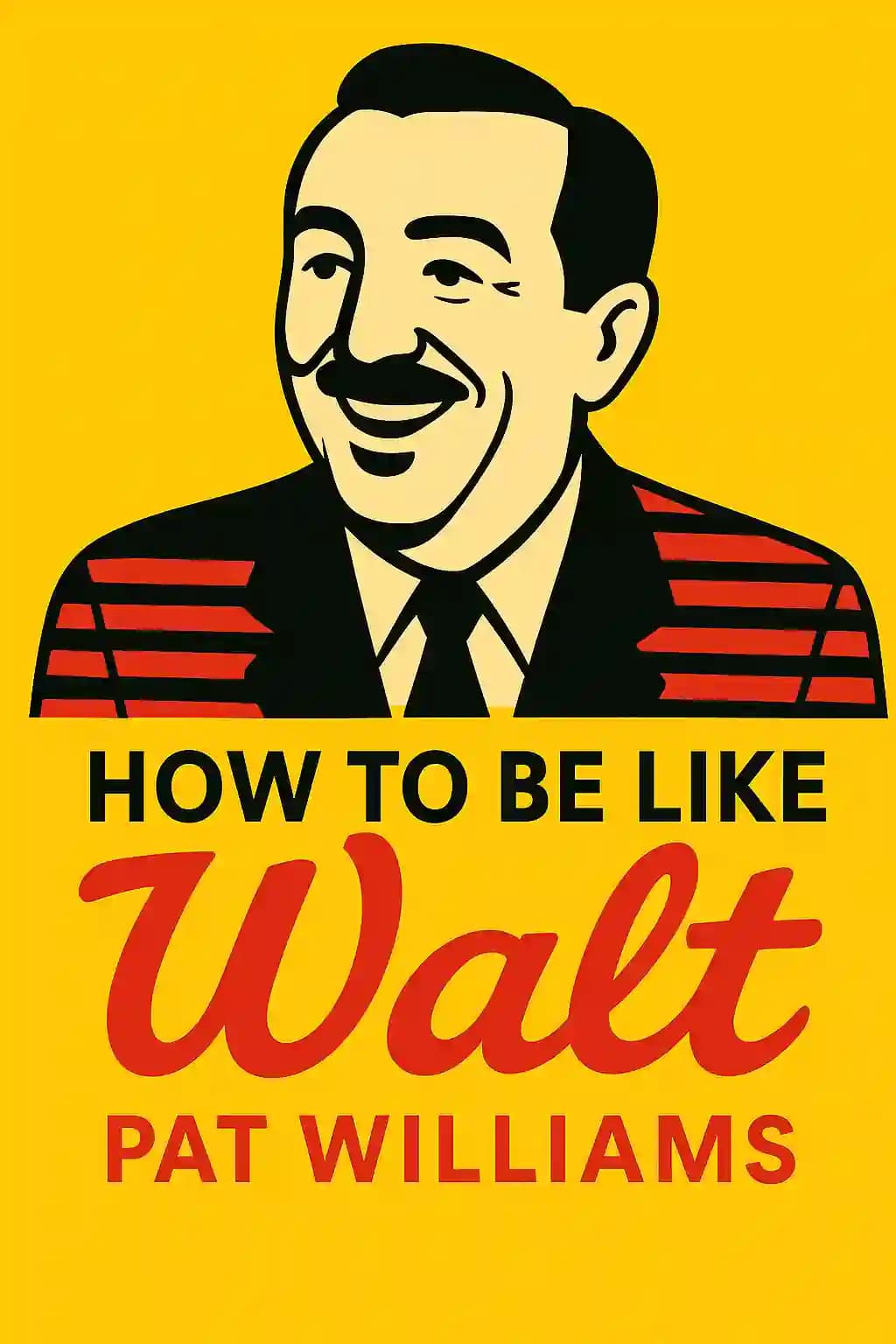
Discover the leadership genius behind the Disney empire. "How to Be Like Walt" reveals the vision, resilience, and creativity that transformed a struggling cartoonist into an entertainment legend. Learn the imagination principles that continue inspiring today's most innovative business leaders.
Pat Williams (1940–2024), co-author of How to Be Like Walt: Leadership Secrets from Disney’s Greatest Creator, was a Hall of Fame sports executive and prolific author on leadership, character, and innovation.
A co-founder of the NBA’s Orlando Magic and former general manager for the Philadelphia 76ers, Williams blended decades of team-building expertise with a passion for studying iconic leaders like Walt Disney.
His books, including Lead Like Walt and Coach Wooden, dissect the principles of visionary leadership through relatable anecdotes and actionable strategies. A Wake Forest University and Indiana University graduate, Williams frequently keynoted on organizational excellence and authored over 30 works spanning faith, cancer survival, and sports biography.
His collaboration with Jim Denney, including Character Carved in Stone and The Mission is Remission, solidified his reputation for merging motivational storytelling with practical wisdom. How to Be Like Walt remains a cornerstone of Disney-inspired leadership literature, reflecting Williams’ lifelong dedication to empowering leaders through historical exemplars.
How to Be Like Walt by Pat Williams explores the leadership principles and life lessons of Walt Disney, blending biography with actionable advice. It highlights Disney’s resilience, creativity, and ability to inspire teams, while offering strategies for embracing imagination, overcoming adversity, and building enduring legacies. Key themes include persistence (“stick-to-it-ivity”), innovation (“plussing”), and learning from failure.
This book is ideal for aspiring leaders, Disney enthusiasts, and professionals in creative or managerial roles. Entrepreneurs will gain insights into visionary thinking, while teams can apply lessons on collaboration. Artists, educators, and career-driven individuals seeking motivation from Walt’s resilience against setbacks will also find value.
Yes, for its blend of biography and practical leadership advice. Pat Williams distills Walt Disney’s philosophies into relatable strategies, such as turning grief into drive and fostering innovation. The book’s focus on perseverance, teamwork, and curiosity makes it a timeless resource for personal and professional growth.
“Plussing” refers to Walt’s practice of enhancing ideas beyond expectations, even in small ways. For example, Disneyland’s design included hidden details guests might never notice, elevating the overall experience. The book urges readers to apply this mindset to projects, relationships, and problem-solving for exceptional outcomes.
Walt faced profound losses, including financial ruin and family tragedies, yet used these challenges as fuel. The book outlines strategies for navigating grief, such as leaning on loved ones, refocusing on long-term goals, and viewing setbacks as temporary. Pat Williams emphasizes persistence and adaptive thinking.
Walt prioritized surrounding himself with talented, passionate individuals (e.g., animators, engineers) and fostering a collaborative culture. The book stresses clear communication, trust, and empowering team members to innovate—principles applicable to modern workplaces and creative projects.
Coined by Pat Williams, “stick-to-it-ivity” describes Walt’s relentless persistence. Despite setbacks like early studio bankruptcies and skepticism about Disneyland, Walt refused to abandon his visions. The book encourages readers to embrace tenacity in pursuing goals, even when faced with doubt or failure.
As an NBA executive and motivational speaker, Williams draws parallels between sports leadership and Walt’s strategies. His experience building teams like the Orlando Magic enriches the book’s lessons on collaboration, goal-setting, and maintaining morale during challenges.
Absolutely. The book’s emphasis on adaptability, innovation, and empathy resonates in today’s fast-paced, tech-driven world. For example, Walt’s “plussing” approach aligns with iterative design in startups, while his resilience mirrors strategies for navigating economic uncertainty or career pivots.
Unlike purely historical accounts, How to Be Like Walt combines storytelling with actionable frameworks, similar to Lead Like Walt (also by Williams). It stands out for focusing on mindset over tactics, making it complementary to books like Atomic Habits or Good to Great.
Some readers note the book idealizes Walt’s legacy without deeply addressing his flaws, such as management controversies. However, its strength lies in distilling actionable principles rather than providing a critical biography. Those seeking a balanced historical analysis may pair it with newer Disney biographies.
Ressentez le livre à travers la voix de l'auteur
Transformez les connaissances en idées captivantes et riches en exemples
Capturez les idées clés en un éclair pour un apprentissage rapide
Profitez du livre de manière ludique et engageante
Everything Walt achieved in his life was something he was told he couldn't do.
Walt could "sell anything to anyone."
Walt genuinely believed in his ability to overcome any obstacle.
He didn't view imagination as merely an innate talent but as a learnable skill.
Accept the pain of the past...then dream big dreams and chase them with unwavering determination.
Décomposez les idées clés de How to be like Walt en points faciles à comprendre pour découvrir comment les équipes innovantes créent, collaborent et grandissent.
Condensez How to be like Walt en indices de mémoire rapides mettant en évidence les principes clés de franchise, de travail d'équipe et de résilience créative.

Découvrez How to be like Walt à travers des récits vivants qui transforment les leçons d'innovation en moments mémorables et applicables.
Posez n'importe quelle question, choisissez la voix et co-créez des idées qui résonnent vraiment avec vous.

Cree par des anciens de Columbia University a San Francisco
"Instead of endless scrolling, I just hit play on BeFreed. It saves me so much time."
"I never knew where to start with nonfiction—BeFreed’s book lists turned into podcasts gave me a clear path."
"Perfect balance between learning and entertainment. Finished ‘Thinking, Fast and Slow’ on my commute this week."
"Crazy how much I learned while walking the dog. BeFreed = small habits → big gains."
"Reading used to feel like a chore. Now it’s just part of my lifestyle."
"Feels effortless compared to reading. I’ve finished 6 books this month already."
"BeFreed turned my guilty doomscrolling into something that feels productive and inspiring."
"BeFreed turned my commute into learning time. 20-min podcasts are perfect for finishing books I never had time for."
"BeFreed replaced my podcast queue. Imagine Spotify for books — that’s it. 🙌"
"It is great for me to learn something from the book without reading it."
"The themed book list podcasts help me connect ideas across authors—like a guided audio journey."
"Makes me feel smarter every time before going to work"
Cree par des anciens de Columbia University a San Francisco

Obtenez le resume de How to be like Walt en PDF ou EPUB gratuit. Imprimez-le ou lisez-le hors ligne a tout moment.
Walt Disney's journey from a humble farm boy to entertainment pioneer wasn't just luck or genius-it was the result of specific qualities anyone might cultivate. Born in 1901 to a stern father and nurturing mother, Walt developed a unique combination of work ethic, integrity, and boundless optimism that would define his life's work. Despite experiencing hardships that would crush most spirits-including harsh discipline from his father and financial struggles-Walt chose to focus on positive memories while learning from painful ones. His childhood in Marceline, Missouri became the nostalgic template for much of his later work, from his love of trains to his vision of small-town America. Most remarkable was Walt's response to adversity: rather than becoming bitter, he channeled difficulties into creative fuel, developing an unwavering belief that anything was possible. As Ray Bradbury later noted, "Everything Walt achieved in his life was something he was told he couldn't do."