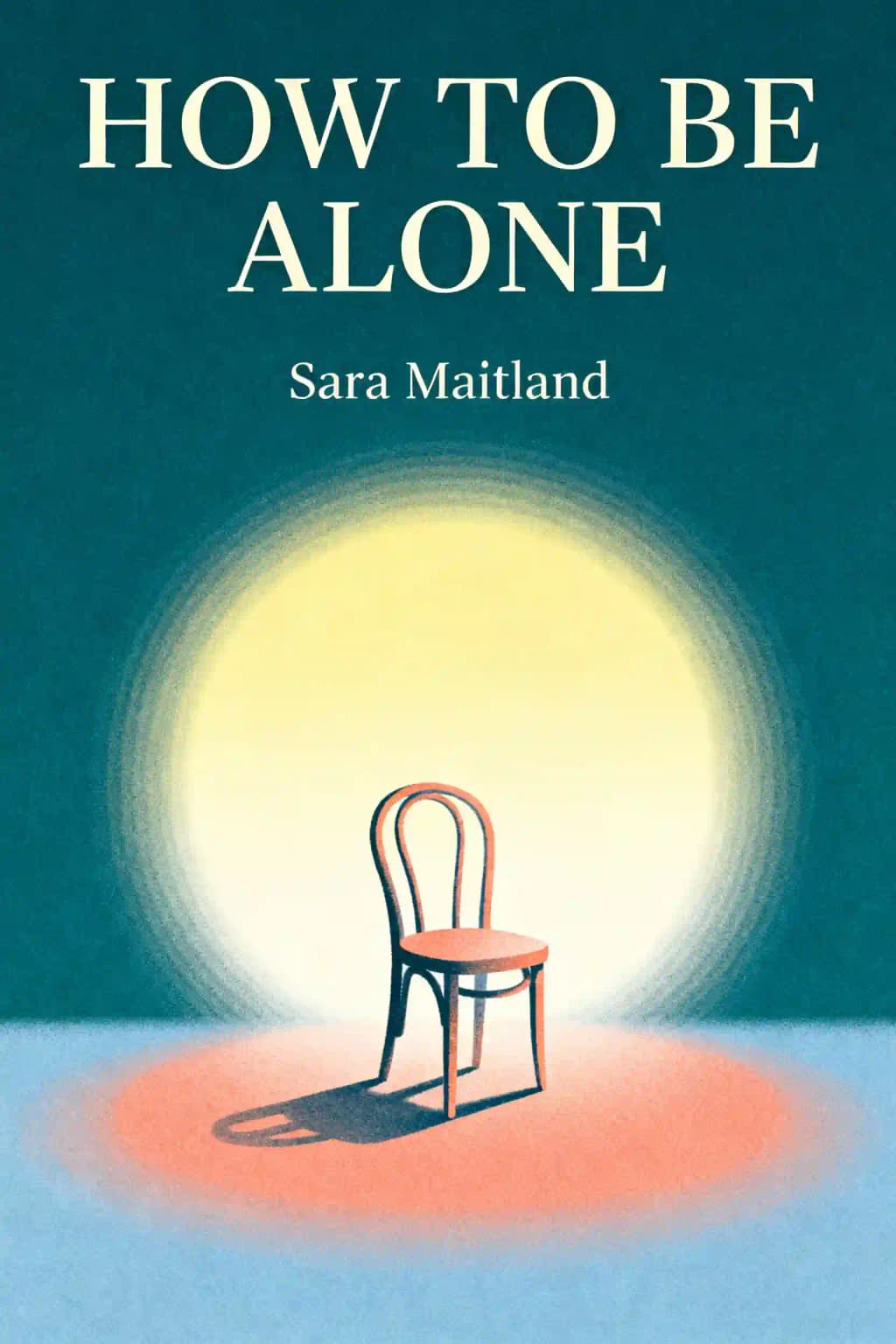
In "How to Be Alone," Sara Maitland boldly challenges our society's fear of solitude. Praised by The New York Times as "intelligent, non-self-helpy, yet immensely helpful," this cultural touchstone reveals why what we fear most might actually unlock our greatest creativity and fulfillment.
Ressentez le livre à travers la voix de l'auteur
Transformez les connaissances en idées captivantes et riches en exemples
Capturez les idées clés en un éclair pour un apprentissage rapide
Profitez du livre de manière ludique et engageante
In a society where "loner" has become shorthand for "psychotic murderer" and loneliness is treated as a public health crisis, Sara Maitland offers a revolutionary perspective. Living in rural Scotland where her nearest neighbor is miles away, she often goes days without seeing another person - and she absolutely loves it. Her experience challenges our deep cultural anxiety about solitude. What if being alone isn't something to fear but something to embrace? What if solitude offers gifts that constant connection cannot provide? This quiet manifesto has become something of a cult classic among creative professionals who recognize that in our hyperconnected age, the ability to be contentedly alone might be our most radical act of self-determination. We've developed a profound cultural phobia of solitude. The accusations against it are numerous: that it's unnatural (humans are pack animals), pathological (psychology insists relationships are necessary for health), and dangerous (physically and psychically risky). The moral arguments are even more absurd: that solitude is self-indulgent, escapist, antisocial, and evades social responsibility. These criticisms reveal important questions we're avoiding about what relationships actually provide, whether creative work offers alternative gratification, and why different lifestyles provoke such anxiety. Throughout history, many people have sought solitude without becoming serial killers - some became great artists or saints. Consider Greta Garbo, who famously retired at thirty-five to live a simpler life with selective social engagement, demonstrating how one can choose solitude without dysfunction.
Décomposez les idées clés de How to Be Alone en points faciles à comprendre pour découvrir comment les équipes innovantes créent, collaborent et grandissent.
Condensez How to Be Alone en indices de mémoire rapides mettant en évidence les principes clés de franchise, de travail d'équipe et de résilience créative.

Découvrez How to Be Alone à travers des récits vivants qui transforment les leçons d'innovation en moments mémorables et applicables.
Posez n'importe quelle question, choisissez la voix et co-créez des idées qui résonnent vraiment avec vous.

Cree par des anciens de Columbia University a San Francisco
"Instead of endless scrolling, I just hit play on BeFreed. It saves me so much time."
"I never knew where to start with nonfiction—BeFreed’s book lists turned into podcasts gave me a clear path."
"Perfect balance between learning and entertainment. Finished ‘Thinking, Fast and Slow’ on my commute this week."
"Crazy how much I learned while walking the dog. BeFreed = small habits → big gains."
"Reading used to feel like a chore. Now it’s just part of my lifestyle."
"Feels effortless compared to reading. I’ve finished 6 books this month already."
"BeFreed turned my guilty doomscrolling into something that feels productive and inspiring."
"BeFreed turned my commute into learning time. 20-min podcasts are perfect for finishing books I never had time for."
"BeFreed replaced my podcast queue. Imagine Spotify for books — that’s it. 🙌"
"It is great for me to learn something from the book without reading it."
"The themed book list podcasts help me connect ideas across authors—like a guided audio journey."
"Makes me feel smarter every time before going to work"
Cree par des anciens de Columbia University a San Francisco

Obtenez le resume de How to Be Alone en PDF ou EPUB gratuit. Imprimez-le ou lisez-le hors ligne a tout moment.