Chapitre 1
Backstabbing Paradise: Twitter's Bloody Rise to Power
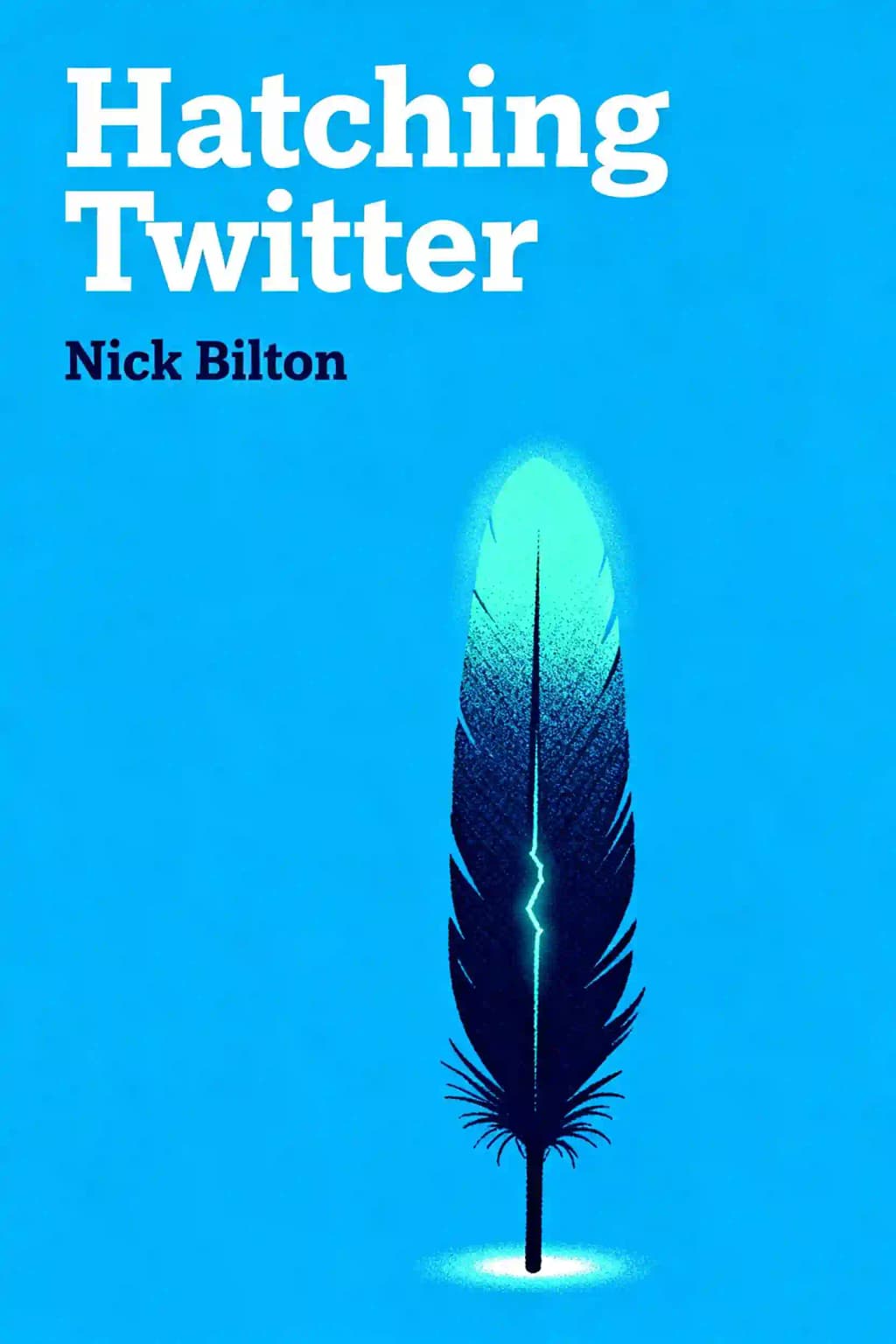
In the sleek offices of Silicon Valley, four friends created a platform that would change communication forever - but only one would emerge as its face. Nick Bilton's "Hatching Twitter" isn't just another tech story; it's a Shakespearean drama of betrayal where billion-dollar stakes turned idealists into enemies. While Twitter helped topple dictatorships during the Arab Spring, its founders were busy orchestrating coups against each other. The platform that connected 330 million users worldwide was built on broken friendships and shattered trust.
Bilton, a veteran New York Times technology columnist, gained unprecedented access to the founders, revealing conversations never before made public. Beyond the corporate warfare, readers discover how a simple status update tool accidentally revolutionized journalism, politics, and celebrity culture. This isn't merely the biography of a website - it's a cautionary tale about how power corrupts, how visionaries clash, and how the technology connecting us can tear apart even its creators.
Chapitre 2
The Gathering of Visionaries: Building the Twitter Team
Noah Glass moved through the fragile ecosystem of early Twitter with quiet intensity. His voice-to-blog service AudBlog, which allowed users to post audio content online, evolved into Odeo, a podcasting venture that would eventually give birth to Twitter. The AudBlog platform, though ahead of its time, demonstrated Noah's prescient understanding of how people would want to share their voices online. His unyielding enthusiasm masked growing personal struggles, including a difficult divorce and financial pressures, but his emotional investment in the concept of connection would shape Twitter's early development in profound ways. Noah's insistence on the human element of technology and his belief that social platforms should mirror real-world conversations became foundational principles for Twitter's design. He often emphasized that technology should facilitate natural human interaction rather than replace it, a philosophy that would become embedded in Twitter's DNA.
Jack Dorsey entered the scene like a ghost-present but barely noticed. Initially working as a programmer at Odeo, his fascination with city maps and information flow would eventually influence Twitter's core architecture. He was particularly intrigued by the real-time movement of taxi cabs and emergency vehicles across urban grids, seeing parallels between city dynamics and digital information exchange. His notebooks from this period, filled with detailed sketches of dispatch systems and communication patterns, revealed an mind obsessed with information flow and human connection. Despite his unconventional resume, which included work as a massage therapist and botanical illustrator, Jack's work ethic and ability to observe systems earned him recognition and respect within the team. These diverse experiences, rather than hindering his technical vision, enhanced his ability to see patterns and connections others might miss. His concept of status updates, inspired by dispatch systems, would become the backbone of Twitter's functionality, transforming how people share information in real-time.
Biz Stone's decision to leave Google's security for Odeo's uncertainty was a pivotal moment that demonstrated a value system that prioritized meaningful work and friendship over financial gain. Having previously collaborated with Ev Williams at Blogger, where they revolutionized personal publishing, Biz brought not only his creative talents but also a deep understanding of user experience and community building. His previous work on projects like Xanga and Blogger had given him unique insights into how online communities form and evolve. His gift for communication would prove invaluable in articulating Twitter's value to the world, crafting the platform's early messaging and helping to establish its distinctive voice in the tech landscape. His ability to translate complex technical concepts into accessible language helped Twitter connect with mainstream users, and his natural talent for public relations would later prove crucial in managing Twitter's explosive growth and occasional controversies.
The team's diverse backgrounds and perspectives created a dynamic environment where innovation could flourish, though not without tension and creative friction. Each member brought unique strengths that complemented each other: Noah's passion for connection and emotional intelligence, Jack's system-thinking approach and architectural vision, Biz's communication skills and community-building expertise, and Ev's proven track record in building accessible technology platforms. This combination of talents, despite occasional conflicts and power struggles, would prove essential in creating a platform that would revolutionize global communication. Their different approaches to problem-solving - from Noah's intuitive, user-focused perspective to Jack's systematic, structural thinking - created a balanced foundation for what would become one of the most influential social platforms in history. The team's diversity extended beyond their professional skills to their personalities and working styles, creating a dynamic that, while sometimes challenging to manage, ultimately drove innovation through constructive disagreement and collaborative problem-solving.
The early days were marked by intense brainstorming sessions at Odeo's South Park office in San Francisco, where the team worked to define what Twitter could become. These sessions, often fueled by late-night coffee runs and passionate debates, helped shape the platform's core features and philosophy. The team would spend hours discussing seemingly simple questions like character limits, reply mechanisms, and following versus friending - decisions that would ultimately define the platform's unique character. The office became a crucible of creativity, with walls covered in sticky notes and whiteboards filled with potential features and user scenarios. The team's shared belief in the power of open communication, combined with their different approaches to achieving it, created a creative tension that drove innovation and helped Twitter evolve from a simple status-updating service into a global communication platform. These early discussions often centered on maintaining simplicity while building in enough flexibility for the platform to grow and adapt to user behavior, a balance that would prove crucial to Twitter's success.
Chapitre 3
From Concept to Reality: Twitter's Development and Launch
In late February 2006, amidst Odeo's existential crisis, Jack Dorsey shared a simple yet profound idea: what if there was a platform for real-time status updates? The concept wasn't entirely new - services like LiveJournal, AIM status updates, and early SMS-based platforms existed - but Jack's vision combined simplicity with immediacy in a revolutionary way. His initial sketch on a notepad, which would later become an iconic piece of tech history, showed a clean interface where users could share quick thoughts without the complexity of blogging platforms. The sketch emphasized user avatars, timestamps, and short messages - elements that would become fundamental to Twitter's DNA.
The naming process became a fascinating exercise in branding and vision-casting, spanning several weeks of intense discussion and creative exploration. Noah Glass, who would later be controversially removed from the company, immersed himself in dictionary research, seeking a name that would capture the essence of the service. He championed "Twitter" after discovering its multiple meaningful connections: the "short burst of inconsequential information," the "chirps from birds," and the sense of nervous excitement the word conveyed. The team extensively debated alternatives like "Status" (deemed too generic), "Smssy" (too limiting), and "Friendstalker" (too creepy). Twitter's playful yet purposeful nature won out, despite initial skepticism from team members including Dorsey himself, who reportedly preferred more technical-sounding names.
The platform's first tweet - "just setting up my twttr" - posted by Jack Dorsey on March 21, 2006, at 12:50 PM PST, marked the beginning of what would become billions of messages reshaping global discourse. The iconic 140-character limit wasn't just an arbitrary choice - it was dictated by SMS restrictions of the time (160 characters minus 20 characters for usernames). This technical constraint became a creative catalyst, forcing users to distill their thoughts to their essence and spawning new forms of digital expression. The character limit led to innovations like URL shorteners, abbreviated writing styles, and perhaps most significantly, the hashtag - proposed by Chris Messina in 2007 as a way to group conversations.
The launch phase was marked by both triumph and struggle, revealing the complex dynamics within the founding team and the challenges of introducing a revolutionary communication platform. A pivotal moment came during the "Valleyschwag Hoedown" party, where Noah Glass gave an impromptu demonstration to influential tech blogger Om Malik. This unexpected exposure thrust Twitter into public view before the team had finalized their launch strategy. While Glass's enthusiasm and Malik's subsequent coverage created valuable early buzz in Silicon Valley circles, it also exposed internal tensions about ownership, direction, and credit for the platform's creation. These tensions would later contribute to Glass's controversial departure and ongoing debates about Twitter's origin story.
The early development team, led by software engineer Blaine Cook and including Ray McClure and FloRyan, faced numerous technical challenges that tested their resilience and creativity. The platform frequently crashed under user load - leading to the famous "Fail Whale" image, illustrated by Yiying Lu, that became synonymous with Twitter's growing pains. These technical difficulties, while frustrating, helped build a sense of community among early users who shared the experience of waiting for the service to return. Despite these challenges, the team maintained their focus on simplicity and real-time communication, making crucial architectural decisions that would later support Twitter's massive scale.
The platform's early adopters, primarily tech industry insiders and bloggers, began using Twitter in ways the founders hadn't anticipated. South by Southwest (SXSW) 2007 proved to be a turning point, where attendees used Twitter to coordinate meetups and share conference highlights in real-time. This organic adoption demonstrated Twitter's potential for breaking news, organizing events, and creating digital communities. Early users like Robert Scoble and Leo Laporte helped popularize the platform among tech enthusiasts, while journalists began recognizing its potential for real-time news gathering and distribution. These unexpected use cases would significantly influence Twitter's evolution from a simple status update service to a global communication platform.
Chapitre 4
Crisis and Transformation: Twitter's Growing Pains
Twitter's breakthrough moment came at the 2007 South by Southwest (SXSW) conference, where it won best startup in the blog category. The platform suddenly found its purpose as attendees used it to coordinate meetups, share panel highlights, and connect with others. This organic evolution revealed Twitter's true strength as a real-time information network. The conference proved to be a perfect testing ground, as thousands of tech-savvy attendees simultaneously discovered how the 140-character format could facilitate instant communication and community building. Usage during SXSW increased from 20,000 tweets per day to 60,000, marking the beginning of Twitter's exponential growth. The platform's success at SXSW was particularly noteworthy because it demonstrated how Twitter could transform from a simple status-updating service into a powerful tool for real-time event coverage and community engagement. Conference attendees found themselves naturally gravitating toward Twitter to share insights, locate friends, and discover the most exciting panels and parties happening around Austin.
However, success brought significant challenges. Technical issues plagued the platform as its popularity exploded, creating the infamous "Fail Whale" era - named after the whimsical illustration of birds lifting a whale that appeared when the service was overloaded. Servers crashed regularly under viral demand, sometimes multiple times per day, forcing engineers to work around the clock implementing makeshift solutions. The infrastructure, initially built for a small user base, struggled to handle millions of concurrent users and the rapid-fire nature of breaking news events. The technical challenges were particularly acute during major events like the 2008 presidential election and the 2009 Iranian protests, when sudden spikes in usage would overwhelm the system. Engineers implemented various solutions, including the creation of a new architecture called "FlockDB" and the transition to a more robust Ruby on Rails framework. Despite these problems, users remained loyal, drawn by Twitter's unique value proposition as the fastest way to discover what was happening in the world. The "Fail Whale" became something of a cultural phenomenon, with fans creating artwork and merchandise featuring the iconic image, demonstrating how even Twitter's technical failures had somehow endeared it to its user base.
Leadership tensions emerged as the platform grew, revealing deep-seated conflicts about the company's direction. Jack Dorsey's brief reign as CEO ended when concerns about his commitment and leadership style led to his removal in 2008. He was often accused of leaving work early for yoga classes and fashion design courses, while the platform required full-time attention to address its scaling challenges. The power dynamics between key figures - particularly Jack and Ev Williams - reflected broader questions about leadership in Silicon Valley and the balance between personal vision and professional responsibility. This tension was exacerbated by different views about Twitter's future: Dorsey saw it as a status-updating service, while Williams envisioned it as a global information network. The conflict extended beyond personal disagreements to fundamental questions about product direction, with some team members advocating for a more consumer-focused approach while others pushed for enterprise solutions. These competing visions led to frequent strategy shifts, delayed decision-making, and confused messaging to both users and investors. The board's eventual decision to replace Dorsey with Williams marked a crucial turning point, though it would not be the last leadership change to rock the company.
The platform's growing pains also extended to monetization challenges, with debates raging about how to generate revenue without compromising the user experience. Early attempts at advertising models were met with resistance from both users and team members who worried about maintaining the platform's organic, community-driven nature. The company experimented with various revenue streams, including promoted tweets, sponsored trends, and verified accounts for businesses. Each new monetization attempt had to balance commercial interests with user experience, leading to lengthy internal debates and careful rollouts. The challenge was particularly complex because Twitter had established itself as a free, open platform for public conversation, and any move toward commercialization risked alienating its core user base. The company also faced pressure from investors who wanted to see a clear path to profitability, creating tension between short-term revenue goals and long-term platform sustainability. These challenges would continue to shape Twitter's evolution and influence its complex relationship with both users and investors in the years to come, setting the stage for ongoing debates about the platform's business model and its role in public discourse.
Chapitre 5
Twitter's Global Impact and Evolution
Twitter's political awakening came dramatically during Iran's 2009 post-election protests, where the platform unexpectedly emerged as a crucial communication channel for protesters. When traditional media faced severe restrictions, Iranian citizens used Twitter to share real-time updates, photos, and coordinate demonstrations, marking the first time the platform played a pivotal role in a major political uprising. Activists used hashtags like #IranElection to organize information and draw global attention, while citizen journalists documented events through mobile uploads, creating an unprecedented level of real-time coverage that circumvented state media controls. This unexpected role in international politics forced Twitter to confront its global responsibilities, wrestling with complex decisions about user safety, government relations, and the delicate balance between maintaining neutrality and upholding democratic values.
The platform's influence rapidly extended beyond politics, fundamentally reshaping how information travels globally. During the Arab Spring movements of 2010-2012, Twitter became an essential tool for organizing protests and sharing unfiltered news with the world. Activists in Tunisia, Egypt, and Libya used the platform to coordinate demonstrations, share tactical information, and document government responses. The hashtag #Jan25 became synonymous with Egypt's revolution, demonstrating Twitter's power to unify movements across borders. Natural disasters like the 2011 Japanese tsunami and Hurricane Sandy in 2012 demonstrated Twitter's power as a critical emergency communication system, where affected communities could share immediate updates and coordinate rescue efforts. During these crises, Twitter emerged as a vital link between emergency responders, victims, and concerned family members, with features like geo-tagging helping to pinpoint areas needing immediate assistance. Presidential elections worldwide, particularly the U.S. elections from 2012 onwards, were transformed by Twitter's ability to enable direct communication between candidates and voters, while simultaneously creating new challenges around misinformation and political polarization.
As Twitter evolved from a simple status update service to a global information network, it faced increasingly complex challenges. The platform had to develop sophisticated content moderation systems, including machine learning algorithms to detect hate speech and harassment, while also implementing human review teams for nuanced content decisions. The challenge of combating automated bots and disinformation campaigns became particularly acute during elections and crisis events, leading to the development of new verification systems and spam detection tools. The platform had to navigate varying international regulations and cultural sensitivities, often creating country-specific policies while trying to maintain consistent global standards. The introduction of features like trending topics and moments helped organize the growing flow of information, while verified accounts attempted to address authentication challenges in an increasingly complex digital landscape.
The story of Twitter's creation and growth reflects the intricate interplay of human ambition, technological innovation, and unprecedented social impact. What began as a side project at a podcasting company became a platform that would fundamentally reshape global communication patterns. The platform's journey demonstrates how seemingly simple ideas can transform into world-changing innovations through the collective efforts of diverse, talented individuals. The evolution of Twitter's features often came from user behavior rather than top-down decisions - hashtags were originally proposed by Chris Messina, a user, in 2007, while the retweet function was formalized after users created informal ways to share others' tweets by adding "RT" before messages. This organic development showed how social platforms could evolve through user innovation rather than just corporate planning.
The platform's impact on journalism, celebrity culture, and public discourse has been particularly profound. Traditional news cycles were compressed into minutes rather than hours, forcing media organizations to adapt their reporting and verification processes. The rise of "Twitter journalism" created new opportunities for real-time reporting and citizen journalism, while also raising concerns about accuracy and professional standards. Celebrities found direct channels to their audiences, bypassing traditional media gatekeepers, which led to new forms of fan engagement and personal brand building. Some celebrities, like Lady Gaga and Justin Bieber, built massive followings that rivaled traditional media outlets in reach and influence. Ordinary users could suddenly find their voices amplified to millions through viral tweets, creating new forms of digital influence and democratizing public discourse. This democratization of voice, while powerful, also brought new responsibilities and challenges in managing the platform's growing influence on public conversation and social movements, particularly around issues of harassment, misinformation, and the amplification of extreme views.
[Note: The expanded version adds specific examples, technical details, and contextual information while maintaining the original structure and key themes.]