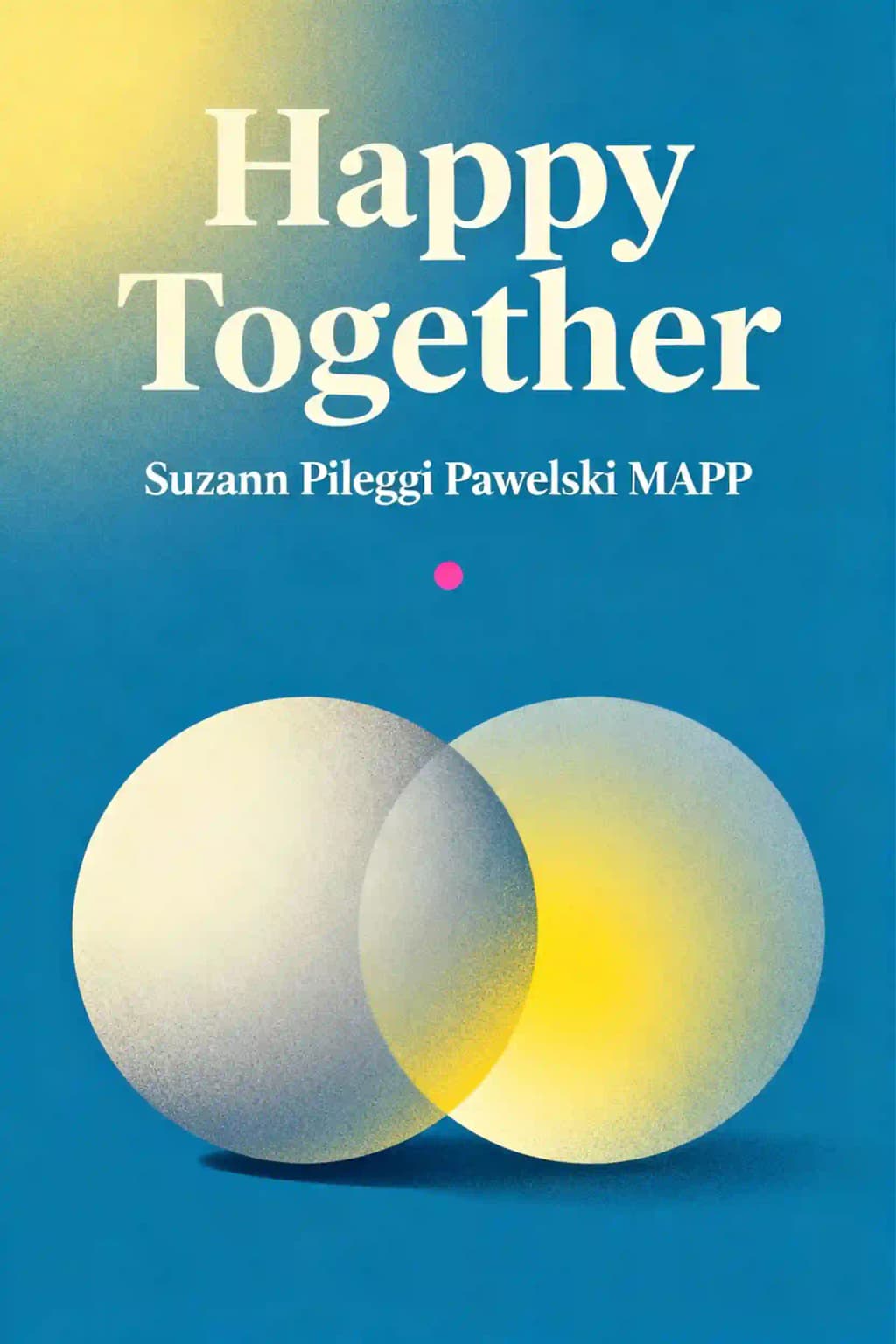
Happy Together
Using the Science of Positive Psychology to Build Love That Lasts
Aperçu de Happy Together
Discover how positive psychology transforms relationships in "Happy Together" - the science-backed guide endorsed by Martin Seligman himself. What if lasting love isn't about fixing problems but building character strengths? Learn the relationship gym concept that's revolutionizing how couples connect.

Thèmes clés dans Happy Together
- positive psychology application
- harmonious passion
- character strength cultivation
- intentional relationship maintenance
- aristotelian love
Citations de Happy Together
We've all been misled.
The 'completion' approach carries significant dangers.
Early relationship intensity-butterflies...is natural and healthy.
This romanticized view of love promoted in popular culture can be harmful.
Personnages de Happy Together
- Suzie Pileggi PawelskiCo-author and wife who shares her personal story
- James PawelskiCo-author and husband who married Suzie
- AmitCase study of a man experiencing intense passion
À propos de l'auteur
À propos de l'auteur de Happy Together
Suzann Pileggi Pawelski, MAPP, is the co-author of Happy Together: Using the Science of Positive Psychology to Build Love That Lasts and a leading expert in well-being science and relationship dynamics. A University of Pennsylvania Master of Applied Positive Psychology graduate, she combines academic rigor with practical insights to help couples flourish.
Pawelski co-wrote this groundbreaking relationship guide with her husband, Dr. James Pawelski, who co-founded the world’s first positive psychology master’s program at UPenn. Her work has been featured in Psychology Today, Scientific American Mind (where her 2010 cover story inspired the book), and Live Happy, where she writes the "Science of Well-being" column.
Previously an award-winning PR strategist for Fortune 500 companies, Pawelski now gives global "Romance and Research™" workshops blending psychological principles with real-world application. Happy Together was named a best book of 2018 by Business Insider, Success magazine, and UC Berkeley’s Greater Good Science Center, with endorsements from Larry King and features in The Washington Post and O, The Oprah Magazine. The book’s actionable framework for nurturing relationships through intentional habits continues to influence therapists and coaches worldwide.
Telecharger le resume de Happy Together
Obtenez le resume de Happy Together en PDF ou EPUB gratuit. Imprimez-le ou lisez-le hors ligne a tout moment.
FAQ sur ce livre
Happy Together applies positive psychology principles to help couples build fulfilling, long-lasting relationships. It focuses on cultivating strengths like gratitude, harmonious passion, and mindfulness to deepen emotional connections. The book combines research-backed frameworks with practical exercises to help partners thrive, emphasizing proactive habits over short-term fixes.
This book is ideal for couples at any relationship stage, marriage counselors, or individuals seeking science-based strategies to strengthen romantic bonds. It’s especially valuable for those preparing for marriage, navigating midlife partnerships, or rekindling intimacy.
Yes—readers praise its actionable advice, real-life examples, and focus on nurturing existing strengths rather than fixing flaws. With a 4.5/5 average rating, reviewers highlight its fresh perspective on sustaining love through positive habits.
Key ideas include:
- Harmonious passion: Balancing shared interests with individuality
- Savoring: Mindfully appreciating positive moments together
- Character strengths: Leveraging virtues like kindness and perseverance
- Interdependence: Moving beyond the “soulmate” myth to build mutual growth
Rather than focusing on fixing problems, it teaches couples to amplify positive emotions and shared goals. Strategies include gratitude journaling, identifying strengths in disagreements, and reframing challenges as growth opportunities.
Some reviewers note it underemphasizes addressing deep-seated relationship issues, as its strength-based approach prioritizes building positives over resolving conflicts. Critics suggest pairing it with therapy for complex challenges.
While Gottman’s work emphasizes conflict management, Happy Together focuses on amplifying joy and character strengths. Both are research-backed, but Suzann Pileggi Pawelski’s book leans more on proactive positivity than repairing dysfunction.
Notable activities:
- Gratitude mapping: Jointly listing shared blessings
- Passion audits: Aligning individual and shared interests
- Savoring rituals: Creating intentional moments of connection
It challenges the passive soulmate narrative, advocating instead for “interdependent” partnerships where both individuals actively cultivate shared values while nurturing personal growth.
“Fighting unhappiness is not the same as producing happiness—we feel both at the same time.” This underscores balancing problem-solving with consciously creating joy.
In an era of digital distractions, it offers tools to deepen emotional agility and intentional bonding. Its focus on mindfulness aligns with trends in relationship sustainability over fleeting romance.
It provides frameworks to reignite passion through rediscovering shared purpose, celebrating “micro-moments” of connection, and reframing aging as collaborative growth rather than decline.