

Aperçu de Forget the Alamo
Challenging everything you thought you knew, "Forget the Alamo" exposes how slavery - not heroism - drove Texas's revolution. This controversial bestseller sparked Texas culture wars and even entangled Phil Collins's artifact collection in its myth-busting narrative that Kirkus calls "popular history at its most engaging."
- The Alamo myth obscures Texas’ fight to preserve slavery over Mexican abolition laws.
- Heroic Anglo Narrative crumbles under scrutiny of Travis and Bowie’s flawed motivations.
- Economic desperation, not patriotism, drove key figures to defend the Alamo.
- Texas’ cotton economy relied on slavery—the real catalyst for the 1836 revolt.
- Modern Alamo symbolism reflects cultural wars more than historical accuracy.
- Stephen F. Austin fiercely defended slavery against Mexico’s gradual abolition efforts.
- Davy Crockett’s Alamo martyrdom masks his political failures and opportunistic Texas move.
- Mexican leaders accommodated Texas until slavery disputes made compromise impossible.
- The Alamo’s 21st-century legacy reveals America’s struggle with foundational racial truths.
- Burrough and Tomlinson dismantle the “last stand” myth using suppressed primary sources.
À propos de l'auteur de Forget the Alamo
Bryan Burrough, co-author of Forget the Alamo: The Rise and Fall of an American Myth, is a Vanity Fair special correspondent and bestselling author of seven books, including Barbarians at the Gate and The Big Rich.
A Texan journalist and historian, his work often exposes hidden layers of American capitalism and mythmaking. Chris Tomlinson, a columnist for the Houston Chronicle and San Antonio Express-News, brings firsthand expertise in Texas history through his acclaimed memoir Tomlinson Hill, which reckons with his family’s slaveholding legacy. Jason Stanford, a political writer and former communications director for Austin’s mayor, amplifies underrepresented narratives via his newsletter The Experiment.
Together, their rigorous research dismantles the Alamo’s “Heroic Anglo Narrative,” highlighting slavery’s role in the Texas Revolution. Burrough’s Public Enemies and Tomlinson’s New York Times-bestselling works further cement their authority in historical revisionism. Praised by NPR and The New York Times, Forget the Alamo sparked national debates on historical memory and was nominated for multiple history-writing awards.
FAQ sur Forget the Alamo
What is Forget the Alamo by Bryan Burrough about?
Forget the Alamo dismantles long-held myths about the 1836 battle, separating historical fact from legend. Co-written by Bryan Burrough, Chris Tomlinson, and Jason Stanford, it examines how the Alamo narrative was shaped by political and cultural agendas over time. The first half reconstructs the battle using primary sources, while the second traces the myth’s evolution, including its ties to Hollywood and racial tensions.
Who should read Forget the Alamo?
This book is ideal for history enthusiasts, Texas history buffs, and readers curious about how myths distort reality. It appeals to those seeking a critical analysis of American folklore and its societal impact. Educators and students will also benefit from its examination of historiography and source interpretation.
Is Forget the Alamo worth reading?
Yes, for its engaging blend of rigorous research and accessible storytelling. Burrough’s journalistic rigor and co-authors’ witty prose challenge romanticized narratives, offering a fresh perspective on why the Alamo myth persists. It’s particularly valuable for understanding modern debates over historical memory and identity.
What are the main arguments in Forget the Alamo?
The book argues that the Alamo’s legend—often centered on heroic Anglo defenders—ignores the battle’s roots in slavery and U.S. expansionism. It highlights how 20th-century media, like John Wayne’s film, perpetuated a sanitized version, erasing Mexican Texan contributions and reinforcing racial stereotypes.
How does Forget the Alamo challenge traditional narratives?
It contrasts documented accounts with popular myths, revealing the battle as a chaotic defeat rather than a noble last stand. The authors debunk claims like Davy Crockett’s martyrdom and emphasize the role of Tejano allies, challenging the Anglo-centric framing.
What sources does Bryan Burrough use in Forget the Alamo?
The book draws on letters, diaries, and Mexican military records to reconstruct events. It also analyzes secondary sources, films, and political speeches to trace the myth’s creation, providing a multidimensional view of the Alamo’s legacy.
Are there criticisms of Forget the Alamo?
Some traditionalists reject its debunking of cherished myths, accusing the authors of revisionism. Critics argue it downplays Texan bravery, though supporters praise its factual rigor and relevance to contemporary identity politics.
How does Forget the Alamo explore myth-making?
The second half analyzes how boosters, politicians, and filmmakers transformed the Alamo into a symbol of American individualism. It ties myth-making to 19th-century racial hierarchies and 20th-century conservatism, illustrating how history is weaponized for cultural agendas.
What makes Forget the Alamo unique among Alamo books?
Unlike celebratory accounts, it focuses on historiography—how history is written—rather than just chronicling events. Its conversational tone and hybrid approach (part history, part cultural critique) make academic concepts accessible to general readers.
How does Bryan Burrough’s background influence the book?
Burrough’s investigative journalism skills shine in his scrutiny of sources and narrative pacing. His experience at Vanity Fair and The Wall Street Journal ensures a gripping, detail-rich account that balances scholarship with readability.
Does Forget the Alamo address modern implications?
Yes, it links the Alamo myth to current debates over Confederate monuments and systemic racism. The book underscores how historical narratives shape present-day identity and policy, urging readers to confront uncomfortable truths.
Is Forget the Alamo controversial?
Yes, it sparked backlash for challenging Texas’s foundational myth. Debates over its publication reflect broader culture wars about whose stories are preserved and how history is taught in schools.
Ressentez le livre à travers la voix de l'auteur
Transformez les connaissances en idées captivantes et riches en exemples
Capturez les idées clés en un éclair pour un apprentissage rapide
Profitez du livre de manière ludique et engageante
Personnages de Forget the Alamo
- Stephen F. AustinEmpresario who led American colonization of Texas
- Moses AustinEconomic refugee who secured the first Texas colony
- Santa AnnaMexican dictator and military commander
- Phil CollinsBritish rock star and Alamo artifact collector
- Baron de BastropIntermediary who helped secure colony approval
Thèmes clés dans Forget the Alamo
- myth making
- texas revolution
- southern cotton expansion
- slavery in texas
- mexican american relations
Citations de Forget the Alamo
The Alamo stands as Texas's secular Western Wall.
Unlike other historical reassessments happening nationwide, the Alamo's defenders have largely escaped critical examination.
"Nothing is wanted but money, and negros are necessary to make it," he would later write.
Without slaves, Anglo Texas was doomed.
Texians had crossed a line from merely ignoring laws to threatening armed rebellion.
Explorez Votre Façon d'Apprendre
 Mode Résumé Rapide
Lisez ou écoutez le résumé de Forget the Alamo en 9 minutes
Décomposez les idées clés de Forget the Alamo en points faciles à comprendre pour découvrir comment les équipes innovantes créent, collaborent et grandissent.

 Mode Fun
Leçons de Forget the Alamo Racontées en Histoires de 19 Min
Découvrez Forget the Alamo à travers des récits vivants qui transforment les leçons d'innovation en moments mémorables et applicables.
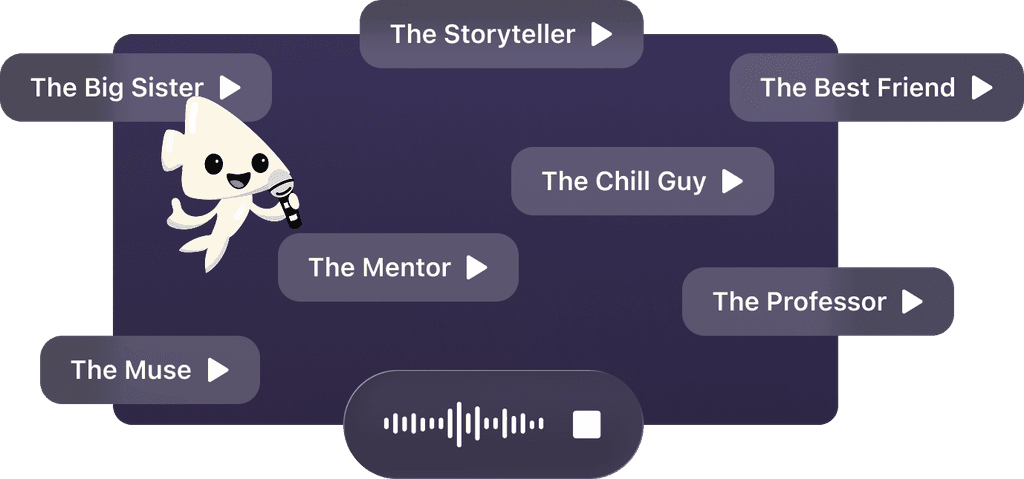
 Mode Personnaliser
Découvrez Forget the Alamo dans votre propre style d’apprentissage
Posez vos questions, choisissez votre style d’apprentissage et co-créez des idées qui vous correspondent vraiment.
Cree par des anciens de Columbia University a San Francisco
"Instead of endless scrolling, I just hit play on BeFreed. It saves me so much time."


"I never knew where to start with nonfiction—BeFreed’s book lists turned into podcasts gave me a clear path."


"Perfect balance between learning and entertainment. Finished ‘Thinking, Fast and Slow’ on my commute this week."
"Crazy how much I learned while walking the dog. BeFreed = small habits → big gains."
"Reading used to feel like a chore. Now it’s just part of my lifestyle."

"Feels effortless compared to reading. I’ve finished 6 books this month already."
"BeFreed turned my guilty doomscrolling into something that feels productive and inspiring."

"BeFreed turned my commute into learning time. 20-min podcasts are perfect for finishing books I never had time for."
"BeFreed replaced my podcast queue. Imagine Spotify for books — that’s it. 🙌"

"It is great for me to learn something from the book without reading it."
"The themed book list podcasts help me connect ideas across authors—like a guided audio journey."
"Makes me feel smarter every time before going to work"
Cree par des anciens de Columbia University a San Francisco
"Instead of endless scrolling, I just hit play on BeFreed. It saves me so much time."
"I never knew where to start with nonfiction—BeFreed’s book lists turned into podcasts gave me a clear path."
"Perfect balance between learning and entertainment. Finished ‘Thinking, Fast and Slow’ on my commute this week."
"Crazy how much I learned while walking the dog. BeFreed = small habits → big gains."
"Reading used to feel like a chore. Now it’s just part of my lifestyle."
"Feels effortless compared to reading. I’ve finished 6 books this month already."
"BeFreed turned my guilty doomscrolling into something that feels productive and inspiring."
"BeFreed turned my commute into learning time. 20-min podcasts are perfect for finishing books I never had time for."
"BeFreed replaced my podcast queue. Imagine Spotify for books — that’s it. 🙌"
"It is great for me to learn something from the book without reading it."
"The themed book list podcasts help me connect ideas across authors—like a guided audio journey."
"Makes me feel smarter every time before going to work"
"Instead of endless scrolling, I just hit play on BeFreed. It saves me so much time."
"I never knew where to start with nonfiction—BeFreed’s book lists turned into podcasts gave me a clear path."
"Perfect balance between learning and entertainment. Finished ‘Thinking, Fast and Slow’ on my commute this week."
"Crazy how much I learned while walking the dog. BeFreed = small habits → big gains."
"Reading used to feel like a chore. Now it’s just part of my lifestyle."
"Feels effortless compared to reading. I’ve finished 6 books this month already."
"BeFreed turned my guilty doomscrolling into something that feels productive and inspiring."
"BeFreed turned my commute into learning time. 20-min podcasts are perfect for finishing books I never had time for."
"BeFreed replaced my podcast queue. Imagine Spotify for books — that’s it. 🙌"
"It is great for me to learn something from the book without reading it."
"The themed book list podcasts help me connect ideas across authors—like a guided audio journey."
"Makes me feel smarter every time before going to work"
"Instead of endless scrolling, I just hit play on BeFreed. It saves me so much time."
"I never knew where to start with nonfiction—BeFreed’s book lists turned into podcasts gave me a clear path."
"Perfect balance between learning and entertainment. Finished ‘Thinking, Fast and Slow’ on my commute this week."
"Crazy how much I learned while walking the dog. BeFreed = small habits → big gains."
"Reading used to feel like a chore. Now it’s just part of my lifestyle."
"Feels effortless compared to reading. I’ve finished 6 books this month already."
"BeFreed turned my guilty doomscrolling into something that feels productive and inspiring."
"BeFreed turned my commute into learning time. 20-min podcasts are perfect for finishing books I never had time for."
"BeFreed replaced my podcast queue. Imagine Spotify for books — that’s it. 🙌"
"It is great for me to learn something from the book without reading it."
"The themed book list podcasts help me connect ideas across authors—like a guided audio journey."
"Makes me feel smarter every time before going to work"

Telecharger le resume de Forget the Alamo
Obtenez le resume de Forget the Alamo en PDF ou EPUB gratuit. Imprimez-le ou lisez-le hors ligne a tout moment.


