Chapitre 1
The Haunting of Villa Taccola: A Descent into Ancient Evil
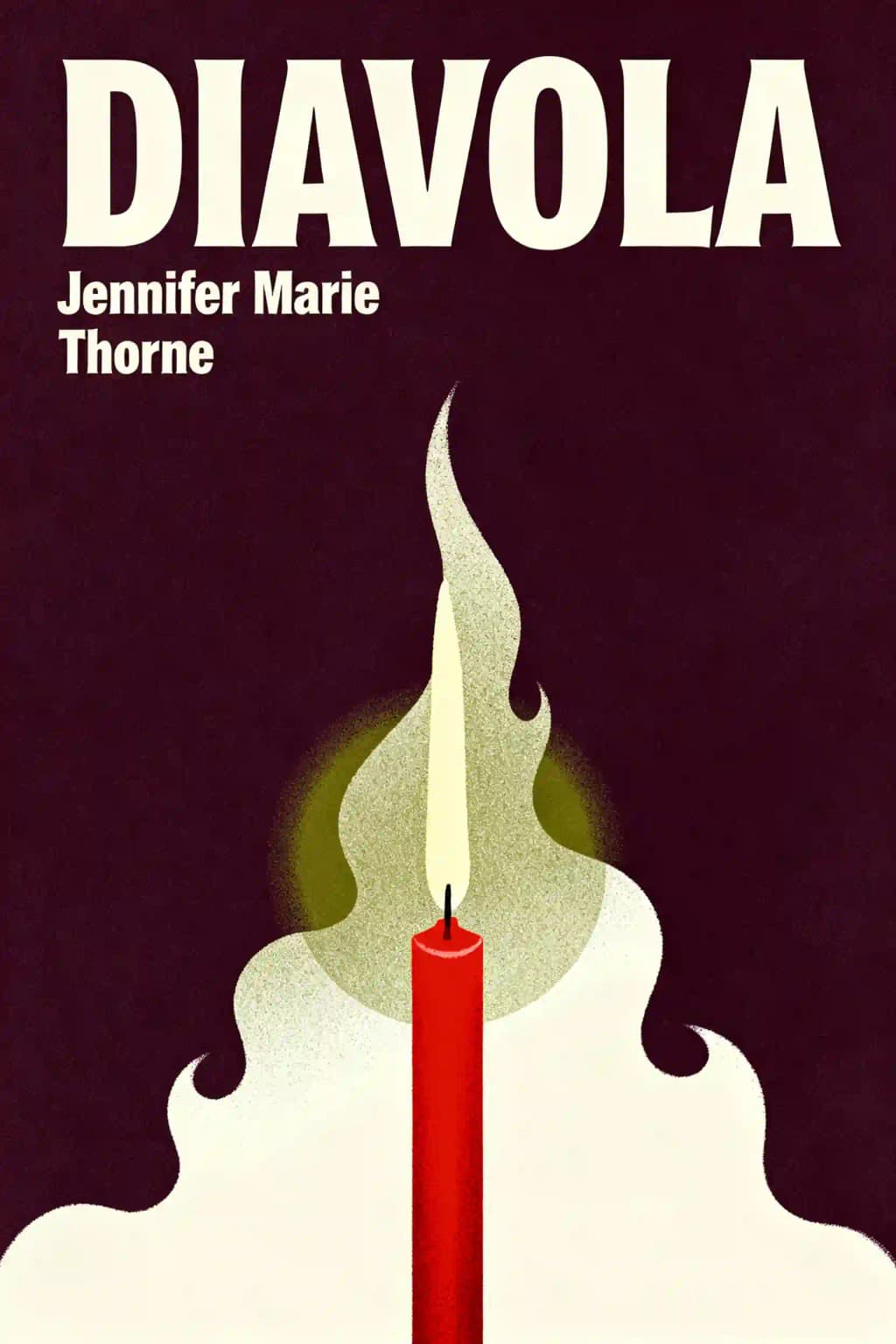
Have you ever wondered what lurks beneath the surface of those picturesque Italian villas you see on Instagram? Jennifer Marie Thorne's "Diavola" takes us deep into the heart of darkness that can hide behind postcard-perfect facades. This psychological horror novel has become something of a cult sensation, with celebrities like Florence Pugh and Stephen King praising its ability to make readers afraid to turn off the lights. Blending elements of folk horror with family drama, Thorne's novel taps into primal fears about possession, family secrets, and the malevolent spirits that might attach themselves to ancient places. The book's exploration of how the past haunts the present resonates particularly in our era of ancestral trauma awareness, making it not just a thrilling read but a culturally significant one.
Chapitre 2
A Family Vacation Shadowed by Secrets
The Pace family vacation to Tuscany begins with deception. Anna arrives at Florence two days early, avoiding traveling with her twin brother Benny and his new boyfriend Christopher. She spends these days in solitary bliss-sketching, visiting galleries, and wandering the ancient streets-before reluctantly heading to Villa Taccola in the Chianti countryside.
From the moment her Uber approaches the medieval villa, something feels wrong. A strange barren circle of dirt surrounds the property, the structure appears eerily still, and Anna senses someone watching from the tower window. Inside, the villa feels oppressive with its smoke-blackened beams and weathered floors that seem to hide centuries of secrets. Original medieval elements peek through modern renovations like pentimenti in an old painting-the past refusing to stay buried beneath the present.
The family dynamics are just as layered and fraught. Anna's relationship with her sister Nicole is strained by a drunken Christmas incident where Anna was accused of flirting with Nicole's husband Justin. Benny seems changed by his relationship with Christopher, who exerts a subtle controlling influence. The children-Nicole's daughters Waverly and Mia-provide moments of lightness but soon become entangled in the villa's mysteries when they mention speaking to "neighbor children" who shouldn't exist.
As the family settles in, strange occurrences multiply: cold spots in the sweltering summer heat, whispers in Italian, scratching noises from behind the locked tower door, and hallucinations of bodies in the swimming pool. When Anna asks about accessing the mysterious tower, she learns it's strictly off-limits-a prohibition that only intensifies her curiosity about what might be hidden there.
Chapitre 3
The Entity in the Tower
The villa's presence grows more malevolent as days pass. Benny wakes screaming one night, describing a dark human shape in his room that disappeared, then returned as an invisible weight smothering him on the bed. The children report seeing a "yellow monster" pressing on their beds. Food left out for hours develops weeks' worth of mold and maggots. Most disturbingly, little Mia is found inexplicably locked inside the forbidden tower room with no memory of how she got there.
During a family trip to Florence's Uffizi Gallery, Anna discovers a portrait titled "Florentine Woman"-a yellow-haired noblewoman with an imperious smile whom she immediately recognizes as the entity haunting the villa. This is La Dama Bianca (The White Lady), whose presence Anna has glimpsed in steamed mirrors and peripheral shadows.
The villa's caretaker and local townspeople treat the Pace family with a mixture of suspicion and pity. When Anna investigates in the nearby town of Monteperso, she finds it eerily deserted, with locals peering from windows but refusing to engage. In the town's church, she discovers disturbing artwork-a fearful-looking Jesus in the Pieta and an unusual Annunciation featuring a smirking, yellow-haired Mary with an arrogant expression. Near the floor, gravestones for the de Felicibus family, all dead in 1505, surround a carving of a jackdaw bird identical to the one on the tower key.
Anna's growing obsession with accessing the tower culminates when Christopher obtains a large iron key from the caretaker. Against her better judgment, Anna joins Christopher and Benny as they unlock the forbidden door. Inside, they find a stale, oppressive atmosphere and climb a winding stone staircase to an empty room with blocked-up windows and an eerie presence that leaves Anna dizzy. Though seemingly anticlimactic, this trespass appears to trigger an escalation in supernatural activity throughout the villa.
Chapitre 4
The Ghost That Follows
What makes "Diavola" particularly chilling is how the haunting follows Anna back to New York after the family flees the villa. Despite her relief at returning to her familiar apartment, Anna discovers the tower key she thought she'd discarded sitting atop her belongings. Looking in the bathroom mirror, she sees the yellow-haired ghost standing behind her.
La Dama Bianca-whom Anna learns was Caterina Colonna, a Florentine noblewoman known for quickly becoming an influential widow-begins systematically destroying Anna's life. The haunting manifests physically: black mold spreads through her bathroom, food rots overnight, doors slam by themselves, and Anna experiences lost time and disorientation. Her work performance deteriorates, leading to her dismissal. Neighbors complain about noises Anna doesn't remember making. Her apartment becomes covered in obsessive drawings of Caterina that she creates during blackouts.
Most devastatingly, Anna's relationships crumble. Her family refuses to acknowledge the supernatural events at the villa, instead accusing Anna of orchestrating everything as some kind of disturbed prank. Nicole reveals that Benny told everyone about Anna's abortion, which she'd kept private. When Anna tries to contact Benny, he suggests she has always had "darkness" in her, bringing chaos wherever she goes. Their final conversation ends with a bitter "deal" to pretend the other is dead.
The haunting becomes increasingly violent. Anna experiences choking attacks and vivid nightmares where she witnesses Caterina's past crimes. When her ex-boyfriend Josh visits, Anna gives him the tower key to dispose of, hoping to rid herself of the curse. Shortly after he leaves, she hears screaming outside-Josh has been killed in what appears to be Caterina's doing, and the key mysteriously returns to Anna's drawer.
Chapitre 5
The Dark History Revealed
Through research and supernatural dreams, Anna pieces together Caterina's history. The Florentine noblewoman became obsessed with someone from the vintner family who owned Villa Taccola. Her obsession led to poisoning, death, and failed exorcisms. Most disturbingly, the villa "had to be fed" or its rot would spread beyond the property line-explaining the circle of dead vegetation surrounding it and the villagers' nightly checks to contain the decay.
Anna discovers a blog by Lucy Montrose who wrote about the villa's ghosts years earlier, mentioning "Italian roommates" and a desire to explore the tower despite warnings. The blog abruptly ends, and comments reveal Lucy died shortly after. Further research shows multiple deaths associated with the villa, which locals call "La Dama Bianca."
The tower key itself appears to be the conduit for Caterina's haunting. The villa's caretaker had repeatedly apologized about it, suggesting something was attached to the object. Anna's attempts to discard the key fail-it always returns to her possession. When she tries giving it to Josh, his death follows immediately, and the key reappears in her apartment.
As Anna's mental state deteriorates, she loses weeks of time, discovering she's been booking a return trip to Villa Taccola and obsessively learning Italian. Caterina's possession becomes more complete, with Anna experiencing the ghost's memories and feeling her physical presence in bed beside her. Eventually, Anna surrenders to the inevitable, purchasing expensive same-day tickets to Florence with the intention of returning to the villa.
Chapitre 6
The Final Confrontation
Upon returning to Villa Taccola, Anna finds the circle of dead grass has expanded, killing nearby trees. The caretaker waits grimly at the gate as Anna approaches speaking fluent Italian: "I brought the key back." Inside, Anna senses the presence of all Caterina's victims throughout the centuries-those who had been trapped and drained of energy "like glasses of wine."
As night falls, the villa's trapped spirits become increasingly visible-neighbors, "Italian roommates," even a child no more than five-all trembling, waiting for something terrible to happen. When Anna finds a butcher's knife waiting for her in the kitchen, she realizes Caterina wants her to commit suicide. Instead, she prepares a ritual, drawing a pentacle in salt on the dining table and arranging symbolic objects.
To her horror, Christopher's ghost appears-skull caved in, dried blood forming a goatee, arm dislocated. This triggers a vision revealing the truth about the "missing day" at the villa: the family, including Anna, had murdered Christopher in a frenzy, with Benny crushing his neck. They had hidden his body in the tower and collectively repressed the memory.
As Caterina drags Anna to the tower room where Christopher's decaying corpse lies, the trapped spirits revolt, forming a barrier between Anna and La Dama. They swarm over Caterina, who can no longer absorb their energy, all chanting an unbinding spell. Anna escapes down the stairs, locks the tower door with her key, and feels Caterina sealed away once more.
Chapitre 7
The Aftermath and Lingering Questions
Months later, Anna has carved out a new existence as a street artist in the medieval city of Lucca, where she's known only as "La Dama Toscana." Her paintings - haunting watercolors of twisted towers and shadowed doorways - draw curious tourists and local art collectors alike. Some say her work captures an otherworldly quality that both attracts and unsettles viewers. Under this artistic persona, she's found a measure of peace, though the weight of her past remains.
Weekly letters arrive from her niece Waverly, each more urgent than the last. The latest describes how their once-tight family has splintered in the wake of Villa Taccola. Their mother rarely leaves her apartment in Florence, obsessively researching family histories. Uncle Marcus has retreated to a monastery in the Alps, seeking answers in ancient texts. Waverly herself writes of strange dreams and unexplained occurrences, begging Anna to help make sense of their shared experience. Though Anna's fingers often hover over blank postcards, she cannot bring herself to respond - uncertain whether contact would heal or reopen wounds.
The tower key has become both talisman and torment. Some nights it burns against her skin through her pocket; other times it rattles like a living thing, demanding attention. During full moons, it seems to pull her toward Villa Taccola with magnetic force. Anna has mapped every road leading away from the villa, ensuring she never accidentally strays too close. Yet she knows precisely how many steps it would take to return, unlock the tower, and face whatever remains of Caterina - or release it.
This unresolved conclusion raises profound questions about the nature of evil and family legacy. Was Caterina truly the malevolent force they believed, or did she serve as a convenient repository for generations of family secrets and shame? The villa's influence remains unclear - did its ancient stones merely amplify existing fractures within the family, or did it actively create the circumstances for their destruction? Perhaps most unsettling is the question of Anna's own transformation. Has she truly escaped Caterina's influence, or has she simply learned to channel it through her art? The darkness in her paintings suggests the line between captor and captive may have blurred beyond recognition.
Some locals in Lucca whisper that the mysterious street artist's works seem to change when viewed at different times of day, and that those who purchase her paintings report strange dreams. Anna pretends not to hear these rumors, but she knows better than anyone that some questions are better left unanswered.
Chapitre 8
The Power of Place in Horror
"Diavola" masterfully explores how physical spaces can become repositories for trauma and evil. Villa Taccola isn't merely haunted - it's almost alive, breathing and hungry, with its circle of dead vegetation expanding like a cancer. The ancient stone walls seem to pulse with malevolent energy, and even the most mundane spaces - kitchens, bedrooms, hallways - become threatening under its influence. The tower, rising like a twisted spine against the Tuscan sky, represents the ultimate forbidden space, housing both literal and metaphorical skeletons. Its spiral staircase serves as a physical manifestation of descent into madness.
The novel suggests that some places absorb the worst of human nature - greed, obsession, violence - and reflect it back at those who enter. Like a dark mirror, Villa Taccola amplifies every shadow in its inhabitants' psyche. The villa doesn't create darkness but rather provides a stage where existing tensions can explode into violence. The Pace family arrives already fractured: Anna and Nicole's sisterly resentment simmers beneath polite exchanges, Benny's conflicted relationship with Christopher manifests in passive-aggressive battles, and the parents' emotional distance creates a vacuum where love should be. The villa simply accelerates their disintegration, turning minor irritations into murderous impulses.
This theme extends beyond the physical villa to explore how we carry places within us - a psychological geography that shapes our reality. When Anna returns to New York, the haunting follows, suggesting that once we've been marked by certain experiences, we can never truly escape them. Her modern Manhattan apartment, once a sanctuary of clean lines and urban sophistication, becomes a microcosm of Villa Taccola, complete with rotting food, flies, and an oppressive atmosphere. The horror isn't contained by geography but travels through objects (the ancient brass key becomes a conduit for evil) and memory (flashbacks blur the line between past and present, Italy and America).
The author skillfully weaves architectural details into the narrative, using them as metaphors for psychological states. Crumbling foundations mirror failing relationships, locked doors represent repressed memories, and the villa's labyrinthine layout reflects the characters' confused mental states. Even the surrounding Tuscan landscape becomes complicit in the horror, with its beautiful cypress trees standing like silent sentinels and its seemingly idyllic olive groves harboring dark secrets. The contrast between the region's sun-drenched beauty and the villa's creeping darkness creates a dissonance that heightens the sense of wrongness permeating the story.
Through this sophisticated exploration of place, "Diavola" demonstrates how settings in horror fiction can transcend mere backdrop to become active participants in the narrative - shaping, reflecting, and ultimately consuming those who dare to inhabit them.
Chapitre 9
Family Secrets and Collective Denial
Perhaps the most insidious aspect of "Diavola" is how it masterfully portrays family dynamics and collective denial. The Pace family's steadfast refusal to acknowledge the supernatural events mirrors their deep-seated unwillingness to address their own dysfunction. They'd rather believe Anna orchestrated everything as an elaborate, disturbed prank than confront the possibility of something truly inexplicable - a choice that reveals their instinct to rationalize rather than face uncomfortable truths.
This denial extends beyond the present to their collective amnesia about Christopher's murder. The family literally cannot remember committing violence together - a powerful metaphor for how families often rewrite their own histories to exclude uncomfortable truths. The selective memory loss serves multiple narrative purposes, highlighting both the mind's capacity for self-protection and the insidious nature of group denial. When Anna finally remembers participating in Christopher's death, it forces readers to question everything she's experienced and recounted. Has she been an unreliable narrator all along? Was Caterina merely a convenient explanation for Anna's own violent tendencies? The novel cleverly maintains this ambiguity, never fully resolving whether the supernatural elements are real or manifestations of shared psychological trauma.
The novel suggests that families often create their own hauntings through layers of secrets, long-simmering resentments, and unacknowledged traumas. Nicole's lingering anger about a high school prom incident - where she was publicly humiliated and Anna failed to defend her - festers beneath their superficially close relationship. Benny's deep-seated resentment about Anna's "darkness" stems from childhood incidents where her sister's behavior cast shadows over family celebrations and milestones. Their parents' emotional distance, manifested in their father's workaholic tendencies and their mother's passive acceptance of family tensions, existed long before Villa Taccola entered their lives.
The supernatural elements of Villa Taccola function as a catalyst, bringing these pre-existing tensions to the surface and making the invisible visible. Each family member's reaction to the haunting reveals their particular forms of denial: the father's rational dismissals, the mother's anxious minimizing, Nicole's angry deflections, and Benny's desperate attempts to maintain normalcy. The house becomes a mirror, reflecting back the family's buried truths and forcing them to confront what they've worked so hard to ignore. Through this lens, the true horror of the novel lies not in the supernatural events themselves, but in the family's recognition that they've been haunting themselves all along.
Chapitre 10
The Possession of Identity
At its core, "Diavola" explores possession not just as a supernatural phenomenon but as a profound meditation on how we lose and reclaim our identities. Anna's gradual possession by Caterina mirrors her already fragile sense of self, creating layers of psychological complexity that deepen throughout the narrative. Even before the haunting begins, she exists in a state of profound displacement - disconnected from her family heritage, harboring doubts about her artistic talents, and deeply traumatized by her recent abortion decision. These existing fractures in her identity make her particularly vulnerable to Caterina's influence.
The possession manifests in increasingly unsettling ways that blur the line between supernatural influence and psychological breakdown. Anna begins drawing obsessively, producing artwork in a style entirely foreign to her own - dark, baroque pieces filled with religious imagery and violent undertones. She suddenly speaks fluent Italian despite never having studied the language, and experiences prolonged periods of lost time where she later discovers evidence of actions she has no memory of performing. These episodes raise profound questions about the nature of identity itself: when Anna speaks Italian, is it truly Caterina speaking through her, or has the possession merely unlocked something buried deep within her own psyche?
The novel masterfully maintains this ambiguity, refusing to provide clear answers about whether Anna is truly being controlled by an external force or surrendering to her own repressed desires and self-destructive tendencies. Her increasingly erratic behavior - alienating friends, destroying her artwork, engaging in risky behaviors - could equally be interpreted as supernatural possession or psychological breakdown. This ambiguity serves to highlight how the boundaries between self and other, between choice and compulsion, are far more permeable than we typically acknowledge.
The climactic confrontation at Villa Taccola represents Anna's ultimate attempt to reclaim her agency and identity. By choosing to return to the site of her possession, she transforms herself from passive victim to active participant in her own fate. The ritual she performs to bind Caterina in the tower becomes a powerful metaphor for psychological integration - rather than attempting to completely exorcise or eliminate her darkness, Anna makes the more mature choice to acknowledge and contain it. This decision reflects a sophisticated understanding that some aspects of ourselves, whether inherited trauma or personal darkness, can never be fully eliminated - they can only be recognized, contained, and managed as part of our complete identity.
Through Anna's journey, "Diavola" suggests that true selfhood isn't about maintaining perfect control or achieving complete independence from outside influences, but rather about consciously choosing which aspects of ourselves and our experiences we allow to shape us.
Chapitre 11
The Persistence of the Past
Thorne's novel brilliantly illustrates how the past refuses to stay buried, manifesting both physically and psychologically throughout the narrative. Villa Taccola itself embodies this theme as a living repository of history - medieval elements peek through modern renovations like persistent memories, while 15th-century frescoes bleed through contemporary wallpaper despite repeated attempts to cover them. The tower, though sealed with iron bands and modern locks, remains paradoxically accessible through dreams and visions, while the dead circle of earth surrounding the property continues to expand outward despite numerous containment efforts, much like the reach of historical trauma.
This architectural palimpsest mirrors the psychological layers of the characters, particularly in Anna's case. Her present is constantly interrupted by intrusive memories - the traumatic abortion she never fully processed, the mysterious "incident" at Hilton Head with Benny that ended their friendship, and Nicole's devastating prom night accusations that altered family dynamics forever. These personal histories shape how she experiences the villa's haunting, making her particularly vulnerable to Caterina's influence. Her past wounds create perfect entry points for supernatural manipulation, suggesting that our traumas make us susceptible to darker influences.
The novel suggests that history itself is a kind of haunting - events echo through time like footsteps in empty corridors, patterns repeat with eerie precision, and trauma passes through generations like a cursed inheritance. The de Felicibus family's violent deaths in 1505 continue to affect the present with undiminished power, manifesting in everything from the villa's persistent cold spots to the recurring nightmares that plague its inhabitants. Similarly, Christopher's murder will likely reverberate through the Pace family for generations to come, creating new layers of trauma that future generations must navigate.
Some cycles, the novel implies, can never be fully broken - only temporarily contained, like Caterina locked in her tower. Each generation's attempts to seal away the past ultimately fail, as history finds new ways to seep through the cracks. The villa's recurring hauntings mirror how societal traumas resurface despite our best efforts to suppress them, while personal ghosts emerge in moments of vulnerability, wearing familiar faces but speaking with ancient voices.
In the end, "Diavola" leaves us with the unsettling suggestion that we are all haunted - by places we've been, choices we've made, and people we've hurt or lost. The true horror isn't the supernatural entity but the recognition that we carry our own ghosts within us, always threatening to escape their carefully constructed towers and possess us once again. These personal specters, like the villa's phantoms, don't require belief to exist - they persist regardless, shaping our perceptions and actions in ways we might not even recognize until it's too late.