Chapitre 1
A Family Darker Than Dark: The Haunting Tale of Seaglass
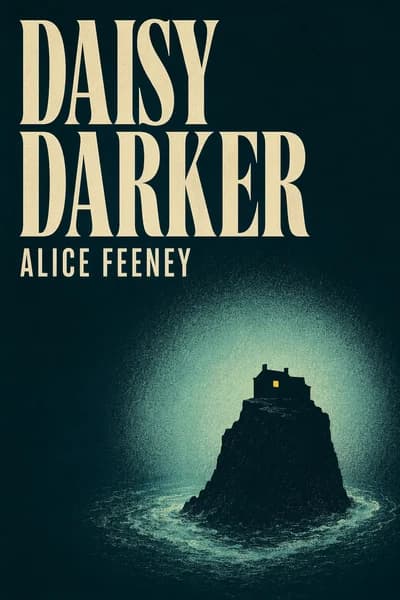
I first encountered "Daisy Darker" through Stephen King's enthusiastic recommendation, calling it "an Agatha Christie classic but with a modern twist." This haunting locked-room mystery by Alice Feeney quickly became a BookTok sensation in 2022, with readers drawn to its atmospheric setting and shocking revelations. The novel follows the dysfunctional Darker family's reunion at their grandmother's isolated coastal home, where they become trapped by the tide as family members begin dying one by one, each death accompanied by an ominous poem. What begins as a classic murder mystery evolves into something far more unexpected and emotionally devastating. Let's dive into this gothic tale where family secrets prove deadlier than any outside threat.
Chapitre 2
Born With a Broken Heart
Daisy Darker enters the world already dying-revived after birth but diagnosed with a rare congenital heart condition that leaves her heart chambers malformed and struggling. The doctors deliver their verdict with clinical detachment: she won't live past fifteen, a grim forecast that casts a long shadow over her childhood years. Each birthday becomes both a celebration and a countdown, marked by regular hospital visits, endless medications, and the constant whir of medical equipment that becomes the soundtrack to her early life.
As the youngest of three sisters, Daisy occupies an unenviable position in the family hierarchy, made worse by her medical fragility. Her mother Nancy, a woman who prizes perfection and abhors weakness, clearly favors her eldest daughters. There's Rose, the brilliant one, whose academic achievements paper the walls of their family home, and Lily, the beautiful one, whose face launches a thousand compliments. Meanwhile, Daisy becomes the family's burden, the broken child requiring expensive medical treatments that strain both finances and patience. Nancy's resentment manifests in subtle ways-missed parent-teacher conferences, forgotten doctor appointments, and the constant, weary sighs that accompany any mention of Daisy's needs.
Only Nana, Daisy's grandmother, sees past the medical charts and hospital bracelets to the vibrant spirit within. Their relationship blossoms in Nana's Victorian stone house, Seaglass, where Daisy spends countless afternoons listening to stories and baking sea-salt cookies. This bond becomes Daisy's emotional anchor, especially after Nana transforms their shared moments into a bestselling children's book series titled "Daisy Darker's Little Secret." The books, featuring a plucky heroine with a special heart who solves mysteries, make Nana wealthy but create deep fissures within the family. Rose and Lily see their exclusion from the stories as yet another slight, while Nancy bristles at her mother's public airing of family dynamics.
When Nana sends out invitations to her eightieth birthday celebration at Seaglass-the house perched precariously on a tiny Cornish island, accessible only during low tide-it marks the first family reunion in over a decade. The timing feels particularly ominous given a palm reader's prediction years ago: Nana would die at exactly this age, on this very night. As family members arrive one by one, each carries their own hidden agenda, primarily focused on securing their portion of Nana's substantial fortune. The air grows thick with unspoken resentments and barely concealed greed. What none of them realize is that this gathering will become a crucible, forcing long-buried secrets to the surface with devastating and deadly consequences. The isolation of Seaglass, cut off from the mainland by the rising tide, will ensure that no one can escape their past-or their fate.
Chapitre 3
Seaglass: A House of Memories and Secrets
Seaglass isn't merely a setting-it's practically a character in its own right. This Victorian stone house with gothic turrets and a turquoise roof sits isolated on a tiny island off the Cornish coast, accessible only during low tide via a narrow causeway that disappears beneath the waves twice daily. The structure itself seems to embody the Darker family's peculiarities: beautiful but decaying, with salt-weathered stones, creaking floorboards, and windows that rattle ominously during storms. It's filled with eccentricities like eighty ticking clocks (one for each year of Nana's life) lining the hallway, their synchronized ticking creating an eerie heartbeat throughout the house. The mismatched retro furniture spans decades - from Art Deco armchairs to 1960s lamps - while the walls are hand-painted with intricate murals of native birds and elderflower blossoms, each one telling its own story.
The house holds decades of memories-both cherished and painful-for the Darker family. Each room contains echoes of past confrontations, celebrations, and betrayals. The music room, with its grand piano positioned to catch the last rays of sunset, is where Frank retreats to play Chopin during family crises. The sprawling kitchen, heart of the home, features a floor-to-ceiling chalkboard wall covered in decades of family notes, recipes, and children's drawings. Eight uniquely painted chairs surround the ancient oak table, each one decorated to reflect its owner's personality - from Lucy's whimsical butterflies to Marcus's austere geometric patterns. The forbidden "West Wing," sealed off for years, contains Nana's illustration studio, where her famous children's books came to life, the walls still splattered with watercolors and the air thick with creative energy.
Most importantly, Seaglass serves as a perfect locked-room setting when the tide comes in, cutting the family off from the mainland for eight hours. This isolation creates the classic murder mystery scenario-when people start dying, the killer must be among them. The rising waters transform the house into an inescapable prison, with waves crashing against the rocky shoreline and sea spray coating the windows. There's nowhere to run, nowhere to hide, and no outside help available until the tide recedes, forcing the family to confront both their potential murderer and their long-buried secrets.
The house's very name-Seaglass-reflects how the family has been shaped by time and pressure, broken pieces smoothed into something different but still fundamentally damaged. Like the blue-green glass decorating its walls, collected from decades of beachcombing, the Darker family has been eroded by years of resentment, jealousy, and secrets, becoming something unrecognizable from what they once were. Each piece of seaglass embedded in the house's decor tells its own story of transformation, much like the family members themselves - sharp edges worn smooth by time, but internal fractures remaining forever visible.
Chapitre 4
Family Dynamics: Love, Jealousy, and Resentment
The Darker family represents a masterclass in dysfunctional relationships. Each member carries deep wounds inflicted by the others, creating a tangled web of resentments that have festered for decades.
Nancy and Frank's failed marriage casts a long shadow. Though divorced, they still orbit each other with a mixture of attraction and bitterness. Frank prioritized his orchestra over his family, leaving Nancy to raise three daughters largely alone. Nancy, in turn, became overprotective of her children while simultaneously playing favorites-doting on Lily's beauty and Rose's intelligence while viewing Daisy's heart condition as an inconvenience.
The sibling dynamic proves even more toxic. Rose, the eldest, maintains a cool intellectual distance from family drama but harbors deep secrets. Middle child Lily weaponizes her beauty and sexuality, using them to get what she wants regardless of who gets hurt. Both sisters torment Daisy throughout her childhood-locking her in cupboards, abandoning her when buried in sand at the beach, and even putting a mouse in her crib as an infant.
Nana stands as the family matriarch, seemingly above the fray yet manipulating events from behind the scenes. Her decision to write children's books starring Daisy creates jealousy among the other grandchildren, while her mysterious will becomes the catalyst for revealing long-buried family secrets.
When Conor Kennedy-a childhood friend with his own complicated history with the Darker sisters-arrives unexpectedly at Seaglass during the reunion, he disrupts the already volatile family dynamic. His presence forces confrontations about past betrayals, particularly regarding his relationships with both Rose and Lily.
Most poignant is fifteen-year-old Trixie, Lily's daughter, who finds herself caught in the crossfire of family resentments she doesn't fully understand. Her inheritance of Nana's estate creates a final breaking point for the already fractured family relationships.
Chapitre 5
The Deadly Reunion: A Birthday Celebration Turns Sinister
What begins as an uncomfortable but seemingly ordinary family gathering quickly descends into nightmare when Nana announces she's sharing her will with everyone that night. The bombshell revelation-that Nana is leaving her valuable literary estate and Seaglass to fifteen-year-old Trixie rather than her own children or grandchildren-ignites immediate tension. Before anyone can fully process this news, the family hears wind chimes and the front door slamming, despite the tide being in and no one able to cross the causeway.
The tension escalates when Conor Kennedy unexpectedly arrives, having rowed across the bay in a borrowed boat. His presence reopens old wounds, particularly between himself and the Darker sisters. As the night progresses, the family watches uncomfortable home movies that reveal painful memories and long-buried secrets.
At midnight, Trixie discovers Nana dead on the kitchen floor with a gash on her head and blood pooling beneath her. More disturbing still, the kitchen's chalkboard wall has been wiped clean of recipes and now displays a disturbing poem predicting each family member's death, beginning with "Daisy Darker's family were as dark as dark can be."
What follows is a night of escalating horror as family members are killed one by one, each death staged with symbolic items tied to their hands and accompanied by a verse of the ominous poem being crossed out on the wall. Frank is found poisoned with his conductor's baton tied to his hand; Nancy is discovered strangled with ivy in the garden, clutching her beloved wildflower book; Lily dies from poisoned perfume with a mirror tied to her hand; and Rose is shot while investigating the murders.
As the survivors try to make sense of what's happening, they discover Conor's boat has been deliberately cut loose, trapping them on the island until the tide recedes. With each death, the survivors grow increasingly paranoid, suspecting each other as the killer remains elusive despite being trapped in the house with them.
Chapitre 6
Secrets Revealed Through Home Movies
Throughout the night of terror, mysterious VHS tapes materialize in unexpected places, each labeled with Scrabble letters spelling increasingly urgent messages: "WATCH ME," "HEAR ME," "NOTICE ME," and "SEE ME." These home movies, filmed on an old camcorder that disappeared years ago, force the family to confront painful moments from their shared past, revealing layers of deception and cruelty that have shaped their relationships across three generations.
The first tape emerges from behind a loose baseboard, showing seven-year-old Rose placing a white mouse in baby Daisy's crib. Rose's face is eerily calm as she sings a twisted version of "Rock-a-bye Baby," replacing the traditional lyrics with dark alternatives about falling and breaking. The footage is grainy but clear enough to show baby Daisy's terrified screams while Rose watches with detached fascination, a pattern of behavior that would continue throughout their childhood.
Another tape, found wrapped in one of Nana's old cardigans, captures nine-year-old Lily's calculated revenge on four-year-old Daisy. After spending weeks telling Daisy stories about magical fairy doors, Lily convinces her sister that a mouse hole in the kitchen cupboard is an entrance to the fairy realm. The video shows Lily luring Daisy inside with promises of meeting the fairy queen, then slamming and locking the door. The camera continues recording for hours, capturing Daisy's increasingly desperate cries while the family searches the grounds, unaware she's trapped inside.
The most devastating revelation comes from footage dated August 15, 1988, discovered in a hollow book in the library. At a beach bonfire party, sixteen-year-old Lily deliberately seduces Conor, Rose's first love, knowing her sister is watching from behind the dunes. The camera catches every calculated move: Lily's practiced hair flip, her strategic positioning in the firelight, and Rose's devastated expression as she witnesses the betrayal. This single night led to Trixie's conception, though the truth remained hidden until a framed DNA test appears in Nana's library, dated just weeks before her death.
These home movies serve as both historical evidence and psychological catalyst, bringing long-buried truths to the surface with brutal clarity. They reveal how patterns of manipulation and betrayal have been passed down like toxic heirlooms, normalized within the family dynamics across decades. Most significantly, they gradually piece together the events leading to thirteen-year-old Daisy's disappearance on Halloween night in 1988-a tragedy that shattered the family's facade of normalcy.
The videos force each family member to confront their past actions through mature eyes, creating moments of devastating recognition. What were once dismissed as childhood pranks or teenage rivalries are exposed as calculated acts of cruelty that shaped Daisy's brief life and set in motion the family's slow unraveling. Each tape adds another layer to the mystery, suggesting that someone has been documenting these moments of betrayal all along, waiting for the perfect moment to force the family to face their shared history of deliberate cruelty.
Chapitre 7
The Shocking Truth About Daisy
As the night progresses and family members continue to die, increasingly strange events occur. Daisy notices her family often seems to ignore her completely. When she speaks, they don't respond. When she touches objects, they sometimes don't react as expected. These oddities culminate in the most shocking revelation of all: Daisy Darker is already dead and has been since Halloween night 1988.
The truth emerges in fragments as Daisy's memories return. After witnessing Lily and Conor's betrayal on the beach, thirteen-year-old Daisy fled along the coastal road. Conor, driving drunk with Rose and Lily as passengers, accidentally hit Daisy with his car. Finding her apparently dead, the three teenagers made a terrible decision-rather than calling for help, they carried Daisy's body to the cliff edge and threw her into the sea below, reasoning that her heart condition meant she wouldn't have lived much longer anyway. The most devastating moment came when Daisy opened her eyes just as they let her go, making eye contact with her sisters and Conor as she fell to her death.
This explains why Daisy hasn't aged in the sixteen years since that night-she's still thirteen, wearing the same clothes from Halloween 1988. It also explains why her family has ignored her throughout the reunion-they couldn't see or hear her at all. Only Trixie, who shares Daisy's heart condition and briefly "died" during a PE class when she was ten, can perceive Daisy's ghost.
The revelation recontextualizes everything we've witnessed. Daisy hasn't been participating in the family reunion as a living person but observing it as a ghost, visible only to those near death themselves. Her inability to move on is tied to the unresolved trauma of her murder and the secrets her family has kept about that night.
Chapitre 8
Nana's Revenge: Justice Served Cold
The final shocking twist reveals that Nana and Trixie orchestrated the entire night of murders as revenge for what happened to Daisy. Nana meticulously planned every detail, including faking her own death using chicken blood, theatrical makeup, and her background in community theater to make it convincing. She then systematically killed each family member who had wronged Daisy, with each death symbolically linked to what they loved most: Frank was strangled with his prized guitar strings while his favorite vinyl record played, Nancy was poisoned with extract from her beloved deadly nightshade plants, Lily suffocated on the expensive face cream she treasured, and Rose was crushed by the filing cabinets containing the work she prioritized over family.
Nana's motivation stemmed from years of watching her family's cruelty toward Daisy. Her primary drive was justice for her granddaughter, but she also wanted to cleanse the family legacy she would leave behind. For fifteen years, she had witnessed Daisy's spirit lingering in the house, unable to find peace. Nana believed that only by forcing each family member to confront their role in Daisy's death could her granddaughter's spirit finally rest. The elaborate revenge scheme was carefully designed to make each family member experience the same feelings of helplessness, fear, and betrayal that Daisy felt in her final moments.
Trixie's involvement came from a deep personal connection to Daisy's story. Born with a similar heart condition, she had experienced the same isolation and overprotection that marked Daisy's short life. Her mother Lily had treated Trixie's condition as a source of shame, hiding her daughter's medical appointments and refusing to let her participate in normal childhood activities. The crucial difference was that Trixie received the life-saving surgery that Daisy had been denied, though doctors still gave her a grim prognosis, predicting she wouldn't live past twenty-five. This shared experience created a powerful bond between Trixie and Daisy's memory, driving her to help Nana execute their revenge.
In the final moments, Nana completes her vengeance by consuming the same deadly nightshade poison she used on Nancy, bringing symmetry to her revenge. Her last conversation with Daisy's spirit is both tender and empowering, telling her granddaughter that she was never truly broken, but rather made perfect in her own way. Nana's final gift to Daisy is the advice to reclaim her narrative by writing her own story. This becomes the catalyst for Daisy's liberation, as she begins her tale with the poignant words "I was born with a broken heart" - transforming what was once her greatest shame into the beginning of her own empowerment.
Chapitre 9
Breaking the Cycle: Finding Peace Through Truth
The novel concludes with Daisy alone at Seaglass, typing her story on Conor's laptop as the first rays of dawn break over the horizon. Trixie has taken Poppins for a morning walk along the beach, giving Daisy the solitude she needs to process the tumultuous events that have unfolded. Though surrounded by the aftermath of death and betrayal - including the shocking revelations about her father's involvement and her mother's willful blindness - Daisy discovers an unexpected sense of peace in finally understanding the truth about her own murder and witnessing justice being served to those who betrayed her.
Throughout her life, Daisy had developed a pattern of escaping into fictional worlds whenever reality became too painful to bear. She would lose herself in romance novels, create elaborate stories in her head, and imagine alternative versions of her life where she wasn't constantly disappointing her parents. Now, in a profound reversal, she finds herself creating something real - her own true story. The act of writing becomes both a form of therapy and a potential pathway to freedom from the limbo she's been trapped in for sixteen long years. Each keystroke helps her reclaim the narrative that others had twisted and controlled since her death.
The novel's masterful final image - Daisy typing "I was born with a broken heart" as the title of her story - creates a sophisticated circular narrative structure that challenges readers' perceptions. These words, which opened the book, take on new meaning as we realize they're not just poetic metaphor but part of Daisy's posthumous account. This revelation forces readers to reevaluate everything they've experienced through her perspective, raising intriguing questions about reliability, truth, and the nature of storytelling itself. Was Daisy's account colored by her desire for revenge? Did her ghostly status give her insights that a living narrator couldn't have had?
Despite the dark themes of murder, family betrayal, and lost innocence that permeate the story, there's a powerful undercurrent of hope in Daisy finally gaining control over her own narrative. In death, she achieves what seemed impossible in life - the ability to make her family truly see her, hear her voice, and confront the devastating impact of their actions. Through the combination of Nana's meticulously planned revenge scheme and Daisy's written testimony, long-buried truths are forced into the light. The wealthy, respected Fairfax family can no longer maintain their carefully constructed facade of perfection.
The ending suggests that true peace comes not from revenge or even justice, but from the simple act of speaking one's truth. As Daisy completes her story, there's a sense that she might finally be ready to move on, having accomplished what her spirit needed to do. The sunrise symbolically reinforces this theme of new beginnings, even after death, suggesting that healing is possible even in the aftermath of the deepest betrayals.
Chapitre 10
The Power of Perspective: Who Tells Your Story?
"Daisy Darker" masterfully explores how perspective shapes reality. Throughout the novel, we see events exclusively through Daisy's eyes, accepting her interpretation of family dynamics and past events. Only in the final chapters do we realize our narrator has been dead all along, forcing us to question everything we thought we knew.
This narrative sleight-of-hand raises profound questions about memory, truth, and how stories shape our understanding of ourselves and others. Each family member carries their own version of events, their own justifications for harmful actions. The home movies serve as objective evidence that contradicts these self-serving narratives, forcing confrontations with uncomfortable truths.
Particularly poignant is the revelation that Daisy wasn't as innocent as she initially appears. She admits to cutting off Lily's hair while she slept, destroying Rose's favorite dress, and harboring violent thoughts toward her sisters. Even in death, she initially conceals these acts from the reader, revealing them only when forced to confront her own capacity for cruelty.
The novel suggests that stories-whether family legends, children's books, or personal narratives-hold tremendous power. Nana's children's books made her wealthy but created jealousy within the family. The stories the Darker family told themselves about Daisy's condition allowed them to justify their neglect and cruelty. Even Daisy's final act-writing her story-represents an attempt to shape how she'll be remembered.
In the end, "Daisy Darker" reminds us that we are all unreliable narrators of our own lives, selectively emphasizing some events while minimizing or erasing others. True healing begins only when we're willing to see ourselves clearly, acknowledging both the harm we've suffered and the harm we've caused. For Daisy, this reckoning comes too late in life but offers the possibility of peace in death as she finally tells her story on her own terms.