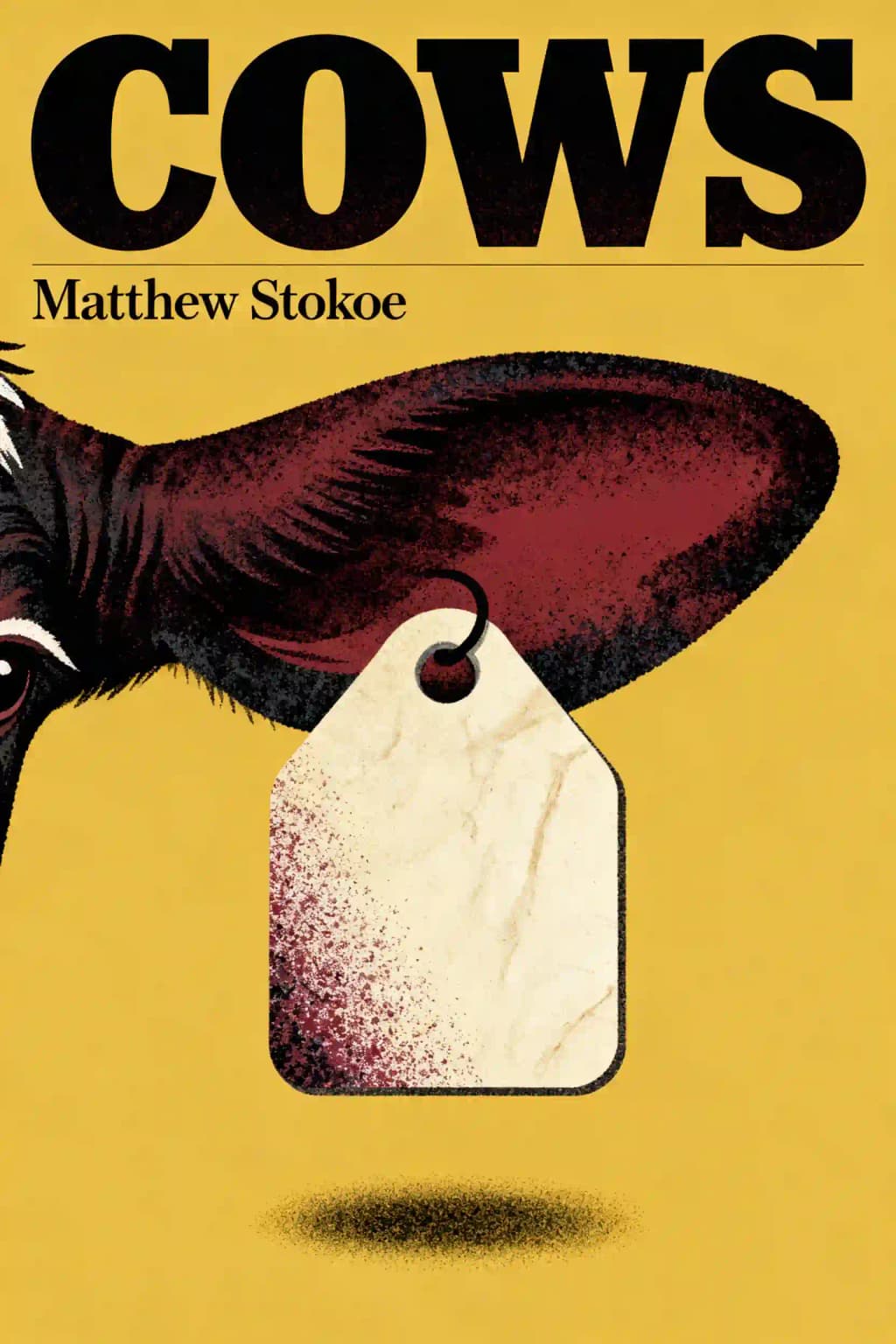
Matthew Stokoe's "Cows" - literature's most notorious underground horror phenomenon that defies conventional boundaries. This visionary cult classic has shocked 3,000+ Goodreads reviewers with its unflinching extremity. What makes readers call it "blindingly great" while others can't stomach its transgressive brilliance?
Matthew Stokoe is the British author of Cows, a 1998 transgressive horror novel that became a cult classic in extreme literature. Born in 1963 in England, Stokoe studied economics at the University of East London and worked for the Crown Prosecution Service, where exposure to human misery and violence deeply influenced his unflinching writing style.
His brutal, noir approach explores taboo subjects with graphic intensity, drawing comparisons to transgressive authors like Bret Easton Ellis.
Stokoe's other acclaimed novels include High Life (2002), which explores Los Angeles's dark underbelly, and Empty Mile (2010), nominated for France's prestigious Grand Prix de Littérature Policière. His most recent work, Colony of Whores (2014), continues his examination of Hollywood excess and corruption.
Despite taking five years to find a publisher, Cows has been translated into multiple languages including Spanish, Russian, German, and Mexican editions, cementing Stokoe's reputation as an uncompromising voice in contemporary dark fiction.
Cows by Matthew Stokoe is an extreme horror novel following Steven, a 25-year-old man trapped in an abusive relationship with his monstrous mother who slowly poisons him. When Steven takes a job at a slaughterhouse under the guidance of insane foreman Cripps, he meets upstairs neighbor Lucy and envisions a better life. However, his path to freedom becomes complicated when talking cows living in tunnels beneath the city recruit him for their own dark purposes.
Matthew Stokoe is a British novelist and screenwriter born in 1963 in England who graduated from the University of East London. Known for his brutal, noir writing style, Stokoe has lived in Australia, New Zealand, and the United States. His debut novel Cows (1998) established him as a provocative voice in transgressive literature. His subsequent works include High Life (2002), Empty Mile (2010), and Colony of Whores (2014), with Empty Mile receiving a nomination for the Grand Prix de Littérature Policière in 2014.
Cows by Matthew Stokoe is strictly for readers of extreme horror and transgressive fiction who can handle graphic depictions of violence, abuse, bestiality, and disturbing psychological content. This novel suits those seeking boundary-pushing literature comparable to works by Hubert Selby Jr. or the Marquis de Sade. It's not recommended for casual readers or those sensitive to taboo subjects. Readers who appreciate literary horror that explores alienation and societal decay through unflinching prose will find value in Stokoe's work.
Cows by Matthew Stokoe is worth reading for those seeking extreme horror with literary merit, as it combines shocking content with "beautiful, evocative and squirm-inducing prose." The novel earned cult classic status and set the benchmark for gritty urban horror since its 1998 publication. While praised for its unflinching exploration of alienation and its elevation above typical "extreme horror," readers must be prepared for graphic content including violence, coprophagia, and bestiality. It's considered one of the most original works on societal decay.
The main themes in Cows by Matthew Stokoe include alienation, abuse, self-empowerment, and the search for normalcy in a nightmarish world. Steven's desire to achieve "Brady Bunch perfection" represents his longing to escape his toxic reality and build a normal life with Lucy. The slaughterhouse setting serves as a metaphor for dehumanization and violence, while Cripps's "gospel of self-empowerment through killing" offers a twisted path to masculinity. The novel examines how abuse cycles perpetuate and how desperation can lead to extreme choices.
The talking cows in Cows by Matthew Stokoe represent escaped victims who live in tunnels beneath the city, creating a dark mirror to Steven's own captivity. Led by a Guernsey cow, the herd attempts to convince Steven to help them stop the slaughterhouse foreman Cripps by killing him. This surreal element transforms the novel from straightforward horror into psychological phantasmagoria, blurring lines between reality and Steven's deteriorating mental state. The cows symbolize rebellion against systematic oppression and violence.
Matthew Stokoe's writing style in Cows features "beautiful, evocative and squirm-inducing prose" that elevates the novel beyond typical extreme horror. His visceral descriptions begin immediately, with opening sentences like "Riding the backs of his corpuscles...the hard black grit of Mama's catabolized meals jammed itself into his flesh." Stokoe blends literary fiction with extreme horror, creating what critics describe as a "scatological tale" that's both poetic and deeply disturbing. His brutal, noir approach draws influence from Raymond Chandler and Hubert Selby.
Readers should know that Cows by Matthew Stokoe contains extreme content warnings including graphic violence, bestiality, animal cruelty, self-harm, incest, child abuse, torture, and coprophagia. The novel features explicit sexual content, self-surgery, and vivisection scenes that make "the Marquis de Sade seem like chicken little." Multiple reviewers warn the book may inspire vegetarianism due to its slaughterhouse brutality. This is considered one of the most extreme novels in transgressive literature and requires strong emotional fortitude to complete.
Cows by Matthew Stokoe is often compared to works by Peter Sotos and Bret Easton Ellis for its transgressive content, but critics note it surpasses typical extreme horror through literary merit. Unlike "edgelording" extreme horror, Stokoe's prose quality elevates the narrative beyond shock value. The novel established Stokoe as part of transgressive literature's legacy alongside authors like Hubert Selby Jr. It's considered more extreme than most contemporary horror while maintaining artistic integrity, earning cult classic status since its 1998 publication.
Steven and Lucy's relationship in Cows by Matthew Stokoe represents hope within horror, as Steven believes Lucy could be his path to normalcy. Lucy, Steven's upstairs neighbor, is obsessed with vivisection and spends nights searching for toxins inside her body. When she enlists Steven's help manipulating invasive medical apparatus, he envisions them building a life together—having a baby and achieving the sitcom perfection he craves from television. However, their disturbing dynamic reflects both characters' psychological damage and distorted understanding of normal relationships.
Cows by Matthew Stokoe achieved cult classic status because it "set the bar for gritty urban horror" with unprecedented originality and insight into alienation. Published in 1998, it gained international recognition across multiple translations including Spanish, Russian, Mexican, and German editions. The novel's fearless exploration of taboo subjects combined with literary prose created a benchmark in extreme fiction. Its influence on transgressive literature and continued availability through various publishers demonstrates lasting impact, with readers either finding it brilliantly provocative or excessively shocking.
The slaughterhouse in Cows by Matthew Stokoe functions as both literal workplace and symbolic arena for transformation. Steven begins as a meat grinder operator at "the end of the line," representing his powerless position in life. Foreman Cripps preaches a twisted philosophy of "self-empowerment through killing," encouraging Steven to become a cow killer to achieve manhood. The slaughterhouse's systematic violence mirrors Steven's home abuse, while also offering tools for his potential liberation through Cripps's dark mentorship. This setting amplifies themes of dehumanization and survival.
Ressentez le livre à travers la voix de l'auteur
Transformez les connaissances en idées captivantes et riches en exemples
Capturez les idées clés en un éclair pour un apprentissage rapide
Profitez du livre de manière ludique et engageante
Food like this kills people.
This is where things are real.
I can't eat this.
Ungrateful fuck!
Décomposez les idées clés de COWS en points faciles à comprendre pour découvrir comment les équipes innovantes créent, collaborent et grandissent.
Découvrez COWS à travers des récits vivants qui transforment les leçons d'innovation en moments mémorables et applicables.
Posez vos questions, choisissez votre style d’apprentissage et co-créez des idées qui vous correspondent vraiment.

Cree par des anciens de Columbia University a San Francisco
"Instead of endless scrolling, I just hit play on BeFreed. It saves me so much time."
"I never knew where to start with nonfiction—BeFreed’s book lists turned into podcasts gave me a clear path."
"Perfect balance between learning and entertainment. Finished ‘Thinking, Fast and Slow’ on my commute this week."
"Crazy how much I learned while walking the dog. BeFreed = small habits → big gains."
"Reading used to feel like a chore. Now it’s just part of my lifestyle."
"Feels effortless compared to reading. I’ve finished 6 books this month already."
"BeFreed turned my guilty doomscrolling into something that feels productive and inspiring."
"BeFreed turned my commute into learning time. 20-min podcasts are perfect for finishing books I never had time for."
"BeFreed replaced my podcast queue. Imagine Spotify for books — that’s it. 🙌"
"It is great for me to learn something from the book without reading it."
"The themed book list podcasts help me connect ideas across authors—like a guided audio journey."
"Makes me feel smarter every time before going to work"
Cree par des anciens de Columbia University a San Francisco

Obtenez le resume de COWS en PDF ou EPUB gratuit. Imprimez-le ou lisez-le hors ligne a tout moment.
In a decrepit apartment where filth reigns supreme, Steven lives under the tyrannical rule of the woman he calls "the Hagbeast" - his mother. Their shared living space is a prison of degradation, where toxic meals are forced down his throat and psychological warfare is the daily norm. His only companion is Dog, a crippled animal whose back legs were smashed by his mother with a brick in an act of senseless cruelty. The television serves as Steven's only window to normalcy, showing glimpses of lives so perfect they only intensify his suffering by comparison. His rare moments of respite come during hot showers when he can briefly imagine having "love, a ranch, a horse, a wife who tenderly strokes his cheek" - fantasies that evaporate the moment the water stops running. Every attempt at resistance is crushed beneath his mother's fury, forcing him back into submission as he fills his mouth with rancid food, knowing that "food like this kills people" yet powerless to refuse.
Steven's job at the meat grinding plant mirrors his home life - another environment defined by death, filth, and brutal power dynamics. The facility "squats in a wasteland of industrial units, belching smoke and steam," processing four animals per minute. As he moves deeper into the plant on his first day, conditions worsen in parallel - temperature dropping, lighting dimming, staff looking increasingly harried. When Cripps, the sadistic foreman, shoves Steven through a door into blinding white light where blood-stained workers operate various stations of dismemberment, he declares, "This is where things are real." The mechanized violence becomes almost hypnotic: "washing, slitting, scraping, skinning, dismembering the animals into unsupported flesh" amid a hellish symphony of electric knives and bone saws. Here Steven meets Gummy, a worker with no teeth and torn lips - his disfigurement foreshadowing the bestial relationships that develop as boundaries between human and animal begin to dissolve.
Toxicity permeates Steven's entire existence. His mother's cooking feels like waste rather than nourishment, leaving him "heavy with poison" that his body can never fully expel-a physical parallel to his inability to escape her influence. When Steven meets Lucy from upstairs, she introduces another dimension to this metaphor, frantically asking if he's seen "the poison inside them" at the slaughterhouse-not toxins but something "hard and black" born from suffering. Lucy obsessively watches medical operation videos, convinced that her bodily excretions don't account for "what being alive pumps into me every fucking day." The contamination theme extends to Steven's birth, where mutual hatred was established immediately-"she cursed him on the kitchen table where they still eat, and he, sensing worse to come, pissed in her eyes"-setting their relationship as an ongoing battle of poisoning and resistance.
Cripps promotes a disturbing philosophy: killing as "self-realization" revealing a man's true power. "Killing frees you to live as you should," he claims, presenting violence as transformative. Steven initially rejects this but begins considering whether happiness could be "forced into being" rather than awaited. Violence escalates when Cripps shows Steven slaughtermen sexually violating a living cow - a grotesque blurring of boundaries between life and death, human and animal. When Steven finally attacks his mother, he feels the impact travel through his bones, marking a fundamental power shift. Before leaving, he establishes his new rule: "I make the food and you eat it." The ultimate test comes when Cripps forces Steven to participate in killing Gummy, cutting the old man open while he "screams and pleads." Surprisingly, Steven wakes feeling transformed - "bright, clean, and new" - as if the horror hasn't destroyed but strengthened him, becoming "a dynamic heart that beat deep and sure" within him.
This story explores the desperate human need for connection and the grotesque forms it takes when normal relationships are impossible. Steven's relationship with Lucy represents his attempt to create a conventional life despite his profound damage. Their first sexual encounter-while she remains fixated on a medical monitor during an endoscopic self-examination-is far from romantic, yet Steven sees it as the beginning of something meaningful. After murdering the Hagbeast, they transform the flat, erasing all traces of the past and creating what Steven views as a perfect TV family home. The apartment becomes "clean, ordered and sun-filled," and with Lucy pregnant, Steven feels his dream materializing. However, this connection is built on mutual damage rather than genuine love. Lucy becomes a prisoner in their apartment, afraid to venture outside where she sees pain in every stranger's face. Though Steven provides some relief from her inner torment, she recognizes their relationship isn't based on love but mutual need-"each using the other as a screen against the world."
Television serves as Steven's primary window into "normal" life. He studies fictional families as anthropological documents, using them as blueprints for how life should be lived. After the Hagbeast's death, Steven and Lucy transform his flat into what he calls "a simulacrum of perfect TV family homes"-a theatrical space mirroring the staged domestic environments he's observed on screen. As Lucy's pregnancy advances, Steven believes he's finally creating the family life he's always envied. However, their carefully constructed facade begins cracking under reality's weight. Steven's anxiety intensifies, turning each morning into a psychological battleground as he struggles to maintain stability. Lucy eventually becomes the voice of brutal honesty, confronting their shared delusion by articulating what they've avoided-that their relationship stems from mutual desperation rather than genuine connection. Despite Steven's insistence that their love is real, Lucy recognizes that the "poison" within them cannot be neutralized by merely mimicking normalcy.
As Steven's grip on reality weakens, he hallucinates escaped cows living in tunnels beneath the city, led by a talking Guernsey. He positions himself as their leader, conducting violent raids, including a massacre where victims' flesh becomes a "sacrament" for the herd. When Steven finds Lucy dead-having cut herself open to remove imagined "poison"-his last human connection vanishes. After days of catatonic depression, he flees his collapsing building, terrified as each person appears surrounded by a threatening "vicious field." Steven retreats underground, convincing himself there had never been a home, woman, or dog-only tunnels and the waiting herd. After killing the Guernsey to establish dominance, he embraces the roan cow, anticipating leadership of "a perfect family where he'll finally belong." In this sanctuary, he believes he can create a world "as perfect as any he had seen on TV." What happens when trauma runs too deep for healing? Steven's descent warns about extreme isolation and abuse. The most terrifying aspect isn't the violence-it's recognizing how thin the line between human and monster truly is, maintained only by fragile connections that, once broken, leave something no longer recognizable as human.