Chapitre 1
A World of Shadows, Magic, and Deadly Secrets
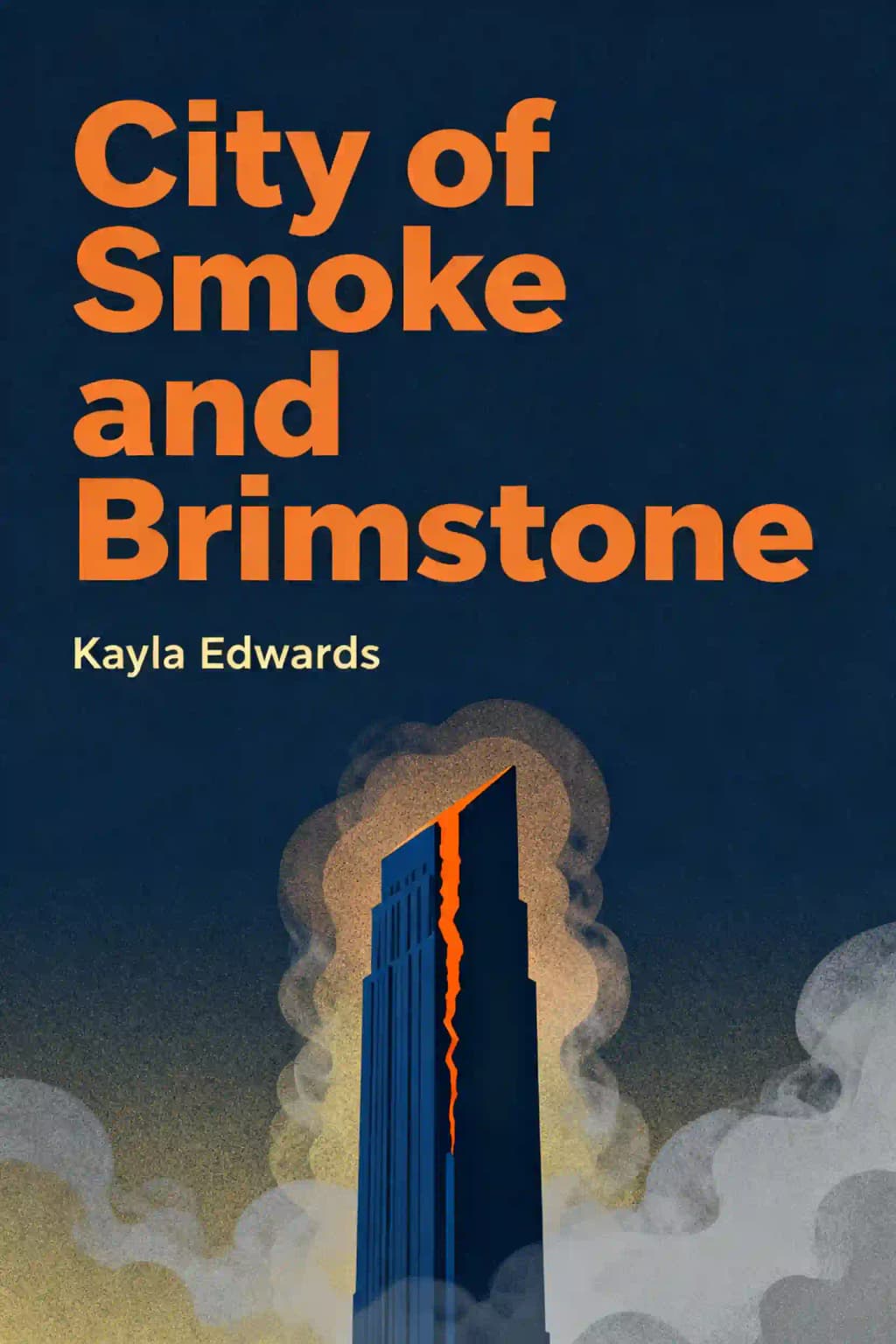
City of Smoke and Brimstone, the fourth installment in Kayla Edwards' House of Devils series, has captivated readers with its intricate world-building and complex characters. This urban fantasy sensation has garnered a devoted following among fantasy enthusiasts, with readers praising Edwards' ability to blend supernatural elements with deeply human struggles. The series has become particularly popular on BookTok, where fans create elaborate theories about the relationships between characters and the mysterious magical system. What makes this book particularly compelling is how it expands the universe established in previous novels while raising the stakes to unprecedented levels, exploring what happens when the veil between worlds begins to collapse.
Chapitre 2
The Falling Veil: When Two Worlds Collide
The story opens with a world in crisis. The magical city of Yveswich lies in ruins, carved apart "like a snowflake" with some areas pulverized and others intact. A supernatural darkness spreads through the streets, consuming everything in its path - buildings crumble, vegetation withers, and metal corrodes on contact. At the center of this chaos is Loren Calla, a human with less than ten months to live due to a mystical curse, desperately searching for Darien Cassel - the enigmatic leader of the Seven Devils who inexplicably tied his fate to hers through an ancient blood ritual.
The catastrophe stems from the weakening of the Veil - a metaphysical barrier separating the human world from Spirit Terra, a realm of death and monsters. This barrier, maintained for millennia by an order of mystic guardians called the Boundary Keepers, has begun to deteriorate at an alarming rate. As it fails, reality itself begins to fracture in increasingly disturbing ways. Waterfalls reverse direction and become shimmering portals between worlds, darkness pours into the city like poisonous gas with a mind of its own, and monsters from beyond the Veil hunt freely in our world. Time itself becomes unstable, with pockets of accelerated decay appearing randomly throughout the city.
What makes this concept particularly terrifying is how it transforms familiar spaces into alien landscapes. The local park where children once played now hosts grotesque creatures that seem to phase between solid and liquid states. Streets once filled with ordinary people now teem with predators bearing glowing stones in their foreheads - ancient beings known as the Hollow Ones who feed on human memories. Shopping centers become maze-like death traps as reality warps around them, and subway tunnels serve as breeding grounds for shadow creatures that mimic human forms.
The authorities respond by implementing increasingly desperate measures. The military erects a massive forcefield around Yveswich, containing the supernatural darkness but trapping thousands inside. This creates a pressure cooker of human desperation as food and supplies dwindle. Meanwhile, refugee camps outside the barrier swell with evacuees, while those left inside face not only supernatural threats but also the breakdown of social order. This creates a desperate race against time as our protagonists must find a way to escape before the military launches anima mundi missiles - weapons designed to destroy supernatural threats by unraveling the very fabric of reality in the target area.
The falling Veil serves as both literal threat and powerful metaphor for the fragility of civilization. When the barriers between worlds collapse, chaos ensues on multiple levels - physical, social, and psychological. Characters must confront not just external monsters but their own inner demons as they fight for survival in a reality coming undone at the seams. The crisis forces unlikely alliances between humans and supernatural beings, as both sides realize that the collapse of the Veil threatens all existence, not just the human world.
Chapitre 3
Love in the Shadow of Death: Darien and Loren's Impossible Romance
At the emotional core of City of Smoke and Brimstone lies the relationship between Darien Cassel and Loren Calla. Theirs is a love story marked by impossible choices and devastating sacrifices. Darien, the ruthless leader of the Seven Devils, has traded years of his immortal life to save Loren's dog Singer-an act that reveals the depth of his feelings for her. "I'm insanely in love with you," he confesses, his usual armor of indifference cracking to reveal raw vulnerability.
What makes their relationship so compelling is how it transforms both characters. For Darien, loving Loren means learning to feel again after years of emotional numbness. His twin sister Ivy acknowledges this change when she tells Loren, "You made someone who always wanted to die want to start living." Meanwhile, Loren struggles with the knowledge that she has less than a year to live, creating a painful dilemma: how can she allow herself to love Darien knowing she'll soon leave him behind?
Their relationship is further complicated by Darien's addiction to Venom-a magical drug that enhances his powers but slowly destroys him. When he attempts to quit, not just for Loren but for himself, we see his vulnerability laid bare: "Breaking his chains is proving to be the hardest fight of his miserable fucking life." This struggle humanizes him, transforming the fearsome darkslayer into someone fighting his own internal battles.
The novel doesn't shy away from physical intimacy either. When Loren and Darien reconcile after a fight, their reunion is passionate and tender. She cares for him during his withdrawal, examining his battle scars-each telling a story of his dangerous past. These quiet moments of connection amid chaos create a powerful contrast to the violence surrounding them.
By the story's end, Loren makes her own sacrifice, visiting the mysterious Widow to demand the return of the extra years Darien traded away. This symmetry of sacrifice illustrates how their love has evolved from initial attraction to something deeper-a willingness to fight not just for each other but for whatever time they might have together.
Chapitre 4
Family Bonds: Blood, Choice, and Loyalty
Beyond romantic relationships, City of Smoke and Brimstone explores the complex nature of family-both those we're born into and those we choose. This theme manifests most powerfully in the relationship between Roman and his brothers Travis and Paxton. When Roman learns the devastating truth that he is actually his uncle Dean's biological son rather than Donovan's, it challenges his entire sense of identity. Yet rather than abandoning Paxton (who would be his cousin, not brother), Roman's resolve only strengthens: "I'll never let you have him."
This declaration represents the novel's core message about family: true bonds transcend blood. Roman's willingness to risk everything for Paxton and Travis demonstrates that family is defined by love and loyalty rather than genetics. Similarly, when Travis stays behind in Yveswich to protect Jewels during her cardiac arrest, he chooses her over his own safety-a decision that nearly costs him his life but reflects his evolving priorities.
The Seven Devils themselves form a chosen family, with Darien serving as their fierce protector. When Detective Glen threatens Loren, Darien's response is primal and violent-he would tear apart anyone who threatens his people. Yet this protective instinct comes with its own complications. Jack confronts Darien about his self-sacrificial decision to save Loren: "You gave me a home, Darien. You gave me a family. Did you not even consider how we'd feel when you decided to end your life?" This emotional confrontation reveals how Darien's choices affect not just himself but everyone who loves him.
Even antagonistic relationships contain complex family dynamics. Donovan Slade's pursuit of his sons Roman and Travis reveals a twisted form of possessiveness rather than genuine paternal love. He views his children as extensions of himself rather than individuals with their own desires and needs. This toxic family relationship serves as a dark counterpoint to the chosen families formed by the protagonists.
Through these varied relationships, Edwards crafts a nuanced exploration of what it means to be family in a world where traditional bonds are constantly tested by supernatural threats and personal betrayals.
Chapitre 5
Power and Its Price: Magic, Addiction, and Control
In the world of City of Smoke and Brimstone, magic comes with steep costs - a truth that permeates every layer of the narrative. The novel meticulously explores various forms of power and the devastating prices paid to wield them. The most visible example is Darien's harrowing addiction to Venom, a crystalline substance that enhances magical abilities while systematically destroying both body and mind. His desperate attempts to break free from this dependency - marked by violent withdrawals, hallucinations, and moments of terrifying clarity - represents the broader theme that power demands sacrifice. Through Darien's struggles, readers witness how the promise of greater strength can lead to self-destruction.
The novel introduces multiple intricate magical systems, each with distinct and often fatal consequences. Darkslayers like Darien and Roman wield shadow magic drawn from the Void, granting them the ability to kill with a mere thought but risking irreversible corruption of their souls. This corruption manifests physically through blackened veins and emotionally through increasing paranoia and violence. Hellsehers like Shay possess the ability to cast powerful illusions and summon lightning, but suffer from the Tricking - a progressive disease that causes seizures, memory loss, and inevitably claims their lives before they reach thirty. Even Loren's extraordinary healing abilities come with a terminal diagnosis; each time she saves another life, her own lifeforce diminishes.
Particularly fascinating is Paxton's emerging power, which manifests in moments of extreme danger. When threatened, his eyes turn solid black with dark lines spreading across his skin like cracks in glass, unleashing devastating energy that literally "pops" attackers "like balloons filled with red paint." This raw, uncontrolled magic terrifies him to his core: "I'm a monster," he sobs afterward, curled into himself. His struggle represents the universal fear of one's own potential - the paralyzing worry that great power might transform us into something we can't recognize in the mirror.
The novel masterfully explores institutional power through the imperator's sophisticated control of information. As Yveswich falls to darkness, carefully crafted news broadcasts systematically downplay the situation, referring to demon invasions as "security breaches" and widespread magical devastation as "power outages." No mention is made of shadows, portals, or monsters devouring civilians in the streets. This calculated manipulation of the narrative demonstrates how those in authority maintain control by restricting access to truth and rewriting reality to suit their needs.
The most insidious form of power appears in the implementation of "Battleshort" - the military's calculated decision to seal Yveswich with an impenetrable forcefield, knowingly sacrificing thousands to contain the spreading darkness. This utilitarian calculation reveals the cold logic of institutional power: some lives are deemed expendable for the "greater good." The military leadership's clinical discussions of acceptable casualties and containment protocols expose how easily human lives become mere statistics in the equations of power.
Through these varied and interconnected examples, Edwards crafts a nuanced exploration of power's seductive allure and devastating cost, suggesting that true strength lies not in the magnitude of magical ability but in the wisdom to know when to use it - and perhaps more importantly, when to refrain. The novel poses the haunting question: at what point does the price of power become too steep to bear?
Chapitre 6
Darkness Visible: Navigating a World of Shadows
Throughout City of Smoke and Brimstone, darkness functions as both literal threat and powerful metaphor. The supernatural shadow consuming Yveswich represents the encroaching chaos as the Veil between worlds collapses, manifesting as an oppressive darkness that creeps through streets and seeps under doorways. Characters must navigate this physical darkness, often relying on Loren's strange new magical Sight that allows her to see where others cannot - a gift that marks her as both blessed and cursed. This enhanced vision reveals not just physical threats but also the ghostly remnants of past violence, forcing her to witness the city's painful history.
The literal darkness parallels the metaphorical shadows many characters carry within themselves. Darien's addiction to Venom represents his internal darkness - a struggle he must overcome not through magical power but through vulnerability and acceptance of help. His withdrawal symptoms manifest as shadow-like hallucinations, blurring the line between physical and psychological darkness. Similarly, Roman must confront the shadows of his past when he learns the truth about his parentage, finding light in his chosen family rather than blood ties. His journey takes him through the abandoned Underground, where physical darkness mirrors his emotional descent before he emerges stronger.
The novel's setting reinforces this theme through carefully crafted locations. Hell's Gate, with its gothic architecture and perpetually shadowed corridors, stands in stark contrast to Heaven's Gate's luminous white marble and enchanted windows. When Hell's Gate is violated and ransacked by shadow creatures, the group relocates to Heaven's Gate, symbolizing a movement from darkness toward light. Yet even Heaven's Gate isn't truly safe - its white walls gradually darken with creeping shadow-mold, suggesting that no refuge is permanent in a world where darkness constantly encroaches.
Perhaps most poignantly, the darkness theme manifests in Loren's conduit tattoos, which glow with various colors reflecting her magical state. The intricate designs shift from deep purple during moments of fear to burning red in combat. When she receives treatment in the Caliginous Chamber, her serpent tattoo transforms from blue-red to softly glowing white - a visual representation of darkness giving way to light. This transformation parallels her emotional journey from fear toward acceptance of her limited time, each color shift marking a milestone in her character development.
The novel's climactic sequence involves characters literally fighting through darkness to reach the Control Tower and bring down the forcefield trapping them in Yveswich. This physical journey through shadow mirrors their emotional journeys toward hope and connection despite overwhelming odds. As they ascend the tower, each floor presents a different manifestation of darkness - from physical shadows to psychological fears - that must be overcome through teamwork and trust rather than individual strength.
By weaving darkness through both setting and character development, Edwards creates a rich tapestry where external threats reflect internal struggles, and finding light amid shadow becomes the central challenge for every character. The author's masterful use of darkness as both environmental threat and psychological metaphor creates a deeply layered narrative where every victory over shadow, whether personal or literal, carries profound significance.
Chapitre 7
Sacrifice and Survival: What We Give Up to Live
Sacrifice emerges as a central theme throughout City of Smoke and Brimstone, with characters repeatedly forced to decide what-and who-they're willing to give up. The most dramatic example comes from Darien, who trades years of his immortal life to save Loren's dog Singer. This sacrifice reveals his deep love for Loren, as he values her happiness above his own longevity.
Similarly, when Loren visits the Widow at the Wishing Fountain in the epilogue, she demands the return of Darien's sacrificed years, willing to make her own bargain to give him back what he lost. This symmetry of sacrifice demonstrates how their relationship has evolved from initial attraction to profound love.
Physical sacrifices abound throughout the narrative. Dallas chooses to have her damaged wings removed, shedding a part of her identity that no longer serves her: "She looks lighter both physically and emotionally, having shed more than just her wings." This physical transformation represents her internal evolution-a willingness to let go of her parents' expectations to pursue "a quieter life."
The novel also explores forced sacrifices. When the military implements the "Battleshort" protocol, sealing Yveswich with a forcefield and planning to launch anima mundi missiles, they sacrifice thousands of civilians to protect the wider world. This utilitarian calculation raises difficult ethical questions about who decides which lives are expendable.
Perhaps most poignantly, Travis and Jewels choose to embrace their limited time together rather than avoiding attachment. Despite Jewels having only two years to live from her incurable disease, they make a deal to "just be" and enjoy whatever remains rather than dwelling on their grim future. This choice to love despite inevitable loss represents a different kind of sacrifice-giving up the safety of emotional distance for the richness of connection, however brief.
Through these varied examples, Edwards suggests that sacrifice isn't merely about loss but about what we value most. Each character's sacrifices reveal their priorities and demonstrate that sometimes giving up something precious is necessary to protect what matters most.
Chapitre 8
The Battle for Tomorrow: Hope Amid Apocalypse
As City of Smoke and Brimstone reaches its climax, hope emerges as a powerful counterforce to the apocalyptic destruction. Despite overwhelming odds - a collapsing Veil between worlds, a spreading supernatural darkness that devours both matter and spirit, and authorities willing to sacrifice thousands to maintain control - the characters refuse to surrender to despair. Their resilience manifests not just in grand gestures, but in small acts of defiance against the encroaching darkness.
This hope manifests most clearly in their desperate plan to save those trapped in Yveswich. Rather than accepting the military's decision to seal the city and launch missiles, they devise a daring rescue mission that showcases both their tactical ingenuity and moral courage. Arthur, drawing on his years of magical expertise, instructs Travis and others to steal a missile with a chargeable warhead - a plan that requires precise timing and unprecedented magical cooperation. They'll need to power it with their combined magical abilities, channeling energy through ancient ley lines beneath the city to destroy the Control Tower and bring down the forcefield. Though risky, with a high probability of magical backlash that could kill them all, this plan represents their absolute refusal to abandon friends and family to certain death.
Individual characters find personal sources of hope amid chaos, demonstrating how crisis often reveals underlying strength. When Roman discovers his true parentage - that he's the son of the very imperator they're fighting against - rather than falling into despair, he embraces his chosen family at Heaven's Gate more fiercely. His declaration that "blood doesn't make family, choice does" becomes a rallying cry for the entire group. Similarly, when Travis and Jewels acknowledge their feelings despite her terminal diagnosis from magical corruption, they choose to value their present connection over future grief, finding meaning in their limited time together.
Perhaps most significantly, Loren's visit to the Widow in the epilogue suggests hope for changing what seemed inevitable. The ancient spider-being, known for her unbreakable prophecies, confirms Loren won't live past twenty-one, but then unexpectedly hints that "the future is never set in stone - even the oldest webs can be rewoven." This cryptic statement, coming from a creature who has never before suggested prophecy could be altered, opens a sliver of possibility that even seemingly fixed fates might be altered through determination and sacrifice.
The novel's final scene shows the survivors gathered in Heaven's Gate's kitchen, sharing a meal and discussing their next steps: restoring the Veil, taking down the imperator, and finishing their fight together. Despite everything they've endured - the losses of fellow fighters, the betrayals by trusted allies, the near-death experiences that have left both physical and psychological scars - they remain united in purpose. This collective resolve in the face of overwhelming odds embodies the novel's central message: even in a world coming undone, hope persists through connection and shared purpose.
By balancing apocalyptic destruction with persistent hope, Edwards creates a narrative that acknowledges darkness while never surrendering to it completely. The author weaves together personal struggles with larger conflicts, showing how hope manifests differently for each character while binding them together in common cause. Through this careful balance, the novel suggests that even as worlds collapse, the human spirit endures through love, loyalty, and fierce determination - not just in grand moments of heroism, but in daily choices to keep fighting, keep caring, and keep believing in possibility.
Chapitre 9
Worlds Within Worlds: The Rich Tapestry of Magical Society
One of the most impressive aspects of City of Smoke and Brimstone is its intricate world-building, revealing a complex supernatural society with its own hierarchies, traditions, and conflicts. The novel introduces us to multiple darkslaying circles in both Angelthene and Yveswich, each with distinct symbols, leaders, and territories. The Seven Devils, The Reapers, The Huntsmen, The Angels of Death, The Wargs, and The Vipers operate in Angelthene, while The Shadowmasters, The Selkies, The Wyverns, The Jackals, and The Sylphen control Yveswich.
This elaborate social structure extends beyond darkslayers to include various supernatural species. We encounter hellsehers with their magical Sight, veneficae (witches and warlocks) with their spell-casting abilities, lycanthropes organized into packs, and lamiae (vampires) with their ancient houses. Each group maintains its own internal hierarchy and complex relationships with other supernatural communities.
Particularly fascinating are the Familiar spirits bonded to various characters. From Bandit (Darien's cropped-eared dog) to Sayagul (Roman's gummy bear-loving dragon), these magical companions reveal aspects of their humans' personalities while providing both practical assistance and emotional support. The relationship between person and Familiar adds another layer to the world's magic system, suggesting that magical ability manifests differently depending on one's innate nature.
The novel also explores liminal spaces-locations that exist between worlds or realities. The Wishing Fountain where the Widow dwells serves as a portal between realms, while waterfalls become natural doorways as the Veil weakens. These in-between places highlight the permeable boundaries of reality in Edwards' universe, suggesting that what we perceive as solid and fixed might actually be fluid and changeable.
Perhaps most intriguing is how this supernatural world intersects with mundane reality. Military forces battle winged demons, news broadcasts downplay magical catastrophes as "security breaches," and magical prisons like Blackwater Penitentiary operate alongside ordinary law enforcement. This juxtaposition of the magical and mundane creates a world that feels simultaneously fantastic and grounded-a place where supernatural threats have real-world consequences.
Through this rich tapestry of magical societies, Edwards creates a universe that extends far beyond the main plot, hinting at countless stories happening just beyond the page and inviting readers to imagine what other wonders and horrors might exist in this vividly realized world.