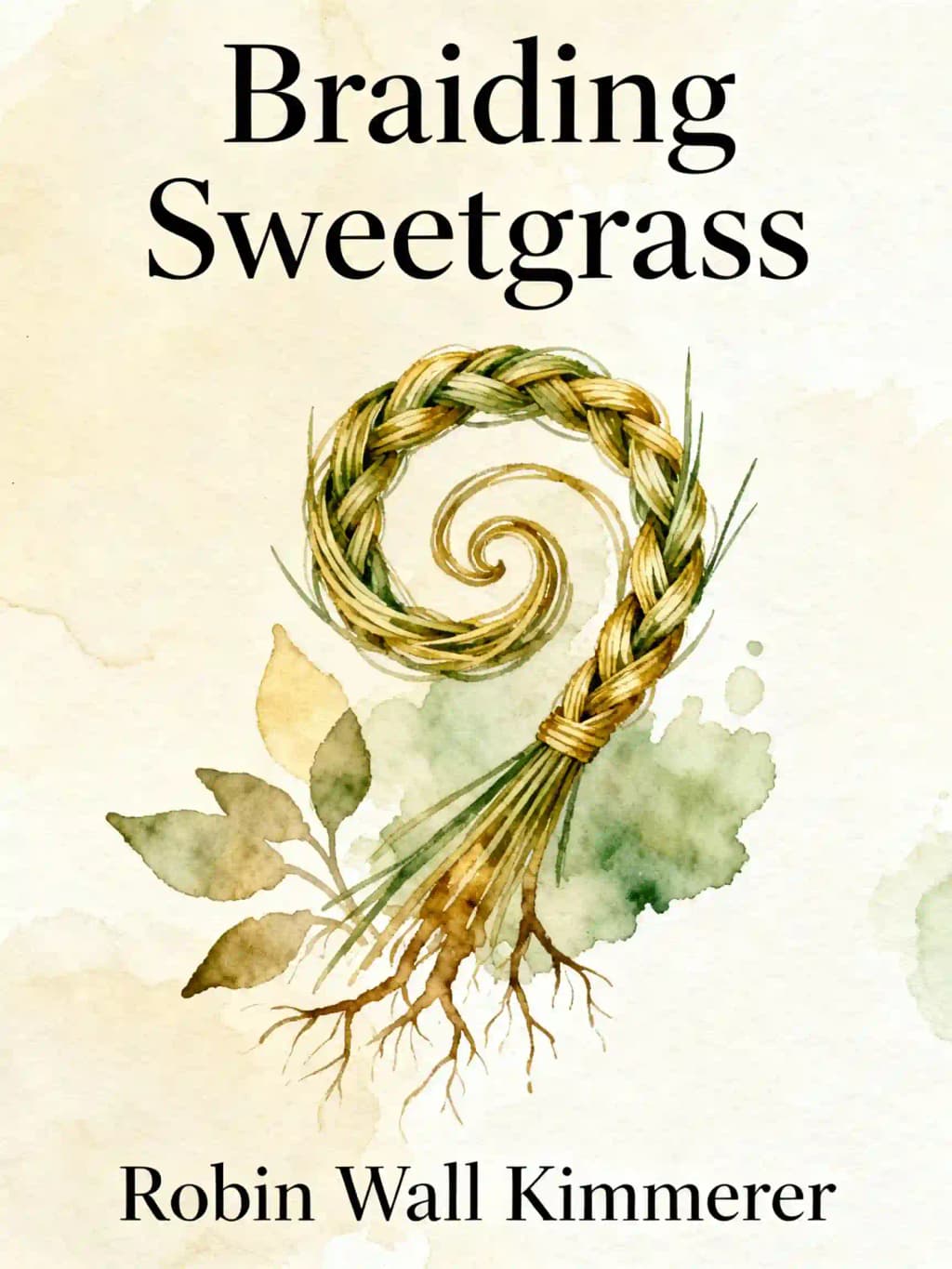
Braiding Sweetgrass weaves indigenous wisdom with scientific knowledge, transforming our relationship with nature. A New York Times bestseller for 181 consecutive weeks, this ecological masterpiece has been described by Pulitzer winner Richard Powers as flowing from "a font of endless knowledge, both mental and spiritual."
Robin Wall Kimmerer is the acclaimed author of Braiding Sweetgrass: Indigenous Wisdom, Scientific Knowledge, and the Teachings of Plants, a groundbreaking work blending memoir, science, and Indigenous philosophy. A distinguished botanist and enrolled member of the Citizen Potawatomi Nation, Kimmerer serves as a SUNY Distinguished Teaching Professor and directs the Center for Native Peoples and the Environment.
Her writing explores themes of reciprocity, ecological stewardship, and the integration of traditional Indigenous knowledge with Western scientific frameworks, reflecting her dual heritage and academic rigor.
Kimmerer’s award-winning debut, Gathering Moss: A Natural and Cultural History of Mosses, earned the John Burroughs Medal, while The Serviceberry: Abundance and Reciprocity in the Natural World further cements her legacy in environmental literature. A 2022 MacArthur Fellow, she has been featured on NPR’s On Being and addressed the United Nations on ecological healing.
Braiding Sweetgrass has been translated into over 20 languages, adapted for young readers, and widely taught in academic curricula, solidifying its status as a modern classic in nature writing and environmental ethics.
Braiding Sweetgrass by Robin Wall Kimmerer intertwines Indigenous wisdom, scientific inquiry, and personal memoir to advocate for a reciprocal relationship with nature. It explores themes like gratitude, ecological responsibility, and the lessons plants offer for healing humanity’s broken bond with the Earth, emphasizing that environmental restoration begins with respect and reciprocity.
This book is ideal for environmentalists, educators, and readers seeking a deeper connection to nature. It resonates with those interested in Indigenous philosophies, sustainable living, or blending scientific and spiritual perspectives. Kimmerer’s lyrical prose also appeals to fans of nature writing and eco-literature.
Yes—it’s a New York Times bestseller praised for its poetic synthesis of science and spirituality. The book challenges readers to rethink humanity’s role in ecology, offering actionable insights for fostering gratitude and sustainability. Its universal themes make it a transformative read for diverse audiences.
Kimmerer frames reciprocity as a mutual exchange where humans give back to the Earth, contrasting it with exploitative market economies. Stories like tending sweetgrass or harvesting pecans illustrate how Indigenous practices sustain ecosystems, arguing that gratitude and responsibility are vital for ecological balance.
The Honorable Harvest is an Indigenous ethic guiding sustainable resource use: take only what is needed, minimize harm, and express gratitude. Kimmerer illustrates this through practices like harvesting sweetgrass, showing how mindful reciprocity ensures both human and ecological thriving.
The Haudenosaunee creation myth of Skywoman falling to Turtle Island establishes the book’s foundational theme—viewing Earth as a gift, not a commodity. This story underscores Indigenous reverence for nature and contrasts with Western exploitation narratives.
As a botanist and Potawatomi member, Kimmerer bridges empirical research with traditional teachings. For example, she uses ecological studies to validate Indigenous practices like controlled burns, demonstrating how science and ancestral wisdom can collaboratively address environmental crises.
The Three Sisters—corn, beans, and squash—symbolize mutualism in Indigenous agriculture. Planted together, they support each other’s growth, embodying reciprocity. Kimmerer uses this metaphor to advocate for collaborative relationships between humans and nature.
Kimmerer argues that climate solutions require reimagining humanity’s relationship with nature. By adopting Indigenous principles like the Honorable Harvest and gift economies, she believes we can shift from exploitation to stewardship, fostering resilience against ecological collapse.
Some critics note the book’s niche appeal, as its blend of spirituality and science may not resonate with all readers. Others suggest its focus on personal transformation overlooks systemic barriers to environmental justice, though most praise its hopeful vision.
Notable quotes include:
Kimmerer redefines sustainability as active reciprocity—not just reducing harm, but nurturing relationships with the natural world. Practices like maple sugaring or basket weaving exemplify how traditions sustain both ecosystems and cultural heritage.
Ressentez le livre à travers la voix de l'auteur
Transformez les connaissances en idées captivantes et riches en exemples
Capturez les idées clés en un éclair pour un apprentissage rapide
Profitez du livre de manière ludique et engageante
Knowing that you love the earth changes you, activates you to defend and protect. But when you feel that the earth loves you in return, that understanding changes everything.
All flourishing is mutual.
The land knows you, even when you are lost.
Wouldn't things be different if nothing was an it?
Décomposez les idées clés de BRAIDING SWEETGRASS en points faciles à comprendre pour découvrir comment les équipes innovantes créent, collaborent et grandissent.
Condensez BRAIDING SWEETGRASS en indices de mémoire rapides mettant en évidence les principes clés de franchise, de travail d'équipe et de résilience créative.

Découvrez BRAIDING SWEETGRASS à travers des récits vivants qui transforment les leçons d'innovation en moments mémorables et applicables.
Posez n'importe quelle question, choisissez la voix et co-créez des idées qui résonnent vraiment avec vous.

Cree par des anciens de Columbia University a San Francisco
"Instead of endless scrolling, I just hit play on BeFreed. It saves me so much time."
"I never knew where to start with nonfiction—BeFreed’s book lists turned into podcasts gave me a clear path."
"Perfect balance between learning and entertainment. Finished ‘Thinking, Fast and Slow’ on my commute this week."
"Crazy how much I learned while walking the dog. BeFreed = small habits → big gains."
"Reading used to feel like a chore. Now it’s just part of my lifestyle."
"Feels effortless compared to reading. I’ve finished 6 books this month already."
"BeFreed turned my guilty doomscrolling into something that feels productive and inspiring."
"BeFreed turned my commute into learning time. 20-min podcasts are perfect for finishing books I never had time for."
"BeFreed replaced my podcast queue. Imagine Spotify for books — that’s it. 🙌"
"It is great for me to learn something from the book without reading it."
"The themed book list podcasts help me connect ideas across authors—like a guided audio journey."
"Makes me feel smarter every time before going to work"
Cree par des anciens de Columbia University a San Francisco

Obtenez le resume de BRAIDING SWEETGRASS en PDF ou EPUB gratuit. Imprimez-le ou lisez-le hors ligne a tout moment.
Imagine holding a braid of sweetgrass in your hands-not just dried plant material, but a living relationship between humans and the natural world. "Braiding Sweetgrass" has sparked a quiet revolution in ecological literature, finding champions from Emma Watson to university classrooms across disciplines. What makes this work so powerful is its unique braiding of indigenous wisdom, scientific knowledge, and personal narrative into a vision of harmony with the natural world. As climate anxiety grows and people yearn for meaningful connections to place, these teachings offer a path forward that honors both ancient understanding and modern knowledge. The sweetgrass itself becomes a metaphor-each strand representing different ways of knowing that, when woven together, create something far stronger than any single perspective could provide.
