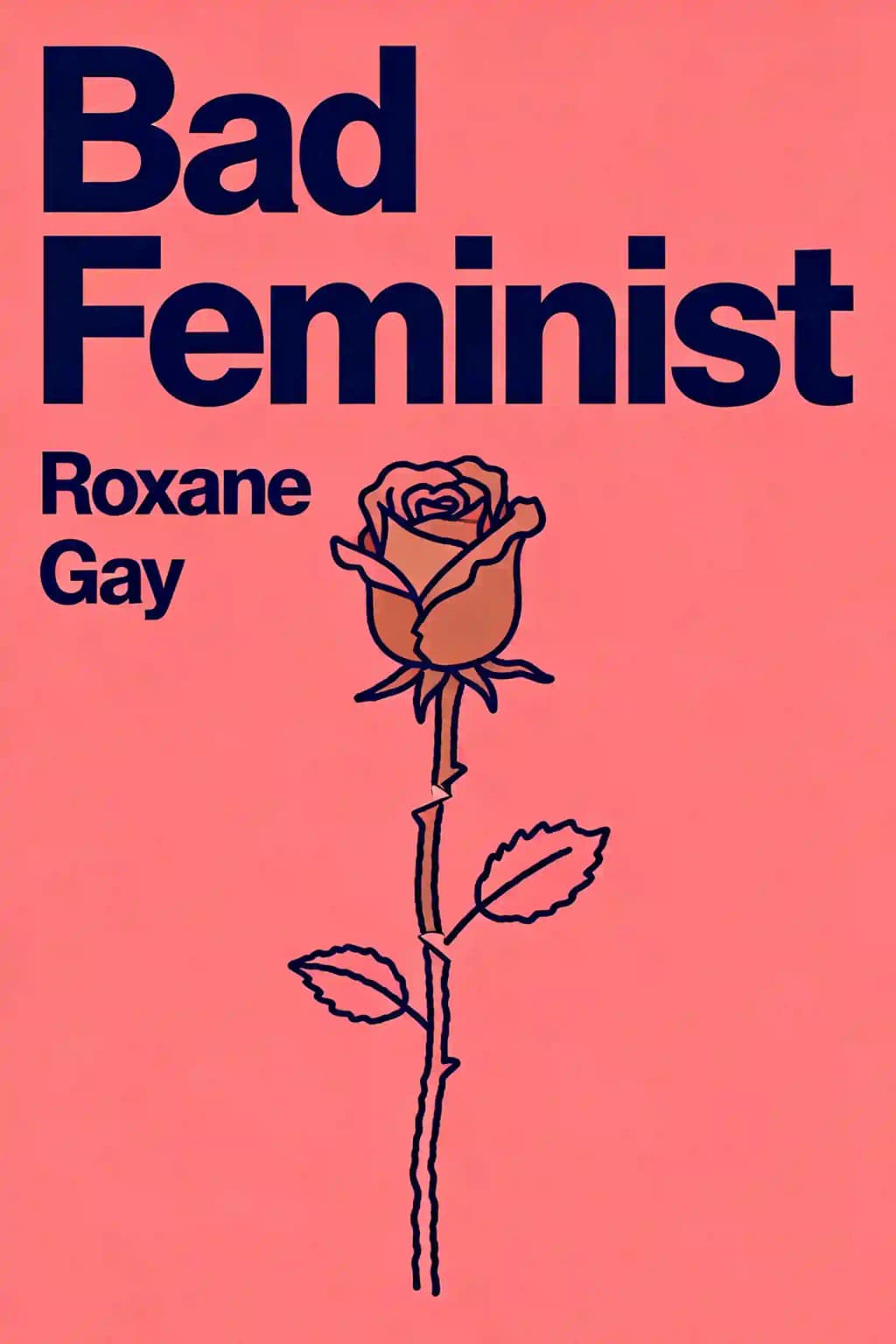
Roxane Gay's bestselling manifesto redefines feminism through personal stories and pop culture critique. Challenging "essential feminism," this New York Times hit sparked conversations between Chimamanda Adichie and bell hooks. What makes this intersectional perspective so revolutionary? Discover why imperfect feminism might be the most powerful.
Roxane Gay, the bestselling author of Bad Feminist: Essays, is a preeminent cultural critic, professor, and essayist. She is renowned for her incisive explorations of feminism, race, and identity.
Born in Omaha, Nebraska, to Haitian parents, Gay's work intertwines personal narrative with sharp sociopolitical commentary. This reflects her academic expertise in rhetoric and technical communication. A professor at Yale and Rutgers, Gay has authored acclaimed titles like Hunger: A Memoir of (My) Body and the novel An Untamed State, which examine trauma, body image, and resilience.
She co-wrote Marvel’s Black Panther: World of Wakana, becoming one of the first Black women to lead a Marvel series. As a New York Times contributing columnist and host of The Roxane Gay Agenda podcast, her voice shapes modern feminist discourse. Bad Feminist, a New York Times bestseller, has been translated into over 20 languages and remains a cornerstone of contemporary feminist literature.
Bad Feminist is a collection of essays exploring modern feminism through personal anecdotes, cultural criticism, and societal analysis. Roxane Gay challenges rigid definitions of feminism, advocating for an inclusive, intersectional approach that embraces imperfections. Topics range from race and gender politics to pop culture, highlighting contradictions in societal expectations.
This book is ideal for readers interested in intersectional feminism, pop culture analysis, or contemporary social issues. It resonates with those seeking a nuanced, relatable take on feminism that acknowledges human flaws, as well as critics exploring race, gender, and class dynamics.
Yes—Gay’s sharp wit, candid storytelling, and accessible prose make complex feminist ideas engaging. The essays blend humor with incisive critiques of misogyny, racism, and pop culture, offering a refreshing antidote to “perfect” feminism. It’s widely praised for its honesty and relevance.
Gay rejects the myth of a “perfect feminist” who conforms to rigid ideals (e.g., rejecting femininity or male approval). She embraces contradictions—liking pink, rom-coms, or male validation—while advocating for gender equality. The term honors imperfection as part of feminist authenticity.
Gay critiques mainstream feminism’s historical focus on white, middle-class women. She highlights how race, class, and immigration status shape women’s experiences, arguing feminism must prioritize marginalized voices to avoid perpetuating inequity.
Gay dissects films, music, and literature (e.g., The Help, Fifty Shades of Grey) to reveal ingrained sexism and racism. She argues that enjoying problematic media doesn’t negate feminist values but invites critical engagement.
These lines underscore the book’s embrace of complexity.
Gay challenges exclusionary practices, such as ignoring marginalized voices or policing feminist “purity.” She calls for a movement that accommodates diverse experiences rather than enforcing rigid ideologies.
Gay argues that critiques often misunderstand feminism’s goals. She acknowledges the movement’s flaws but stresses its potential for growth when centered on inclusivity and humility.
Its themes—intersectionality, media representation, and imperfect activism—remain urgent amid debates about gender equity, racial justice, and pop culture’s role in shaping norms. Gay’s work prefigures modern calls for flexible, inclusive feminism.
Ressentez le livre à travers la voix de l'auteur
Transformez les connaissances en idées captivantes et riches en exemples
Capturez les idées clés en un éclair pour un apprentissage rapide
Profitez du livre de manière ludique et engageante
I embrace the label of bad feminist because I am human.
Become the feminist you want to see.
If you're reading this, you have privilege.
I could have been a slave.
Décomposez les idées clés de BAD FEMINIST (IMPACTS) (French Edition) en points faciles à comprendre pour découvrir comment les équipes innovantes créent, collaborent et grandissent.
Condensez BAD FEMINIST (IMPACTS) (French Edition) en indices de mémoire rapides mettant en évidence les principes clés de franchise, de travail d'équipe et de résilience créative.

Découvrez BAD FEMINIST (IMPACTS) (French Edition) à travers des récits vivants qui transforment les leçons d'innovation en moments mémorables et applicables.
Posez n'importe quelle question, choisissez la voix et co-créez des idées qui résonnent vraiment avec vous.

Cree par des anciens de Columbia University a San Francisco
"Instead of endless scrolling, I just hit play on BeFreed. It saves me so much time."
"I never knew where to start with nonfiction—BeFreed’s book lists turned into podcasts gave me a clear path."
"Perfect balance between learning and entertainment. Finished ‘Thinking, Fast and Slow’ on my commute this week."
"Crazy how much I learned while walking the dog. BeFreed = small habits → big gains."
"Reading used to feel like a chore. Now it’s just part of my lifestyle."
"Feels effortless compared to reading. I’ve finished 6 books this month already."
"BeFreed turned my guilty doomscrolling into something that feels productive and inspiring."
"BeFreed turned my commute into learning time. 20-min podcasts are perfect for finishing books I never had time for."
"BeFreed replaced my podcast queue. Imagine Spotify for books — that’s it. 🙌"
"It is great for me to learn something from the book without reading it."
"The themed book list podcasts help me connect ideas across authors—like a guided audio journey."
"Makes me feel smarter every time before going to work"
Cree par des anciens de Columbia University a San Francisco

Obtenez le resume de BAD FEMINIST (IMPACTS) (French Edition) en PDF ou EPUB gratuit. Imprimez-le ou lisez-le hors ligne a tout moment.
What does it mean to be a "bad feminist"? For Roxane Gay, it's about acknowledging the messy contradictions that make us human. Her collection of essays brilliantly captures the tension between loving things that might undermine feminist ideals while maintaining a deep commitment to gender equality. She loves pink despite its gendered associations, sometimes plays dumb with repairmen because it's easier, and occasionally dances to music with lyrics that degrade women. These admissions create space for readers to recognize their own inconsistencies without shame. "I embrace the label of bad feminist because I am human," she writes, offering a refreshing alternative to the impossible standards often placed on women who identify as feminists. Rather than presenting a sanitized version of feminism, Gay invites us into a world where loving reality TV and fighting for reproductive rights can coexist.