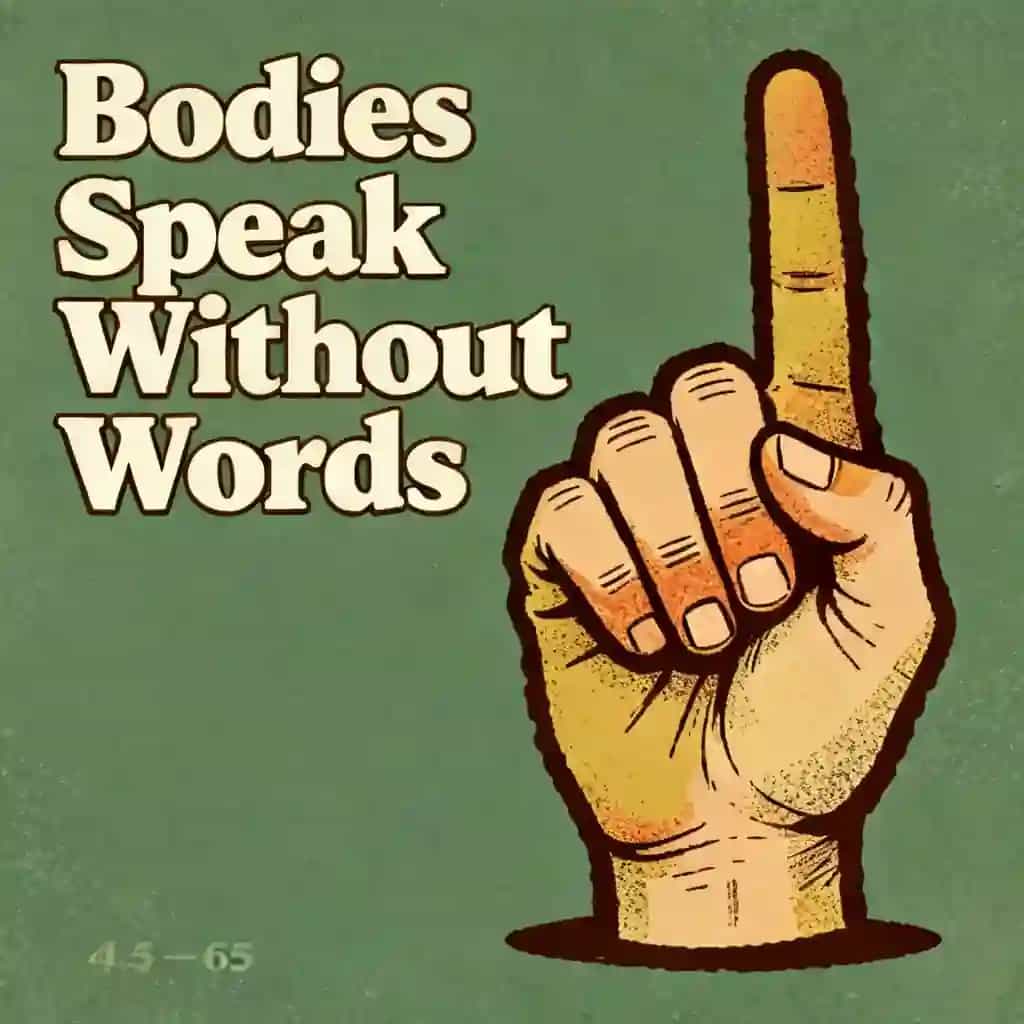
The Silent Language: Mastering Body Language Decoding
Learn to read subconscious signals and micro-expressions in milliseconds. This guide explores the limbic brain's role in communication and provides a practical playbook for high-stakes social navigation.

Bestes Zitat aus The Silent Language: Mastering Body Language Decoding
The neocortex is the diplomat, but the limbic system is the witness. While we’re busy trying to find the right words to sound polite or composed, our body is already sending signals that don't have a filter.
Generated by angela
How can I read people through body language? 

Häufig gestellte Fragen
While we are often taught from childhood to control our facial expressions—such as being told to "smile for the camera"—most people never think to manage their feet. The feet are governed by the limbic system, the brain's "honesty reflex" tied to survival. Because the feet are responsible for moving us toward what we want and away from danger, they often reveal true intentions, such as pointing toward an exit when a person subconsciously wants to leave a conversation.
The Othello Error is a common mistake where an observer misinterprets a physical sign of stress as a sign of guilt or lying. For example, a person might look nervous or avoid eye contact not because they are being deceptive, but because they are anxious about being disbelieved or are simply overwhelmed by the situation. To avoid this error, it is important to look for "clusters" of multiple signals rather than relying on a single gesture.
A genuine smile, known as the "Duchenne smile," involves two specific sets of muscles: the zygomatic major muscles which pull up the corners of the mouth, and the orbicularis oculi muscles which scrunch the eyes and create "crow's feet." In a fake or "Pan Am" smile, the mouth moves but the eyes remain flat and uninvolved. If the eyes aren't "smiling" along with the mouth, the expression is likely not genuine.
Ventilating behaviors are pacifying actions people take to soothe themselves when they feel stressed, threatened, or uncomfortable. When the limbic system detects a threat, the body's temperature can rise, leading a person to perform actions like pulling at a shirt collar, running fingers through their hair, or touching the suprasternal notch at the base of the neck. These involuntary movements are the body's way of trying to lower the heart rate and cool down.
Mirroring is the act of subtly adopting the same posture, gestures, or head tilts as the person you are speaking with. This nonverbal technique signals "social safety" and communicates that you share the other person's "vibe" or are on their team. For mirroring to be effective and build a subconscious bond, it must be subtle and natural; doing it too instantly or obviously can feel artificial and make the other person uncomfortable.
Von Columbia University Alumni in San Francisco entwickelt
"Instead of endless scrolling, I just hit play on BeFreed. It saves me so much time."


"I never knew where to start with nonfiction—BeFreed’s book lists turned into podcasts gave me a clear path."


"Perfect balance between learning and entertainment. Finished ‘Thinking, Fast and Slow’ on my commute this week."
"Crazy how much I learned while walking the dog. BeFreed = small habits → big gains."
"Reading used to feel like a chore. Now it’s just part of my lifestyle."

"Feels effortless compared to reading. I’ve finished 6 books this month already."
"BeFreed turned my guilty doomscrolling into something that feels productive and inspiring."

"BeFreed turned my commute into learning time. 20-min podcasts are perfect for finishing books I never had time for."
"BeFreed replaced my podcast queue. Imagine Spotify for books — that’s it. 🙌"

"It is great for me to learn something from the book without reading it."
"The themed book list podcasts help me connect ideas across authors—like a guided audio journey."
"Makes me feel smarter every time before going to work"
Von Columbia University Alumni in San Francisco entwickelt
"Instead of endless scrolling, I just hit play on BeFreed. It saves me so much time."
"I never knew where to start with nonfiction—BeFreed’s book lists turned into podcasts gave me a clear path."
"Perfect balance between learning and entertainment. Finished ‘Thinking, Fast and Slow’ on my commute this week."
"Crazy how much I learned while walking the dog. BeFreed = small habits → big gains."
"Reading used to feel like a chore. Now it’s just part of my lifestyle."
"Feels effortless compared to reading. I’ve finished 6 books this month already."
"BeFreed turned my guilty doomscrolling into something that feels productive and inspiring."
"BeFreed turned my commute into learning time. 20-min podcasts are perfect for finishing books I never had time for."
"BeFreed replaced my podcast queue. Imagine Spotify for books — that’s it. 🙌"
"It is great for me to learn something from the book without reading it."
"The themed book list podcasts help me connect ideas across authors—like a guided audio journey."
"Makes me feel smarter every time before going to work"
"Instead of endless scrolling, I just hit play on BeFreed. It saves me so much time."
"I never knew where to start with nonfiction—BeFreed’s book lists turned into podcasts gave me a clear path."
"Perfect balance between learning and entertainment. Finished ‘Thinking, Fast and Slow’ on my commute this week."
"Crazy how much I learned while walking the dog. BeFreed = small habits → big gains."
"Reading used to feel like a chore. Now it’s just part of my lifestyle."
"Feels effortless compared to reading. I’ve finished 6 books this month already."
"BeFreed turned my guilty doomscrolling into something that feels productive and inspiring."
"BeFreed turned my commute into learning time. 20-min podcasts are perfect for finishing books I never had time for."
"BeFreed replaced my podcast queue. Imagine Spotify for books — that’s it. 🙌"
"It is great for me to learn something from the book without reading it."
"The themed book list podcasts help me connect ideas across authors—like a guided audio journey."
"Makes me feel smarter every time before going to work"
"Instead of endless scrolling, I just hit play on BeFreed. It saves me so much time."
"I never knew where to start with nonfiction—BeFreed’s book lists turned into podcasts gave me a clear path."
"Perfect balance between learning and entertainment. Finished ‘Thinking, Fast and Slow’ on my commute this week."
"Crazy how much I learned while walking the dog. BeFreed = small habits → big gains."
"Reading used to feel like a chore. Now it’s just part of my lifestyle."
"Feels effortless compared to reading. I’ve finished 6 books this month already."
"BeFreed turned my guilty doomscrolling into something that feels productive and inspiring."
"BeFreed turned my commute into learning time. 20-min podcasts are perfect for finishing books I never had time for."
"BeFreed replaced my podcast queue. Imagine Spotify for books — that’s it. 🙌"
"It is great for me to learn something from the book without reading it."
"The themed book list podcasts help me connect ideas across authors—like a guided audio journey."
"Makes me feel smarter every time before going to work"