The Pedestal Effect: Overcoming Social Inferiority and Power Dynamics
Learn how to dismantle the pedestal effect and overcome social inferiority. Understand the cognitive labor of power dynamics and reclaim your self-confidence.
Bestes Zitat aus The Pedestal Effect: Overcoming Social Inferiority and Power Dynamics
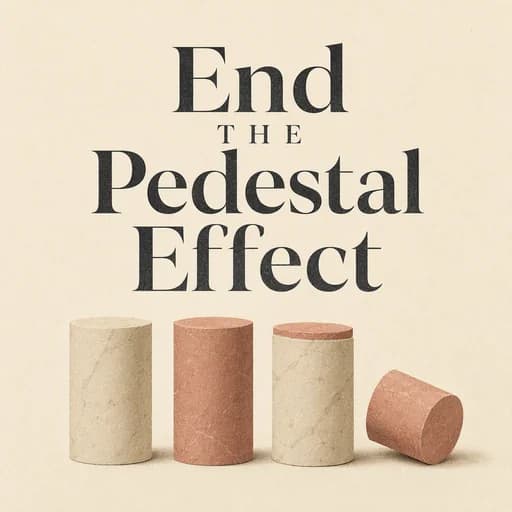
The moment you push someone up on that pedestal, you automatically place yourself beneath them, shifting from an equal contributor to an inferior devotee. This dynamic is a trap because people often mirror back the way you treat yourself; if you act as though you aren't on their level, you teach them to treat you accordingly.
Generated by Jazi
Strategies and psychological shifts to stop putting others on a pedestal and feeling small in social situations, specifically addressing the loss of confidence when interacting with high-status strangers, bosses or leaders, and talented peers.






Häufig gestellte Fragen
The pedestal effect is a psychological process where you mentally elevate another person to a flawless, superhuman status. This cognitive labor creates a power differential that makes you feel like the smallest person in the room. By placing someone else on a pedestal, you automatically position yourself as an inferior devotee rather than an equal contributor, which reinforces feelings of social inferiority and overrides your actual capabilities.
Power dynamics in the workplace often manifest when we perceive senior figures as inherently more competent than ourselves. This mental architecture can cause your brain to short-circuit during high-stakes moments, such as when an executive enters a briefing. This reaction is rarely about your professional readiness; instead, it is a result of the psychological hierarchy you have constructed, which teaches others to treat you as though you aren't on their level.
Constructing a pedestal is considered cognitive labor because it is an active mental process of creating and maintaining a specific psychological reality. You are not just reacting to someone's status; you are putting in the mental work to view them as godlike and yourself as beneath them. Understanding this architecture is the first step toward dismantling these internal power dynamics and reclaiming your sense of self-confidence in social and professional settings.
Von Columbia University Alumni in San Francisco entwickelt
"Instead of endless scrolling, I just hit play on BeFreed. It saves me so much time."


"I never knew where to start with nonfiction—BeFreed’s book lists turned into podcasts gave me a clear path."


"Perfect balance between learning and entertainment. Finished ‘Thinking, Fast and Slow’ on my commute this week."
"Crazy how much I learned while walking the dog. BeFreed = small habits → big gains."
"Reading used to feel like a chore. Now it’s just part of my lifestyle."

"Feels effortless compared to reading. I’ve finished 6 books this month already."
"BeFreed turned my guilty doomscrolling into something that feels productive and inspiring."

"BeFreed turned my commute into learning time. 20-min podcasts are perfect for finishing books I never had time for."
"BeFreed replaced my podcast queue. Imagine Spotify for books — that’s it. 🙌"

"It is great for me to learn something from the book without reading it."
"The themed book list podcasts help me connect ideas across authors—like a guided audio journey."
"Makes me feel smarter every time before going to work"
Von Columbia University Alumni in San Francisco entwickelt
"Instead of endless scrolling, I just hit play on BeFreed. It saves me so much time."
"I never knew where to start with nonfiction—BeFreed’s book lists turned into podcasts gave me a clear path."
"Perfect balance between learning and entertainment. Finished ‘Thinking, Fast and Slow’ on my commute this week."
"Crazy how much I learned while walking the dog. BeFreed = small habits → big gains."
"Reading used to feel like a chore. Now it’s just part of my lifestyle."
"Feels effortless compared to reading. I’ve finished 6 books this month already."
"BeFreed turned my guilty doomscrolling into something that feels productive and inspiring."
"BeFreed turned my commute into learning time. 20-min podcasts are perfect for finishing books I never had time for."
"BeFreed replaced my podcast queue. Imagine Spotify for books — that’s it. 🙌"
"It is great for me to learn something from the book without reading it."
"The themed book list podcasts help me connect ideas across authors—like a guided audio journey."
"Makes me feel smarter every time before going to work"
"Instead of endless scrolling, I just hit play on BeFreed. It saves me so much time."
"I never knew where to start with nonfiction—BeFreed’s book lists turned into podcasts gave me a clear path."
"Perfect balance between learning and entertainment. Finished ‘Thinking, Fast and Slow’ on my commute this week."
"Crazy how much I learned while walking the dog. BeFreed = small habits → big gains."
"Reading used to feel like a chore. Now it’s just part of my lifestyle."
"Feels effortless compared to reading. I’ve finished 6 books this month already."
"BeFreed turned my guilty doomscrolling into something that feels productive and inspiring."
"BeFreed turned my commute into learning time. 20-min podcasts are perfect for finishing books I never had time for."
"BeFreed replaced my podcast queue. Imagine Spotify for books — that’s it. 🙌"
"It is great for me to learn something from the book without reading it."
"The themed book list podcasts help me connect ideas across authors—like a guided audio journey."
"Makes me feel smarter every time before going to work"
"Instead of endless scrolling, I just hit play on BeFreed. It saves me so much time."
"I never knew where to start with nonfiction—BeFreed’s book lists turned into podcasts gave me a clear path."
"Perfect balance between learning and entertainment. Finished ‘Thinking, Fast and Slow’ on my commute this week."
"Crazy how much I learned while walking the dog. BeFreed = small habits → big gains."
"Reading used to feel like a chore. Now it’s just part of my lifestyle."
"Feels effortless compared to reading. I’ve finished 6 books this month already."
"BeFreed turned my guilty doomscrolling into something that feels productive and inspiring."
"BeFreed turned my commute into learning time. 20-min podcasts are perfect for finishing books I never had time for."
"BeFreed replaced my podcast queue. Imagine Spotify for books — that’s it. 🙌"
"It is great for me to learn something from the book without reading it."
"The themed book list podcasts help me connect ideas across authors—like a guided audio journey."
"Makes me feel smarter every time before going to work"