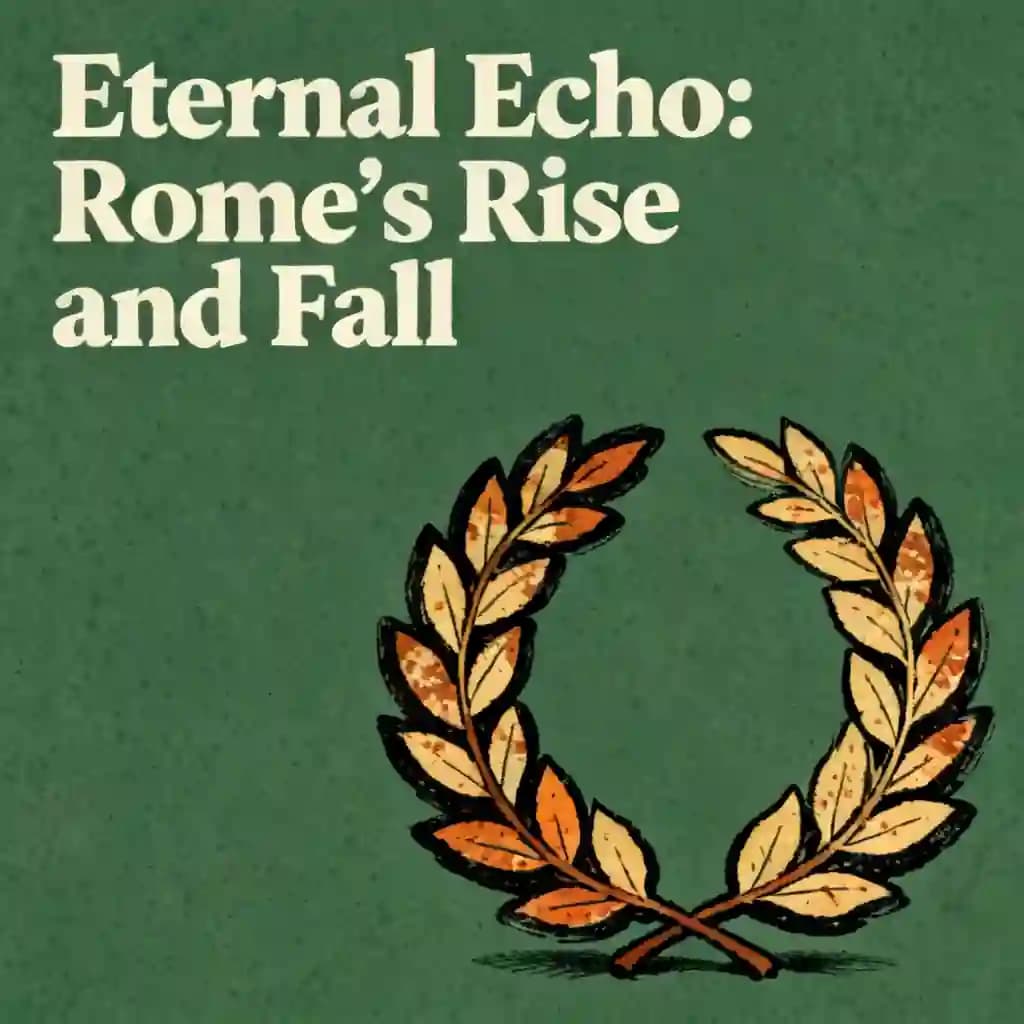
The Eternal Echo: Rome’s Rise and Fall
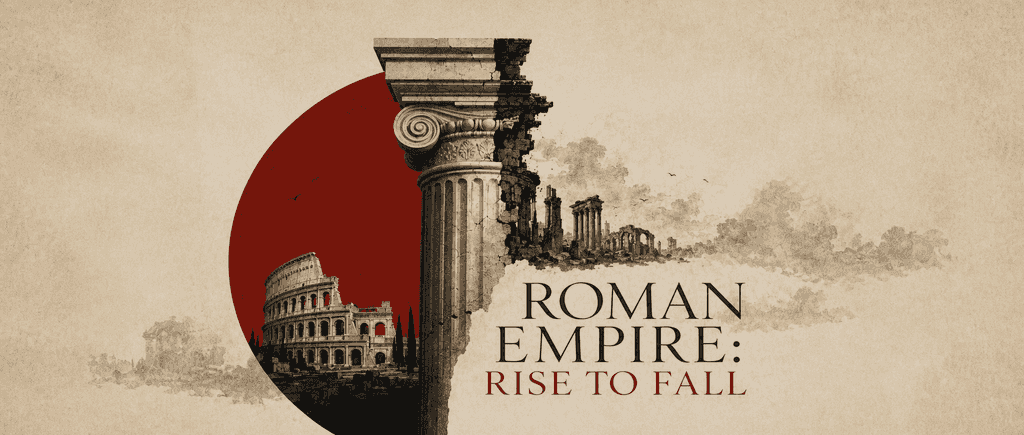
Trace Rome's epic transformation from a city of clay to a global superpower, exploring the internal rot and external pressures that eventually toppled an empire.
Bestes Zitat aus The Eternal Echo: Rome’s Rise and Fall
Rome didn't fall in a day, and it wasn't built in a day. It was a process. And as we look at the legacy it left behind—from our legal systems to our languages—it’s clear that even when an empire 'falls,' it never truly disappears. It just becomes the soil for whatever grows next.
Generated by Freedee_38FB5B59
History of rome empire

Häufig gestellte Fragen
This famous boast refers to both a physical and structural transformation of the Roman state. Physically, Augustus oversaw massive building projects, replacing humble brick and clay structures with grand marble monuments and forums. Structurally, he transitioned Rome from a messy, representative Republic into a hyper-efficient Empire. While he maintained the "illusion" of the Republic by keeping the Senate, he centralized actual authority in himself as Princeps, or "first citizen," holding superior power over all other officials.
To govern an empire of sixty million people spanning two million square miles, Rome developed a sophisticated bureaucracy and infrastructure. They built approximately 250,000 miles of roads, including 50,000 miles of paved highways, which served as a high-speed data network for horse-drawn couriers and state officials. Additionally, Augustus transformed the army into a permanent, professional institution of roughly 450,000 soldiers to defend the borders and maintain internal stability.
The empire suffered from severe political instability, evidenced by over 100 instances of armed violence over the throne between 180 CE and 476 CE. This was exacerbated by the corruption of the Praetorian Guard, who often auctioned off the emperorship. Economically, the state faced a "financial death spiral" caused by rampant inflation from debasing the currency and a tax system that squeezed the middle and lower classes while the wealthy elite found ways to avoid paying altogether.
The tribes along the borders were not primitive; they evolved by adopting Roman agricultural techniques, iron-working, and military tactics. Many barbarian leaders actually served in the Roman army, learning their secrets firsthand. As Rome weakened, it began "outsourcing" its defense to these groups through a process called receptio, allowing them to settle within the empire. These groups eventually became "states within a state," retaining their own laws and leaders until they were strong enough to seize entire provinces for themselves.
The Eastern Empire, centered in Constantinople, possessed significant geographic and economic advantages. Constantinople was a natural fortress protected by the sea and the massive Theodosian Walls, making it much easier to defend than the West's thousands of miles of open river borders. Furthermore, the Eastern provinces like Egypt and Anatolia remained wealthy and stable, providing a consistent tax base that allowed the East to pay off invaders or redirect them toward the struggling Western Empire.
Von Columbia University Alumni in San Francisco entwickelt
"Instead of endless scrolling, I just hit play on BeFreed. It saves me so much time."


"I never knew where to start with nonfiction—BeFreed’s book lists turned into podcasts gave me a clear path."


"Perfect balance between learning and entertainment. Finished ‘Thinking, Fast and Slow’ on my commute this week."
"Crazy how much I learned while walking the dog. BeFreed = small habits → big gains."
"Reading used to feel like a chore. Now it’s just part of my lifestyle."

"Feels effortless compared to reading. I’ve finished 6 books this month already."
"BeFreed turned my guilty doomscrolling into something that feels productive and inspiring."

"BeFreed turned my commute into learning time. 20-min podcasts are perfect for finishing books I never had time for."
"BeFreed replaced my podcast queue. Imagine Spotify for books — that’s it. 🙌"

"It is great for me to learn something from the book without reading it."
"The themed book list podcasts help me connect ideas across authors—like a guided audio journey."
"Makes me feel smarter every time before going to work"
Von Columbia University Alumni in San Francisco entwickelt
"Instead of endless scrolling, I just hit play on BeFreed. It saves me so much time."
"I never knew where to start with nonfiction—BeFreed’s book lists turned into podcasts gave me a clear path."
"Perfect balance between learning and entertainment. Finished ‘Thinking, Fast and Slow’ on my commute this week."
"Crazy how much I learned while walking the dog. BeFreed = small habits → big gains."
"Reading used to feel like a chore. Now it’s just part of my lifestyle."
"Feels effortless compared to reading. I’ve finished 6 books this month already."
"BeFreed turned my guilty doomscrolling into something that feels productive and inspiring."
"BeFreed turned my commute into learning time. 20-min podcasts are perfect for finishing books I never had time for."
"BeFreed replaced my podcast queue. Imagine Spotify for books — that’s it. 🙌"
"It is great for me to learn something from the book without reading it."
"The themed book list podcasts help me connect ideas across authors—like a guided audio journey."
"Makes me feel smarter every time before going to work"
"Instead of endless scrolling, I just hit play on BeFreed. It saves me so much time."
"I never knew where to start with nonfiction—BeFreed’s book lists turned into podcasts gave me a clear path."
"Perfect balance between learning and entertainment. Finished ‘Thinking, Fast and Slow’ on my commute this week."
"Crazy how much I learned while walking the dog. BeFreed = small habits → big gains."
"Reading used to feel like a chore. Now it’s just part of my lifestyle."
"Feels effortless compared to reading. I’ve finished 6 books this month already."
"BeFreed turned my guilty doomscrolling into something that feels productive and inspiring."
"BeFreed turned my commute into learning time. 20-min podcasts are perfect for finishing books I never had time for."
"BeFreed replaced my podcast queue. Imagine Spotify for books — that’s it. 🙌"
"It is great for me to learn something from the book without reading it."
"The themed book list podcasts help me connect ideas across authors—like a guided audio journey."
"Makes me feel smarter every time before going to work"
"Instead of endless scrolling, I just hit play on BeFreed. It saves me so much time."
"I never knew where to start with nonfiction—BeFreed’s book lists turned into podcasts gave me a clear path."
"Perfect balance between learning and entertainment. Finished ‘Thinking, Fast and Slow’ on my commute this week."
"Crazy how much I learned while walking the dog. BeFreed = small habits → big gains."
"Reading used to feel like a chore. Now it’s just part of my lifestyle."
"Feels effortless compared to reading. I’ve finished 6 books this month already."
"BeFreed turned my guilty doomscrolling into something that feels productive and inspiring."
"BeFreed turned my commute into learning time. 20-min podcasts are perfect for finishing books I never had time for."
"BeFreed replaced my podcast queue. Imagine Spotify for books — that’s it. 🙌"
"It is great for me to learn something from the book without reading it."
"The themed book list podcasts help me connect ideas across authors—like a guided audio journey."
"Makes me feel smarter every time before going to work"