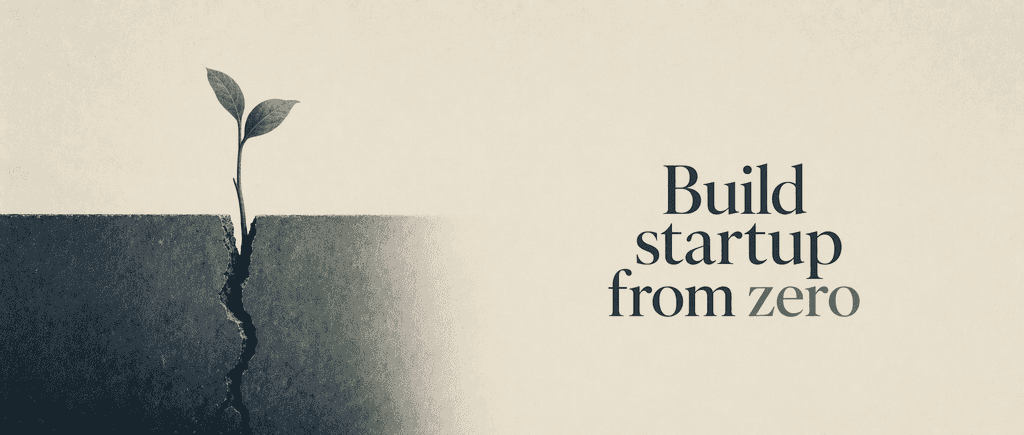
Startup Survival: Decoding the Patterns of Failure
Most startups collapse long before the money runs out. Learn to spot the subtle patterns of failure and build a resilient venture in the 2026 market.

Bestes Zitat aus Startup Survival: Decoding the Patterns of Failure
If you want to be the one in ten that makes it, you have to stop looking at failure as a ghost to be feared and start looking at it as a set of predictable patterns to be decoded.
Generated with BeFreed
Why Most Startups Die, and How to Survive






Häufig gestellte Fragen
While 70% of failed startups point to running out of money as the reason for closing, this is usually just a final symptom rather than the root cause. The underlying "disease" is often a lack of product-market fit, which accounts for 43% of collapses. Many companies build "nice-to-have" products that solve problems users don't actually find urgent, leading to a situation where they spend money to acquire users who never return.
The Great Reset represents a structural shift away from the "growth at all costs" mentality fueled by cheap money in the early 2020s. In the current landscape, venture capital is highly concentrated in specific sectors like AI, and the number of overall deals has hit a decade low. This means the traditional safety net has vanished, forcing founders to prioritize capital efficiency, margins, and a clear path to profitability over rapid market expansion.
Many AI startups are currently "API wrappers" that offer features rather than standalone companies, making them easy to replicate. To survive, founders must move beyond flashy demos and focus on "workflow lock-in," where the product becomes a mission-critical part of a customer's daily operations. Success in 2026 requires solving high-stakes, specific problems that are operationally expensive for a customer to remove, rather than just providing a better interface for an underlying AI model.
Founders often fall into the "sunk cost" trap, but 81% of successful founders have pivoted at least once. Key signals that a pivot is necessary include seeing growth without retention, or realizing that customers are only using one specific feature while ignoring the rest of the platform. If a product could disappear tomorrow without being missed by its users, it is a sign that the current business model is not providing essential value.
Founder burnout is a significant business risk, as 90% of founders report severe stress and 87% experience intense isolation. This "founder's tax" can cloud judgment and lead to poor decision-making. Because the company’s survival is often tied to the founder's energy, protecting mental clarity and building support systems—such as mentors or co-founders—is just as critical as managing the company's bank balance.
Von Columbia University Alumni in San Francisco entwickelt
"Instead of endless scrolling, I just hit play on BeFreed. It saves me so much time."


"I never knew where to start with nonfiction—BeFreed’s book lists turned into podcasts gave me a clear path."


"Perfect balance between learning and entertainment. Finished ‘Thinking, Fast and Slow’ on my commute this week."
"Crazy how much I learned while walking the dog. BeFreed = small habits → big gains."
"Reading used to feel like a chore. Now it’s just part of my lifestyle."

"Feels effortless compared to reading. I’ve finished 6 books this month already."
"BeFreed turned my guilty doomscrolling into something that feels productive and inspiring."

"BeFreed turned my commute into learning time. 20-min podcasts are perfect for finishing books I never had time for."
"BeFreed replaced my podcast queue. Imagine Spotify for books — that’s it. 🙌"

"It is great for me to learn something from the book without reading it."
"The themed book list podcasts help me connect ideas across authors—like a guided audio journey."
"Makes me feel smarter every time before going to work"
Von Columbia University Alumni in San Francisco entwickelt
"Instead of endless scrolling, I just hit play on BeFreed. It saves me so much time."
"I never knew where to start with nonfiction—BeFreed’s book lists turned into podcasts gave me a clear path."
"Perfect balance between learning and entertainment. Finished ‘Thinking, Fast and Slow’ on my commute this week."
"Crazy how much I learned while walking the dog. BeFreed = small habits → big gains."
"Reading used to feel like a chore. Now it’s just part of my lifestyle."
"Feels effortless compared to reading. I’ve finished 6 books this month already."
"BeFreed turned my guilty doomscrolling into something that feels productive and inspiring."
"BeFreed turned my commute into learning time. 20-min podcasts are perfect for finishing books I never had time for."
"BeFreed replaced my podcast queue. Imagine Spotify for books — that’s it. 🙌"
"It is great for me to learn something from the book without reading it."
"The themed book list podcasts help me connect ideas across authors—like a guided audio journey."
"Makes me feel smarter every time before going to work"
"Instead of endless scrolling, I just hit play on BeFreed. It saves me so much time."
"I never knew where to start with nonfiction—BeFreed’s book lists turned into podcasts gave me a clear path."
"Perfect balance between learning and entertainment. Finished ‘Thinking, Fast and Slow’ on my commute this week."
"Crazy how much I learned while walking the dog. BeFreed = small habits → big gains."
"Reading used to feel like a chore. Now it’s just part of my lifestyle."
"Feels effortless compared to reading. I’ve finished 6 books this month already."
"BeFreed turned my guilty doomscrolling into something that feels productive and inspiring."
"BeFreed turned my commute into learning time. 20-min podcasts are perfect for finishing books I never had time for."
"BeFreed replaced my podcast queue. Imagine Spotify for books — that’s it. 🙌"
"It is great for me to learn something from the book without reading it."
"The themed book list podcasts help me connect ideas across authors—like a guided audio journey."
"Makes me feel smarter every time before going to work"
"Instead of endless scrolling, I just hit play on BeFreed. It saves me so much time."
"I never knew where to start with nonfiction—BeFreed’s book lists turned into podcasts gave me a clear path."
"Perfect balance between learning and entertainment. Finished ‘Thinking, Fast and Slow’ on my commute this week."
"Crazy how much I learned while walking the dog. BeFreed = small habits → big gains."
"Reading used to feel like a chore. Now it’s just part of my lifestyle."
"Feels effortless compared to reading. I’ve finished 6 books this month already."
"BeFreed turned my guilty doomscrolling into something that feels productive and inspiring."
"BeFreed turned my commute into learning time. 20-min podcasts are perfect for finishing books I never had time for."
"BeFreed replaced my podcast queue. Imagine Spotify for books — that’s it. 🙌"
"It is great for me to learn something from the book without reading it."
"The themed book list podcasts help me connect ideas across authors—like a guided audio journey."
"Makes me feel smarter every time before going to work"