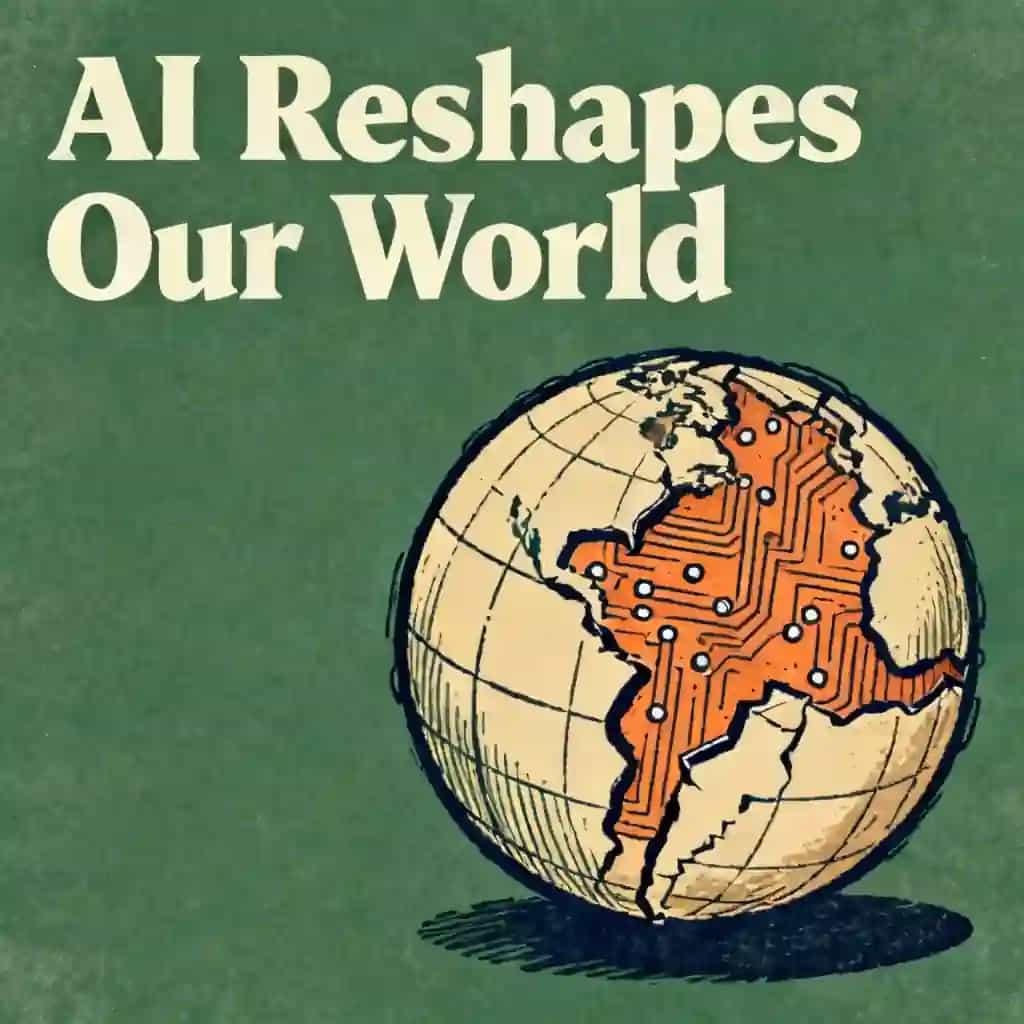
Stanford Emerging Technology Review 2026: The Future of Innovation
Explore the future of innovation with The Stanford Emerging Technology Review 2026. Learn how fundamental research in AI, biotech, and materials science is colliding.
Bestes Zitat aus Stanford Emerging Technology Review 2026: The Future of Innovation
We are harvesting today the research seeds that were planted decades ago, but if we stop planting the seeds of basic research today, the innovation engine of the future will stall.
Generated by Ricky
Create a comprehensive, engaging lecture based on 'The Stanford Emerging Technology Review 2026'. Cover specifically all ten areas: AI, Biotech, Cryptography, Energy, Materials Science, Neuroscience, Quantum, Robotics, Semiconductors, and Space. For each technology, provide a plain-English definition, essential concepts, how it works, current 2026 state, applications, advances, bottlenecks, risks, and a 10-year outlook. Focus on technological convergence and how these fields accelerate each other (e.g., AI and materials, energy and AI scaling). Maintain the 'intelligent non-technical professional' tone. Address 'frontier bias' and contrast genuine progress with hype. Include understanding checks after every two technologies as requested. Preserve the full structure and specific relationship pairs detailed in the user's prompt. Source: Report.pdf.


Häufig gestellte Fragen
The Stanford Emerging Technology Review 2026 is an exploration of the current 'hinge of history' where ten distinct technological fields are advancing and colliding. Grounded in the legacy of fundamental research at Stanford University, such as the National Science Foundation grant that led to the birth of Google, this review examines how deep inquiry changes the coordinates of daily life. It focuses on the convergence of fields like artificial intelligence, biotechnology, and materials science to understand the future of global innovation.
Fundamental research is described as deep, risky inquiry that prioritizes long-term discovery over immediate profit. As seen in the history of Stanford University during the early 1990s, this type of academic work can lead to world-changing outcomes like the creation of the modern internet. By supporting projects through organizations like the National Science Foundation, fundamental research creates the necessary foundation for major breakthroughs in artificial intelligence and other emerging technologies that eventually redefine how society functions.
According to the Stanford Emerging Technology Review 2026, these three fields are currently supercharging one another at a dizzying speed. This convergence represents a shift where artificial intelligence, biotechnology, and materials science are no longer advancing in isolation but are instead colliding to create rapid, transformational change. This synergy allows for breakthroughs that would be impossible within a single discipline, marking a significant moment in the history of technological development and scientific application.
Frontier bias is the mistaken assumption that transformational change only occurs at the absolute bleeding edge of a specific field. The Stanford Emerging Technology Review 2026 warns against this perspective, noting that real progress often stems from the clever application of established technologies or unexpected synergies between different worlds. By looking beyond the most recent discoveries, researchers can identify how the integration of existing tools and new fundamental research creates the most significant impacts on our daily lives.
Von Columbia University Alumni in San Francisco entwickelt
"Instead of endless scrolling, I just hit play on BeFreed. It saves me so much time."


"I never knew where to start with nonfiction—BeFreed’s book lists turned into podcasts gave me a clear path."


"Perfect balance between learning and entertainment. Finished ‘Thinking, Fast and Slow’ on my commute this week."
"Crazy how much I learned while walking the dog. BeFreed = small habits → big gains."
"Reading used to feel like a chore. Now it’s just part of my lifestyle."

"Feels effortless compared to reading. I’ve finished 6 books this month already."
"BeFreed turned my guilty doomscrolling into something that feels productive and inspiring."

"BeFreed turned my commute into learning time. 20-min podcasts are perfect for finishing books I never had time for."
"BeFreed replaced my podcast queue. Imagine Spotify for books — that’s it. 🙌"

"It is great for me to learn something from the book without reading it."
"The themed book list podcasts help me connect ideas across authors—like a guided audio journey."
"Makes me feel smarter every time before going to work"
Von Columbia University Alumni in San Francisco entwickelt
"Instead of endless scrolling, I just hit play on BeFreed. It saves me so much time."
"I never knew where to start with nonfiction—BeFreed’s book lists turned into podcasts gave me a clear path."
"Perfect balance between learning and entertainment. Finished ‘Thinking, Fast and Slow’ on my commute this week."
"Crazy how much I learned while walking the dog. BeFreed = small habits → big gains."
"Reading used to feel like a chore. Now it’s just part of my lifestyle."
"Feels effortless compared to reading. I’ve finished 6 books this month already."
"BeFreed turned my guilty doomscrolling into something that feels productive and inspiring."
"BeFreed turned my commute into learning time. 20-min podcasts are perfect for finishing books I never had time for."
"BeFreed replaced my podcast queue. Imagine Spotify for books — that’s it. 🙌"
"It is great for me to learn something from the book without reading it."
"The themed book list podcasts help me connect ideas across authors—like a guided audio journey."
"Makes me feel smarter every time before going to work"
"Instead of endless scrolling, I just hit play on BeFreed. It saves me so much time."
"I never knew where to start with nonfiction—BeFreed’s book lists turned into podcasts gave me a clear path."
"Perfect balance between learning and entertainment. Finished ‘Thinking, Fast and Slow’ on my commute this week."
"Crazy how much I learned while walking the dog. BeFreed = small habits → big gains."
"Reading used to feel like a chore. Now it’s just part of my lifestyle."
"Feels effortless compared to reading. I’ve finished 6 books this month already."
"BeFreed turned my guilty doomscrolling into something that feels productive and inspiring."
"BeFreed turned my commute into learning time. 20-min podcasts are perfect for finishing books I never had time for."
"BeFreed replaced my podcast queue. Imagine Spotify for books — that’s it. 🙌"
"It is great for me to learn something from the book without reading it."
"The themed book list podcasts help me connect ideas across authors—like a guided audio journey."
"Makes me feel smarter every time before going to work"
"Instead of endless scrolling, I just hit play on BeFreed. It saves me so much time."
"I never knew where to start with nonfiction—BeFreed’s book lists turned into podcasts gave me a clear path."
"Perfect balance between learning and entertainment. Finished ‘Thinking, Fast and Slow’ on my commute this week."
"Crazy how much I learned while walking the dog. BeFreed = small habits → big gains."
"Reading used to feel like a chore. Now it’s just part of my lifestyle."
"Feels effortless compared to reading. I’ve finished 6 books this month already."
"BeFreed turned my guilty doomscrolling into something that feels productive and inspiring."
"BeFreed turned my commute into learning time. 20-min podcasts are perfect for finishing books I never had time for."
"BeFreed replaced my podcast queue. Imagine Spotify for books — that’s it. 🙌"
"It is great for me to learn something from the book without reading it."
"The themed book list podcasts help me connect ideas across authors—like a guided audio journey."
"Makes me feel smarter every time before going to work"