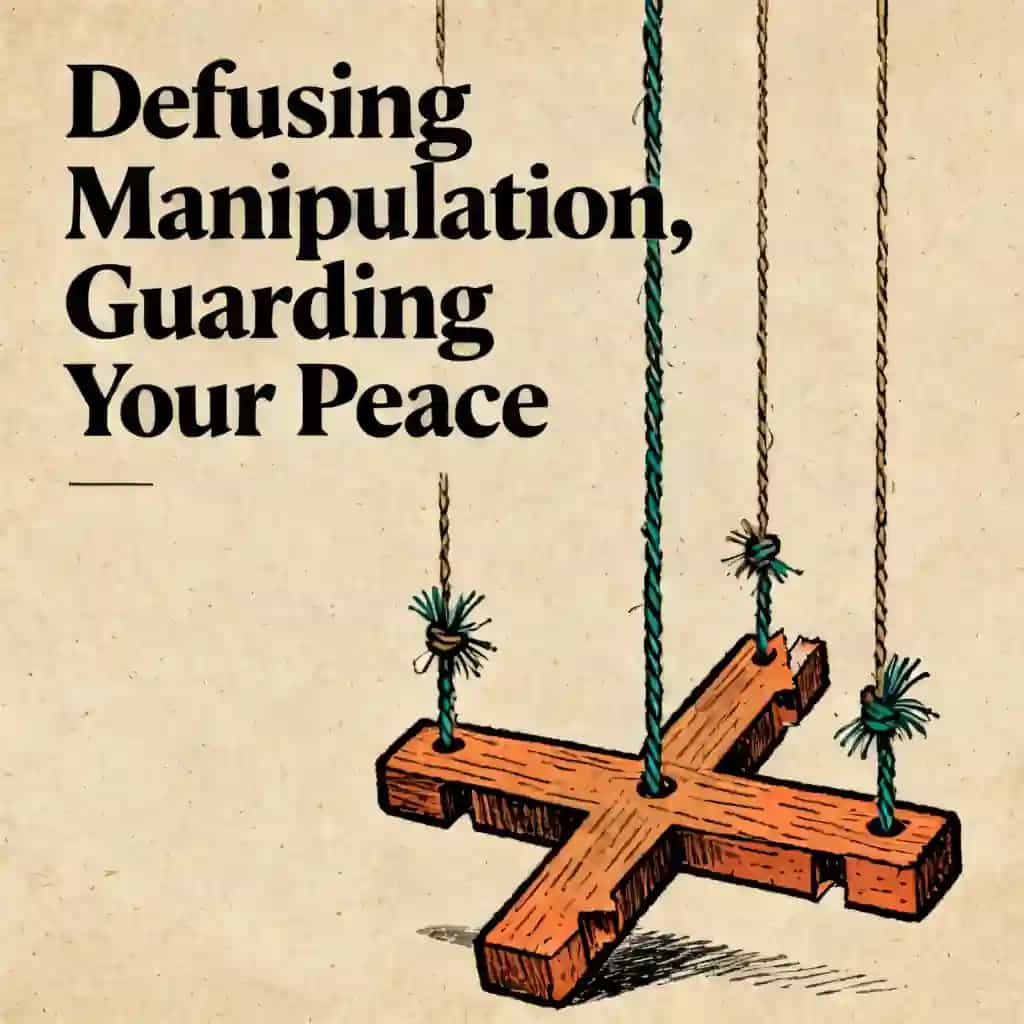
Spotting predators and reclaiming your power
When survival has left you feeling vulnerable, how do you trust your gut again? Learn to decode the predator's playbook and rebuild your autonomy.

Bestes Zitat aus Spotting predators and reclaiming your power
Compliance under pressure is not consent; it’s a survival strategy. If you’re trapped in a system where saying 'no' has a massive cost, your brain is going to do whatever it takes to keep you safe in that moment.

Diese Audiolektion wurde von einem BeFreed-Community-Mitglied erstellt
I want to learn how to protect myself from users and to spot a user and a predator. I been in survival and lost my way of fight to were I’m vunerable scared and lost my memory and have to start over again I don’t have the tools or wisdom to move forward. I been beaten hostage of witchcraft rape and oppression and torment. My abuser said it was a test


Häufig gestellte Fragen
The "Interview" is a calculated social strategy where a predator acts like a locksmith studying a lock to see if they can bypass a person’s boundaries. During this phase, they use subtle tests, such as asking overly personal questions, making inappropriate jokes, or physical encroaching, to gauge a person's reaction. They are specifically looking for "boundary flexibility" or a tendency to be polite and give the benefit of the doubt, which they view as a green light to escalate their behavior.
Memory loss and cognitive fog are natural, protective responses to overwhelming oppression and torment. When the body is in survival mode, the brain shifts resources away from the prefrontal cortex, which handles complex reasoning and long-term memory, and prioritizes the amygdala and survival centers. This "dissociative amnesia" or "re-indexing" of memories is the brain's way of compartmentalizing distressing information so the individual can function under extreme pressure.
"No JADE" is a practical communication tool that stands for "don't Justify, Argue, Defend, or Explain." It is based on the insight that providing explanations to a predator or their "flying monkeys" (enforcers) only gives them more access to your emotional state and more information to manipulate. By refusing to engage in an argument, a survivor can stop the extraction of their energy and maintain a firm boundary, recognizing that "no" is a complete sentence.
Reclaiming power does not require winning a massive battle all at once; instead, it starts with strengthening the "muscle" of autonomy through small, daily choices. Micro-boundaries involve practicing saying "no" to minor things, such as declining a phone call or choosing a different restaurant. These small acts of self-assertion help signal to the nervous system that it is safe to begin moving out of performance mode and back into a state of personal agency.
Tactical survival is the understanding that compliance under extreme pressure or threat is not a sign of weakness or a lack of "fight," but a resilient adaptation by the nervous system to stay alive. If the cost of resistance is too high—such as losing a home, a job, or a spiritual community—the brain chooses compliance to ensure immediate safety. Reframing past actions as tactical survival helps remove self-blame and recognizes that the individual did what was necessary to survive an impossible situation.
Mehr entdecken
Revenging a manipulator
This plan is essential for anyone seeking to break free from toxic cycles and reclaim their autonomy. It provides a strategic roadmap for victims of manipulation to transform into empowered survivors through psychological mastery and boundary setting.

Spot and Stop Master Manipulators
In an era of complex social dynamics, understanding the mechanics of exploitation is a vital survival skill. This plan is designed for anyone seeking to protect their mental well-being and reclaim control from toxic influences in professional or personal settings.
Reclaim Your Energy
This plan is essential for anyone struggling to move past a breakup or stuck in cycles of seeking external validation. It provides a biological and psychological roadmap to stop idealizing others and start building a resilient, self-sustained sense of worth.
Dark psychology
In an era of complex social dynamics, understanding the mechanics of manipulation is essential for self-protection. This plan is ideal for anyone looking to identify toxic behaviors and build strong psychological defenses against predatory personalities.

Reclaiming Your Body and Mind
This plan is essential for survivors of maternal narcissism seeking to heal the deep-seated neurological and emotional wounds of their upbringing. It provides a holistic path for those ready to integrate somatic healing with cognitive boundary-setting to reclaim their sense of self.

Mental Self-Defense and Manipulation Detection
In an era of increasing psychological influence, protecting your mental autonomy is essential for personal and professional safety. This guide is designed for professionals and digital citizens who want to sharpen their intuition and build robust defenses against predatory behavior.

From Bracing to Breathing
This plan is essential for survivors of emotional abuse seeking to untangle their true identity from trauma-induced defense mechanisms. It is designed for anyone struggling with avoidant attachment or chronic hypervigilance who wants to restore a sense of safety and flow in their relationships.

Self-study & healing from narcissistic abuse
This learning plan is essential for survivors seeking to reclaim their identity and physiological well-being after experiencing toxic relationship dynamics. It provides a structured path from initial validation to long-term empowerment for anyone ready to break the cycle of abuse.
Von Columbia University Alumni in San Francisco entwickelt
"Instead of endless scrolling, I just hit play on BeFreed. It saves me so much time."


"I never knew where to start with nonfiction—BeFreed’s book lists turned into podcasts gave me a clear path."


"Perfect balance between learning and entertainment. Finished ‘Thinking, Fast and Slow’ on my commute this week."
"Crazy how much I learned while walking the dog. BeFreed = small habits → big gains."
"Reading used to feel like a chore. Now it’s just part of my lifestyle."

"Feels effortless compared to reading. I’ve finished 6 books this month already."
"BeFreed turned my guilty doomscrolling into something that feels productive and inspiring."

"BeFreed turned my commute into learning time. 20-min podcasts are perfect for finishing books I never had time for."
"BeFreed replaced my podcast queue. Imagine Spotify for books — that’s it. 🙌"

"It is great for me to learn something from the book without reading it."
"The themed book list podcasts help me connect ideas across authors—like a guided audio journey."
"Makes me feel smarter every time before going to work"
Von Columbia University Alumni in San Francisco entwickelt
"Instead of endless scrolling, I just hit play on BeFreed. It saves me so much time."
"I never knew where to start with nonfiction—BeFreed’s book lists turned into podcasts gave me a clear path."
"Perfect balance between learning and entertainment. Finished ‘Thinking, Fast and Slow’ on my commute this week."
"Crazy how much I learned while walking the dog. BeFreed = small habits → big gains."
"Reading used to feel like a chore. Now it’s just part of my lifestyle."
"Feels effortless compared to reading. I’ve finished 6 books this month already."
"BeFreed turned my guilty doomscrolling into something that feels productive and inspiring."
"BeFreed turned my commute into learning time. 20-min podcasts are perfect for finishing books I never had time for."
"BeFreed replaced my podcast queue. Imagine Spotify for books — that’s it. 🙌"
"It is great for me to learn something from the book without reading it."
"The themed book list podcasts help me connect ideas across authors—like a guided audio journey."
"Makes me feel smarter every time before going to work"
"Instead of endless scrolling, I just hit play on BeFreed. It saves me so much time."
"I never knew where to start with nonfiction—BeFreed’s book lists turned into podcasts gave me a clear path."
"Perfect balance between learning and entertainment. Finished ‘Thinking, Fast and Slow’ on my commute this week."
"Crazy how much I learned while walking the dog. BeFreed = small habits → big gains."
"Reading used to feel like a chore. Now it’s just part of my lifestyle."
"Feels effortless compared to reading. I’ve finished 6 books this month already."
"BeFreed turned my guilty doomscrolling into something that feels productive and inspiring."
"BeFreed turned my commute into learning time. 20-min podcasts are perfect for finishing books I never had time for."
"BeFreed replaced my podcast queue. Imagine Spotify for books — that’s it. 🙌"
"It is great for me to learn something from the book without reading it."
"The themed book list podcasts help me connect ideas across authors—like a guided audio journey."
"Makes me feel smarter every time before going to work"
"Instead of endless scrolling, I just hit play on BeFreed. It saves me so much time."
"I never knew where to start with nonfiction—BeFreed’s book lists turned into podcasts gave me a clear path."
"Perfect balance between learning and entertainment. Finished ‘Thinking, Fast and Slow’ on my commute this week."
"Crazy how much I learned while walking the dog. BeFreed = small habits → big gains."
"Reading used to feel like a chore. Now it’s just part of my lifestyle."
"Feels effortless compared to reading. I’ve finished 6 books this month already."
"BeFreed turned my guilty doomscrolling into something that feels productive and inspiring."
"BeFreed turned my commute into learning time. 20-min podcasts are perfect for finishing books I never had time for."
"BeFreed replaced my podcast queue. Imagine Spotify for books — that’s it. 🙌"
"It is great for me to learn something from the book without reading it."
"The themed book list podcasts help me connect ideas across authors—like a guided audio journey."
"Makes me feel smarter every time before going to work"