Spanish Is More Than One Language
Struggling with different Spanish dialects? Learn how to build a digital immersion toolkit and use frequency to reach fluency through your daily routine.

Bestes Zitat aus Spanish Is More Than One Language
The 1,000 most common Spanish words cover roughly eighty percent of everyday conversation; stop chasing the fringes and dominate the core to build the structural steel of your fluency.

Diese Audiolektion wurde von einem BeFreed-Community-Mitglied erstellt
Spanish


Häufig gestellte Fragen
The 80/20 rule, or Pareto Principle, suggests that twenty percent of your efforts will lead to eighty percent of your results. In Spanish, this means focusing on the most frequently used words rather than trying to memorize obscure vocabulary. Research shows that the 1,000 most common Spanish words cover roughly eighty percent of everyday conversation, while the top 3,000 words cover ninety-five percent of all written and spoken language. Prioritizing versatile "engine" verbs like ser, estar, tener, and hacer provides the structural foundation needed for fluency.
A Spaced Repetition System uses algorithms to present a vocabulary word to you at the precise moment you are about to forget it, acting as a workout for long-term memory. To use this effectively, the script recommends avoiding direct English translations on flashcards. Instead, you should use images and full context sentences to associate the Spanish sound and sight directly with a concept. This method trains the brain to stop the habit of mental translation, which often slows down conversational speed.
Comprehensible input, or the i+1 theory, is the practice of consuming content that is just one small step above your current proficiency level. This prevents the "firehose problem" where a learner becomes overwhelmed by high-speed, complex speech. By watching content where the context is clear—such as a cooking show where a host points to ingredients—the brain can map new sounds onto known objects without needing a dictionary. This makes immersion a productive learning tool rather than a source of frustration.
You can build a "digital sanctuary" by changing the language settings on your phone and computer, which provides constant micro-immersion hits through daily interface interactions. Additionally, you can "label your world" by placing sticky notes on household objects and replacing your daily English media—podcasts, music, and social media—with Spanish alternatives. The goal is to integrate the language into your existing routine so that you are living your life in Spanish rather than treating it as a chore or a separate study session.
The Manila Galleon trade (1565–1815) created the first global trade route, linking Asia and the Americas via Spanish ships. This exchange was a culinary and biological reset that spread words and goods like tomatoes, chocolate, and chilies across the globe. Understanding this history provides "contextual learning," helping students see Spanish words as historical artifacts. It also offers a deeper cultural competency by highlighting the complex legacy of the Spanish Empire, including both its economic advancements and its devastating biological impact on indigenous populations.
Mehr entdecken
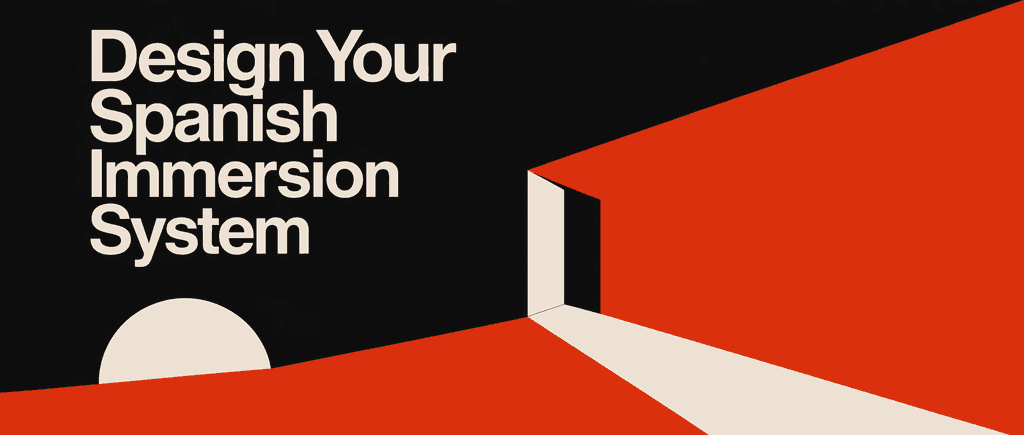
Design Your Spanish Immersion System
This plan is essential for intermediate learners who feel stuck and need a structured approach to daily Spanish usage. It benefits busy professionals and students by transforming their existing environment into a powerful engine for natural language acquisition.

Spanish
This comprehensive Spanish learning plan is designed for anyone seeking to achieve genuine fluency, from complete beginners to intermediate learners ready to reach advanced levels. It's ideal for travelers, professionals working with Spanish-speaking communities, literature enthusiasts, or anyone wanting to deeply connect with one of the world's most spoken languages and its rich cultural heritage.

Spanish Fluency: The 20-Hour Sprint
This accelerated learning plan is designed for busy professionals and travelers who need to achieve functional Spanish proficiency quickly. By focusing on linguistic Pareto principles and high-impact communication patterns, it transforms beginners into confident speakers in a fraction of the usual time.

Learn spanish in 3 months
This plan is designed for dedicated beginners who need a structured, fast-track route to Spanish fluency. It combines linguistic foundations with practical conversational patterns, making it ideal for travelers or professionals moving to Spanish-speaking regions.

Spanish for the Savvy Traveler
This learning plan is designed for travelers who want to move beyond basic phrases and navigate Spanish-speaking countries with independence. It is ideal for tourists and business travelers who need practical communication skills for real-world transit, dining, and emergency scenarios.
Learn Basic Spanish Grammar Step-by-Step
This structured plan is essential for beginners who want to move beyond simple memorization to functional fluency. It is ideal for travelers, students, or professionals seeking a logical progression from basic sounds to advanced grammatical structures.
Gamified Spanish Verb Tense Learning Tools
This plan bridges the gap between linguistic mastery and digital engagement, making it essential for educators and developers. It is ideal for those looking to transform dry grammar drills into immersive, high-impact educational games.
Become fluent in speaking French.
This plan is designed for learners who want to move beyond rote memorization to achieve true conversational confidence. It is ideal for travelers, professionals, or expats who need to master both the linguistic mechanics and the cultural nuances of the French language.
Von Columbia University Alumni in San Francisco entwickelt
"Instead of endless scrolling, I just hit play on BeFreed. It saves me so much time."


"I never knew where to start with nonfiction—BeFreed’s book lists turned into podcasts gave me a clear path."


"Perfect balance between learning and entertainment. Finished ‘Thinking, Fast and Slow’ on my commute this week."
"Crazy how much I learned while walking the dog. BeFreed = small habits → big gains."
"Reading used to feel like a chore. Now it’s just part of my lifestyle."

"Feels effortless compared to reading. I’ve finished 6 books this month already."
"BeFreed turned my guilty doomscrolling into something that feels productive and inspiring."

"BeFreed turned my commute into learning time. 20-min podcasts are perfect for finishing books I never had time for."
"BeFreed replaced my podcast queue. Imagine Spotify for books — that’s it. 🙌"

"It is great for me to learn something from the book without reading it."
"The themed book list podcasts help me connect ideas across authors—like a guided audio journey."
"Makes me feel smarter every time before going to work"
Von Columbia University Alumni in San Francisco entwickelt
"Instead of endless scrolling, I just hit play on BeFreed. It saves me so much time."
"I never knew where to start with nonfiction—BeFreed’s book lists turned into podcasts gave me a clear path."
"Perfect balance between learning and entertainment. Finished ‘Thinking, Fast and Slow’ on my commute this week."
"Crazy how much I learned while walking the dog. BeFreed = small habits → big gains."
"Reading used to feel like a chore. Now it’s just part of my lifestyle."
"Feels effortless compared to reading. I’ve finished 6 books this month already."
"BeFreed turned my guilty doomscrolling into something that feels productive and inspiring."
"BeFreed turned my commute into learning time. 20-min podcasts are perfect for finishing books I never had time for."
"BeFreed replaced my podcast queue. Imagine Spotify for books — that’s it. 🙌"
"It is great for me to learn something from the book without reading it."
"The themed book list podcasts help me connect ideas across authors—like a guided audio journey."
"Makes me feel smarter every time before going to work"
"Instead of endless scrolling, I just hit play on BeFreed. It saves me so much time."
"I never knew where to start with nonfiction—BeFreed’s book lists turned into podcasts gave me a clear path."
"Perfect balance between learning and entertainment. Finished ‘Thinking, Fast and Slow’ on my commute this week."
"Crazy how much I learned while walking the dog. BeFreed = small habits → big gains."
"Reading used to feel like a chore. Now it’s just part of my lifestyle."
"Feels effortless compared to reading. I’ve finished 6 books this month already."
"BeFreed turned my guilty doomscrolling into something that feels productive and inspiring."
"BeFreed turned my commute into learning time. 20-min podcasts are perfect for finishing books I never had time for."
"BeFreed replaced my podcast queue. Imagine Spotify for books — that’s it. 🙌"
"It is great for me to learn something from the book without reading it."
"The themed book list podcasts help me connect ideas across authors—like a guided audio journey."
"Makes me feel smarter every time before going to work"
"Instead of endless scrolling, I just hit play on BeFreed. It saves me so much time."
"I never knew where to start with nonfiction—BeFreed’s book lists turned into podcasts gave me a clear path."
"Perfect balance between learning and entertainment. Finished ‘Thinking, Fast and Slow’ on my commute this week."
"Crazy how much I learned while walking the dog. BeFreed = small habits → big gains."
"Reading used to feel like a chore. Now it’s just part of my lifestyle."
"Feels effortless compared to reading. I’ve finished 6 books this month already."
"BeFreed turned my guilty doomscrolling into something that feels productive and inspiring."
"BeFreed turned my commute into learning time. 20-min podcasts are perfect for finishing books I never had time for."
"BeFreed replaced my podcast queue. Imagine Spotify for books — that’s it. 🙌"
"It is great for me to learn something from the book without reading it."
"The themed book list podcasts help me connect ideas across authors—like a guided audio journey."
"Makes me feel smarter every time before going to work"