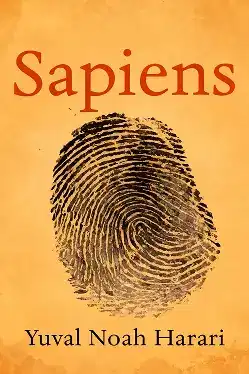
Sapiens: The Discovery of Ignorance
We once believed we knew everything, but admitting our ignorance changed the world. Trace the history of Sapiens to see how we became powerful gods.

Bestes Zitat aus Sapiens: The Discovery of Ignorance
We are becoming gods, but we are gods who don't know what we're doing. We are more powerful than ever, but we seem more unsure than ever about what to do with that power.
Generated with BeFreed
An audio lesson about the book Sapiens, covering its key ideas and takeaways.


Häufig gestellte Fragen
For most of history, humans believed that all essential knowledge was already contained in ancient traditions or holy books. The Scientific Revolution began when Europeans started creating maps with "blank spaces," signaling a willingness to admit they did not know everything about the world. This discovery of ignorance shifted the human focus from looking backward at tradition to looking forward toward discovery, transforming curiosity into a powerful tool for technological and political advancement.
In the modern era, science and empire became deeply intertwined in a mutually beneficial feedback loop. While explorers like Captain James Cook conducted scientific experiments, such as observing the transit of Venus, they were simultaneously claiming new territories for their governments. Empires provided the funding and global laboratories that scientists needed, while scientists provided the geographical, linguistic, and technological knowledge that allowed empires to manage and control distant lands more effectively.
Before the rise of capitalism, people generally viewed wealth as a fixed "pie," where one person's gain was another's loss. Capitalism introduced the idea that the pie could grow through reinvestment and credit. Credit is essentially a bet on the future; it allows people to borrow money today because there is a collective trust that tomorrow will be more prosperous. This shift turned self-interest into a communal virtue, as reinvesting profits became the engine for global economic growth.
Biological research suggests that human happiness is governed by a "set point" of neurotransmitters like serotonin and dopamine, which evolution designed for survival rather than constant satisfaction. Furthermore, happiness is determined by the gap between our expectations and our reality. Even though modern humans have more resources than their ancestors, our expectations have risen alongside our advancements, often leaving our internal "happiness meter" at the same level as a hunter-gatherer from thousands of years ago.
We are moving from a world governed by natural selection to one shaped by "intelligent design" through genetic engineering and bionic technology. As we begin to rewrite biological codes and merge our bodies with machines—such as using thought-controlled bionic limbs—the line between organic and inorganic life is blurring. This transition suggests a future where "post-humans" may possess abilities far beyond our current imagination, potentially making the current definition of Homo sapiens obsolete.
Von Columbia University Alumni in San Francisco entwickelt
"Instead of endless scrolling, I just hit play on BeFreed. It saves me so much time."


"I never knew where to start with nonfiction—BeFreed’s book lists turned into podcasts gave me a clear path."


"Perfect balance between learning and entertainment. Finished ‘Thinking, Fast and Slow’ on my commute this week."
"Crazy how much I learned while walking the dog. BeFreed = small habits → big gains."
"Reading used to feel like a chore. Now it’s just part of my lifestyle."

"Feels effortless compared to reading. I’ve finished 6 books this month already."
"BeFreed turned my guilty doomscrolling into something that feels productive and inspiring."

"BeFreed turned my commute into learning time. 20-min podcasts are perfect for finishing books I never had time for."
"BeFreed replaced my podcast queue. Imagine Spotify for books — that’s it. 🙌"

"It is great for me to learn something from the book without reading it."
"The themed book list podcasts help me connect ideas across authors—like a guided audio journey."
"Makes me feel smarter every time before going to work"
Von Columbia University Alumni in San Francisco entwickelt
"Instead of endless scrolling, I just hit play on BeFreed. It saves me so much time."
"I never knew where to start with nonfiction—BeFreed’s book lists turned into podcasts gave me a clear path."
"Perfect balance between learning and entertainment. Finished ‘Thinking, Fast and Slow’ on my commute this week."
"Crazy how much I learned while walking the dog. BeFreed = small habits → big gains."
"Reading used to feel like a chore. Now it’s just part of my lifestyle."
"Feels effortless compared to reading. I’ve finished 6 books this month already."
"BeFreed turned my guilty doomscrolling into something that feels productive and inspiring."
"BeFreed turned my commute into learning time. 20-min podcasts are perfect for finishing books I never had time for."
"BeFreed replaced my podcast queue. Imagine Spotify for books — that’s it. 🙌"
"It is great for me to learn something from the book without reading it."
"The themed book list podcasts help me connect ideas across authors—like a guided audio journey."
"Makes me feel smarter every time before going to work"
"Instead of endless scrolling, I just hit play on BeFreed. It saves me so much time."
"I never knew where to start with nonfiction—BeFreed’s book lists turned into podcasts gave me a clear path."
"Perfect balance between learning and entertainment. Finished ‘Thinking, Fast and Slow’ on my commute this week."
"Crazy how much I learned while walking the dog. BeFreed = small habits → big gains."
"Reading used to feel like a chore. Now it’s just part of my lifestyle."
"Feels effortless compared to reading. I’ve finished 6 books this month already."
"BeFreed turned my guilty doomscrolling into something that feels productive and inspiring."
"BeFreed turned my commute into learning time. 20-min podcasts are perfect for finishing books I never had time for."
"BeFreed replaced my podcast queue. Imagine Spotify for books — that’s it. 🙌"
"It is great for me to learn something from the book without reading it."
"The themed book list podcasts help me connect ideas across authors—like a guided audio journey."
"Makes me feel smarter every time before going to work"
"Instead of endless scrolling, I just hit play on BeFreed. It saves me so much time."
"I never knew where to start with nonfiction—BeFreed’s book lists turned into podcasts gave me a clear path."
"Perfect balance between learning and entertainment. Finished ‘Thinking, Fast and Slow’ on my commute this week."
"Crazy how much I learned while walking the dog. BeFreed = small habits → big gains."
"Reading used to feel like a chore. Now it’s just part of my lifestyle."
"Feels effortless compared to reading. I’ve finished 6 books this month already."
"BeFreed turned my guilty doomscrolling into something that feels productive and inspiring."
"BeFreed turned my commute into learning time. 20-min podcasts are perfect for finishing books I never had time for."
"BeFreed replaced my podcast queue. Imagine Spotify for books — that’s it. 🙌"
"It is great for me to learn something from the book without reading it."
"The themed book list podcasts help me connect ideas across authors—like a guided audio journey."
"Makes me feel smarter every time before going to work"