Regulating Wellness: The FDA and FTC Supplement Guide
Explore the legal landscape of the dietary supplement industry, from DSHEA labeling rules to the FTC’s strict standards for scientific evidence in advertising.
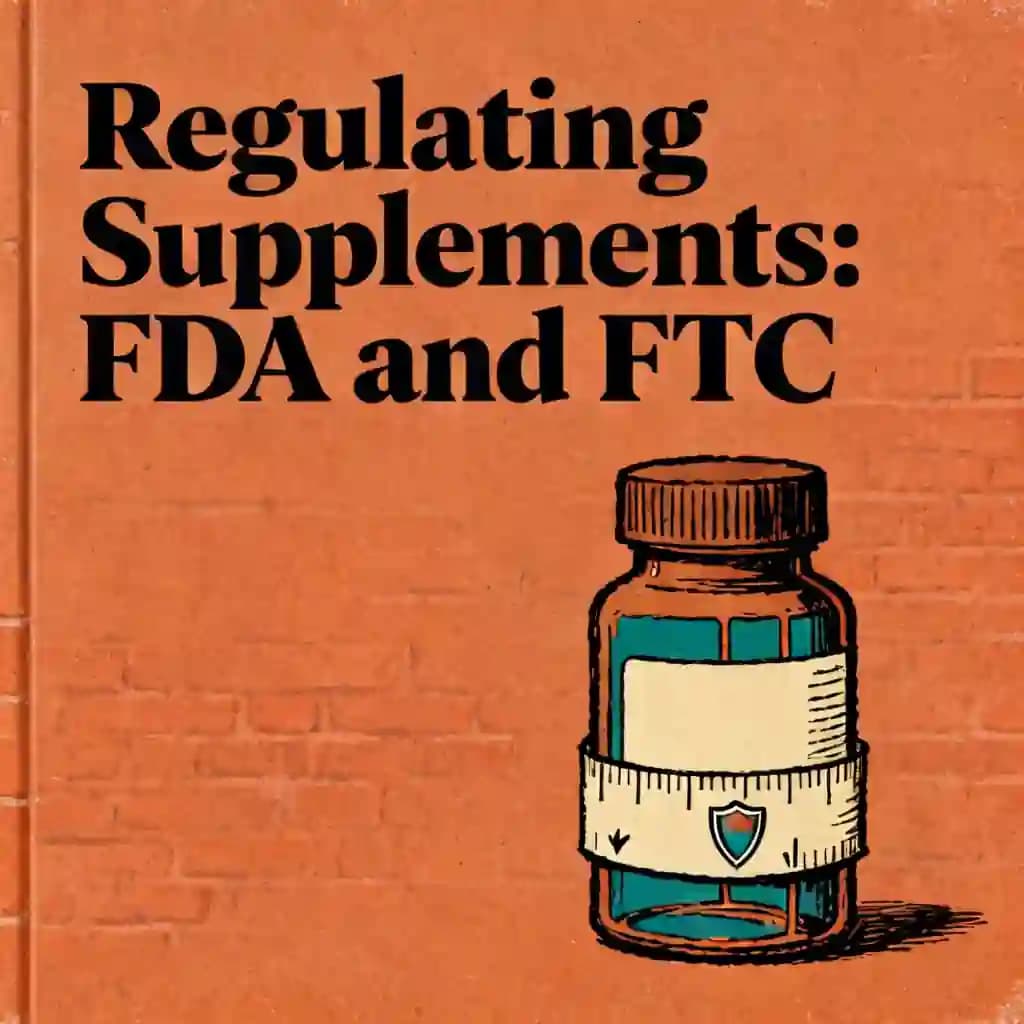
Bestes Zitat aus Regulating Wellness: The FDA and FTC Supplement Guide
The regulatory framework is built on a delicate balance: the freedom to sell and buy health products versus the government’s duty to prevent deception and harm. Ultimately, being legal isn't the same thing as being effective.
Generated by Emma
} Create a short educational podcast explaining the legal framework governing dietary supplements in the United States. Discuss the roles of the FDA and FTC, how DSHEA regulates supplement labeling, and how the FTC enforces rules against deceptive advertising, including the requirement for “competent and reliable scientific evidence.

Häufig gestellte Fragen
This disclaimer is a legal requirement under the Dietary Supplement Health and Education Act (DSHEA) of 1994. Because supplements are regulated as a category of food rather than drugs, they do not require government approval before they are sold. The FDA primarily focuses on post-market enforcement, meaning they step in only if a product is found to be unsafe or misbranded after it is already on the shelves.
A health claim describes a relationship between a nutrient and a reduced risk of a disease, such as "calcium may reduce the risk of osteoporosis," and requires significant scientific agreement or a specific FDA-mandated disclaimer. A structure/function claim describes how a nutrient affects the body's normal operation, such as "supports bone health." These do not require pre-approval by the FDA, but they must be truthful and must include the mandatory disclaimer stating the product is not intended to treat or cure any disease.
While the FDA handles labeling, the Federal Trade Commission (FTC) regulates advertising. The FTC requires that all health-related claims be backed by "competent and reliable scientific evidence," which typically means randomized, controlled human clinical trials. They also monitor "material connections," requiring influencers and experts to disclose if they are being paid or provided free products to endorse a supplement.
If an ingredient was not marketed in the U.S. before October 15, 1994, it is considered a "New Dietary Ingredient" (NDI). Manufacturers must notify the FDA at least 75 days before marketing these ingredients and provide evidence showing they are reasonably expected to be safe. However, this notification is not the same as an official "approval," and the legal burden of ensuring safety remains entirely on the manufacturer.
Listeners should look for "Current Good Manufacturing Practices" (cGMP) compliance, which ensures the company has established specifications for purity, strength, and composition. It is also important to check the "Other Ingredients" list for fillers or allergens and to be wary of "proprietary blends" that do not disclose the specific amounts of each ingredient. Finally, any product claiming to "cure" or "treat" a specific medical condition should be viewed as a red flag, as those are unauthorized drug claims.
Von Columbia University Alumni in San Francisco entwickelt
BeFreed vereint eine globale Gemeinschaft wissbegieriger Menschen


"Instead of endless scrolling, I just hit play on BeFreed. It saves me so much time."


"I never knew where to start with nonfiction—BeFreed’s book lists turned into podcasts gave me a clear path."


"Perfect balance between learning and entertainment. Finished ‘Thinking, Fast and Slow’ on my commute this week."
"Crazy how much I learned while walking the dog. BeFreed = small habits → big gains."
"Reading used to feel like a chore. Now it’s just part of my lifestyle."

"Feels effortless compared to reading. I’ve finished 6 books this month already."
"BeFreed turned my guilty doomscrolling into something that feels productive and inspiring."

"BeFreed turned my commute into learning time. 20-min podcasts are perfect for finishing books I never had time for."
"BeFreed replaced my podcast queue. Imagine Spotify for books — that’s it. 🙌"

"It is great for me to learn something from the book without reading it."
"The themed book list podcasts help me connect ideas across authors—like a guided audio journey."
"Makes me feel smarter every time before going to work"
Von Columbia University Alumni in San Francisco entwickelt
BeFreed vereint eine globale Gemeinschaft wissbegieriger Menschen
"Instead of endless scrolling, I just hit play on BeFreed. It saves me so much time."
"I never knew where to start with nonfiction—BeFreed’s book lists turned into podcasts gave me a clear path."
"Perfect balance between learning and entertainment. Finished ‘Thinking, Fast and Slow’ on my commute this week."
"Crazy how much I learned while walking the dog. BeFreed = small habits → big gains."
"Reading used to feel like a chore. Now it’s just part of my lifestyle."
"Feels effortless compared to reading. I’ve finished 6 books this month already."
"BeFreed turned my guilty doomscrolling into something that feels productive and inspiring."
"BeFreed turned my commute into learning time. 20-min podcasts are perfect for finishing books I never had time for."
"BeFreed replaced my podcast queue. Imagine Spotify for books — that’s it. 🙌"
"It is great for me to learn something from the book without reading it."
"The themed book list podcasts help me connect ideas across authors—like a guided audio journey."
"Makes me feel smarter every time before going to work"
"Instead of endless scrolling, I just hit play on BeFreed. It saves me so much time."
"I never knew where to start with nonfiction—BeFreed’s book lists turned into podcasts gave me a clear path."
"Perfect balance between learning and entertainment. Finished ‘Thinking, Fast and Slow’ on my commute this week."
"Crazy how much I learned while walking the dog. BeFreed = small habits → big gains."
"Reading used to feel like a chore. Now it’s just part of my lifestyle."
"Feels effortless compared to reading. I’ve finished 6 books this month already."
"BeFreed turned my guilty doomscrolling into something that feels productive and inspiring."
"BeFreed turned my commute into learning time. 20-min podcasts are perfect for finishing books I never had time for."
"BeFreed replaced my podcast queue. Imagine Spotify for books — that’s it. 🙌"
"It is great for me to learn something from the book without reading it."
"The themed book list podcasts help me connect ideas across authors—like a guided audio journey."
"Makes me feel smarter every time before going to work"
"Instead of endless scrolling, I just hit play on BeFreed. It saves me so much time."
"I never knew where to start with nonfiction—BeFreed’s book lists turned into podcasts gave me a clear path."
"Perfect balance between learning and entertainment. Finished ‘Thinking, Fast and Slow’ on my commute this week."
"Crazy how much I learned while walking the dog. BeFreed = small habits → big gains."
"Reading used to feel like a chore. Now it’s just part of my lifestyle."
"Feels effortless compared to reading. I’ve finished 6 books this month already."
"BeFreed turned my guilty doomscrolling into something that feels productive and inspiring."
"BeFreed turned my commute into learning time. 20-min podcasts are perfect for finishing books I never had time for."
"BeFreed replaced my podcast queue. Imagine Spotify for books — that’s it. 🙌"
"It is great for me to learn something from the book without reading it."
"The themed book list podcasts help me connect ideas across authors—like a guided audio journey."
"Makes me feel smarter every time before going to work"