Reading body language for what people aren't saying
When verbal cues don't match someone's vibe, their nonverbal signals tell the real story. Learn to decode honest gestures to read any room with confidence.

Bestes Zitat aus Reading body language for what people aren't saying
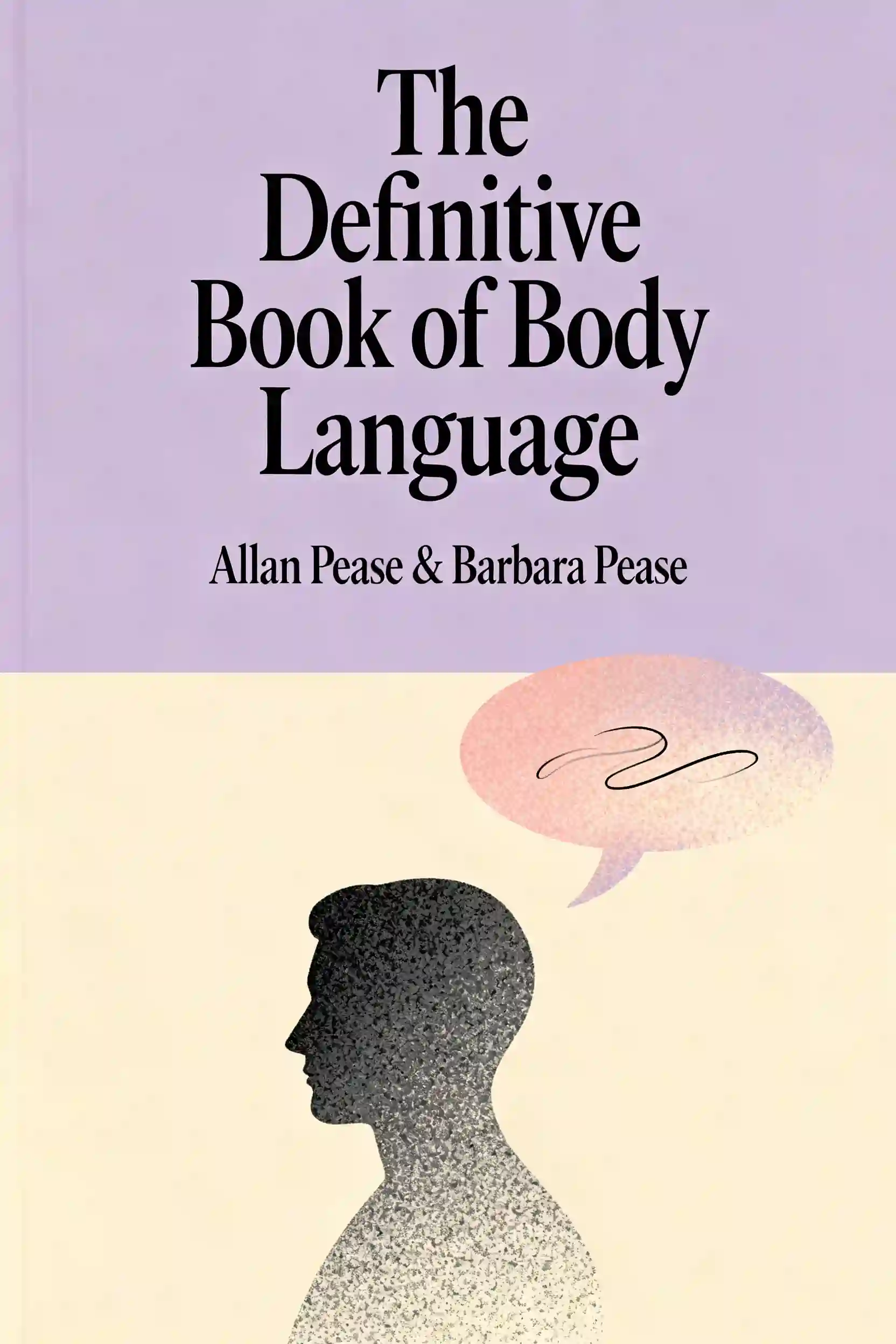
Research shows nonverbal cues account for 65 to 90 percent of our communication, yet we usually obsess over our words. Most people stare at faces to find the truth, but the feet are actually the most honest part of the body because they react to comfort or stress instantly.
Generated by Jon
Reading body language

Häufig gestellte Fragen
The feet are considered the most honest because they are controlled by the limbic system, which is the emotional and survival center of the brain. This system reacts to environmental stimuli—like stress or comfort—instantly and instinctively, long before the thinking brain (the neocortex) can process a social response or a lie. Because people rarely practice "interview feet" and instead focus on managing their facial expressions, the lower body often leaks true feelings, such as pointing toward an exit when someone wants to leave a conversation.
A discomfort cluster is a group of at least three nonverbal signals—such as squinting eyes, compressed lips, and touching the neck—that occur close together. Relying on a single gesture can lead to the "Single-Signal Fallacy," where a person might simply have an itch or a nervous habit. By looking for a cluster of changes that deviate from a person's established baseline, an observer can more reliably identify when a specific topic or stimulus has caused a genuine shift in the speaker's emotional state.
Pacifying behaviors are self-soothing actions the body performs to calm the limbic system when it feels rattled. Common examples include rubbing the neck, stroking hair, or adjusting jewelry. These actions are biologically functional; for instance, the neck contains nerves that, when stroked, lower the heart rate. Noticing these behaviors in a meeting can signal that the person is experiencing internal pressure or finds a particular proposal threatening, even if their words remain professional.
A social smile is a polite gesture that primarily uses the muscles around the mouth, often used for photos or social masking. In contrast, a genuine Duchenne smile involves the involuntary contraction of the orbicularis oculi muscles, which causes the corners of the eyes to crinkle (crow's feet). If the eyes do not "smile" along with the mouth, it is a high-value signal that the person may not truly be experiencing joy or agreement, despite their outward expression.
Body language is not universal and must be interpreted through "cultural pacing" and norms. In "High-Context" cultures, such as those in Japan or the Middle East, silence is a sign of respect and reflection rather than a lack of information. Similarly, "proxemics" vary globally; what one culture views as a comfortable distance for building rapport, another may perceive as an invasion of personal space. Effective communicators establish a new baseline for each interaction rather than relying on stereotypes.
Von Columbia University Alumni in San Francisco entwickelt
"Instead of endless scrolling, I just hit play on BeFreed. It saves me so much time."


"I never knew where to start with nonfiction—BeFreed’s book lists turned into podcasts gave me a clear path."


"Perfect balance between learning and entertainment. Finished ‘Thinking, Fast and Slow’ on my commute this week."
"Crazy how much I learned while walking the dog. BeFreed = small habits → big gains."
"Reading used to feel like a chore. Now it’s just part of my lifestyle."

"Feels effortless compared to reading. I’ve finished 6 books this month already."
"BeFreed turned my guilty doomscrolling into something that feels productive and inspiring."

"BeFreed turned my commute into learning time. 20-min podcasts are perfect for finishing books I never had time for."
"BeFreed replaced my podcast queue. Imagine Spotify for books — that’s it. 🙌"

"It is great for me to learn something from the book without reading it."
"The themed book list podcasts help me connect ideas across authors—like a guided audio journey."
"Makes me feel smarter every time before going to work"
Von Columbia University Alumni in San Francisco entwickelt
"Instead of endless scrolling, I just hit play on BeFreed. It saves me so much time."
"I never knew where to start with nonfiction—BeFreed’s book lists turned into podcasts gave me a clear path."
"Perfect balance between learning and entertainment. Finished ‘Thinking, Fast and Slow’ on my commute this week."
"Crazy how much I learned while walking the dog. BeFreed = small habits → big gains."
"Reading used to feel like a chore. Now it’s just part of my lifestyle."
"Feels effortless compared to reading. I’ve finished 6 books this month already."
"BeFreed turned my guilty doomscrolling into something that feels productive and inspiring."
"BeFreed turned my commute into learning time. 20-min podcasts are perfect for finishing books I never had time for."
"BeFreed replaced my podcast queue. Imagine Spotify for books — that’s it. 🙌"
"It is great for me to learn something from the book without reading it."
"The themed book list podcasts help me connect ideas across authors—like a guided audio journey."
"Makes me feel smarter every time before going to work"
"Instead of endless scrolling, I just hit play on BeFreed. It saves me so much time."
"I never knew where to start with nonfiction—BeFreed’s book lists turned into podcasts gave me a clear path."
"Perfect balance between learning and entertainment. Finished ‘Thinking, Fast and Slow’ on my commute this week."
"Crazy how much I learned while walking the dog. BeFreed = small habits → big gains."
"Reading used to feel like a chore. Now it’s just part of my lifestyle."
"Feels effortless compared to reading. I’ve finished 6 books this month already."
"BeFreed turned my guilty doomscrolling into something that feels productive and inspiring."
"BeFreed turned my commute into learning time. 20-min podcasts are perfect for finishing books I never had time for."
"BeFreed replaced my podcast queue. Imagine Spotify for books — that’s it. 🙌"
"It is great for me to learn something from the book without reading it."
"The themed book list podcasts help me connect ideas across authors—like a guided audio journey."
"Makes me feel smarter every time before going to work"
"Instead of endless scrolling, I just hit play on BeFreed. It saves me so much time."
"I never knew where to start with nonfiction—BeFreed’s book lists turned into podcasts gave me a clear path."
"Perfect balance between learning and entertainment. Finished ‘Thinking, Fast and Slow’ on my commute this week."
"Crazy how much I learned while walking the dog. BeFreed = small habits → big gains."
"Reading used to feel like a chore. Now it’s just part of my lifestyle."
"Feels effortless compared to reading. I’ve finished 6 books this month already."
"BeFreed turned my guilty doomscrolling into something that feels productive and inspiring."
"BeFreed turned my commute into learning time. 20-min podcasts are perfect for finishing books I never had time for."
"BeFreed replaced my podcast queue. Imagine Spotify for books — that’s it. 🙌"
"It is great for me to learn something from the book without reading it."
"The themed book list podcasts help me connect ideas across authors—like a guided audio journey."
"Makes me feel smarter every time before going to work"