Money Scripts: The Psychology of Financial Habits and Dr. Brad Klontz
Explore the psychology of financial habits in Money Scripts. Learn how Dr. Brad Klontz’s research on money avoidance, worship, and status shapes your net worth.

Bestes Zitat aus Money Scripts: The Psychology of Financial Habits and Dr. Brad Klontz
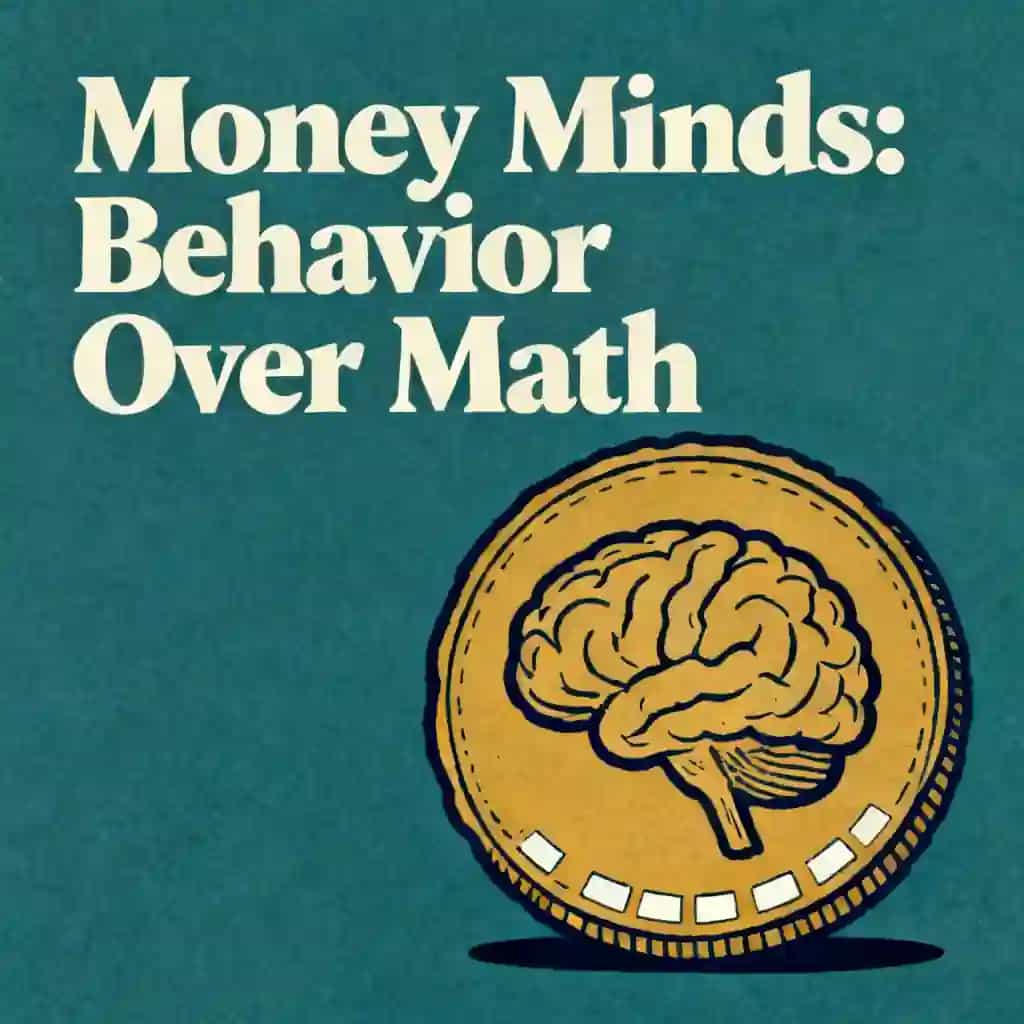
Money scripts are the 'why' behind the 'what.' They are unconscious, deeply held beliefs that act as an unwritten code of rules for how we handle every cent, often formed when we are just kids.
Generated by Brandy
I want to learn about Money Scripts and financial behavior. Specifically, how to help clients understand and navigate their financial behaviors.






Häufig gestellte Fragen
Money scripts are unconscious, deeply held beliefs about money that act as an unwritten code for how we handle our finances. Often formed during childhood, these scripts explain the psychology behind why people fail to follow even the most perfect financial plans. According to the podcast, these beliefs are predictive of your financial reality, meaning they can often determine your income level, net worth, and whether you carry credit card debt.
Dr. Brad Klontz is a leading researcher in financial psychology who identified four primary types of money scripts: Money Avoidance, Money Worship, Money Status, and Money Vigilance. His research suggests that these scripts are the "why" behind our financial "what." By identifying which script an individual follows, professionals can better understand the invisible forces pulling people away from rational math-based decisions and toward specific financial habits.
Many people struggle to follow financial plans because humans do not make purely rational decisions based on math or spreadsheets. As discussed by Lena and Miles, there is often an invisible hand pulling individuals in the opposite direction of their goals. This disconnect occurs because our deeply ingrained money scripts override logical recommendations, leading to a gap between knowing what to do and actually executing those financial changes in real life.
Yes, research into financial psychology indicates that money scripts are actually predictive of an individual's economic status. By understanding a person's specific money script, experts can often guess their income level, overall net worth, and even their likelihood of carrying credit card debt. These unconscious beliefs serve as the foundation for our financial habits, making them a critical factor in determining long-term financial health and success.
Von Columbia University Alumni in San Francisco entwickelt
"Instead of endless scrolling, I just hit play on BeFreed. It saves me so much time."


"I never knew where to start with nonfiction—BeFreed’s book lists turned into podcasts gave me a clear path."


"Perfect balance between learning and entertainment. Finished ‘Thinking, Fast and Slow’ on my commute this week."
"Crazy how much I learned while walking the dog. BeFreed = small habits → big gains."
"Reading used to feel like a chore. Now it’s just part of my lifestyle."

"Feels effortless compared to reading. I’ve finished 6 books this month already."
"BeFreed turned my guilty doomscrolling into something that feels productive and inspiring."

"BeFreed turned my commute into learning time. 20-min podcasts are perfect for finishing books I never had time for."
"BeFreed replaced my podcast queue. Imagine Spotify for books — that’s it. 🙌"

"It is great for me to learn something from the book without reading it."
"The themed book list podcasts help me connect ideas across authors—like a guided audio journey."
"Makes me feel smarter every time before going to work"
 Ask ChatGPT
 Ask Claude
Von Columbia University Alumni in San Francisco entwickelt
"Instead of endless scrolling, I just hit play on BeFreed. It saves me so much time."
"I never knew where to start with nonfiction—BeFreed’s book lists turned into podcasts gave me a clear path."
"Perfect balance between learning and entertainment. Finished ‘Thinking, Fast and Slow’ on my commute this week."
"Crazy how much I learned while walking the dog. BeFreed = small habits → big gains."
"Reading used to feel like a chore. Now it’s just part of my lifestyle."
"Feels effortless compared to reading. I’ve finished 6 books this month already."
"BeFreed turned my guilty doomscrolling into something that feels productive and inspiring."
"BeFreed turned my commute into learning time. 20-min podcasts are perfect for finishing books I never had time for."
"BeFreed replaced my podcast queue. Imagine Spotify for books — that’s it. 🙌"
"It is great for me to learn something from the book without reading it."
"The themed book list podcasts help me connect ideas across authors—like a guided audio journey."
"Makes me feel smarter every time before going to work"
"Instead of endless scrolling, I just hit play on BeFreed. It saves me so much time."
"I never knew where to start with nonfiction—BeFreed’s book lists turned into podcasts gave me a clear path."
"Perfect balance between learning and entertainment. Finished ‘Thinking, Fast and Slow’ on my commute this week."
"Crazy how much I learned while walking the dog. BeFreed = small habits → big gains."
"Reading used to feel like a chore. Now it’s just part of my lifestyle."
"Feels effortless compared to reading. I’ve finished 6 books this month already."
"BeFreed turned my guilty doomscrolling into something that feels productive and inspiring."
"BeFreed turned my commute into learning time. 20-min podcasts are perfect for finishing books I never had time for."
"BeFreed replaced my podcast queue. Imagine Spotify for books — that’s it. 🙌"
"It is great for me to learn something from the book without reading it."
"The themed book list podcasts help me connect ideas across authors—like a guided audio journey."
"Makes me feel smarter every time before going to work"
"Instead of endless scrolling, I just hit play on BeFreed. It saves me so much time."
"I never knew where to start with nonfiction—BeFreed’s book lists turned into podcasts gave me a clear path."
"Perfect balance between learning and entertainment. Finished ‘Thinking, Fast and Slow’ on my commute this week."
"Crazy how much I learned while walking the dog. BeFreed = small habits → big gains."
"Reading used to feel like a chore. Now it’s just part of my lifestyle."
"Feels effortless compared to reading. I’ve finished 6 books this month already."
"BeFreed turned my guilty doomscrolling into something that feels productive and inspiring."
"BeFreed turned my commute into learning time. 20-min podcasts are perfect for finishing books I never had time for."
"BeFreed replaced my podcast queue. Imagine Spotify for books — that’s it. 🙌"
"It is great for me to learn something from the book without reading it."
"The themed book list podcasts help me connect ideas across authors—like a guided audio journey."
"Makes me feel smarter every time before going to work"







![[0f72827a-c520-4535-852d-24ab426e98ff:c0000] the-psychology-of-money-by-morgan-housel_260801_124238.pdf p1-1](/_next/image?url=https%3A%2F%2Fd1y2du6z1jfm9e.cloudfront.net%2Fassets%2Fpodcast%2Fyellow.png&w=1024&q=50)
![[0f72827a-c520-4535-852d-24ab426e98ff:c0001] the-psychology-of-money-by-morgan-housel_260801_124238.pdf p1-1](/_next/image?url=https%3A%2F%2Fd1y2du6z1jfm9e.cloudfront.net%2Fassets%2Fpodcast%2Fgreen.png&w=1024&q=50)
![[0f72827a-c520-4535-852d-24ab426e98ff:c0002] the-psychology-of-money-by-morgan-housel_260801_124238.pdf p1-1](/_next/image?url=https%3A%2F%2Fd1y2du6z1jfm9e.cloudfront.net%2Fassets%2Fpodcast%2Fblue.png&w=1024&q=50)