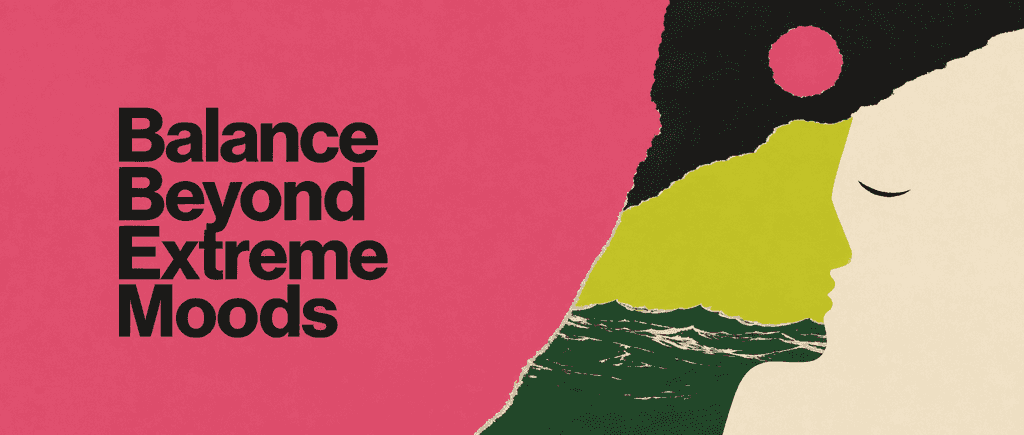
Mild BPD: Moving Beyond the Misconceptions
BPD is often misunderstood as a fixed trait rather than a pattern of emotional flooding. Learn to navigate the criteria and build tools for stability.

Bestes Zitat aus Mild BPD: Moving Beyond the Misconceptions
We’re not trying to break the microphone; we’re trying to train the person to be a masterful sound engineer. It’s a shift from being a victim of the noise to being the one at the mixing board.
Generated by Cathy
Can you help to create a lesson plan on mild borderline personality disorders

Häufig gestellte Fragen
This analogy explains that individuals with mild BPD often have an emotional system that is exquisitely sensitive, much like a professional-grade microphone. While this allows for incredible empathy and a rich experience of life, it also means they pick up on the subtlest shifts in tone or body language. When the "gain" is turned up too high, minor social cues or setbacks can result in "feedback," making a small comment feel like a deafening roar of criticism or a catastrophic failure.
The script describes a biological "race" between two parts of the brain: the amygdala and the prefrontal cortex. In a brain wired with BPD traits, the amygdala (the smoke detector) is on a hair trigger for relational threats like rejection. It triggers a fight-or-flight response instantly. Meanwhile, the prefrontal cortex (the logical braking system) often experiences a lag. By the time the logical brain comes online to provide perspective, the emotional accelerator has already led to an impulsive reaction or an intense outburst.
Splitting is a psychological defense mechanism where the brain, flooded by fear, loses the ability to see "gray areas" and categorizes people as either "all good" or "all bad." This is often driven by the "Relational Seesaw," a tug-of-war between the fear of being abandoned (which drives a need for closeness) and the fear of engulfment or losing one's identity (which drives a need to push people away). Splitting simplifies a complex emotional world by "rejecting" someone first to protect the individual from anticipated pain.
Since a person with BPD may feel like a "moving target" or a "chameleon" based on their current mood, the script suggests using a "Values Compass." While feelings change like the weather, values—such as kindness, learning, or creativity—remain constant. By focusing on actions that align with these values rather than reacting to temporary emotions, an individual can build a stable sense of self and agency that doesn't depend on their current internal "fog."
One of the most effective tools is the TIPP skill, which focuses on changing the body's physiology to change the mind. This includes using cold temperature (like splashing ice water on the face) to trigger the mammalian dive reflex and slow the heart rate. Other tools include the "Physiological Sigh" to off-load carbon dioxide and the "5-4-3-2-1" grounding exercise, which pulls the person out of an internal emotional storm and back into the physical environment.
Von Columbia University Alumni in San Francisco entwickelt
"Instead of endless scrolling, I just hit play on BeFreed. It saves me so much time."


"I never knew where to start with nonfiction—BeFreed’s book lists turned into podcasts gave me a clear path."


"Perfect balance between learning and entertainment. Finished ‘Thinking, Fast and Slow’ on my commute this week."
"Crazy how much I learned while walking the dog. BeFreed = small habits → big gains."
"Reading used to feel like a chore. Now it’s just part of my lifestyle."

"Feels effortless compared to reading. I’ve finished 6 books this month already."
"BeFreed turned my guilty doomscrolling into something that feels productive and inspiring."

"BeFreed turned my commute into learning time. 20-min podcasts are perfect for finishing books I never had time for."
"BeFreed replaced my podcast queue. Imagine Spotify for books — that’s it. 🙌"

"It is great for me to learn something from the book without reading it."
"The themed book list podcasts help me connect ideas across authors—like a guided audio journey."
"Makes me feel smarter every time before going to work"
Von Columbia University Alumni in San Francisco entwickelt
"Instead of endless scrolling, I just hit play on BeFreed. It saves me so much time."
"I never knew where to start with nonfiction—BeFreed’s book lists turned into podcasts gave me a clear path."
"Perfect balance between learning and entertainment. Finished ‘Thinking, Fast and Slow’ on my commute this week."
"Crazy how much I learned while walking the dog. BeFreed = small habits → big gains."
"Reading used to feel like a chore. Now it’s just part of my lifestyle."
"Feels effortless compared to reading. I’ve finished 6 books this month already."
"BeFreed turned my guilty doomscrolling into something that feels productive and inspiring."
"BeFreed turned my commute into learning time. 20-min podcasts are perfect for finishing books I never had time for."
"BeFreed replaced my podcast queue. Imagine Spotify for books — that’s it. 🙌"
"It is great for me to learn something from the book without reading it."
"The themed book list podcasts help me connect ideas across authors—like a guided audio journey."
"Makes me feel smarter every time before going to work"
"Instead of endless scrolling, I just hit play on BeFreed. It saves me so much time."
"I never knew where to start with nonfiction—BeFreed’s book lists turned into podcasts gave me a clear path."
"Perfect balance between learning and entertainment. Finished ‘Thinking, Fast and Slow’ on my commute this week."
"Crazy how much I learned while walking the dog. BeFreed = small habits → big gains."
"Reading used to feel like a chore. Now it’s just part of my lifestyle."
"Feels effortless compared to reading. I’ve finished 6 books this month already."
"BeFreed turned my guilty doomscrolling into something that feels productive and inspiring."
"BeFreed turned my commute into learning time. 20-min podcasts are perfect for finishing books I never had time for."
"BeFreed replaced my podcast queue. Imagine Spotify for books — that’s it. 🙌"
"It is great for me to learn something from the book without reading it."
"The themed book list podcasts help me connect ideas across authors—like a guided audio journey."
"Makes me feel smarter every time before going to work"
"Instead of endless scrolling, I just hit play on BeFreed. It saves me so much time."
"I never knew where to start with nonfiction—BeFreed’s book lists turned into podcasts gave me a clear path."
"Perfect balance between learning and entertainment. Finished ‘Thinking, Fast and Slow’ on my commute this week."
"Crazy how much I learned while walking the dog. BeFreed = small habits → big gains."
"Reading used to feel like a chore. Now it’s just part of my lifestyle."
"Feels effortless compared to reading. I’ve finished 6 books this month already."
"BeFreed turned my guilty doomscrolling into something that feels productive and inspiring."
"BeFreed turned my commute into learning time. 20-min podcasts are perfect for finishing books I never had time for."
"BeFreed replaced my podcast queue. Imagine Spotify for books — that’s it. 🙌"
"It is great for me to learn something from the book without reading it."
"The themed book list podcasts help me connect ideas across authors—like a guided audio journey."
"Makes me feel smarter every time before going to work"