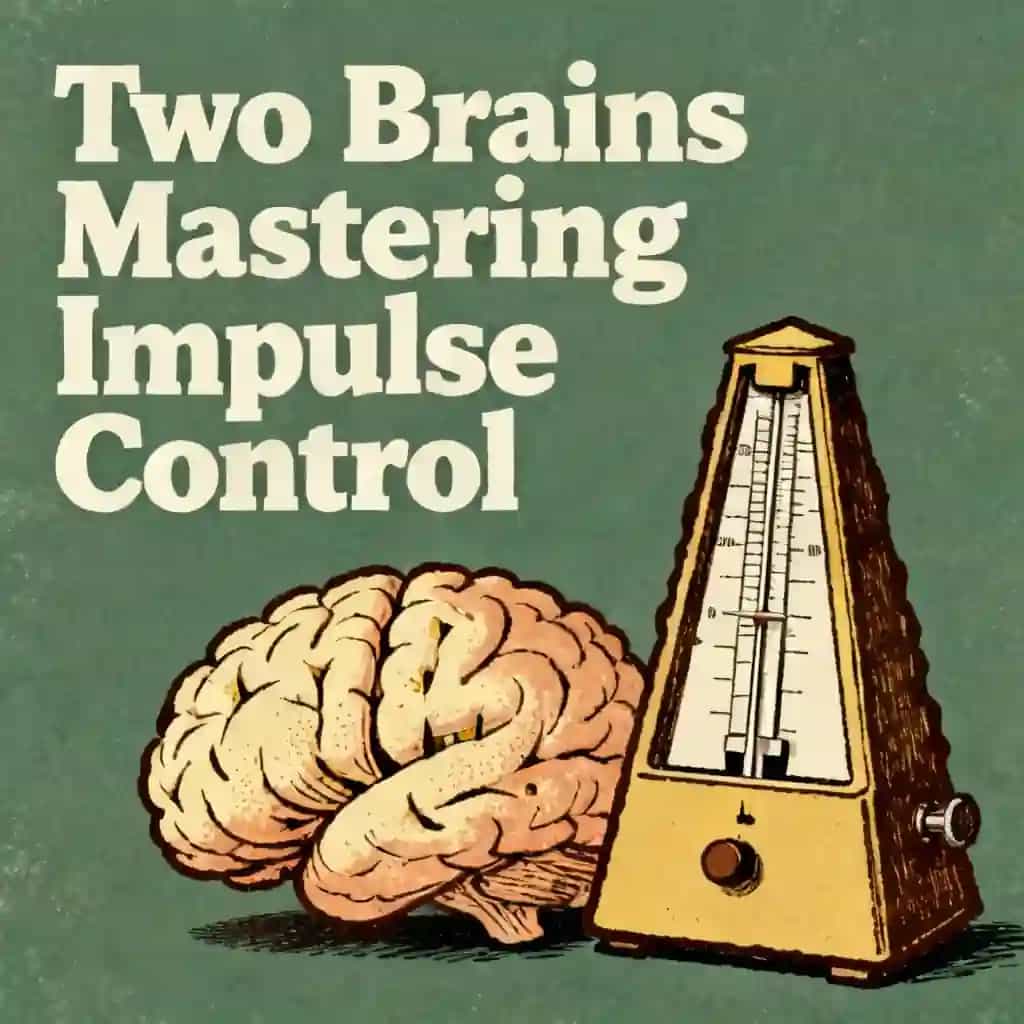
Mastering the Gap: From Impulse to Insight
Learn how to escape the 'Reaction Trap' by using psychological distancing to regain control. Discover practical tools to silence your survival mode and transform impulsive outbursts into thoughtful responses.

Bestes Zitat aus Mastering the Gap: From Impulse to Insight
It’s about creating a gap between the stimulus—the thing that happens—and your response. In that split second of distance, you find your power to choose who you want to be.
Generated by Freedee_DB074FEA
To make myself reaction less

Häufig gestellte Fragen
The Reaction Trap is an impulsive, high-intensity emotional burst where feelings hijack the brain before a person can think clearly. During these moments, research shows that individuals literally lose their "wisdom" because the prefrontal cortex—the part of the brain responsible for rational thinking—goes quiet. Meanwhile, the amygdala takes over, shifting the brain into a primitive survival mode that prioritizes reactive defense over thoughtful response.
While traditional mindfulness often focuses on being fully present in the moment, detached mindfulness adds a layer of psychological separation. It is based on the "Observer Perspective," where you recognize that you are the person noticing an emotion rather than the emotion itself. Using the metaphor of a movie theater, it is the shift from being immersed in the characters on screen to realizing you are simply an audience member sitting in a chair watching light hit a screen. This separation helps deactivate the brain's emotional alarm system.
According to Construal-Level Theory, there are four ways to create psychological distance: spatial, temporal, social, and hypothetical. Spatial distance involves imagining a situation from far away, like viewing a problem from the moon. Temporal distance involves looking at an event from a future point in time, such as asking if it will matter in a year. Social distance means taking the perspective of a neutral third party, like a reporter. Finally, hypothetical distance involves reminding oneself that a "worst-case scenario" is just a thought and not a current reality.
Suppression involves trying to hide outward reactions or "stuffing feelings down," which is cognitively taxing and actually increases internal physiological stress, such as heart rate and blood pressure. In contrast, distancing "turns the heat down" by changing the internal meaning of the event. Because distancing helps the brain process stressors from a safe, objective viewpoint, it leads to lower emotional distress and creates sustained, long-term changes in how the brain evaluates negative content.
Third-Person Self-Talk is a technique where you address yourself by your own name during a stressful moment—for example, saying "Lena, why are you feeling this way?" instead of "Why am I feeling this way?" This linguistic shift helps the brain engage in "self-projection," moving the perspective from the "here and now" to a more objective state. It allows an individual to act as their own wise advisor or coach, making it easier to regulate emotions and avoid getting "stuck" in a personal reaction.
Von Columbia University Alumni in San Francisco entwickelt
"Instead of endless scrolling, I just hit play on BeFreed. It saves me so much time."


"I never knew where to start with nonfiction—BeFreed’s book lists turned into podcasts gave me a clear path."


"Perfect balance between learning and entertainment. Finished ‘Thinking, Fast and Slow’ on my commute this week."
"Crazy how much I learned while walking the dog. BeFreed = small habits → big gains."
"Reading used to feel like a chore. Now it’s just part of my lifestyle."

"Feels effortless compared to reading. I’ve finished 6 books this month already."
"BeFreed turned my guilty doomscrolling into something that feels productive and inspiring."

"BeFreed turned my commute into learning time. 20-min podcasts are perfect for finishing books I never had time for."
"BeFreed replaced my podcast queue. Imagine Spotify for books — that’s it. 🙌"

"It is great for me to learn something from the book without reading it."
"The themed book list podcasts help me connect ideas across authors—like a guided audio journey."
"Makes me feel smarter every time before going to work"
 Ask ChatGPT
 Ask Claude
Von Columbia University Alumni in San Francisco entwickelt
"Instead of endless scrolling, I just hit play on BeFreed. It saves me so much time."
"I never knew where to start with nonfiction—BeFreed’s book lists turned into podcasts gave me a clear path."
"Perfect balance between learning and entertainment. Finished ‘Thinking, Fast and Slow’ on my commute this week."
"Crazy how much I learned while walking the dog. BeFreed = small habits → big gains."
"Reading used to feel like a chore. Now it’s just part of my lifestyle."
"Feels effortless compared to reading. I’ve finished 6 books this month already."
"BeFreed turned my guilty doomscrolling into something that feels productive and inspiring."
"BeFreed turned my commute into learning time. 20-min podcasts are perfect for finishing books I never had time for."
"BeFreed replaced my podcast queue. Imagine Spotify for books — that’s it. 🙌"
"It is great for me to learn something from the book without reading it."
"The themed book list podcasts help me connect ideas across authors—like a guided audio journey."
"Makes me feel smarter every time before going to work"
"Instead of endless scrolling, I just hit play on BeFreed. It saves me so much time."
"I never knew where to start with nonfiction—BeFreed’s book lists turned into podcasts gave me a clear path."
"Perfect balance between learning and entertainment. Finished ‘Thinking, Fast and Slow’ on my commute this week."
"Crazy how much I learned while walking the dog. BeFreed = small habits → big gains."
"Reading used to feel like a chore. Now it’s just part of my lifestyle."
"Feels effortless compared to reading. I’ve finished 6 books this month already."
"BeFreed turned my guilty doomscrolling into something that feels productive and inspiring."
"BeFreed turned my commute into learning time. 20-min podcasts are perfect for finishing books I never had time for."
"BeFreed replaced my podcast queue. Imagine Spotify for books — that’s it. 🙌"
"It is great for me to learn something from the book without reading it."
"The themed book list podcasts help me connect ideas across authors—like a guided audio journey."
"Makes me feel smarter every time before going to work"
"Instead of endless scrolling, I just hit play on BeFreed. It saves me so much time."
"I never knew where to start with nonfiction—BeFreed’s book lists turned into podcasts gave me a clear path."
"Perfect balance between learning and entertainment. Finished ‘Thinking, Fast and Slow’ on my commute this week."
"Crazy how much I learned while walking the dog. BeFreed = small habits → big gains."
"Reading used to feel like a chore. Now it’s just part of my lifestyle."
"Feels effortless compared to reading. I’ve finished 6 books this month already."
"BeFreed turned my guilty doomscrolling into something that feels productive and inspiring."
"BeFreed turned my commute into learning time. 20-min podcasts are perfect for finishing books I never had time for."
"BeFreed replaced my podcast queue. Imagine Spotify for books — that’s it. 🙌"
"It is great for me to learn something from the book without reading it."
"The themed book list podcasts help me connect ideas across authors—like a guided audio journey."
"Makes me feel smarter every time before going to work"