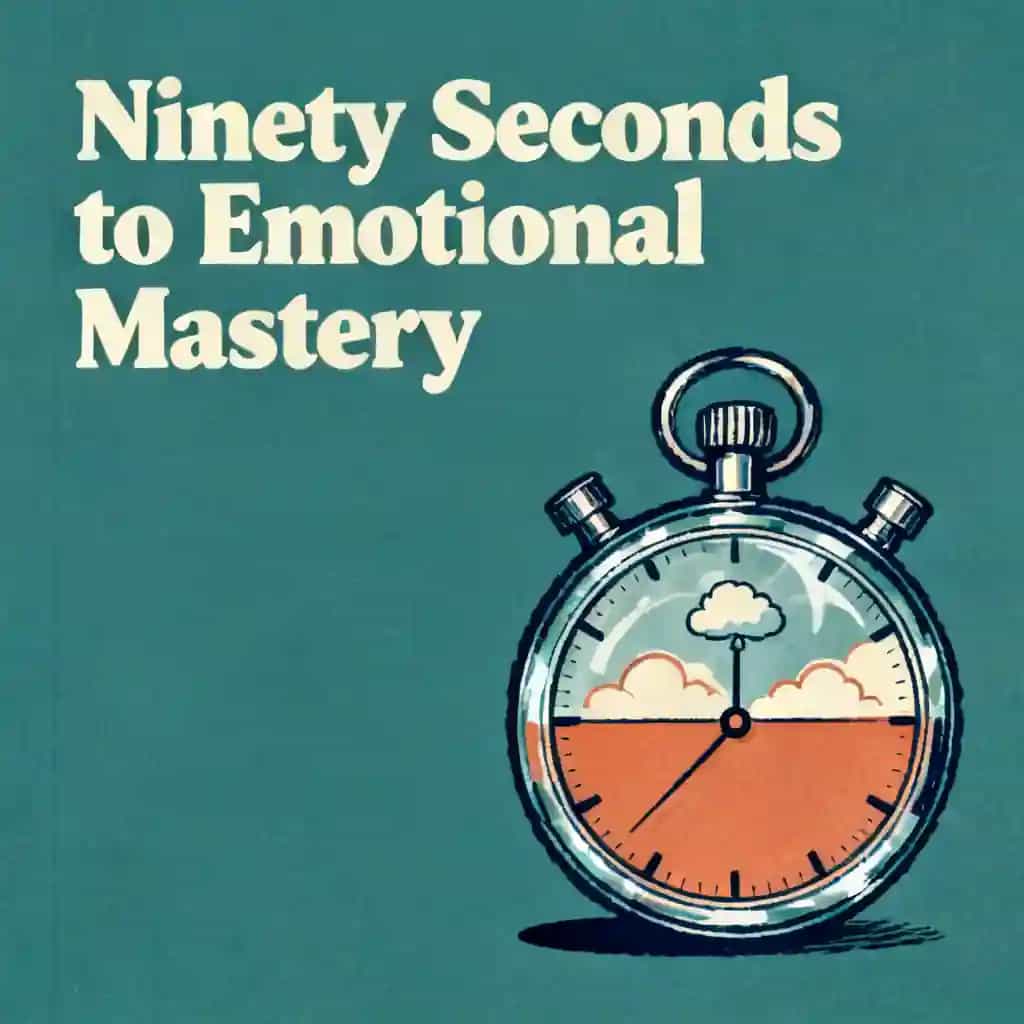
Die Maske ablegen: Emotionale Kontrolle ohne Selbstverleugnung
Erfahre, warum das Unterdrücken von Gefühlen oft das Gegenteil bewirkt und wie du mit der 90-Sekunden-Regel sowie gezielten Strategien echte emotionale Freiheit gewinnst.

Bestes Zitat aus Die Maske ablegen: Emotionale Kontrolle ohne Selbstverleugnung
Zwischen Reiz und Reaktion liegt ein Raum, und in diesem Raum liegt unsere Macht und unsere Freiheit. Je besser wir unsere Emotionsregulation trainieren, desto größer wird dieser Raum.

Diese Audiolektion wurde von einem BeFreed-Community-Mitglied erstellt
I want to Stop Showing my Emotions so much

Häufig gestellte Fragen
According to the script, a physiological emotional response typically lasts only about 90 seconds if you allow yourself to briefly experience it without suppression. While it may feel like an eternity in the moment, the intense chemical surge in the body is relatively short-lived. The difficulty usually arises when we try to fight the emotion, which can actually make the feeling more intense and long-lasting.
The "Red Zone" refers to a state of high tension, specifically above 71 percent, where the brain's emotional alarm center (the amygdala) takes control and the logical thinking center (the prefrontal cortex) goes "offline." In this state, physical symptoms like a racing heart and shallow breathing occur, making it nearly impossible to think rationally. Because the logical brain is blocked, people in this zone often act impulsively or say things they later regret.
The 446-breathing technique involves inhaling for four seconds, holding the breath for four seconds, and exhaling slowly for six seconds. This specific rhythm, especially the long exhalation, activates the parasympathetic nervous system, which acts as the body's natural brake. By practicing this for three to five minutes, you signal to your biological system that you are safe, which lowers your heart rate and blood pressure, eventually allowing your rational mind to regain control.
Emotional granularity is the ability to precisely name and differentiate between specific feelings rather than using vague terms like "stressed" or "bad." When you "label" an emotion accurately—distinguishing, for example, between frustration, fear, or disappointment—the amygdala begins to calm down almost immediately. This process, often called "emotional labeling," helps the brain understand the specific problem it needs to solve and reduces the overwhelming power of the feeling.
Cognitive reappraisal involves actively questioning and changing your interpretation of a stressful situation. Since emotions react to our evaluation of reality rather than reality itself, changing the narrative can change the feeling. For example, instead of thinking a driver cut you off to provoke you, you might consider they are in a rush for an emergency. This shift in perspective can transform an impulse of anger into a feeling of composure or even empathy.
Mehr entdecken

Master emotional self-control
Master emotional self-control
Emotional self-control is a foundational skill that impacts every aspect of life, from personal relationships to professional success. This learning plan benefits anyone experiencing emotional reactivity, those in high-pressure environments, and individuals seeking to enhance their leadership abilities and interpersonal effectiveness.

Mit schwierigen Menschen umgehen
Mit schwierigen Menschen umgehen
Dieser Lernplan ist essenziell für alle, die im Berufs- oder Privatleben durch herausfordernde Persönlichkeiten belastet werden. Er bietet praxisnahe Werkzeuge, um Souveränität zurückzugewinnen und die eigene psychische Gesundheit nachhaltig zu schützen.

Disziplin, Körpersprache & Psychologie lernen
Disziplin, Körpersprache & Psychologie lernen
Dieser Lernplan ist ideal für Führungskräfte und Ambitionierte, die ihre Selbstführung und zwischenmenschliche Wirkung optimieren wollen. Er verbindet wissenschaftliche Psychologie mit praktischer nonverbaler Kommunikation für maximale Überzeugungskraft.
Control my emotions
Control my emotions
This plan is designed for individuals seeking to transition from reactive behavior to intentional living by mastering their internal state. It is ideal for professionals and students who want to build mental resilience and emotional intelligence through science-backed techniques.

Undress yourself
Undress yourself
This plan is designed for individuals feeling disconnected from their true selves due to societal pressure or past emotional defenses. It provides a structured path for those seeking to move beyond superficial living toward a life of radical authenticity and emotional freedom.

Die Lüge
Die Lüge
In einer Welt voller Fehlinformationen ist die Fähigkeit, Täuschung zu durchschauen, eine lebensnotwendige Kompetenz. Dieser Kurs richtet sich an alle, die ihre Menschenkenntnis schärfen, sich vor Manipulation schützen und ein Leben in echter Integrität führen möchten.
Self regulation
Self regulation
In an era of constant distraction, the ability to govern one's own impulses and emotions is the ultimate competitive advantage. This plan is designed for professionals and individuals seeking to move beyond temporary motivation toward permanent behavioral transformation and self-mastery.
Kaltakquise-Angst besiegen & Vertrieb stärken
Kaltakquise-Angst besiegen & Vertrieb stärken
Dieser Lernplan ist essenziell für Vertriebsmitarbeiter und Unternehmer, die ihre Hemmungen bei der Neukundenansprache ablegen wollen. Er kombiniert psychologische Ansätze mit praktischen Verkaufstechniken, um aus Ablehnung echten Erfolg zu generieren.
Von Columbia University Alumni in San Francisco entwickelt
"Instead of endless scrolling, I just hit play on BeFreed. It saves me so much time."


"I never knew where to start with nonfiction—BeFreed’s book lists turned into podcasts gave me a clear path."


"Perfect balance between learning and entertainment. Finished ‘Thinking, Fast and Slow’ on my commute this week."
"Crazy how much I learned while walking the dog. BeFreed = small habits → big gains."
"Reading used to feel like a chore. Now it’s just part of my lifestyle."

"Feels effortless compared to reading. I’ve finished 6 books this month already."
"BeFreed turned my guilty doomscrolling into something that feels productive and inspiring."

"BeFreed turned my commute into learning time. 20-min podcasts are perfect for finishing books I never had time for."
"BeFreed replaced my podcast queue. Imagine Spotify for books — that’s it. 🙌"

"It is great for me to learn something from the book without reading it."
"The themed book list podcasts help me connect ideas across authors—like a guided audio journey."
"Makes me feel smarter every time before going to work"
Von Columbia University Alumni in San Francisco entwickelt
"Instead of endless scrolling, I just hit play on BeFreed. It saves me so much time."
"I never knew where to start with nonfiction—BeFreed’s book lists turned into podcasts gave me a clear path."
"Perfect balance between learning and entertainment. Finished ‘Thinking, Fast and Slow’ on my commute this week."
"Crazy how much I learned while walking the dog. BeFreed = small habits → big gains."
"Reading used to feel like a chore. Now it’s just part of my lifestyle."
"Feels effortless compared to reading. I’ve finished 6 books this month already."
"BeFreed turned my guilty doomscrolling into something that feels productive and inspiring."
"BeFreed turned my commute into learning time. 20-min podcasts are perfect for finishing books I never had time for."
"BeFreed replaced my podcast queue. Imagine Spotify for books — that’s it. 🙌"
"It is great for me to learn something from the book without reading it."
"The themed book list podcasts help me connect ideas across authors—like a guided audio journey."
"Makes me feel smarter every time before going to work"
"Instead of endless scrolling, I just hit play on BeFreed. It saves me so much time."
"I never knew where to start with nonfiction—BeFreed’s book lists turned into podcasts gave me a clear path."
"Perfect balance between learning and entertainment. Finished ‘Thinking, Fast and Slow’ on my commute this week."
"Crazy how much I learned while walking the dog. BeFreed = small habits → big gains."
"Reading used to feel like a chore. Now it’s just part of my lifestyle."
"Feels effortless compared to reading. I’ve finished 6 books this month already."
"BeFreed turned my guilty doomscrolling into something that feels productive and inspiring."
"BeFreed turned my commute into learning time. 20-min podcasts are perfect for finishing books I never had time for."
"BeFreed replaced my podcast queue. Imagine Spotify for books — that’s it. 🙌"
"It is great for me to learn something from the book without reading it."
"The themed book list podcasts help me connect ideas across authors—like a guided audio journey."
"Makes me feel smarter every time before going to work"
"Instead of endless scrolling, I just hit play on BeFreed. It saves me so much time."
"I never knew where to start with nonfiction—BeFreed’s book lists turned into podcasts gave me a clear path."
"Perfect balance between learning and entertainment. Finished ‘Thinking, Fast and Slow’ on my commute this week."
"Crazy how much I learned while walking the dog. BeFreed = small habits → big gains."
"Reading used to feel like a chore. Now it’s just part of my lifestyle."
"Feels effortless compared to reading. I’ve finished 6 books this month already."
"BeFreed turned my guilty doomscrolling into something that feels productive and inspiring."
"BeFreed turned my commute into learning time. 20-min podcasts are perfect for finishing books I never had time for."
"BeFreed replaced my podcast queue. Imagine Spotify for books — that’s it. 🙌"
"It is great for me to learn something from the book without reading it."
"The themed book list podcasts help me connect ideas across authors—like a guided audio journey."
"Makes me feel smarter every time before going to work"