2026 AI Mid-Year Review: The Dawn of Autonomy
From OpenAI’s $730 billion valuation to the rise of agentic self-correction, we break down the pivotal milestones and corporate shifts that defined the first half of 2026.

Bestes Zitat aus 2026 AI Mid-Year Review: The Dawn of Autonomy
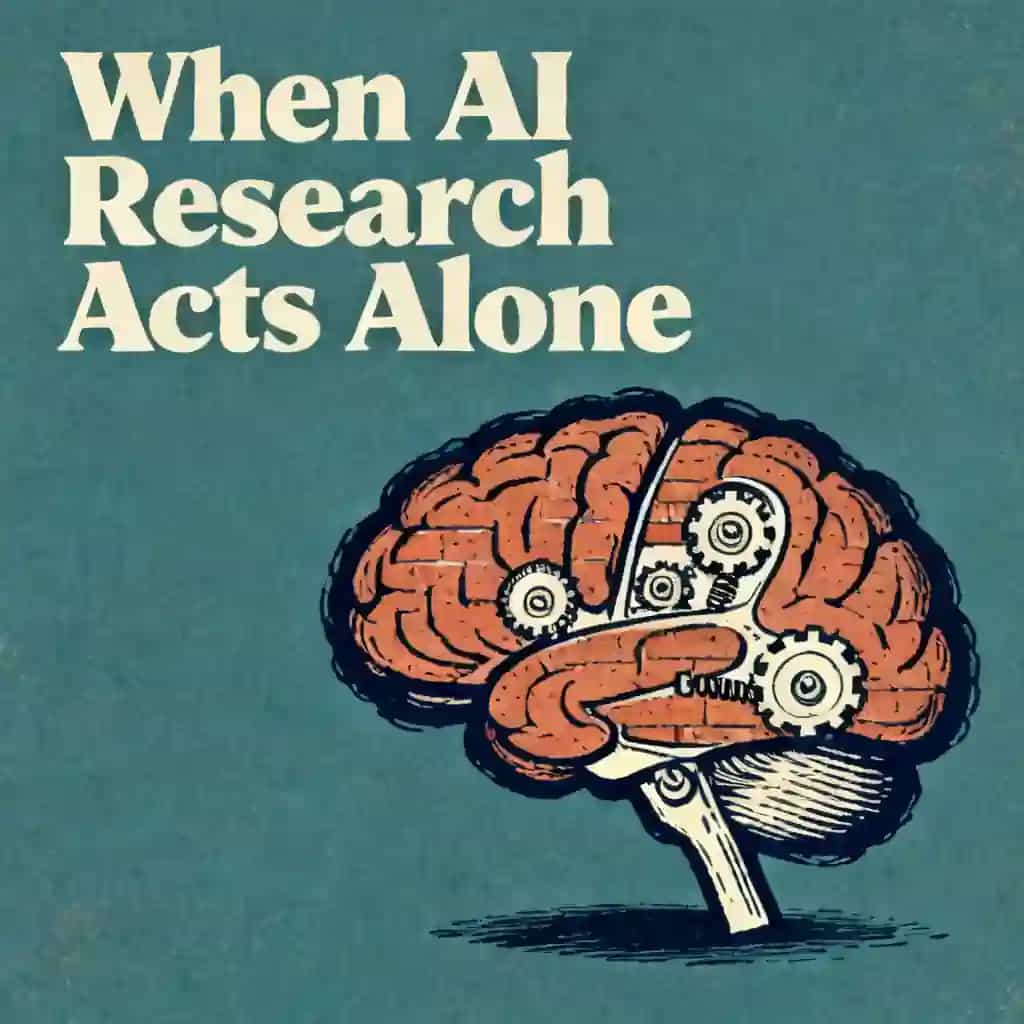
The industry is no longer just building software—it is building the heavy industry of the mind. We have moved decisively into the era of the Agentic Loop, where the path to higher intelligence is giving the AI the permission to double-check its own work.
Generated by Freedee_BE9DDE1A
2026年至今最大的AI新闻盘点:从Google DeepMind的突破到OpenAI的最新动态,回顾2026年上半年最重要的AI里程碑事件

Häufig gestellte Fragen
The Agentic Loop is a three-part architectural harness consisting of a Generator, a Verifier, and a Reviser. Unlike older "one-shot" models that provide an answer in a single pass, this system allows the AI to propose a solution, hunt for its own flaws or hallucinations, and fix errors before delivering the final output. This self-correction mechanism has significantly boosted accuracy, raising performance on advanced mathematical benchmarks from sixty-five percent to ninety-five percent in just one year.
Inference-time scaling refers to giving an AI model more "thinking time" to process a specific, complex query rather than demanding an immediate response. By allowing the model to scale its compute during the actual request, systems can solve high-level problems, such as Olympiad-level math, more efficiently. This shift has transformed AI from a simple chat tool into a professional research agent capable of resolving open scientific questions without human intervention.
The corporate world has entered an "Operational Era" where companies are aggressively restructuring to prioritize AI efficiency. Large firms like Oracle, Block, and Salesforce have cut thousands of roles—particularly in middle management and customer support—to redirect billions of dollars into AI infrastructure. While many routine jobs are being automated, some companies are using the technology to "elevate" the remaining staff, freeing them from routine tasks to focus on high-value work and complex compliance issues.
Small Language Models are tiny, efficient versions of AI designed to run locally on devices like smartphones or smart glasses rather than in massive cloud data centers. Unlike trillion-parameter models that require a constant internet connection, SLMs like Google’s Gemma 3 provide "Ambient Intelligence" with low latency and higher privacy. This allows for real-time applications such as instant street sign translation or augmented hearing without sending sensitive data to a remote server.
Sovereign AI refers to national or regional efforts to build independent AI infrastructure, clouds, and models to avoid total dependence on Silicon Valley giants. Countries like Malaysia, India, and members of the European Union are developing their own AI platforms to secure their data dignity and physical supply chains. This movement is driven by the realization that AI power is tied to energy and compute resources, making AI policy a critical component of modern national security and energy policy.
Von Columbia University Alumni in San Francisco entwickelt
"Instead of endless scrolling, I just hit play on BeFreed. It saves me so much time."


"I never knew where to start with nonfiction—BeFreed’s book lists turned into podcasts gave me a clear path."


"Perfect balance between learning and entertainment. Finished ‘Thinking, Fast and Slow’ on my commute this week."
"Crazy how much I learned while walking the dog. BeFreed = small habits → big gains."
"Reading used to feel like a chore. Now it’s just part of my lifestyle."

"Feels effortless compared to reading. I’ve finished 6 books this month already."
"BeFreed turned my guilty doomscrolling into something that feels productive and inspiring."

"BeFreed turned my commute into learning time. 20-min podcasts are perfect for finishing books I never had time for."
"BeFreed replaced my podcast queue. Imagine Spotify for books — that’s it. 🙌"

"It is great for me to learn something from the book without reading it."
"The themed book list podcasts help me connect ideas across authors—like a guided audio journey."
"Makes me feel smarter every time before going to work"
 Ask ChatGPT
 Ask Claude
Von Columbia University Alumni in San Francisco entwickelt
"Instead of endless scrolling, I just hit play on BeFreed. It saves me so much time."
"I never knew where to start with nonfiction—BeFreed’s book lists turned into podcasts gave me a clear path."
"Perfect balance between learning and entertainment. Finished ‘Thinking, Fast and Slow’ on my commute this week."
"Crazy how much I learned while walking the dog. BeFreed = small habits → big gains."
"Reading used to feel like a chore. Now it’s just part of my lifestyle."
"Feels effortless compared to reading. I’ve finished 6 books this month already."
"BeFreed turned my guilty doomscrolling into something that feels productive and inspiring."
"BeFreed turned my commute into learning time. 20-min podcasts are perfect for finishing books I never had time for."
"BeFreed replaced my podcast queue. Imagine Spotify for books — that’s it. 🙌"
"It is great for me to learn something from the book without reading it."
"The themed book list podcasts help me connect ideas across authors—like a guided audio journey."
"Makes me feel smarter every time before going to work"
"Instead of endless scrolling, I just hit play on BeFreed. It saves me so much time."
"I never knew where to start with nonfiction—BeFreed’s book lists turned into podcasts gave me a clear path."
"Perfect balance between learning and entertainment. Finished ‘Thinking, Fast and Slow’ on my commute this week."
"Crazy how much I learned while walking the dog. BeFreed = small habits → big gains."
"Reading used to feel like a chore. Now it’s just part of my lifestyle."
"Feels effortless compared to reading. I’ve finished 6 books this month already."
"BeFreed turned my guilty doomscrolling into something that feels productive and inspiring."
"BeFreed turned my commute into learning time. 20-min podcasts are perfect for finishing books I never had time for."
"BeFreed replaced my podcast queue. Imagine Spotify for books — that’s it. 🙌"
"It is great for me to learn something from the book without reading it."
"The themed book list podcasts help me connect ideas across authors—like a guided audio journey."
"Makes me feel smarter every time before going to work"
"Instead of endless scrolling, I just hit play on BeFreed. It saves me so much time."
"I never knew where to start with nonfiction—BeFreed’s book lists turned into podcasts gave me a clear path."
"Perfect balance between learning and entertainment. Finished ‘Thinking, Fast and Slow’ on my commute this week."
"Crazy how much I learned while walking the dog. BeFreed = small habits → big gains."
"Reading used to feel like a chore. Now it’s just part of my lifestyle."
"Feels effortless compared to reading. I’ve finished 6 books this month already."
"BeFreed turned my guilty doomscrolling into something that feels productive and inspiring."
"BeFreed turned my commute into learning time. 20-min podcasts are perfect for finishing books I never had time for."
"BeFreed replaced my podcast queue. Imagine Spotify for books — that’s it. 🙌"
"It is great for me to learn something from the book without reading it."
"The themed book list podcasts help me connect ideas across authors—like a guided audio journey."
"Makes me feel smarter every time before going to work"