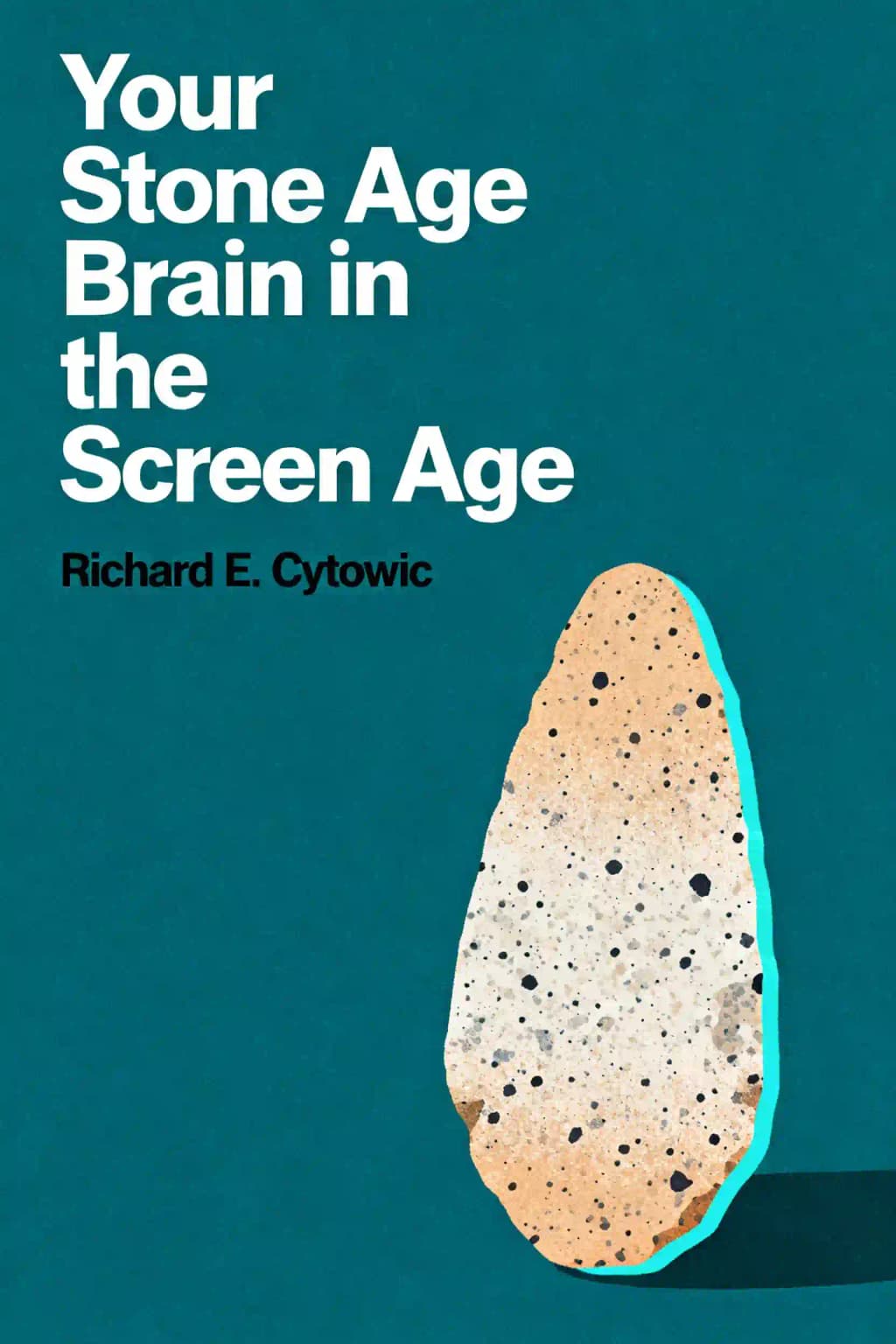
In "Your Stone Age Brain in the Screen Age," neurologist Richard Cytowic reveals why our prehistoric minds struggle with digital overload. Oliver Sacks praised how Cytowic "changed the way we think of the human brain." Can your ancient neural wiring ever adapt to endless notifications?
Richard E. Cytowic, neurologist and pioneering synesthesia researcher, explores digital distraction in Your Stone Age Brain in the Screen Age, merging neuroscience with modern sensory challenges.
A professor at George Washington University School of Medicine, Cytowic reignited scientific interest in synesthesia through bestselling works like The Man Who Tasted Shapes and Wednesday Is Indigo Blue (co-authored with David Eagleman), which won the Montaigne Medal and was praised by Oliver Sacks as "a unique and indispensable guide."
His writing spans academic textbooks, New York Times Magazine features—including a Pulitzer-nominated cover story—and essays blending medical insight with cultural commentary.
Cytowic’s expertise has been featured in TIME, BBC documentaries, and talks at NASA and the Smithsonian. His MIT Press publications establish authority in perception studies, while his latest book addresses how ancient neural wiring collides with today’s digital overload. Over 1.2 million copies of his works have circulated globally, translated into 18 languages.
Your Stone Age Brain in the Screen Age explores how evolutionary biology clashes with modern technology, explaining why our brains—optimized for survival in prehistoric environments—struggle with digital distraction and sensory overload. Richard Cytowic, a neurologist, details mechanisms like dopamine-driven reward systems and the orienting reflex, showing how tech companies exploit these neural pathways. The book offers science-backed strategies to regain focus and reduce screen dependency.
This book is essential for parents, educators, and professionals grappling with digital overstimulation. It’s particularly valuable for those seeking to understand how screens rewire attention spans, harm young developing brains, and undermine learning. Cytowic’s insights also appeal to neuroscience enthusiasts interested in the intersection of biology and technology.
Yes—Cytowic combines rigorous neuroscience with actionable advice, making it a standout guide for navigating screen addiction. Praised for its clarity, the book translates complex concepts like neurotransmitter functions into relatable takeaways. Its blend of evolutionary biology and modern tech criticism offers fresh perspective, earning endorsements from academics and general readers alike.
Key ideas include:
Cytowic recommends:
The book warns that screens condition children to seek instant gratification, impairing patience and deep learning. Developing brains are especially vulnerable to dopamine-driven feedback loops, which may stunt emotional regulation and critical thinking. Cytowic urges limits on screen time and more unstructured play to protect cognitive development.
Some readers may find its neurobiological focus too technical, though Cytowic avoids jargon. Others might desire more policy-level solutions beyond individual strategies. However, its evidence-based approach and practical frameworks are widely praised for bridging science and self-help.
While both address tech overuse, Cytowic’s book emphasizes the why of addiction (Stone Age brain wiring) rather than the how of habit change. It offers a stronger neuroscientific foundation but fewer step-by-step productivity hacks, making it a complementary read to Newport’s tactical guides.
As AI and immersive tech escalate screen time, Cytowic’s warnings about attention erosion and sensory overload grow more urgent. The book’s framework helps readers navigate emerging tools like VR and generative AI without losing cognitive autonomy, making it a timely resource.
Cytowic’s 40+ years in neurology, including pioneering work on synesthesia, grounds the book in clinical expertise. His TED-style storytelling makes complex science accessible, while his critiques of tech draw on firsthand observations of patient struggles with screen addiction.
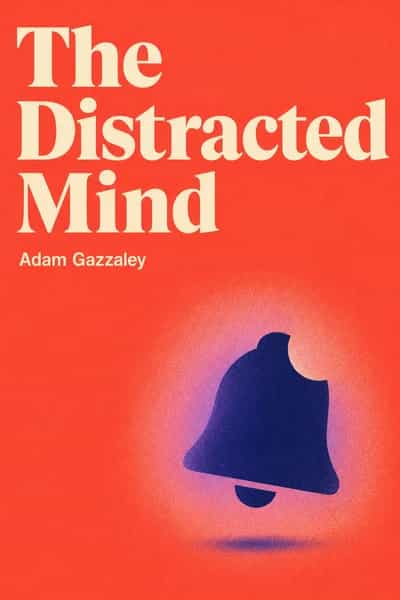
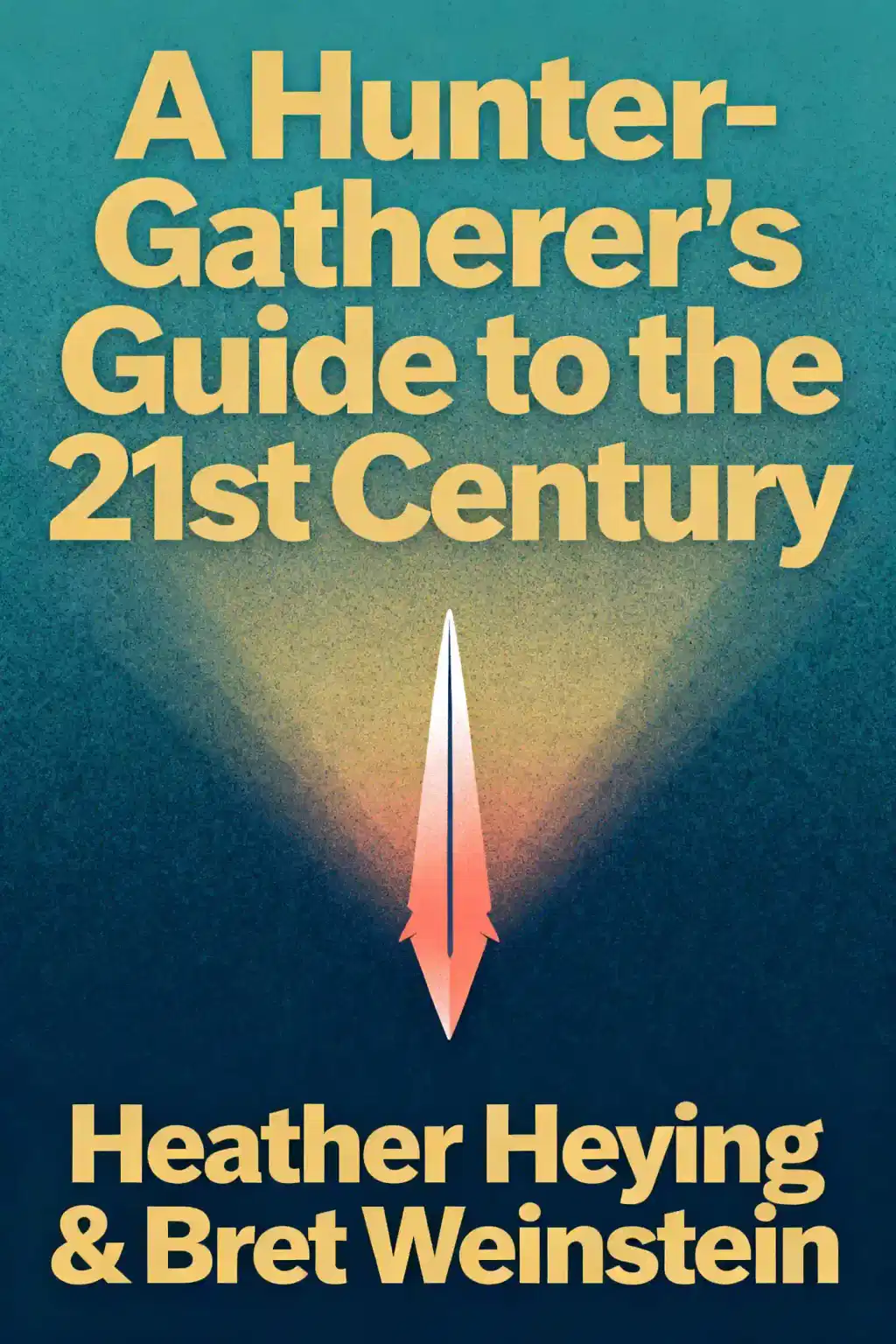
For further reading, try:
Erlebe das Buch durch die Stimme des Autors
Verwandle Wissen in fesselnde, beispielreiche Erkenntnisse
Erfasse Schlüsselideen blitzschnell für effektives Lernen
Genieße das Buch auf unterhaltsame und ansprechende Weise
Our ancient reward circuits have been hijacked by modern technology.
Attention shifting is metabolically expensive.
The human brain faces fundamental biological limitations.
Media multitasking has particularly concerning implications.
Zerlegen Sie die Kernideen von Your Stone Age Brain in the Screen Age in leicht verständliche Punkte, um zu verstehen, wie innovative Teams kreieren, zusammenarbeiten und wachsen.
Erleben Sie Your Stone Age Brain in the Screen Age durch lebhafte Erzählungen, die Innovationslektionen in unvergessliche und anwendbare Momente verwandeln.
Fragen Sie alles, wählen Sie Ihren Lernstil und gestalten Sie Erkenntnisse, die wirklich zu Ihnen passen.

Von Columbia University Alumni in San Francisco entwickelt
"Instead of endless scrolling, I just hit play on BeFreed. It saves me so much time."
"I never knew where to start with nonfiction—BeFreed’s book lists turned into podcasts gave me a clear path."
"Perfect balance between learning and entertainment. Finished ‘Thinking, Fast and Slow’ on my commute this week."
"Crazy how much I learned while walking the dog. BeFreed = small habits → big gains."
"Reading used to feel like a chore. Now it’s just part of my lifestyle."
"Feels effortless compared to reading. I’ve finished 6 books this month already."
"BeFreed turned my guilty doomscrolling into something that feels productive and inspiring."
"BeFreed turned my commute into learning time. 20-min podcasts are perfect for finishing books I never had time for."
"BeFreed replaced my podcast queue. Imagine Spotify for books — that’s it. 🙌"
"It is great for me to learn something from the book without reading it."
"The themed book list podcasts help me connect ideas across authors—like a guided audio journey."
"Makes me feel smarter every time before going to work"
Von Columbia University Alumni in San Francisco entwickelt

Erhalten Sie die Your Stone Age Brain in the Screen Age-Zusammenfassung als kostenloses PDF oder EPUB. Drucken Sie es aus oder lesen Sie es jederzeit offline.
Imagine picking up your phone 40,000 times a year-that's not science fiction, it's your reality. While tech executives strictly limit their own children's screen time, they've engineered products that keep the rest of us perpetually tethered to our devices. This isn't accidental. Our Stone Age brains-exquisitely tuned through 200,000 years of evolution to detect change and respond to rewards-have met their match in modern technology. That rustling bush that might have signaled danger to our ancestors has been replaced by the ping of a notification, triggering the same ancient survival circuits. The mismatch between our evolutionary programming and digital environments creates a perfect storm for attention capture and addiction-what former Google ethicist Tristan Harris calls "a race to the bottom of the brain stem." The brain's reward system didn't evolve for happiness but survival, driving us to constantly seek more through powerful dopamine pathways. While a smaller endorphin system provides brief satisfaction, the wanting never truly ends. This biological reality explains our compulsive phone-checking despite diminishing returns. Each notification triggers the same dopamine response that once rewarded finding food or avoiding danger. Social media platforms particularly exploit this mechanism through variable reward schedules-you never know which scroll will yield the dopamine-triggering "like," just as our ancestors never knew which berry bush would yield fruit.
Your brain is an energy hog. Despite comprising just 2% of your body weight, it consumes 20% of your daily calories - with children's brains demanding even more. This high energy requirement creates a fundamental constraint on attention that most discussions about screen dependency overlook. Attention shifting - which screens force us to do constantly - is metabolically expensive, quickly depleting our limited neural resources. When we exceed our biological attention limits, we experience mental fatigue, reduced focus, and memory errors - that "brain fog" after excessive screen time. While computers can rapidly switch between processes, our brains face biological limitations. Neural processing maxes out at roughly 1,000 operations per second (compared to billions in computers), and listening to someone speak consumes about half our cognitive bandwidth. The myth that we use only 10% of our brains is wrong. We use all our neurons, just not simultaneously. For efficiency, only 1-16% of neurons should be active at any moment due to energy constraints. When energy demands exceed capacity, the brain "slashes expenses," causing cognitive impairment. That mental exhaustion after screen time isn't weakness - it's your brain's energy budget running dry.
Stanford research reveals a painful truth: self-proclaimed multitaskers perform worse on cognitive tests, struggling with filtering information, managing working memory, and switching between tasks. Yet they maintain an inflated self-assessment-a classic Dunning-Kruger effect where the least competent overestimate their abilities most. The consequences extend beyond personal productivity. In healthcare, doctors distracted by electronic records miss crucial patient cues. In one case, a physician's distraction by a text led to missed medication updates, causing a child's kidney failure. On streets, "phombies" (phone zombies) create hazards-only 22% check for vehicles before crossing, while 30% regularly walk into objects, contributing to rising pedestrian deaths. Device distraction also disrupts collective movement. A 2021 study found that when just 8% of people in a crowd were on phones, overall movement efficiency decreased by 34%. These individuals took 18% longer to navigate routes and occupied 24% more space while walking, creating ripple effects throughout the crowd-exactly what happens when someone blocks the sidewalk while texting.
We're facing an empathy drought, partly due to digital devices delivering on-demand content. We respond to these devices socially, but this engagement lacks crucial elements of human interaction-particularly eye contact. Our Stone Age brains evolved for social cooperation, with emotional networks responding faster than reasoning networks. The human brain dedicates extensive neural space to analyzing faces, with regions projecting to the amygdala for emotional judgment. We naturally read facial expressions from childhood, yet screens neither make eye contact nor provide readable emotional cues. Harry Harlow's landmark experiments with young chimpanzees demonstrated the importance of emotional engagement and physical touch for healthy development. Modern educators observe students in "digital pits of despair" completing entire school days without speaking to others. Stanford research analyzing 14,000 college students found empathy declining sharply as technology use increased, while narcissism rises. The consequences appear in rising rates of loneliness, anxiety, and depression as genuine human connection becomes increasingly rare.
Sleep isn't passive downtime-it's when your brain performs critical work. During REM sleep, the brain makes creative connections impossible while awake, solving complex problems and integrating new information. Even minor sleep deprivation degrades mental performance for days. The bluish light from LED screens disrupts circadian patterns. Our hypothalamus is sensitive to blue light, and modern screens emit wavelengths that trick our brains into thinking it's daytime. Teenagers have naturally delayed circadian rhythms and are twice as sensitive to evening light, with laptop exposure after dusk significantly suppressing melatonin production. Sleep provides crucial brain maintenance, functioning like a cleaning crew removing toxins through the glymphatic system. During deep sleep, memories transfer from the hippocampus to the neocortex for long-term storage. "Sleep pressure" builds throughout wakefulness, increasing proteins associated with Alzheimer's disease, and can only be relieved through quality sleep.
Fighting screen distractions isn't about abandoning technology but regaining control of your attention. Simple adjustments like reducing display intensity and adjusting color settings help minimize harmful blue light. Consider rethinking internet habits, practicing niksen (Dutch "doing nothing"), immersing in nature, reading physical books, writing by hand, and avoiding screens during meals. Remember that "free" digital services mean you're the product. "Zoom fatigue" stems from speaking louder than normal, processing multiple faces simultaneously, and the strain of appearing engaged. Our brains struggle with digital communication that lacks natural conversational rhythms. Physicist Alan Lightman notes that constant digital checking prevents the essential quiet time needed for creativity and self-reflection. Silence isn't emptiness but a mental space filled with possibility. Japanese aesthetics describe this quiet through concepts like sabi (beauty in solitude), wabi (simplicity), shibui (essence), aware (fragility), and yugen (hidden reality) - with wabi-sabi representing tranquility and finding beauty in imperfection.
We are the first generation navigating life with devices designed to exploit our ancient neural circuitry. This isn't about demonizing technology but recognizing its impact on our evolutionary biology. The solution is mindful engagement that respects our biological limits. Your attention is your most precious resource - more valuable than money or time. Moments spent scrolling mindlessly are moments not invested in genuine connection, creative thought, or restorative silence. Our brains evolved for movement, face-to-face interaction, and natural environments, not today's static, isolated existence. The pandemic revealed that technology cannot substitute for genuine human connection. Our minds require downtime, our brain's bandwidth is limited, and physical presence communicates more than words. When your phone beckons, ask: Is this serving my deeper needs, or am I serving an algorithm? Reclaim your attention, protect your sleep, nurture relationships, and remember that meaningful human existence happens with full presence and undivided attention.