Kapitel 1
The Silent Epidemic: When Success Feels Like Fraud
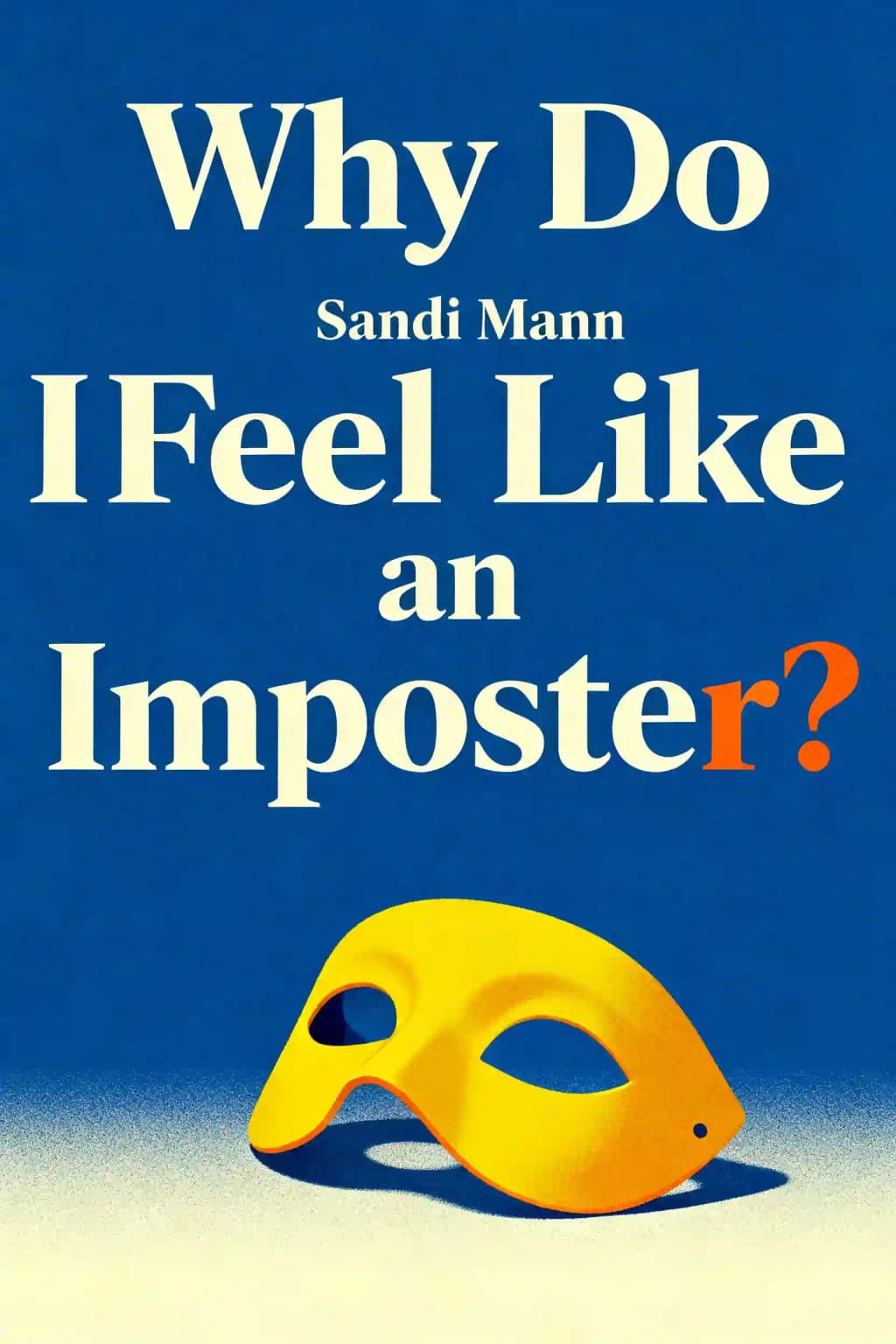
Imagine achieving everything you've worked for - the promotion, the degree, the recognition - only to be haunted by a persistent whisper: "You don't deserve this. You've fooled everyone. It's only a matter of time before they discover you're a fraud." If this sounds familiar, you're experiencing what psychologists call Imposter Syndrome, a phenomenon affecting approximately 70% of people at some point in their lives. This psychological pattern, first identified in 1978, has gained significant cultural traction in recent years, with celebrities from Maya Angelou to Tom Hanks confessing their struggles with it. The book's author, Dr. Sandi Mann, a renowned psychologist, discovered the concept as a postgraduate student and immediately recognized her own thought patterns. What began as a phenomenon observed primarily in high-achieving women has evolved into a recognized experience affecting people across genders, professions, and life circumstances. From parents feeling inadequate to religious individuals questioning their faith, Imposter Syndrome has become a pervasive feature of modern life that transcends professional achievement.
Kapitel 2
The Anatomy of Imposter Syndrome: What It Is and Who It Affects
Imposter Syndrome manifests as a persistent belief that you're not as competent as others perceive you to be, despite evidence to the contrary. The condition has three defining characteristics: believing others overestimate your abilities, fearing eventual exposure as a fraud, and attributing success to external factors like luck rather than your own capabilities. While initially identified in high-achieving women, research now shows Imposter Syndrome affects people across genders and circumstances.
Certain transitions often trigger these feelings in susceptible individuals. Qualifying in your field, beginning a new educational program, or receiving a promotion can all activate dormant imposter feelings. When James was promoted to management in his IT company, his initial excitement quickly transformed into overwhelming anxiety. Though handling personnel issues and mediating conflicts were normal challenges for his new role, James became convinced he lacked the necessary skills and that senior management had made a terrible mistake. The fear of being "found out" as incompetent became so intense he considered quitting before the inevitable exposure.
According to expert Valerie Young, certain groups face higher risk of developing Imposter Syndrome: students comparing themselves to peers, academics and creative professionals surrounded by talented colleagues, highly successful individuals, first-generation professionals, those who took unconventional career paths, members of underrepresented groups, children of high-achieving parents, and self-employed individuals who receive limited feedback.
Academia creates particularly fertile ground for imposter feelings. As Beth McMillan noted in Times Higher Education, "Many of the most respected academics wake up convinced they are not worthy of their position." The academic environment combines elite status with constant evaluation, creating perfect conditions for self-doubt to flourish.
Even the most celebrated individuals aren't immune. Maya Angelou once confessed, "I have written 11 books, but each time I think, 'Uh oh, they're going to find out now.'" Academy Award winners Tom Hanks, Jodie Foster, and Meryl Streep have all expressed similar sentiments. Facebook COO Sheryl Sandberg admits she still wakes up feeling like a fraud, while Nobel Prize winner John Steinbeck wrote in his diary, "I am not a writer. I am fooling myself and other people."
Kapitel 3
The Family Foundations of Self-Doubt
Early research identified two family dynamics that contribute significantly to imposter feelings later in life. In the first pattern, a child grows up with a sibling who receives the "intelligent" label while they're characterized differently - perhaps as "sensitive" or "friendly." Despite later achievements, the family maintains these early perceptions, causing the individual to question whether their success is genuine or merely the result of hard work compensating for lesser ability.
Consider Shula, who grew up in the shadow of her "gifted" sister Dana. Though Shula became highly ambitious and achieved significant success, she never felt her accomplishments measured up to her sister's seemingly effortless intelligence. Even with academic prizes and a thriving career, Shula felt like an impostor compared to Dana, whom the family still viewed as "the real deal."
The second pattern involves families that place impossibly high expectations on children, treating them as superior in every way. When these children inevitably experience failure or realize they can't meet these perfect standards, they begin to distrust their parents' perceptions and doubt themselves. Like Shane, who felt burdened by his parents' idealized view of him while caring for his special needs brother, these individuals feel fraudulent for not being the paragons their families believe them to be. The more they try to meet these expectations, the more fake they feel, storing every imperfection as evidence of their impostor status.
While family background plays a significant role, it's not deterministic. Many people from these family types don't develop Imposter Syndrome, while others with different backgrounds do. This suggests additional factors are at play in determining who develops these persistent self-doubts.
Kapitel 4
The Five Faces of Imposters: Understanding Your Type
Not all imposters are created equal. Research has identified five distinct types, each following different internal rules that perpetuate their feelings of fraudulence. Understanding your specific type can help target strategies for overcoming these self-limiting beliefs.
The Perfectionist sets impossibly high standards that they rarely meet, reinforcing beliefs of inadequacy. Even when successful, they're dissatisfied, believing they could have done better or set the bar too low. They fixate on flaws rather than achievements, leading to anxiety and self-doubt. When falling short of their standards, they ruminate for days about failures, seeing them as evidence of their fraudulent status. Perfectionists resist delegation, believing no one else can meet their exacting standards-standards they themselves struggle to achieve despite obsessive effort.
Unlike Perfectionists who focus on quality, the Superwoman/Superman imposter measures worth by quantity-how many roles they excel in simultaneously. They constantly seek external validation, taking on multiple responsibilities to prove their value. Unable to relax, they must always be productive to demonstrate worth. The inevitable failure in one area among many responsibilities confirms their imposter status. Originally identified in women trying to "have it all," this pattern now affects all genders juggling multiple life roles.
Natural Genius imposters believe true talent shouldn't require effort. Often early achievers who found success without much work, they develop a fixed mindset that genuine ability means instant mastery. When they eventually encounter challenges requiring effort, they see this as proof they're frauds. Unlike Perfectionists who will keep trying to achieve perfection, Natural Geniuses become quickly discouraged when excellence doesn't come easily.
The Rugged Individual imposter believes success only counts when achieved entirely alone. They feel like frauds when complimented after receiving help, thinking "it wasn't really me." Being offered assistance feels particularly threatening, as they interpret it as others detecting their incompetence. For Rugged Individuals, asking for help risks exposing their perceived fakeness.
Finally, the Expert Imposter feels undeserving of their "expert" label, believing true expertise requires knowing absolutely everything about a subject-an impossibly high threshold. Despite qualifications, they feel these were obtained through fluke or trickery. They obsessively pursue more training and knowledge, never feeling qualified enough. They avoid applying for positions unless meeting 100% of requirements and refuse to use their skills until they're "expert enough."
Understanding which pattern dominates your thinking is the first step toward developing targeted strategies for managing these self-doubting beliefs.
Kapitel 5
Society's Role: Why Imposter Syndrome Is Flourishing Today
While individual psychology and family dynamics contribute significantly to Imposter Syndrome, broader societal factors have created fertile ground for these feelings to flourish. Understanding these external influences helps recognize that developing IS isn't a personal failing but rather a natural response to modern society's structure and expectations.
At the core of Imposter Syndrome lies low self-esteem-the fundamental belief that "you're not good enough." This often stems from childhood experiences that become internalized as negative core beliefs. These beliefs make it difficult to accept success as deserved, perpetuating the imposter cycle where achievements feel fraudulent rather than earned.
Attribution bias plays a crucial role in maintaining imposter feelings. While most people attribute successes to internal factors (skills, abilities) and failures to external circumstances, imposters do the opposite. They credit successes to external factors like luck while blaming failures on themselves. These attribution styles develop in early adolescence and eventually become internalized thinking patterns that perpetuate imposter feelings.
Social media has dramatically amplified these tendencies. Research shows 62% of users feel inadequate about their lives compared to others online. The constant exposure to others' curated highlights creates unrealistic standards and perpetual comparison. Social media fuels imposter feelings in three key ways: people only post edited highlights of their lives, creating false impressions of perpetual success; the effort behind achievements is glossed over, making success appear effortless; and the vast range of people available for comparison expands opportunities for negative self-evaluation.
Before social media, people primarily compared themselves to neighbors and local community members with similar lifestyles. Today's Facebook and Instagram generation can compare themselves to an unprecedented range of people-from celebrities to slightly wealthier acquaintances-creating constant unfavorable comparisons. Research shows 88% of people make social comparisons on Facebook, with 98% being "upward" comparisons to those perceived as superior.
Unlike previous generations who might occasionally read about wealthy lifestyles in newspapers, today's social media users face constant comparison that follows them everywhere. People check their phones approximately every 12 minutes (every 8.6 minutes for those under 35), creating a relentless drip-feed effect of others' highlight reels.
Millennials (born between early 1980s and mid-1990s) are particularly susceptible to Imposter Syndrome. As "trophy kids" raised with participation awards and excessive praise, they face a confusing paradox-told they're successful while simultaneously feeling their achievements are unearned. These participation trophies become evidence of their perceived phoniness rather than genuine success.
Kapitel 6
Women at Work: Where Imposter Syndrome Began
Imposter Syndrome was first identified in relation to women in the workplace and has historically been most closely associated with females. While hard data supporting gender differences is limited, women are consistently described as experiencing IS more frequently and intensely than men, particularly in male-dominated fields. The syndrome has become "the workplace anxiety du jour" for women, offering partial explanation for gender disparities in workplace status and pay.
Several theories explain why women may experience Imposter Syndrome more frequently than men. Success is traditionally defined in male terms (status, power, resources) rather than female-associated qualities like nurturing or community-building. Women may be evolutionarily programmed to fear rejection due to historical female exogamy practices. Society's lower expectations for women create a "confidence gap" where women doubt themselves despite evidence of competence.
This socialization begins early-boys learn to bluff while girls learn to distrust their opinions-and continues into adulthood where women's work is more likely to be trivialized, making them more self-critical and vulnerable to IS. Professor Correll's research shows women interpret moderate achievement (like C grades) as failure while men see it as success. This gap explains why women are less likely to request raises (earning 67 cents to a man's dollar) or seek promotions.
A 2003 experiment showed business students rated identical entrepreneur profiles differently based solely on gender-"Howard" was deemed likable and talented while "Heidi" was considered selfish and undesirable as a colleague. Sheryl Sandberg notes that as men become more successful, they're better liked, while successful women become less liked. This stems from role incongruity-when women display leadership qualities traditionally coded as masculine (assertiveness, ambition), they face backlash.
Remote work is increasingly common and particularly benefits women. Research shows remote companies have higher percentages of women in leadership roles than traditional office-based companies, likely because the flexibility better accommodates childcare responsibilities that women still disproportionately shoulder. However, remote workers face higher IS risk due to limited opportunities for positive feedback, narrower emotional bandwidth in communications, and isolation from coworkers.
For women experiencing imposter syndrome at work, several targeted strategies can help. These include recognizing if you belong to an "at risk" group (entrepreneurs, those in male-dominated industries, remote workers, managers), reframing how you view rejection and criticism, addressing the confidence gap, and avoiding self-fulfilling prophecies by acting confident even when you don't feel it.
Kapitel 7
The Hidden Male Imposters: Masculinity Under Pressure
Although traditionally seen as a female phenomenon, Imposter Syndrome affects men equally, with studies showing similar rates between genders. Men suffer an additional burden-feeling emasculated for experiencing what's perceived as a "female complaint." Research shows no significant gender differences in self-reported impostor feelings among students, professors and professionals. Even Pauline Clance, who originally defined IS, conceded her theory of it being uniquely female was incorrect.
The real difference lies not in prevalence but in expression-men are less likely to admit their feelings due to "stereotype backlash"-social punishment for failing to conform to male stereotypes of confidence and assertiveness. While women openly discuss self-doubt, men often hide it, fearing it undermines their masculinity.
Male stereotypes that feed Imposter Syndrome include several key archetypes. The successful businessman stereotype demands financial success and high status. Research shows males across species are more sensitive to "status defeats" and have stronger drives to attain status than females. Men whose identities are bound to career success often feel like imposters, fearing their achievements are fraudulent.
The athlete stereotype pressures men to be physically strong and tough. Media constantly portrays male role models as muscular athletes or superheroes. Many men develop impressive physiques while feeling internally weak or sensitive, creating a mismatch between their outer appearance and inner reality. The more they build their physical facade, the more fraudulent they may feel.
Modern men must also excel as partners and fathers. They're expected to participate actively in childcare, cooking, and family routines. However, many men feel they lack the same emotional connection with their children as mothers do, especially when mothers have been primary caregivers. This can leave fathers feeling "surplus to requirements" despite outward appearances of being great dads.
The phrase 'man up' can have devastating consequences for men's mental health. It reinforces harmful stereotypes about masculinity that equate emotional sensitivity with weakness. Young boys learn early that "big boys don't cry" and must repress their emotions. This cultural messaging leads men to question their own sense of maleness when they experience normal human emotions, making them feel like gender imposters.
Military men face a particularly intense form of Imposter Syndrome when dealing with mental health conditions like PTSD. The military culture prizes psychological resilience and historically viewed mental health issues as signs of weakness. Studies show military leaders view personnel who access mental health services more negatively than peers, and physical injuries are considered more legitimate than psychological ones. Only 40% of military personnel with PTSD express interest in treatment, with just 25% actually receiving help.
Kapitel 8
Beyond Work: Imposters in Social and Family Life
While Imposter Syndrome has traditionally been associated with work environments, the feeling of being fake extends well beyond professional settings, impacting confidence, mental health and self-esteem in social spheres. Three main non-work areas where IS flourishes include do-gooders who don't believe their kindness is enough, popular people who feel they lack genuine friends, and those who appear to have everything but aren't happy.
Do-Gooder Imposters perform numerous acts of kindness but never believe they're truly good people. They discount their charitable actions, believing that genuine kindness must be completely selfless. If they derive any personal satisfaction from helping others, they feel this negates the goodness of their deeds. They collect evidence of kindnesses not done to prove they're not as good as people think, creating a cycle where no amount of good deeds is ever enough.
Aaron exemplifies this pattern-devoting his life to good causes by building schools in Africa, fundraising through challenging activities, feeding the homeless weekly, and working for a charity. Despite these extraordinary contributions, he suffers from depression and low self-esteem, dismissing his good deeds because he enjoys them. He feels like a fake when people praise his kindness, readily citing examples of his occasional unkindness as evidence that he's not truly good.
Popular Imposters appear to have thriving social lives but internally feel they have few "real" friends and that their popularity is fake. They work exceptionally hard at maintaining relationships through constant entertaining and social engagement, then discount the resulting popularity as mere reciprocation rather than genuine liking. This disconnect stems from placing enormous value on popularity while continuously raising the bar for what constitutes "enough" friends or social validation.
Robin Dunbar's research shows humans can maintain about 150 acquaintances, arranged in concentric circles of intimacy. The innermost circle contains roughly 5 people with whom we share deeply and connect emotionally. The Popular Imposter's dilemma stems from overpopulating the outer circles while neglecting the inner circle, creating a visible appearance of popularity that masks their emotional emptiness. Social media exacerbates this by facilitating shallow connections rather than developing meaningful relationships in the crucial inner circle.
The Charmed Life Imposter appears to have everything-wealth, beautiful home, exotic travels, perfect children, fulfilling career-yet feels profoundly unfulfilled. The greater the apparent perfection of their life, the more fraudulent they feel inside. This disconnect between public and private self can trigger depression, which only intensifies their imposter feelings-how can someone with such a "perfect" life legitimately feel depressed?
Successful people are paradoxically more prone to depression-CEOs experience depression at twice the rate of the general public, wealthy children show more anxiety than middle or low-income peers, and depression is more common in wealthy countries than poorer ones. A key factor is the lack of meaning: those who "have it all" often wonder what it all means, having achieved their material goals and lacking new aspirations.
Kapitel 9
The Perfect Parent Myth: When Parenthood Feels Fraudulent
Modern parenting has become increasingly pressurized, with 80% of Millennial parents feeling they must be "perfect" compared to 70% of Generation X parents. This pressure stems from the shift from "good enough" parenting to "intensive parenting" that demands constant enrichment, stimulation, and expert-guided child-rearing.
The pressure to achieve "parenting perfectionism" began when women entered the workforce in greater numbers after World War II. Parenting norms shifted from children being left to their own devices to an intensive "concerted cultivation" approach focused on maximizing intellectual potential through constant enrichment activities. Parents are bombarded with messages that failure to provide stimulating environments will harm their children's futures, creating enormous pressure and feelings of inadequacy.
When the Duchess of Cambridge appeared immaculate hours after giving birth to her third child in 2018, many criticized her for setting unrealistic standards for new mothers. Interestingly, even Kate herself has spoken about "the pressure to be a perfect parent; pretending we're all coping perfectly"-words revealing imposter feelings. A soap brand's research found that nine in ten mothers feel pressured toward perfection, with glossy social media representations being key stressors.
Social media dramatically amplifies parenting pressure, especially for Millennial parents who document every achievement. While parents have always boasted about their children, social media enables permanent, widespread bragging that creates unrealistic standards. Research shows parents who worry more about others' perceptions and use Facebook frequently report higher parenting stress levels.
Today's parents seek validation through social media likes and comments due to increasing insecurity. With the average first-time mother now 29.8 years old (up from 21 in 1970), many approach parenting with career-honed expectations of measurable success. Modern parenting focuses on building psychological resilience rather than mere survival, with less tangible goals like developing self-esteem and confidence that are difficult to measure.
Parents increasingly feel pressured to fill their children's schedules with enriching activities, with London primary schoolers averaging 3.2 extra-curricular activities weekly. This "hothousing" approach, popularized by Amy Chua's "Battle Hymn of the Tiger Mother," involves intensive stimulation to accelerate development. Combined with increased early academic testing, this creates more metrics for parents to compare themselves and their children, feeding the cycle of insecurity and impostor feelings.
The cruel irony of Imposter Parent Syndrome is that parental insecurity often leads to giving up on challenging aspects of childrearing, making these parents less effective than their more confident counterparts. Parents doubting their abilities may abandon potty training sooner or outsource parenting responsibilities to "experts." This trend may explain the significant increase in children starting school without being potty trained, as parents increasingly outsource fundamental parenting tasks due to insecurity rather than just time constraints.
Kapitel 10
Young Imposters: Academic Pressure and Social Media Anxiety
I'm seeing increasing numbers of young people with Imposter Syndrome, both in my clinic and at university. Beyond academic insecurities, they struggle with concerns about appearance, organizational skills, and popularity. Today's young people face unprecedented academic pressure through constant testing-from early SATs to frequent internal assessments and external exams. This creates multiple opportunities for stress, fear of failure, and actual failure.
A 2017 Guardian report noted 82% of UK primary schools reported increased mental health issues during SATs periods, with 78% seeing rises in stress, anxiety and panic attacks over two years. High-achieving students particularly risk developing Imposter Syndrome when they feel unable to maintain their grades or meet expectations. The pressure to enter good schools has created a "pressure cooker atmosphere," with tutoring for children as young as eight becoming commonplace-setting conditions for lifelong academic insecurity as these students may attribute their success solely to tutoring rather than ability.
Gifted students face particularly acute Imposter Syndrome risk as high expectations become their norm. When not the absolute best, they may attribute success only to hard work rather than talent, making statements like "I only won because I worked harder" or "I only succeeded because the examiner liked me." These students often withdraw to hide their perceived fraudulence, resist praise, feel uncomfortable among talented peers, feel burdened by others' high expectations, and avoid challenging projects that might "reveal" their inadequacy.
Research shows social media creates more pressure on students than exams, with 37% of school leaders identifying it as the primary pressure source versus 27% citing exam stress. Today's digital natives face unique challenges-they've grown up measuring worth through likes and follows while navigating potentially dangerous anonymous feedback. Unlike adults who developed self-esteem in a pre-digital world, young people must contend with photoshopped celebrity culture and the pressure to create impossibly perfect online personas.
College life intensifies Imposter Syndrome as young people leave supportive home environments for independent living with numerous challenges. Many universities now recognize IS as a widespread issue, with institutions like University of St Andrews, Bath, Cambridge, and Harvard offering advice on their websites. At Stanford Business School, when asked "How many feel you're the one mistake the admissions committee made?", two-thirds of new students raised their hands.
Parents and educators must help children manage potential Imposter Syndrome through careful guidance. Avoid labeling children as "the clever one" or "the kind one," as these seemingly positive labels can become burdensome expectations. Maintain balanced feedback-neither over-praising nor being overly critical. Allow children to develop confidence by doing things themselves rather than rescuing them too quickly. Teach them that making mistakes builds resilience, and be mindful about imposing gendered expectations that might create additional pressure to conform to specific ideals.
Kapitel 11
From Imposter to Authentic: Finding Balance and Growth
Imposter Syndrome may be debilitating, but there's good news: its negative effects can be overcome and even leveraged advantageously. Recognition is the crucial first step-once you understand the condition, you can apply strategies to manage IS and improve self-confidence. The goal isn't to completely eliminate imposterish thoughts but to minimize them.
A mild form of IS can actually be positive, spurring you on to work hard and achieve your best. What's needed is acceptance and balance rather than total elimination. With recognition, understanding and adoption of management strategies, you can address feelings of self-doubt, grow in self-confidence and achieve this balance.
Throughout this exploration, we've seen how Imposter Syndrome manifests across different contexts-from academic achievements to parenting, from social popularity to career success. We've examined how family dynamics, social media, and societal expectations contribute to these feelings of fraudulence. We've recognized that both men and women struggle with these feelings, though they may express them differently due to social constraints.
The path forward involves challenging our attribution styles-learning to internalize success rather than dismissing it as luck or external factors. It requires developing healthier relationships with social media, recognizing the curated nature of others' presentations. It means setting realistic expectations for ourselves across all domains of life, from work to parenting to social connections.
Perhaps most importantly, overcoming Imposter Syndrome means developing compassion for ourselves-the same compassion we would readily offer a friend experiencing self-doubt. By recognizing the universality of these feelings and implementing targeted strategies to address our specific imposter type, we can move from feeling like frauds to embracing our authentic, imperfect selves-worthy of the success we've achieved and capable of facing new challenges with confidence rather than fear.