Kapitel 1
When Stress Hijacks Your Love Story
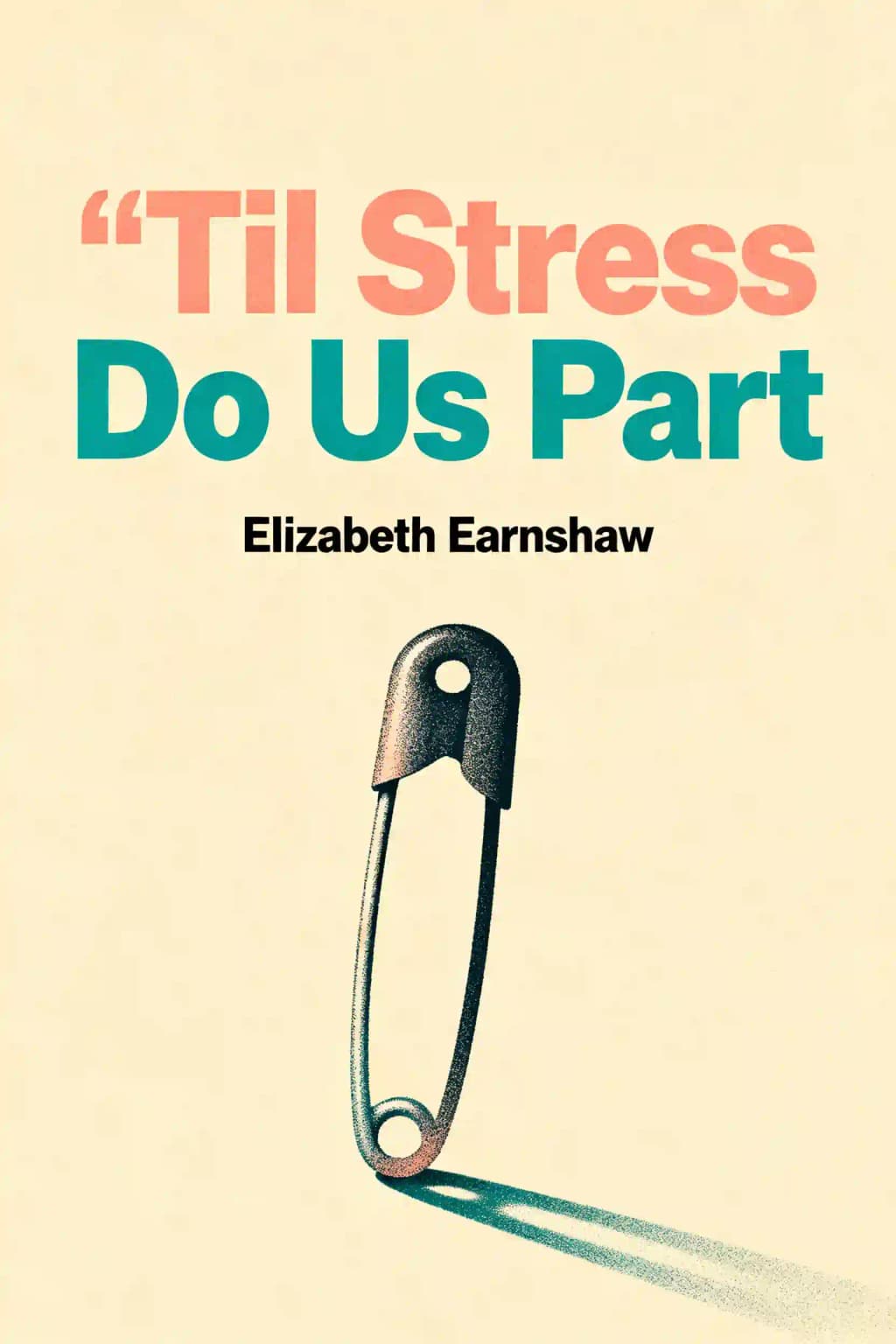
Have you ever wondered why couples who genuinely love each other suddenly find themselves trapped in cycles of criticism, defensiveness, and emotional distance? Elizabeth Earnshaw's "Til Stress Do Us Part" offers a revolutionary perspective: it's not your relationship that's the problem-it's the stress that's destroying your relationship. As a licensed marriage and family therapist who experienced her own relationship challenges during the pandemic, Earnshaw's insights have resonated deeply with couples worldwide. The book has become a staple recommendation among relationship therapists and has been praised by celebrities like Kristen Bell, who called it "the relationship guide we all need right now." What makes this book particularly powerful is how it challenges our cultural narrative that relationship problems stem from communication issues or compatibility, instead revealing how physiological stress responses literally hijack our ability to connect with our partners-and what we can do about it.
Kapitel 2
The Hidden Culprit Behind Relationship Struggles
When Elizabeth Earnshaw first opened her therapy practice, she offered standard couples therapy focused on communication skills. Couples would improve their interactions, yet mysteriously return with the same issues. It wasn't until she experienced her own relationship challenges-particularly after having a baby-that she discovered what was missing from her approach.
The breakthrough came when she identified mental load disparity-the uneven distribution of cognitive effort in managing life responsibilities-as a significant stressor in relationships. While addressing this helped somewhat, her relationship with her husband still faced challenges. Then the pandemic hit, creating what she calls a "paradigm shift" in her understanding: no matter how many relationship skills she possessed, overwhelming stress made them unusable.
This realization transformed her approach to couples therapy. She observed that most couples were blaming their relationship for their stress, when in reality, their stress was destroying their relationship. Since the pandemic, relationships have been unraveling at alarming rates as people struggle with global crises, financial pressures, workplace dissatisfaction, and parenting challenges-all while facing unrealistic expectations to thrive.
What happens physiologically explains why even the most committed couples can find themselves in trouble. When stressed, we lose access to crucial relationship tools like affection, humor, and problem-solving. Our brains literally cannot function in relationship-enhancing ways when our nervous systems are in survival mode. Different people respond differently-some become agitated and ill-tempered (the "king cobra" response), others withdraw and freeze (the "opossum" response), while some immediately think of escape (the "fearful deer" response).
Most importantly, stress responses aren't always rational-they draw on stored experiences and can misinterpret neutral situations as threats. Like reading a story about someone running and immediately assuming danger based on personal history, we often fill in relationship scenarios with our own fears rather than reality. The meaning we derive from situations is shaped by our past experiences, personality, and thinking patterns, which explains why partners can experience the same event so differently.
Under chronic stress, humans become flooded and dysregulated, struggling with impulse control and awareness of others. We become more self-focused, less cooperative, and find it difficult to regulate emotions even when we consciously try. This explains why during highly stressful periods like the COVID-19 pandemic, society became increasingly polarized, with people ending relationships over differences in reaction to the virus. When we're in survival mode, even slight differences in opinion can feel threatening, making compromise nearly impossible.
Kapitel 3
Breaking Free from the Mental Load Trap
One of the most insidious relationship stressors is the unequal distribution of mental load-that invisible work of not just doing household tasks but knowing they need to be done in the first place. This burden often falls disproportionately on one partner, typically women in heterosexual relationships, creating a profound sense of resentment and exhaustion.
Earnshaw shares her own awakening to this concept after reading a viral comic about mental load. The comic perfectly captured her frustration when her husband would say, "You should've asked! I would've helped!" She realized the problem wasn't just about physical tasks but about the cognitive burden of remembering, researching, worrying, and delegating.
This mental load disparity manifests in countless ways. While one partner simply gets dressed, eats breakfast, and heads to work without worry, the other juggles childcare arrangements, household management, and work responsibilities simultaneously. The mental gymnastics required to keep all these plates spinning creates a state of constant stress that erodes relationship satisfaction.
For couples to address this imbalance, they must first acknowledge its existence. This means having honest conversations about who carries what cognitive responsibilities in the relationship. The goal isn't necessarily equal division but rather a fair distribution that accounts for each partner's capabilities, preferences, and circumstances.
Beyond mental load, couples must also recognize how they manifest Gottman's "four horsemen" of relationship apocalypse-criticism, defensiveness, stonewalling, and contempt-when stressed. These communication patterns predict relationship failure with remarkable accuracy, but they can be transformed through specific alternative responses:
• For criticism: Describe observations, feelings, and needs rather than attacking character
• For defensiveness: Validate and take responsibility rather than counter-attacking
• For stonewalling: Ask for breaks when overwhelmed rather than shutting down
• For contempt: Practice emotion labeling and pause before speaking rather than expressing disgust
Perhaps most importantly, couples need to develop "reality checking"-the ability to distinguish inner turmoil from actual situations. This involves working toward flexible thinking by generating "helpful other thoughts" that expand possibilities beyond rigid thinking patterns. When we're stressed, our thinking becomes myopic and absolute, but by deliberately considering alternative perspectives, we can break free from cognitive traps that fuel relationship conflict.
Kapitel 4
The Physiology of Relationship Stress
Understanding the physiological impact of stress on relationships provides a crucial foundation for healing. When couples come to therapy citing "communication issues," they're often describing symptoms of a deeper problem-being stuck in constant stress loops that hijack their nervous systems.
Stress activates a neurological and hormonal response designed to protect us from threats. Whether facing a lion or a relationship conflict, your body undergoes the same ancient survival process: blood rushes to muscles, heart rate increases, and endorphins release to numb pain. Your focus narrows to survival, tuning out everything else.
Earnshaw illustrates this with a personal story of severing her finger in a door accident. She remained remarkably calm, directed others to help, and felt no pain, but later couldn't remember details around the incident. Her body had shut down non-essential functions like memory and interpersonal skills to focus on survival.
While this response is appropriate for genuine threats, constant activation in daily life damages health and relationships. Research shows that when heart rates exceed 100 beats per minute during conflict, productive communication becomes physiologically impossible. This explains why taking breaks during heated arguments isn't avoidance-it's creating the necessary conditions for productive conversation.
For couples to break free from stress cycles, they must first identify their personal stress responses. Some become agitated and confrontational (the king cobra), others immediately think of escape (the fearful deer), while some withdraw and shut down completely (the playing-dead opossum). Many people cycle through all three responses depending on the situation-perhaps starting as the deer, then becoming the cobra when further triggered, and finally playing dead like the opossum when other responses fail.
Though these instinctual reactions are natural, humans have the unique capacity to develop awareness and self-soothing techniques that allow us to remain cooperative even under stress. Practical interventions include tracking heart rate to identify when you're physiologically flooded, practicing deep breathing exercises like box breathing (four-second inhale-hold-exhale-hold pattern), and creating comprehensive lists of physical and psychological stressors to gain clarity about what's actually happening in your life.
The goal isn't to eliminate stress entirely-that's impossible-but rather to develop the ability to recognize when you're physiologically dysregulated and take steps to return to a state where productive communication becomes possible again.
Kapitel 5
The Power of Co-Regulation
While society emphasizes self-regulation, co-regulation is actually the foundation for developing those skills. Research confirms that romantic partners significantly influence each other's physiological stress responses-holding hands reduces pain perception, and partners mirror each other's cortisol levels whether stressed or calm.
Co-regulation occurs when someone with a regulated nervous system shares their calm state with someone who's dysregulated. Like parents soothing babies through swaying, holding them close, and humming-actions that simultaneously calm both parent and child-couples can literally calm each other's bodies through intentional presence.
Earnshaw illustrates this with a powerful personal story about her infant son becoming dangerously ill. After rushing him to the emergency room and witnessing a terrifying moment when he went limp, she and her husband found comfort in each other's embrace while medical professionals provided reassurance. This experience perfectly demonstrates how we physiologically respond to others' calming presence during extreme stress.
The wisest approach combines both thinking and feeling-what dialectical behavior therapy calls the "wise mind." Couples living in their emotional mind make decisions that feel good momentarily but cause long-term harm, like saying hurtful things during arguments. Those stuck in their rational mind avoid risks, over-plan, and dismiss emotions. When couples learn to combine both minds, they become emotion coaches and solution coaches for each other.
Practical co-regulation techniques include speaking softly, relaxing facial expressions, dropping shoulders, and practicing belly breathing together. Box breathing (four-second inhale-hold-exhale-hold pattern) can be particularly effective when done as a couple. Using "wise mind" statements that connect rational thoughts with emotions using "and" phrases helps integrate these different aspects of experience: "I'm feeling overwhelmed by this conversation AND I know we need to figure this out."
Unlike our ancestors who completed their stress cycles through physical exertion when fleeing danger, modern stressors often leave our stress responses unresolved. To properly end the stress cycle, couples must engage in activities that signal safety to the nervous system: slow breathing, playful movement, quality sleep, or spending time with loved ones. These practices don't eliminate stressors but help prevent their accumulation in the body.
Kapitel 6
Intimacy Beyond the Bedroom
Many couples experience sexual challenges during stressful periods but often misattribute the problem to personal failings rather than recognizing stress as the culprit. This leads to harmful beliefs like "If my partner loved me, we would have a great sex life" or "If we can't fix our sex life, maybe we need a divorce."
Stress impacts sexuality both psychologically and physiologically. Research shows chronic stress correlates with decreased sexual satisfaction, with women experiencing lower genital arousal and men facing erectile difficulties due to hormonal changes like increased cortisol. Stress hormones provide quick energy to handle immediate threats, but when stress becomes chronic, the body continuously produces cortisol, which reduces testosterone production in both men and women-directly impacting sex drive.
Beyond hormonal changes, stress makes it difficult to be present for intimate moments, as our minds resist focusing on pleasure when we feel threatened. Stressed individuals often seek isolation and may perceive their partner's attempts at intimacy as intrusive, leading to withdrawal or irritability. This creates a cycle where one partner feels increasingly disrespected while the other feels rejected and alone.
The key is approaching these challenges as a team rather than personalizing them. Emily Nagoski's concept of sexual "accelerators" (things that turn you on) and "brakes" (things that inhibit desire) helps couples understand their differences and work together to create environments conducive to intimacy by removing each other's brakes.
Importantly, intimacy extends beyond sex to include various forms of closeness. When sexual connection is challenging, exploring other intimacy types can strengthen the relationship and reduce stress. Couples can experience emotional intimacy (safely sharing feelings), intellectual intimacy (learning together), experiential intimacy (shared activities), spiritual intimacy (experiencing awe together), and physical intimacy (cuddling, touching).
Sex remains one of the most difficult topics for couples to discuss openly. Partners often approach these conversations with trepidation, communicate unclearly, and fill knowledge gaps with harmful assumptions. Couples benefit from having "dyadic coping conversations" where they discuss stress and its impact on their sex life with empathy and curiosity rather than reactivity or shame. These conversations should explore desires, hopes, and beliefs about sex without pressure for immediate resolution.
Kapitel 7
The Danger of "More, More, More"
Western society encourages people to "have it all," creating pressure to constantly achieve more. Ironically, this good stress (eustress) often morphs into harmful stress as people take on too much in an attempt to control what they can amid larger unsolvable problems.
Earnshaw shares her own experience embracing self-help philosophies promoting saying "yes" to everything. She built a business, dated actively, and improved her fitness-experiencing the positive feedback loop of "good stress" that initially brought connection, focus, and motivation. When she met her husband, she maintained this "we can make anything work" mindset. However, over time, their constant accumulation of responsibilities transformed eustress into distress, affecting their health and family.
This "more, more, more" approach is ultimately an illness-each new commitment requires additional management and sacrifice, eventually leading to exhaustion, burnout, and anxiety. Many couples try to bridge painful gaps between their ideals and reality by taking on more: wanting to prioritize children while having demanding jobs, desiring sustainable living without time to research purchases, or believing in healthy eating but finding it too expensive.
Social media exacerbates these struggles by showcasing others who seemingly bridge these gaps effortlessly. The pressure extends beyond the privileged-many families spend beyond their means for Disney trips or brand-name clothing due to social pressure. This pattern affects couples like Tyler and Ashley, who spend money to outsource what matters while working more to afford it, creating a miserable cycle despite material success.
The solution begins with identifying your "North Star" values-the guiding principles that matter most in your life. When faced with decisions about taking on more, couples should ask whether each new commitment aligns with these core values. Often, saying no to good opportunities creates space for what truly matters. As Earnshaw learned when declining to attend her son's ex-nanny's wedding despite feeling guilty, sometimes protecting your family's financial security and peace means disappointing others-a difficult but necessary choice when aligning with core values.
Kapitel 8
Embracing the "Good Enough" Life
The pandemic forced many couples to reckon with hustle culture as carefully constructed lives came to a halt. Unable to maintain their usual go-go-go pace, many initially fought the slowdown by finding new ways to stay busy-scheduling more clients, starting gardens, recreating children's educational experiences at home. But eventually, the impossibility of doing it all became undeniable.
Earnshaw describes her own breaking point: while conducting a therapy session with a client who had just received a cancer diagnosis, her son had a meltdown downstairs while her husband was trapped on an urgent work call. Unable to be fully present for anyone, she realized that "doing her best" wasn't enough in this impossible situation. Despite her professional expertise in stress management, she struggled to apply these principles in her own overwhelmed life.
The pandemic became a "come-to-Jesus moment" for many couples, revealing how career aspirations and energy expenditure had pulled them away from what truly mattered. The stress of trying to maintain appearances while navigating a pandemic, family illness, and daily frustrations was destroying connections. Many realized they needed to stop chasing external validation and refocus on their struggling relationships and families.
Donald Winnicott's concept of the "good enough mother" applies to all areas of life-we don't need perfection in our jobs, friendships or partnerships. Despite constant messages pushing us to be more, choosing to let enough be enough transforms family life. This might mean not climbing to the top of career ladders but having more time together, taking fewer vacations but having financial security, or accepting that some areas of life will be messy but fundamentally okay.
When facing uncontrollable circumstances like illness or loss, couples must balance both internal and external loci of control. An external locus acknowledges what we can't change and didn't cause-a house fire, a child's illness, or a partner's depression. Simultaneously, we need an internal locus to recognize where our power remains: calling insurance after the fire, increasing a sick child's comfort, or supporting a depressed partner by facilitating therapy.
This balanced approach improves compassion and problem-solving, helping couples address suffering from empowerment rather than bitterness. It also helps establish meaningful coping strategies: practices (deep breathing, journaling, exercise), routines (daily self-care tasks), and rituals (meaningful activities that carry significance). As Esther Perel notes, "Routines get us through the day. Rituals guide us through life."
Kapitel 9
Creating a Protected Space for Love
When couples fail to protect their relationship from outside influences, their connection suffers. Stan Tatkin's concept of "the couple bubble" describes the protective membrane that shields partners from external threats. "Thirds" are anything that pierces this cocoon-phones, work, in-laws, substances-draining energy, resources and trust. Despite trying communication strategies and dividing labor fairly, relationships struggle when these thirds aren't properly managed.
Creating a safe cocoon requires making decisions that benefit the relationship unit as a whole. Many couples pierce this protective shell with poor boundaries around these thirds. Each breach weakens the relationship's security. For couples struggling with daily overwhelm, identifying these thirds and their impact becomes the first step toward managing relationship stress.
When couples realize there's no magic in their lives anymore, they must make intentional sacrifices rather than rushing to quick solutions. Real change requires understanding each partner's perspective through deep conversation before making decisions. Intentional sacrifice means rebelling against unhealthy societal expectations-perhaps making less money to have more time together. These choices aren't easy and may involve grief, but when the net value exceeds the loss, they become worthwhile.
Healthy boundaries aren't just about managing external thirds but also about setting limits with each other. Setting "limits with love" means expressing boundaries while maintaining connection: using a gentle tone, tending to attachment needs, avoiding blame, and focusing on your own behaviors. This approach extends to arguments too-creating agreements about how to handle conflict to prevent criticism and defensiveness from escalating, creating a safer environment where you're less likely to become physiologically dysregulated.
While understanding boundaries conceptually is one thing, implementing them requires facing uncomfortable emotions. People avoid setting limits because they lack the language or fear the feelings that arise. Boundary-setting approaches include saying no directly, saying yes with limits, or offering alternatives. The discomfort of setting boundaries-including guilt and shame-is a necessary part of protecting what matters most.
Kapitel 10
The Path to Radical Acceptance
When facing unfair situations, couples often get stuck in rigid beliefs about fairness that create conflict. As Oprah wisely noted, "All stress comes from wanting something to be what it isn't." Radical acceptance means acknowledging reality without necessarily approving of it. When something unfair happens, you have four choices: remain in denial and misery, allow it to be, try to change it, or distance yourself from it.
Many people avoid making these hard choices due to an illusion of control. Radical acceptance requires moving from a willful stance ("I need to teach them a lesson") to a willing stance ("I am willing to make choices that help me feel better"). The paradox is that accepting reality is the first step to changing what you don't like.
This concept reveals common relationship patterns: often one partner takes on all stressors to protect the other from frustration, only to build resentment. Partners need to recognize it's each person's responsibility to manage their own stress rather than one person shouldering the burden. Those who struggle often feel entitled to comfort and believe they shouldn't have to deal with frustrations, while their partners accept that discomfort is part of life.
Taking responsibility for our lives empowers us, even when it involves facing loss or regret. Once we identify a problem causing distress, we must take personal and relational responsibility to make changes. Many people struggle with this-refusing help for drinking problems that damage relationships or maintaining overwhelming commitments to children without reducing the load. While we can't control external stressors, we can control our responses through boundaries, seeking help, self-soothing, or making difficult decisions.
Radical responsibility means finding choices within challenging situations and making empowering rather than disempowering ones. This involves observing truth (like acknowledging unaffordable credit card debt), accepting yourself and your partner's reactions with compassion, and practicing "opposite action" by doing the reverse of your typical stress response. Partners are encouraged to list potential responses to stressors (including outlandish ones) to expand their perceived options, then agree on specific responsibilities each will take to improve their situation.
Kapitel 11
Building a Sustainable System Together
Connected couples treat their relationship like a business by scheduling structured weekly meetings. These meetings should be held at a time when both partners have energy-often not evenings for those with traditional work schedules. The recommended agenda includes: sharing appreciations about your partner, discussing what went well for the relationship, giving non-critical feedback about what could improve, discussing prepared agenda items, and selecting one or two issues to solve together.
Creating an inventory involves examining all aspects of your life together-what uses your time, money, emotional focus, and impacts your health. Include everything from major stressors to minor annoyances, being as specific as possible. This comprehensive inventory helps identify areas where small changes can create early wins and momentum for tackling larger issues.
To organize your inventory, create three labeled categories: "Basket 1: Shedding," "Basket 2: Preventing," and "Basket 3: Adapting." This system helps couples methodically address different types of stressors in their lives:
Shedding is about lightening your load by eliminating unnecessary stressors. Despite recognizing that shedding creates relief, most people resist it because we live in a want-driven society where we're told we should be able to do everything. This basket should be your largest, containing things you can temporarily let go of to simplify life.
Preventing contains items that could become less stressful through new systems, better boundaries, getting help, self-care, or co-regulation with your partner. Creating clear systems like Eve Rodsky's Fair Play card deck helps establish ownership of household tasks, reducing mental load and increasing fairness. Setting boundaries around time, energy, and finances prevents overwhelm.
Adapting focuses on stressors that exist regardless of prevention efforts-illness, busy work periods, economic downturns. This basket contains stressors that are unavoidable or outside your control. Adapting requires accepting reality (without necessarily liking it), taking responsibility for your response, and utilizing healthy coping skills that complete rather than continue stress cycles.
After identifying what needs prevention and adaptation, return to your shedding basket to finalize what must be eliminated. For less important items, schedule weekly times to tackle them together. For more complex issues, prioritize them by difficulty level and negotiate together how to address them, keeping your North Star values as your guide when eliminating sources of relationship harm.
By systematically addressing stress through shedding, preventing and adapting, couples create space for true partnership-patience, kindness, humor, play, curiosity, and building dreams together. While nothing can shield us completely from life's inevitable stresses, we can build relationships that withstand these challenges without becoming overwhelmed.