Kapitel 1
The Paradoxical Power of Useful Delusions
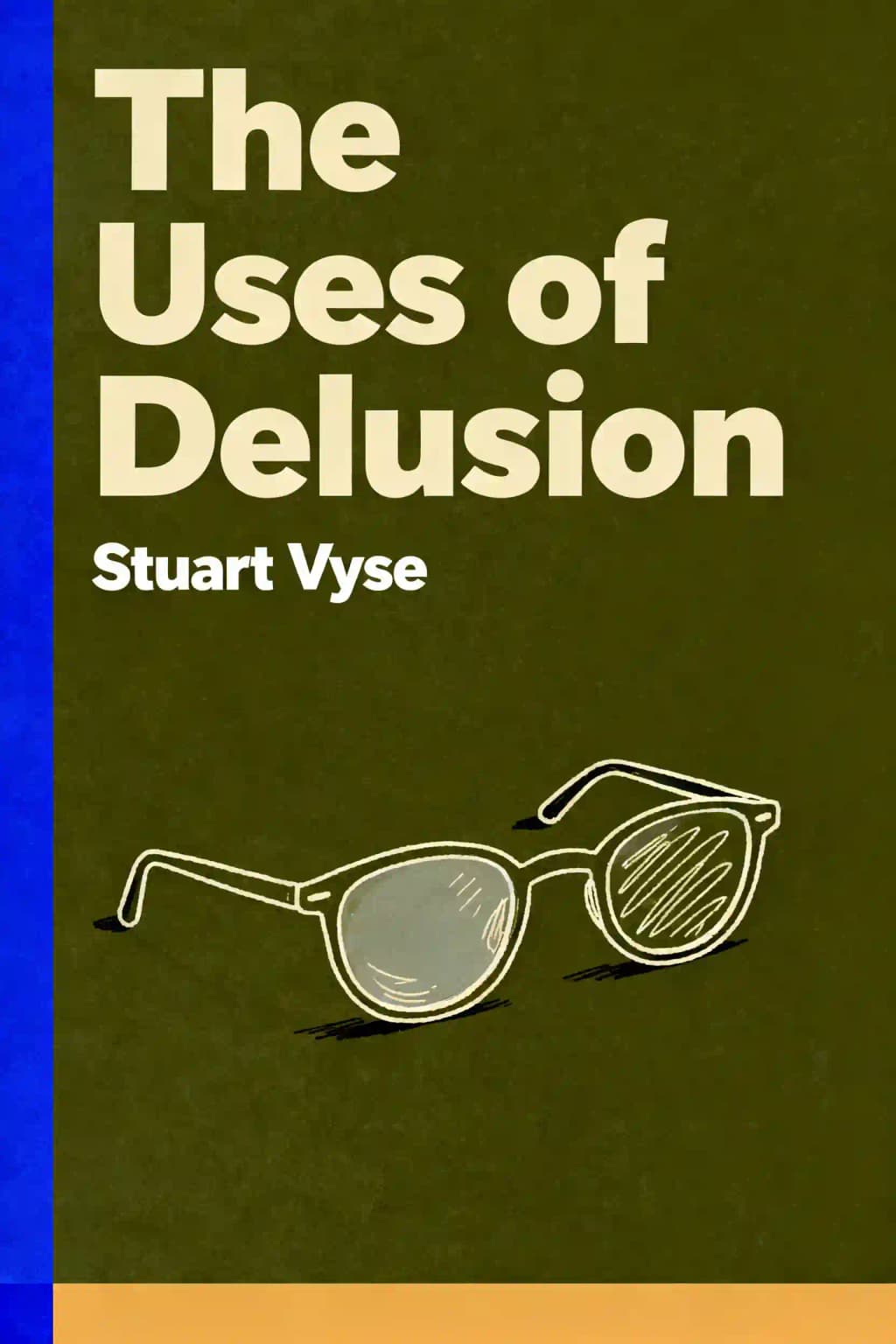
We humans are walking contradictions. We pride ourselves on rationality yet cling to beliefs that defy logic. As a behavioral scientist who has spent decades studying human decision-making, Stuart Vyse has come to a surprising conclusion: certain delusions actually help us navigate life's challenges. Some are built into our cognitive architecture like perceptual illusions, while others we unconsciously choose to embrace. When his friend Susan lost her husband in a car accident, she continued looking for him from her library window months later. Joan Didion kept her deceased husband's shoes, believing he might return. These aren't signs of mental illness but glimpses of our dual cognitive systems at work-the quick, intuitive System One and the deliberate, analytical System Two. This tension creates what Vyse calls "useful delusions"-beliefs that contradict evidence yet help us survive difficult times, navigate social worlds, and achieve personal goals. The book has garnered attention from psychologists and philosophers alike, with Daniel Kahneman calling it "a refreshing counterpoint to strict rationalism" and The New York Times praising its "compassionate view of human irrationality." In exploring these beneficial self-deceptions, Vyse reveals a profound truth: sometimes, it's not actually rational to be completely rational.
Kapitel 2
The Delicate Balance Between Truth and Utility
What exactly constitutes a delusion? While psychiatric contexts suggest abnormality, delusions exist on a spectrum affecting even the healthiest minds. Derived from Latin "deludere" meaning "to play with" or "make a mockery of," delusion involves holding beliefs despite evidence to the contrary. Unlike flat-Earth believers whose delusions have few practical consequences, Vyse focuses on common, consequential delusions that paradoxically benefit us.
Traditional rationality encompasses both epistemic rationality (having evidence-based beliefs) and instrumental rationality (taking appropriate actions given one's goals). Economic theories from Adam Smith onward portrayed humans as purely rational actors making optimal choices, but behavioral economics has revealed our built-in flaws. According to rational choice theory, our actions should be grounded in our best available beliefs, which should be based on evidence. The theory identifies irrationality when desires determine beliefs (wishful thinking), when beliefs lack evidence, or when logic fails.
This tension between evidence and belief sparked a classic debate between William Clifford and William James in the late 19th century. Clifford took an extreme evidentiary position, arguing it's "wrong always, everywhere, and for anyone, to believe anything upon insufficient evidence." He used the example of a shipowner who ignored doubts about his vessel's seaworthiness, resulting in disaster. Nineteen years later, William James responded with "The Will to Believe," carving exceptions for beliefs that met three conditions: they must be "living hypotheses" (plausible options), address "forced questions" (unavoidable decisions), and be "momentous" (with significant stakes).
James, despite being a scientist who established one of America's earliest psychology laboratories, parted from strict rationalism, believing certain "live hypotheses" could be accepted without sufficient evidence. This pragmatic approach-judging beliefs by their usefulness rather than their truth value-forms the foundation for understanding why certain delusions persist. As psychologist Jonathan Baron suggests, rational thinking is whatever helps people achieve their goals-even if that means carefully violating logic. This aligns with American pragmatism: "If there be any life that is really better we should lead, and if there be any idea which, if believed in, would help us to lead that life, then it would be really better for us to believe in that idea."
Kapitel 3
The Surprising Benefits of Self-Deception
In the 1980s, psychologists Shelley Taylor and Jonathan Brown challenged the notion that clear self-understanding was always beneficial, arguing that most people engage in daily self-deceptions that actually serve them well. They identified three categories of self-flattering delusions: unrealistically positive self-views, overestimated control over events, and overly optimistic views of our futures.
We're motivated toward optimism because it simply feels good. Life is more pleasant when we anticipate happy times ahead and believe we're doing better than others. Several cognitive biases reinforce this outlook. The self-serving attribution bias leads us to claim credit for successes while blaming external factors for failures. We savor praise but minimize criticism, remember positive experiences more readily than negative ones, and make downward social comparisons with those doing worse than us.
Remarkably, research on "depressive realism" shows that moderately depressed people see reality accurately, while non-depressed people maintain beneficial illusions. In one experiment, participants pressed buttons trying to control a light with varying probabilities of success. Depressed participants accurately judged their limited control, while non-depressed people substantially overestimated their influence-they were happier but less accurate. This suggests optimism, not realism, contributes to good mental health.
Starting a business exemplifies dangerous optimism-only 50% survive five years, and self-employed people earn 35% less on average than employees. Entrepreneurs show overconfidence in both absolute prospects and relative to competitors. In studies, business students overestimated their skills and underestimated competitors, while across countries, entrepreneurial self-confidence didn't correlate with business success.
Yet this same overconfidence serves as a powerful motivational force. Without entrepreneurial optimism, innovation would stagnate-which is why legal protections like bankruptcy exist to encourage risk-taking. Laboratory research confirms this intuition: in a slider-positioning experiment, participants whose overconfidence remained intact completed 19% more tasks and maintained accuracy compared to those whose confidence was deflated by feedback. Remarkably, 94% of participants overestimated their performance.
Self-deception makes us more effective deceivers. Unlike rational lying, where we know the truth but present something different, self-deception allows us to project authentic confidence. Robert Trivers argues humans evolved self-deception partly because it enhances our ability to deceive others-the genuinely overconfident athlete intimidates opponents without revealing weakness through unconscious signals. When projecting strength, believing your own hype helps avoid cognitive dissonance-the psychological conflict between actions and beliefs that can be emotionally draining.
Kapitel 4
The Strategic Value of Optimism and Pessimism
During the COVID-19 pandemic, the world witnessed both helpful and unhelpful delusions affecting our response. While some leaders claimed the virus might "disappear like a miracle" and church members believed divine protection would save them, experts in medicine and epidemiology had long warned of pandemic threats. The contrast between delusional optimism and rational preparation became stark as the crisis unfolded.
Unlike COVID-19's initial uncertainties, many health risks are well-understood yet still ignored. The WHO reports 71% of global deaths come from preventable noncommunicable diseases with behavioral components. Young smokers demonstrate optimistic bias, underestimating addiction risks while overestimating their ability to quit. Economists like Becker and Murphy proposed a "Rational Theory of Addiction," suggesting people rationally choose immediate benefits despite future costs. However, studies reveal approximately 90% of smokers regret starting, contradicting the economists' view that addicts make sound decisions with clear foresight.
Kahneman and Tversky's discovery of loss aversion revealed how our current position-our status quo-fundamentally shapes our decisions. While we typically measure things on scales starting at zero, what matters most in decision-making is how outcomes will affect our present condition. When healthy, we aim to maintain this comfortable baseline while avoiding losses. Once sick or injured, our priorities reverse-the new unhealthy status quo becomes intolerable, and we become preoccupied with returning to our former state.
Shelley Taylor, a pioneer in health psychology, found that cancer patients who adopted the somewhat magical belief they had control over their illness coped better and often discovered new purpose in life. Research since then has strengthened the conclusion that optimism leads to better health outcomes and reduced mortality. Optimism works by promoting productive coping mechanisms. Optimists facing challenges adopt either problem-focused strategies (like adhering to physical therapy) or emotion-focused approaches (seeking social support or finding meaning in tragedy).
However, optimism's benefits come with an important caveat. Most studies showing positive effects involved people already experiencing health problems or stressors-people below their status quo seeking to regain comfort. For those above the status quo line, like healthy young people who feel invincible, optimism can lead to dangerous behaviors.
While Western culture generally discourages pessimism in favor of optimism, there are situations where "crazy pessimism" proves valuable. For those below the status quo line-experiencing illness or trauma-pessimism indeed worsens matters by promoting avoidance and denial. However, for those above the line when the future holds uncertainty, "defensive pessimism" can be beneficial. Defensive pessimism involves maintaining unrealistically low expectations despite past successes. More anxious than optimists, defensive pessimists imagine worst-case scenarios to develop preventive strategies.
During the COVID-19 pandemic, many people effectively adopted defensive pessimism, carefully considering every surface touched and encounter made. Studies of previous outbreaks showed defensive pessimists were more likely to take protective actions. This explains why collectivist Asian societies generally responded more effectively to COVID-19 than individualistic Western nations, where mask-wearing became politically divisive rather than collectively embraced.
Kapitel 5
The Comforting Power of Rituals and Superstitions
Barack Obama's Election Day basketball tradition serves as an entry point for understanding superstitions and rituals. This practice began when he played basketball before winning the 2008 Iowa caucus but lost the New Hampshire primary when he skipped the game. Though Obama continued this practice through subsequent elections, we can distinguish between superstitions that might affect performance (like Baltimore Ravens kicker Justin Tucker's pre-game uniform ritual) and those that merely provide psychological comfort but cannot influence outcomes (like Obama's basketball games after campaigning ended).
Psychologists Jane Risen and Thomas Gilovich's research on "tempting fate" suggests some superstitious thinking may have adaptive value. Their experiments showed people believe negative outcomes are more likely when someone "tempts fate"-like a student not doing assigned reading being more likely to be called on, or someone wearing a Stanford t-shirt before receiving an admission decision being less likely to be accepted.
While superstitions about tempting fate may have adaptive value by discouraging unnecessary risks and strengthening social cohesion, research on luck-enhancing superstitions yields mixed results. The famous "golf ball study" from the University of Cologne initially showed participants told they were using a "lucky ball" performed better at putting, but subsequent larger replication attempts failed to reproduce these results.
Rituals, however, show more consistent benefits across various contexts. Laboratory studies demonstrate that performing rituals helps people sing better in front of strangers, solve math problems more accurately, cope with disappointment, and improve self-control. These benefits stem from rituals' ability to restore a sense of order and control, reducing anxiety. Effective rituals typically involve rigidly ordered sequences of actions with symbolic meaning but only indirect connections to goals.
Most personal rituals aren't overtly religious or superstitious-only about 20% of ritual users report religious elements and 17% report superstitious elements. This suggests many rituals provide psychological benefits without requiring irrational beliefs, making them beneficial but not necessarily delusional. Group rituals-from church hymns to team cheers to Walmart's employee chant-add a social dimension, bonding people together and providing proof of membership.
Religious belief presents a paradox: less religious countries and states are happier overall, yet within any location, religious individuals report greater happiness than their non-religious neighbors. The key factor appears to be social engagement rather than belief itself-happiness increases consistently with frequency of service attendance, peaking at 47% for those attending multiple times weekly versus just 26% for non-attendees.
The moral benefits of religion follow a similar pattern. Religious people give more to charity, volunteer more frequently, and donate blood more often. However, research shows it's religious attendance, not belief content, that predicts these prosocial behaviors. As Putnam and Campbell note, "nothing that we can discover about the content of her religious faith adds anything to our understanding or prediction of her good neighborliness."
Kapitel 6
The Delusions That Sustain Love
Love often creates tension between romantic ideals and rational thinking, as illustrated by the author's experience when he casually suggested to his partner that each of them might have been equally happy with other people. His scientifically-minded partner reacted strongly, insisting they were uniquely matched soul mates-a mathematically implausible notion that nonetheless felt emotionally necessary to her. This fundamental disagreement may have contributed to their eventual breakup, revealing how romantic delusions can be both relationship glue and potential fault lines.
Wedding vows present a rational dilemma when promising lifelong commitment despite divorce statistics. While traditional Christian vows include "till death do us part," Jewish and Islamic traditions more pragmatically acknowledge divorce possibilities through legal documents. Some modern couples struggle with these promises. One attorney even proposed replacing marriage with "wedlease"-renewable marriage contracts with separate property ownership. This practical but unromantic solution hasn't caught on.
Philosopher Berislav Marusic argues that wedding promises can be made responsibly despite statistical odds if there are sufficient practical reasons for commitment. Rather than merely predicting future behavior based on demographics, one can decide to be faithful based on love and desire for lasting partnership. This view contrasts with common perceptions of love as involuntary-people "fall" in love rather than choosing it. Many report immediate attraction, with one study finding 43% of couples claiming love "at first sight." As Julian Barnes writes, "Who can control how much they love? If you can control it, it isn't love."
Before commitment even begins, self-delusions can help in finding a partner. Overconfidence proves advantageous in romantic settings-studies show confident people are judged more attractive than less confident competitors. In one speed-dating experiment, women found confident men more appealing and were significantly more likely to want to see them again. Studies show mixed results about overconfidence in dating profiles-while overconfident people project more confidence, they're also seen as more arrogant. However, overconfidence makes people more willing to compete for desired mates and may help clear out competition.
While self-delusion helps find a mate, certain delusions prove valuable in maintaining relationships. Studies show that couples who unrealistically idealize each other maintain higher satisfaction levels in their relationships. Sandra Murray's study of 222 childless newlywed couples over three years found that despite the typical decline in marital satisfaction, those who idealized their partners at the beginning maintained significantly higher satisfaction throughout. A 2006 study following 168 couples over thirteen years confirmed that "marital love is less likely to decline when partners enter marriage with idealized images of one another."
The most successful relationships involve people who "egocentrically saw themselves in their partners"-believing their partner is more similar to them than objectively true, creating a sense of being uniquely matched "soul mates." Contrary to expectations, these idealizing couples don't merely overlook flaws-they actually build more satisfying relationships, essentially creating the better partnerships they believe they have.
Kapitel 7
The Healing Power of Continuing Bonds
In the aftermath of losing a spouse, many experience a peculiar form of magical thinking where, despite knowing their loved one has died, they maintain a nagging sense the person might return. Joan Didion, after her husband's death, recognized this phenomenon, writing: "I know why we try to keep the dead alive: we try to keep them alive in order to keep them with us." She ultimately acknowledged the need to "relinquish the dead" to continue living.
The American Psychiatric Association's approach to grief has evolved. Until 2013, grief was excluded from potential causes of depression in the Diagnostic and Statistical Manual (DSM), but the fifth edition now includes bereavement as a possible contributor to clinical depression, allowing for medical treatment of grief under certain circumstances.
While earlier theories by Kubler-Ross and Freud suggested grief follows predictable stages requiring "grief work" to sever emotional bonds with the deceased, modern bereavement research recognizes grief as highly individualized. Most people show resilience, and forcing "closure" can be counterproductive. Rather than breaking emotional ties, maintaining a "continuing bond" with the deceased often proves helpful-not through delusion but through acts of remembrance like visiting graves or creating memorials.
Approximately half of all bereaved people report feeling the presence of the deceased, regardless of their belief in an afterlife. This "double consciousness"-knowing someone is dead while simultaneously feeling they might return-is particularly common when relationships were close and death was sudden. Many bereaved people even search for their loved ones in the early stages of grief, as seen after the 9/11 attacks when family members posted pictures asking "Have you seen my husband?" even when no physical recovery was possible.
In Western cultures, people often hesitate to admit feeling the presence of the deceased for fear of being considered mentally unstable, while Asian cultures support continuing relationships with ancestors through rituals and offerings. Research shows that these continuing experiences with deceased loved ones are mostly positive-helping solve problems, providing encouragement, or resolving unfinished business. The nature of these experiences often reflects the relationship when the person was alive, with troubled relationships sometimes continuing as negative encounters after death.
For many like British novelist Julian Barnes, whose wife died after thirty years of marriage, these continuing bonds become life-sustaining. Despite contemplating suicide, Barnes found comfort in regularly talking to his wife and hearing her voice in response. As he wrote: "If I have survived what is now four years of her absence, it is because I have had four years of her presence."
Kapitel 8
The Illusion of a Stable Self
The story of Patricia Hearst exemplifies one of our most profound delusions-the belief in a stable, unified self. As the wealthy granddaughter of media magnate William Randolf Hearst, Patricia was kidnapped from her Berkeley apartment in 1974 by the radical Symbionese Liberation Army. Within two months, she had transformed from privileged heiress to revolutionary "Tania," participating in an armed bank robbery where security cameras captured her brandishing a rifle and threatening to "blow his motherfucking head off" to anyone who raised their head.
We take for granted that we are consistent, stable individuals with recognizable personalities. This belief serves both personal and social functions-it gives us a sense of identity and allows others to predict our behavior, facilitating social relationships and trust. We believe in an authentic self that remains relatively constant over time, which is why it's shocking when seemingly normal people commit horrific acts.
Psychology has approached this question of identity from two competing perspectives. Personality psychology has generally supported the view that character is stable, evolving from ancient theories of temperament to modern statistical approaches that identify consistent traits. The currently dominant five-factor theory (OCEAN: openness, conscientiousness, extroversion, agreeableness, and neuroticism) suggests our personality profiles remain fairly constant throughout our lives, possibly with genetic foundations.
Social psychology, conversely, emerged from different historical circumstances, with many founding researchers being European emigrants or first-generation Jewish-Americans influenced by the Holocaust. Rather than focusing on internal essences, they studied how human behavior is shaped by social context. Solomon Asch demonstrated through his famous conformity experiments how easily people abandon their independent judgment when faced with group pressure. Stanley Milgram took this further by studying obedience to authority, showing how ordinary people would administer apparently painful electric shocks when urged by an experimenter in a lab coat.
Despite the trait-focused approach of personality psychology, our assessment of others ultimately revolves around moral character. When people enter or leave our lives, their trustworthiness and moral qualities matter most. At funerals, regardless of accomplishments, speakers emphasize moral character: "She was a good person. Someone you could trust."
Our sense of self feels undeniable, yet philosophers and psychologists have long questioned its reality. Descartes asserted "I think, therefore I am," confirming at least the existence of thought itself. David Hume extended this by proposing his "bundle theory"-we experience separate sensations, emotions, and perceptions that our imagination bundles into a continuous string. For Hume, we have no coherent self beyond these discrete perceptions.
Modern psychology supports this view through studies of memory. Alison Gopnik suggests autobiographical memory forms the backbone of our sense of self. Cases like Henry Molaison, who lost the ability to form new memories after brain surgery, reveal how crucial episodic memory is to identity. While Molaison could learn procedural skills like mirror tracing, he couldn't integrate new experiences into his life story.
Kapitel 9
The Mind's Greatest Illusion
The most powerful delusion may be our sense of free will. When we examine the universe at large, we readily accept determinism-that physical laws govern everything from galaxies to weather patterns. Only with complex animals, particularly humans, do we question this mechanistic view. As Kurt Vonnegut's fictional Tralfamadorian notes, "Only on Earth is there any talk of free will."
Throughout history, humans have used technological metaphors to understand the brain-from telephone switchboards to computers. In the 17th century, Rene Descartes, inspired by mechanical automata in wealthy gardens, proposed that human and animal bodies functioned like machines. However, he maintained that humans possessed a non-material soul, establishing his famous mind-body dualism with the pineal gland as the proposed connection point.
Benjamin Libet, born to Ukrainian Jewish immigrants in Chicago and educated at the University of Chicago, conducted groundbreaking research in the 1980s on brain activity during voluntary actions. In his famous experiment, participants were connected to an EEG while watching a clock-like dial. They were asked to spontaneously flick their finger or wrist whenever they felt the urge, noting the dial position when they felt this urge. Libet discovered that the brain's "readiness potential"-a buildup of negative electrical charge-began approximately one-third of a second before participants became consciously aware of their urge to move. This suggested our brains initiate actions before we're conscious of deciding to act, challenging traditional notions of free will and supporting a deterministic view of behavior where conscious intention is an effect rather than a cause of our actions.
Harvard psychologist Daniel Wegner recognized that we often don't cause things we think we do, and do cause things we think we don't. Beyond the normal state where feeling and action align, there are many instances where they don't-like Wegner's experience thinking he controlled a video game that was actually running a demo program. Such "illusions of control" are common with disconnected crosswalk buttons, deactivated elevator "close door" buttons, and superstitious behaviors like blowing on dice.
Much of everyday life consists of habitual, predictable actions, but random behavior appears more free and autonomous. Wegner and Ebert conducted studies showing this effect. In one study, participants pressed computer keys following either alternating or random sequences. Despite both groups following computer prompts, those in the random sequence group reported feeling significantly more free.
Facilitated communication exemplifies action projection, where facilitators unconsciously attribute their own typing to language-disabled individuals. Initially hailed as a breakthrough for autism communication, the method was eventually discredited through controlled experiments. Like the famous case of Clever Hans (a horse who appeared to do math but was actually responding to subtle trainer cues), facilitators unconsciously guide typing while genuinely believing they aren't the authors.
Wegner's theory of conscious will proposes that the feeling of intention is separate from the act of doing. In this model, unconscious processes independently create both the thought of action and the action itself. Because thoughts emerge slightly earlier, we experience the illusion that our thoughts cause our actions. This delusion of conscious will, while not real, serves valuable purposes: it helps us distinguish our actions from others (the "emotion of authorship"), provides a sense of control that benefits our emotional well-being, and enables social systems of credit and blame.
Kapitel 10
Embracing Beneficial Delusions
Odysseus, Homer's hero known for cunning deception, represents our human capacity for adaptation through disguise. While some deceptions are conscious-like lovers lying or adopting accents-most delusions operate without our awareness. We wear them not as cloaks but as skin. Evolutionary biologist Robert Trivers suggests we evolved self-deception to better deceive others; believing our own lies makes us more effective deceivers. This self-deception isn't merely defensive but can be offensive, helping us compete in work, love, and health. Though our cognitive revolution 70,000 years ago gave us remarkable reasoning abilities, survival-not rationality-remains nature's goal. Some delusions persist precisely because they aid survival, making them adaptive despite contradicting reason.
Exceptions to moral responsibility exist in our legal systems where punishment wouldn't serve as deterrence-like when someone is coerced at gunpoint or acts due to mental illness. These align with situations where we say someone "had no choice" or "didn't intend" their actions. The concept of mens rea (guilty mind), though grounded in free will, applies where social control can be effective.
The nondeluded view of personality contradicts the notion of unwavering essence in people. We often flatten others with labels like "murderer" or "thief" when we want to punish them, forcing them to wear their worst mistake forever. In reality, people are complex and changeable. We need consistency in relationships but must accept that circumstances can transform anyone. The illusion of a constant person helps us accommodate others in our lives.
The delusions explored in this book-from optimism to love to free will-aren't signs of weakness but adaptations that help us navigate life's complexities. They represent "ridiculous bits of unreason" central to our humanity. While we should approach major decisions with clear-eyed rationality, these beneficial delusions serve us well in daily life, helping us persevere through challenges, maintain relationships, and find meaning in difficult circumstances. Perhaps the most rational approach is recognizing when delusion serves us better than cold reality-understanding that sometimes, it's not rational to be completely rational.