Kapitel 1
The Art of Trading: Mastering Market Momentum
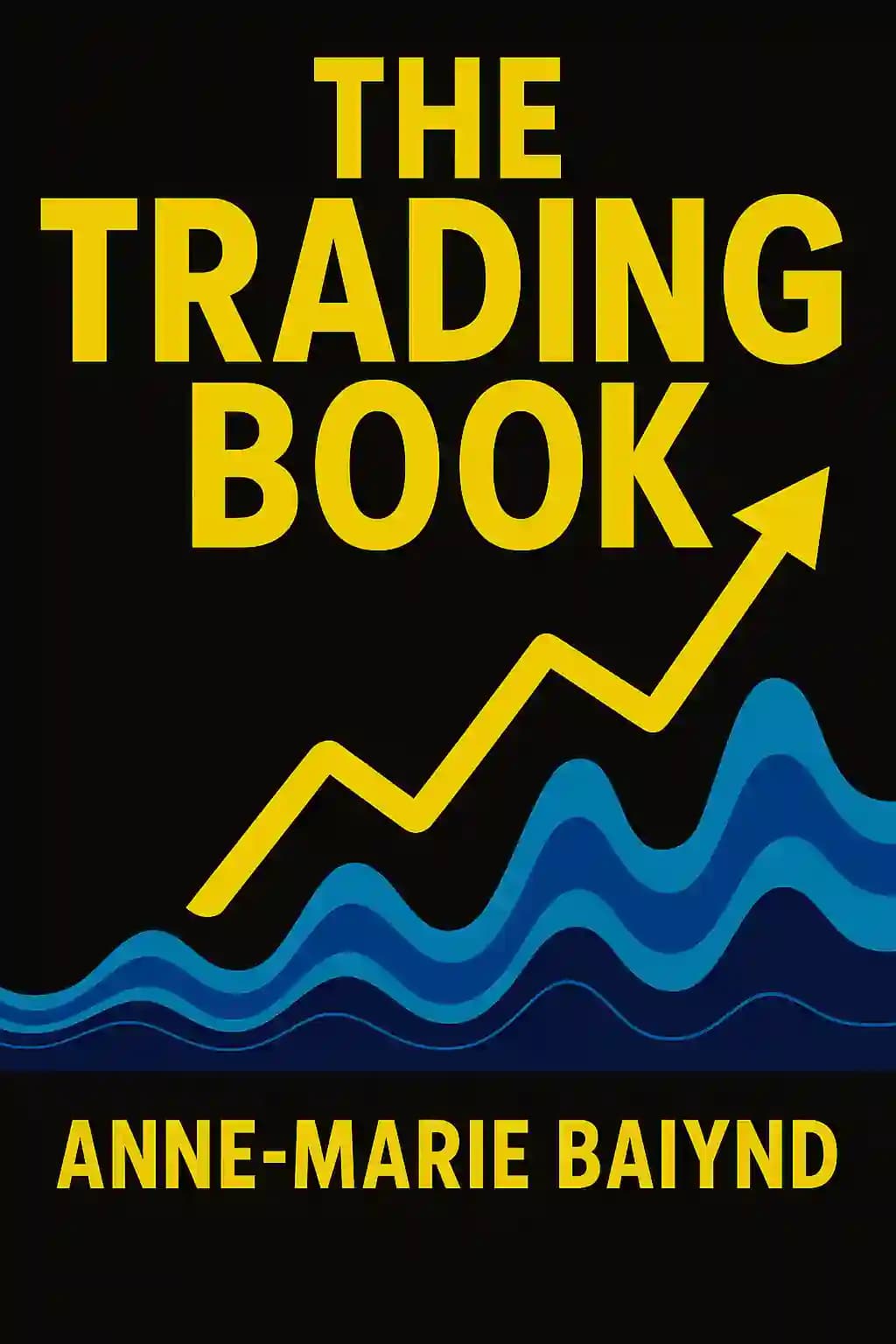
In the high-stakes world of financial trading, few books have garnered the respect and practical application that Anne-Marie Baiynd's "The Trading Book" commands. This masterclass in technical trading has become required reading for serious traders, with even hedge fund managers citing its influence on their strategies. What makes this work particularly remarkable is that Baiynd developed her approach as a self-taught trader, deliberately avoiding "expert opinions" to create a pure, clear technical system. Unlike many trading books written by those who primarily sell systems rather than trade, Baiynd's methodology emerged from the trenches of actual market warfare, where she learned that the market is not a place of free economic forces but a battlefield where savvy participants aim to relieve others of their holdings.
Kapitel 2
The Market's Living Rhythm: Understanding Technical Trading
The markets are living enterprises run by fickle, changeable beings-never the same place twice. As Mark Twain wisely noted, "History does not repeat itself, it merely rhymes," and this perfectly captures market behavior. Technical trading represents a fundamental departure from traditional investment approaches, using charting methods to determine market movement rather than fundamental analysis of company performance.
What makes technical trading powerful is its focus on probability bias-identifying patterns that tend to occur together without implying causality. Think about how you expect mail when you see the mailman-this is probability bias in action. Technical traders look for pattern clusters to make decisions based on what's highly probable, though these decisions are rarely straightforward.
Many new traders approach the market with a dangerous misconception-that markets are logical mechanisms governed by economic theories. The reality is far messier. Markets function as giant pendulums swinging between extremes, driven by sentiment, panic, euphoria, greed, and disbelief. This understanding helps avoid a critical mistake: trading what you think rather than what you see.
Consider jobless claims reports-you might correctly predict bad numbers but watch the market rise instead of fall. This happens when you miss factors like projected numbers or previous market pricing adjustments. Trading news is mostly hit-or-miss, primarily miss. The wiser approach is letting the market show its direction and following it rather than predicting and placing positions.
Another common misconception is viewing markets as gambling venues. Many retail traders enter after losing income, hoping to quickly generate wealth from their retirement accounts. They trade with unrealistic expectations and excessive risk, expecting returns that even legendary investors can't achieve. Even with potential for 200-600% annual returns (which are possible but not probable for average traders), such gains carry enormous risk. Even great traders have lost everything by losing sight of risk management.
For novice traders, distinguishing useful information from noise presents an enormous challenge. Success isn't about accumulating economic theories or understanding general market relationships-many brilliant financial experts have no trading ability. Only applying specific knowledge at specific times makes good trades. Everything else is just noise.
Kapitel 3
The Technical Trader's Toolkit: Essential Indicators
At the heart of technical trading lies the ability to read price action through specialized tools. Candlesticks, perhaps the most fundamental of these tools, effectively illustrate the emotional battlefield between buyers and sellers. Developed by an 18th-century Japanese rice trader, this charting method remains remarkably effective despite its ancient origins.
Each candlestick represents a specific time period's price range, showing who won that particular "round" in the buyer-seller battle. When candles reverse direction, they signal power shifts between market participants. Real reversal candles have long wicks and close far from their extremes, signifying swift power shifts at important price points. Doji candles-those with nearly identical opening and closing prices-signal market indecision and potential shifts, especially when accompanied by high volume after extended price runs.
Moving averages form another cornerstone of technical analysis, measuring average price prints per time frame. The slope of these averages is crucial in momentum-based trading systems-without directional slope, good trades aren't available. Many traders try to "catch the bottom" before a move begins, hoping to maximize gains, but this frequently leads to anxiety and losses when the move either comes after patience runs out or never materializes.
The Market Positioning System (MPS) trading approach uses the 8 exponential moving average (8 EMA) and 20 simple moving average (20 SMA), along with 50 and 200 simple moving averages as general gauges. These specific averages work well because so many traders watch and anticipate bounces at these levels, creating a self-fulfilling prophecy. Moving averages communicate important information about price action-fast averages moving further from slower ones indicate price acceleration in that direction, while parallel averages confirm a constant rate of change.
Bollinger bands add another dimension by measuring a stock's emotional range-from even-keeled to wildly swinging. They define a statistical range within which prices should theoretically fall, typically using a 20-period SMA and 2.0 standard deviations to create a 95% confidence interval. When prices pierce these bands, it signals potential directional change.
For day trading, the author recommends non-default parameters: 25 SMA with 2.5 standard deviations, and for swing trading, 30 SMA with 2.5 standard deviations. These wider parameters give stocks more room to move without generating false signals. Bollinger bands reveal several patterns: upside momentum (prices above midline near upper band), sideways action (band inflection after acceleration), volatility squeezes (tight bands indicating compressed price range), weakness (failure to breach midline), and indecision (flat moving average with price oscillating between bands).
Volume represents the "excitement factor" in trading, validating price movements. A new high on minimal volume means little, while heavy volume confirms genuine price discovery and directional acceleration. Decreasing volume as price rises suggests waning demand, while decreasing volume as price falls indicates diminishing supply. Key volume patterns include: inclining volume with inclining price (more buyers entering), inclining volume with declining price (more sellers entering), declining volume with inclining price (fewer buyers), and declining volume with declining price (fewer sellers).
Kapitel 4
The Mental Game: Trading Psychology and Discipline
Trading well requires making good decisions rapidly while knowing when to change course or maintain position. Like a skilled quarterback scanning the field, traders must navigate a dynamic landscape requiring constant decision-making under pressure. The market environment shifts constantly, demanding both quick reactions and thoughtful analysis. Off-the-shelf trading systems promising automatic success can't match the skilled trader's discretionary decision-making, as markets are too complex for purely mechanical approaches. Success depends not just on understanding systems but on personal execution-the "me" factor many traders ignore when facing failure. This human element often determines the difference between profit and loss.
Fear and trading typically go together, yet must be separated for success. Uncertainty feeds fear, which breeds failure-a cycle of circular destruction that can paralyze decision-making and lead to missed opportunities. Fear manifests in multiple ways: fear of loss, fear of missing out, fear of being wrong, and fear of success itself. While fear cannot be conquered, it can be replaced through faith in our decision-making abilities developed through consistent practice and experience. Left to our natural instincts, we typically buy high and sell low, following the crowd at exactly the wrong moments. Physiologically, uncertainty triggers our fight-or-flight response, flooding our bodies with stress hormones that impair rational thinking. Paradoxically, the best long trades often exist where we feel like selling, and the best shorts where we feel like buying - a reality that requires overcoming our basic instincts.
Success requires operating comfortably in market ambiguity. Like Blue Angels pilots who practice their routines blindfolded before taking to the skies, traders must visualize trades going bad to prepare for negative outcomes. This mental rehearsal builds resilience and reduces emotional reactions to losses. Experienced traders always know what's at stake and how to respond when trades derail-preparation that helps avoid irrational behavior. They develop specific action plans for various scenarios, including position sizing, stop-loss levels, and profit targets before entering trades.
To become successful traders, we must assess our performance daily and ensure our expectations remain realistic. This requires confronting uncomfortable questions: Are we seeking a perfect system? Can we handle being wrong? Are we afraid to lose money? Do we have the discipline to follow our trading rules? Trading demands a new thinking style that resists impulse and embraces deliberate planning. Success requires extensive homework outside market hours, including market analysis, strategy development, and performance review. Conscious execution during trading hours means following predetermined plans rather than emotional impulses. Taking complete responsibility for our positions means no blaming external factors for losses.
Systems don't create success-traders executing according to systems do. Even the best system requires human judgment for optimal implementation. No "holy grail" system works 100% of the time, but our discretionary decision-making can enhance any system's power through proper risk management and tactical adjustments. We must approach each day as an opportunity to become better traders than we were yesterday, learning from both successes and failures. By accepting that we control our trading destiny through preparation, discipline, and continuous improvement, we can adapt and overcome market challenges. This mindset transformation from seeking perfect systems to developing ourselves as traders marks the path to sustainable success.
Kapitel 5
Risk Management: The Foundation of Trading Success
The market demands specifics, not generalities, and successful trading hinges on precise risk calculation rather than vague rules. Nothing sparks more ire among seasoned traders than seeing people tout "golden rules" that should really be considered flexible guidelines dependent on market conditions, trading style, and individual circumstances. Trading is fundamentally a thinking person's game-we don't need genius-level intelligence, but we must maintain constant vigilance and stay one step ahead of sophisticated opponents who will readily capitalize on our mistakes. Accepting both risk and personal accountability forms the cornerstone of sustainable trading success.
Consider a typical $50,000 investor account operating with an 8% risk threshold divided among five holdings ($10,000 each). Stops must be calculated individually and precisely: a $10 stock would have a $9.20 stop ($.80 below entry), a $25 stock would stop at $23, a $50 stock at $46, and a $100 stock at $92. However, here's what many new retail traders often learn the hard way: a triggered stop loss doesn't guarantee execution at that exact price. If a stock gaps down significantly overnight, perhaps due to earnings disappointment or negative news, you'll get executed at the lower opening price-making stable price patterns without gaps absolutely crucial for effective risk management. This reality underscores why experienced traders often avoid holding positions through major news events or earnings announcements.
Day trading demands an exceptional skill set compared to traditional investing-requiring lightning-quick recognition of market changes, rapid analysis of multiple data points, and confident execution under pressure. Unlike long-term investors who can reasonably ignore intraday price movements, day traders must respond instantly to market shifts, often within seconds. Experienced day traders typically utilize only 50-60% of their trading capital at any given time, focusing intensely on 3-4 stocks maximum to maintain control and clarity. Beginners should master trading one single stock before adding complexity with multiple positions. Successful day traders also implement strict maximum daily loss thresholds-when reached, they stop trading immediately until problems are thoroughly analyzed and corrected, preventing emotional revenge trading.
Proper entry point selection proves more critical than exit strategy since it establishes your initial risk parameters and potential reward ratio. Even fundamentally sound trades may initially move against your position without invalidating the underlying thesis. We can execute trades with expert precision and timing, but failing to properly manage risk means we're essentially trading blind by ignoring the market's inherent dangers. This includes position sizing, correlation risk between holdings, and overall portfolio exposure to various market factors. Smart traders know that preservation of capital through disciplined risk management ultimately matters more than any individual winning trade.
Kapitel 6
Waves and Fibonacci: Navigating Market Rhythms
Trading momentum is like surfing-we must wait patiently for the right conditions to catch the wave after the crest. This is the essence of Fibonacci retracements, tools that measure market swells and identify crests. Market movements behave like ocean waves, coming up with force and pulling back with force. In uptrends, waves moving up are more forceful than retreating waves; in downtrends, the opposite occurs. Just as experienced surfers read ocean conditions, successful traders must develop an intuitive understanding of market rhythms and patterns.
As traders, we must be skilled navigators of market waves. Markets move in combinations of waves-when trending up, impulse waves push prices higher while corrective waves pull back but don't change the overall direction. These waves form distinct patterns: five-wave impulse sequences followed by three-wave corrections in the opposite direction. Charts contain waves within waves, creating fractal-like patterns that replicate at different scales - from 1-minute charts to monthly timeframes. The key skill is identifying the primary trend and its component waves before attempting to draw Fibonacci levels.
For beginners, trading in the direction of the longer impulse wave provides the simplest and most reliable trades. This means buying pullbacks in uptrends and selling rallies in downtrends. Traders often ignore this advice and attempt countertrend trades, hoping to catch exact bottoms or tops. These risky trades usually result in painful lessons through lost capital, as fighting the dominant trend rarely succeeds consistently.
Whether waves cause Fibonacci retracements to appear or anticipated retracements cause waves is irrelevant to practical trading. The Fibonacci sequence (1,1,2,3,5,8,13,21...) reveals patterns in nature through fractal geometry-objects that maintain their essential form when divided. In markets, we measure wave retracements at common Fibonacci levels: 14.6%, 23.8%, 27.2%, 38.2%, 50%, 61.8%, 78.6%, and 88.77%, with 0% and 100% marking the beginning and end of the measured move. These levels often act as support and resistance zones where price action tends to pause or reverse.
Impulse waves typically retrace to 38.2% (aggressive momentum), 50% (standard momentum), or 61.8% (weak momentum). The depth of retracement provides valuable information about trend strength - shallow retracements indicate strong trends while deeper pullbacks suggest weakening momentum. Retracements beyond 61.8% suggest no measurable momentum or trading edge. Corrective waves typically retrace 100% and can reach 150-161.8% before another corrective wave begins. Understanding these typical retracement levels helps traders identify optimal entry points and set appropriate stop-loss levels.
Advanced traders combine Fibonacci retracements with other technical tools like trend lines, moving averages, and momentum indicators to confirm trade signals. The most reliable setups occur when multiple Fibonacci levels cluster together with other forms of technical support or resistance, creating high-probability trading zones.
Kapitel 7
The Trading Journal: Your Path to Improvement
A trading journal is an essential but often neglected tool for trading success. Many traders resist journaling due to perceived workload, uncertainty about what to record, laziness, or reluctance to review painful mistakes. This resistance often stems from a misunderstanding of the journal's true value - it's not just a record-keeping exercise, but rather your personal trading textbook. Without careful trade review, understanding why trades succeed or fail becomes impossible. The journal serves as class notes during market "lectures," providing material to study before the next day's "quiz."
Early trading journals reveal the emotional struggle of developing traders-fear of decision-making, entering late, exiting early, rage after losses, negative self-talk, and feelings of isolation. These painful records expose the journey from having no real system to eventual competence. Traders often document their progression from random, emotion-driven decisions to structured, systematic approaches. Common early entries might include statements like "Panic sold at the bottom" or "Waited too long to enter, missed the move." These raw emotions and mistakes become valuable learning tools. The critical lesson: if you don't believe you can succeed, you won't.
Keep a notebook or digital file open throughout trading to record critical events. Record economic releases, entries, exits, and emotions in real-time, not after the fact when memory becomes unreliable. By rereading these entries, you can begin understanding your impulse triggers and identify patterns in your decision-making. A comprehensive trading journal should include:
• Date and market conditions
• Premarket movement (range and market reactions)
• Economic releases and times with market impact
• Top stocks to watch with specific conditions and alerts
• Detailed trade entries including position size and risk parameters
• Market events including trades taken with times and prices
• Technical analysis used for entry and exit decisions
• Emotional state before, during, and after trades
• Aftermarket review analyzing decisions and outcomes
• Lessons learned and adjustments needed
Maintaining a trading journal becomes easier once you establish a rhythm and customize it to your trading style. Many successful traders use digital platforms that automatically record trades while allowing manual notation of thought processes. Without journaling, you seal failure as your fate by repeating the same mistakes without awareness. The journal helps break old habits and prevent mixing mistakes with new skills by creating accountability and a clear record of progress. If you're pleased with your current skill level, you probably shouldn't be-the market evolves constantly, requiring daily improvement and adaptation. Review your journal weekly and monthly to identify patterns and areas for improvement.
Kapitel 8
The Ideal Trade Setup: Finding Your Edge
Defining your edge means defining your trade. Without probability stacked in your favor, you might as well be rolling dice or "pulling the horse"-hesitating during a jump, which telegraphs uncertainty and leads to poor performance. Many traders jump into positions without a clear edge, then make unwise decisions due to fear and indecision.
Momentum provides a clear trading edge, though it doesn't guarantee success. Before entering any trade, isolate your strategy and find stocks with room to move. The steepness of slope in moving averages indicates momentum, with greater volume increasing the likelihood of momentum advancement. Sufficient volume (minimum 500,000 shares daily average) is crucial as it provides liquidity, allowing you to name your price rather than being at market makers' mercy.
Align your trading timeframes: when trading daily charts, ensure weekly and four-hour charts follow the same trend. For four-hour charts, check daily and hourly charts. For 15-minute charts, verify hourly and 5-minute charts. For 5-minute charts, confirm with 15- and 2-minute charts. Newer traders should stick to longer timeframes until developing deeper chart understanding.
The 15-minute rule is remarkably simple but can save you from catastrophic trades. At market open, there's always pent-up buying and selling pressure that can cause price spikes or dips. By the time the first 15 minutes are over, a trend is usually established. This rule states: if a stock breaches the high of the first 15-minute candle anytime during the trading day with momentum, price will continue upward. Similarly, if a stock breaks below the first 15-minute candle's low with momentum, price will continue downward.
Before entering a trade, follow a conservative checklist for highest chances of success: qualify the stock (ensuring liquidity, stable patterns, clear trends); confirm trend alignment across timeframes; identify the best trend and note slope and Bollinger band locations; mark high-volume areas and reversal candle formations; draw Fibonacci levels; isolate probable entry points; recognize that premium entries occur at support/resistance; set exit targets and alerts; establish appropriate stops; calculate acceptable risk exposure; wait for confirmation candles; avoid opening trades in the first 15 minutes; adjust stops as new support/resistance forms; and take partial profits at target levels.
Kapitel 9
Preserving Your Trading Capital: Both Financial and Emotional
Emotional capital-our drive or "heart"-is far more difficult to replace than cash capital. It's the will to win and continue despite defeat. While confidence is knowing you have skill, heart is believing in yourself enough to develop that skill and manage defeat. Talent is less important than this drive. We deplete emotional capital through losses from poor trades and risk management. Trading requires balancing prudence and valor, and our ability to withstand setbacks is tested by market blows.
The impact of losses on our emotional capital directly relates to how we take on risk. Many traders have desire but lack drive or discretion. Success can lead to carelessness-as illustrated by a trader who, after some wins, jumped into a running stock on margin without watching for potential failure signals. When the trade reversed, she held the losing position until the pain became unbearable, depleting both her financial and emotional capital so severely she never traded again.
Our failure to manage emotional capital will destroy our ability to endure market ups and downs. This isn't just about knowing stops and risk-it's knowing you can handle losses that slip past your stops. Even great traders like Paul Tudor Jones experience moments of defeat, but the difference is in how quickly they recover. He took a visible breath after a 6% loss and immediately began preparing for tomorrow. We spend too much time dwelling on setbacks, essentially driving while looking in the rearview mirror-a guaranteed recipe for crashes.
Most traders suffer from market addiction, fearing we'll miss great moves while away and struggling to regain rhythm upon return. The truth is we don't need to trade every day-sometimes observing markets is work enough, and preserving capital by staying out is wiser than jumping into uncertainty. Complete vacations from trading are one of the best remedies for poor performance. A real break means completely extricating from market tentacles-no paper trading, studying, or chart analysis-allowing the mind to clear and breathing new life into decision-making abilities.
Trading is a lifelong endeavor, and choosing it as an occupation is among life's most adventurous paths. Many fail not just from lack of technical knowledge but from failing to act on what we know, fearing being wrong. We must accept wrongness as inevitable and manage risk accordingly. Simple tools-moving averages, Bollinger bands, and Fibonacci levels-create an extraordinarily powerful trading system when combined with straightforward rules and continuous learning. The fears associated with trading disappear with complete knowledge of a good system and consistent application of its principles. The line between mediocrity and distinction is preparation-the wider and more pronounced the line, the greater the distance between the two.