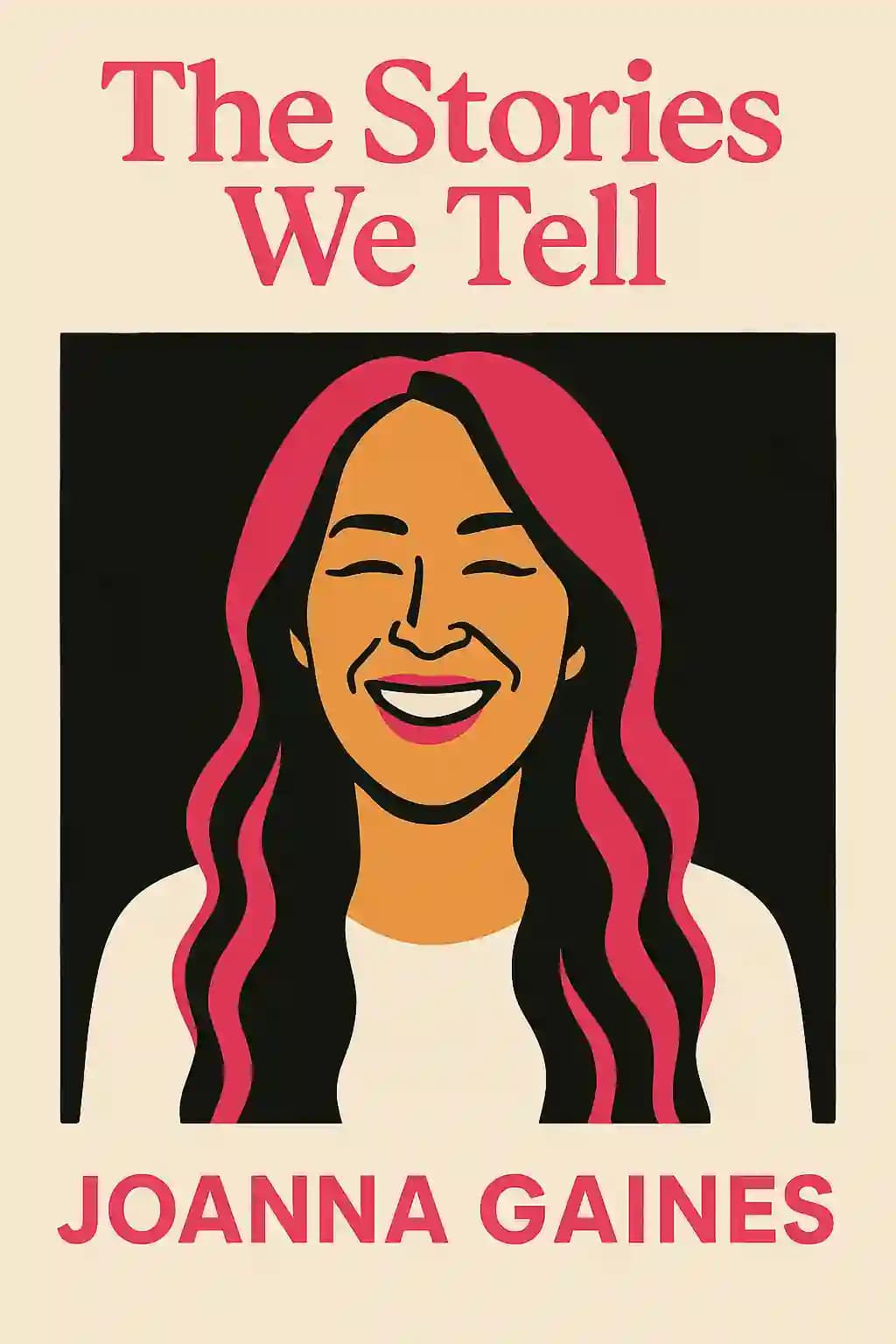
Joanna Gaines' NYT bestseller unveils the power of personal storytelling, inviting readers to confront insecurities and embrace vulnerability. What childhood memory shaped this design icon's philosophy? Discover why her journey of self-reflection has become a milestone birthday gift phenomenon.
Joanna Gaines, New York Times bestselling author of The Stories We Tell, is a celebrated lifestyle expert, interior designer, and co-founder of Magnolia. Known for her work on HGTV’s Fixer Upper and the Magnolia Network, Gaines infuses her memoir with themes of authenticity, vulnerability, and finding purpose through personal narrative.
Her background in communications (Baylor University) and hands-on experience renovating homes and building the Magnolia brand—including Magnolia Market, Magnolia Realty, and Magnolia Journal—anchor her authority on crafting spaces and stories that resonate.
This introspective work reflects Gaines’ signature Texan-rooted philosophy of embracing life’s imperfections while pursuing meaningful connections. As editor-in-chief of Magnolia Journal, she curates content aligned with the book’s focus on self-discovery and intentional living. The Stories We Tell debuted as an instant New York Times bestseller, solidifying Gaines’ status as a trusted voice in lifestyle and personal growth.
The Stories We Tell (2022) is a memoir where Joanna Gaines reflects on her personal journey, emphasizing how life’s challenges and triumphs shape identity. She shares intimate stories about family, faith, and building her Magnolia empire, weaving in lessons about authenticity and resilience. The book encourages readers to embrace their unique narratives and find meaning in both struggles and successes.
This book resonates with fans of Joanna’s design work, memoir enthusiasts, and anyone seeking inspiration to navigate life’s transitions. It’s ideal for readers interested in personal growth, faith-based storytelling, or behind-the-scenes insights into the Gaines family’s journey from small-business owners to HGTV stars.
Yes—readers praise its candid, relatable tone and actionable wisdom. Gaines balances vulnerability with uplifting takeaways, making it a compelling choice for those exploring self-discovery, entrepreneurship, or family dynamics. Reviews highlight its resonance with “anyone needing encouragement to own their story.”
Key themes include embracing vulnerability, finding purpose through adversity, and the power of faith. Gaines reflects on how societal expectations often clash with personal truth, urging readers to prioritize authenticity over perfection. Recurring motifs include home as a metaphor for selfhood and the importance of legacy.
Unlike her cookbooks (Magnolia Table) or design guides (Homebody), this memoir focuses on personal philosophy rather than practical tips. It complements The Magnolia Story (2016) by delving deeper into her emotional journey post-fame, including motherhood and balancing public visibility with private growth.
While direct quotes aren’t publicly excerpted, the book’s ethos mirrors Gaines’ signature lines like:
Gaines, who is Korean-American and Lebanese-German, discusses navigating her mixed heritage in Texas. She reflects on feeling “in between” cultures early in life and how embracing her roots influenced her design aesthetic and family values.
Gaines shares strategies for reframing setbacks as growth opportunities, such as journaling prompts to unpack personal narratives. She also emphasizes setting boundaries in relationships and work—a lesson learned from scaling Magnolia while raising five children.
Some readers note the book prioritizes introspection over concrete takeaways, which may disappoint those seeking step-by-step guidance. However, fans appreciate its reflective tone as a natural evolution from her earlier, more instructional works.
It aligns with movements around mindful living and storytelling-as-therapy but stands out by tying personal growth to community and faith. Unlike transactional productivity guides, Gaines frames resilience as a collective endeavor rooted in love and service.
Yes—Gaines discusses overcoming self-doubt as a female entrepreneur in male-dominated industries. She advocates for “starting small” (e.g., her early blog) and trusting incremental progress, making it relevant for creatives and business founders alike.
In an era of curated social media personas, Gaines’ emphasis on raw, unfiltered storytelling offers a counter-narrative. The book’s focus on mental health, legacy, and redefining success mirrors broader cultural shifts toward purpose-driven living.
Erlebe das Buch durch die Stimme des Autors
Verwandle Wissen in fesselnde, beispielreiche Erkenntnisse
Erfasse Schlüsselideen blitzschnell für effektives Lernen
Genieße das Buch auf unterhaltsame und ansprechende Weise
Fear has always had its way with me.
Perfectionism, which is really just another form of control.
Vulnerability-not safety-was my path to freedom.
Our pain reveals our purpose.
These highlight reels offer only glimpses, obscuring reality.
Zerlegen Sie die Kernideen von The Stories We Tell in leicht verständliche Punkte, um zu verstehen, wie innovative Teams kreieren, zusammenarbeiten und wachsen.
Destillieren Sie The Stories We Tell in schnelle Gedächtnisstützen, die die Schlüsselprinzipien von Offenheit, Teamarbeit und kreativer Resilienz hervorheben.

Erleben Sie The Stories We Tell durch lebhafte Erzählungen, die Innovationslektionen in unvergessliche und anwendbare Momente verwandeln.
Fragen Sie alles, wählen Sie die Stimme und erschaffen Sie gemeinsam Erkenntnisse, die wirklich bei Ihnen ankommen.

Von Columbia University Alumni in San Francisco entwickelt
"Instead of endless scrolling, I just hit play on BeFreed. It saves me so much time."
"I never knew where to start with nonfiction—BeFreed’s book lists turned into podcasts gave me a clear path."
"Perfect balance between learning and entertainment. Finished ‘Thinking, Fast and Slow’ on my commute this week."
"Crazy how much I learned while walking the dog. BeFreed = small habits → big gains."
"Reading used to feel like a chore. Now it’s just part of my lifestyle."
"Feels effortless compared to reading. I’ve finished 6 books this month already."
"BeFreed turned my guilty doomscrolling into something that feels productive and inspiring."
"BeFreed turned my commute into learning time. 20-min podcasts are perfect for finishing books I never had time for."
"BeFreed replaced my podcast queue. Imagine Spotify for books — that’s it. 🙌"
"It is great for me to learn something from the book without reading it."
"The themed book list podcasts help me connect ideas across authors—like a guided audio journey."
"Makes me feel smarter every time before going to work"
Von Columbia University Alumni in San Francisco entwickelt

Erhalten Sie die The Stories We Tell-Zusammenfassung als kostenloses PDF oder EPUB. Drucken Sie es aus oder lesen Sie es jederzeit offline.
Fear doesn't vanish when you turn on the lights. As a child, I'd lie frozen in bed, convinced monsters lurked in the shadows. But here's what nobody tells you: those monsters don't disappear with age-they just change shape. They morph from imaginary creatures into very real anxieties about rejection, failure, and being truly seen. The first time I tasted social fear, I was in kindergarten during show-and-tell. I proudly displayed a button that had fallen off my jacket, expecting awe. Instead, I got laughter. That moment-so small, so ordinary-planted a seed that would follow me for decades. It taught me that the world could be unpredictable, that vulnerability could backfire, that maybe it was safer to hide. My family moved constantly for my father's job, and with each relocation, those fears intensified. By high school, I'd hide in the library rather than brave the cafeteria alone. Fear became my shadow, always there, whispering that I should protect myself, stay small, avoid risk. Perfectionism became my armor-if I could control everything, maybe I'd never feel that kindergarten humiliation again. Then I met Chip, whose fearlessness baffled me. He approached life with a boldness I couldn't comprehend. When we opened our first Magnolia shop, my fears screamed at full volume. During a buying trip with my mom, doubt overwhelmed me until I finally broke down. That day, something shifted. I realized I could acknowledge my fears and still move forward. Vulnerability-not safety-was my path to freedom. The journey beyond fear isn't about eliminating it completely. It's about recognizing fear's presence while still taking that next brave step, discovering that what waits on the other side isn't disaster but often the very thing your heart has been longing for all along.