Thomas Merton's spiritual masterpiece sold 600,000 copies in 1948 alone, yet mysteriously never appeared on The New York Times bestseller list. Championed by Evelyn Waugh, this atomic-age antidote to Cold War anxiety continues offering what one critic called "a countercultural option" to modern living.
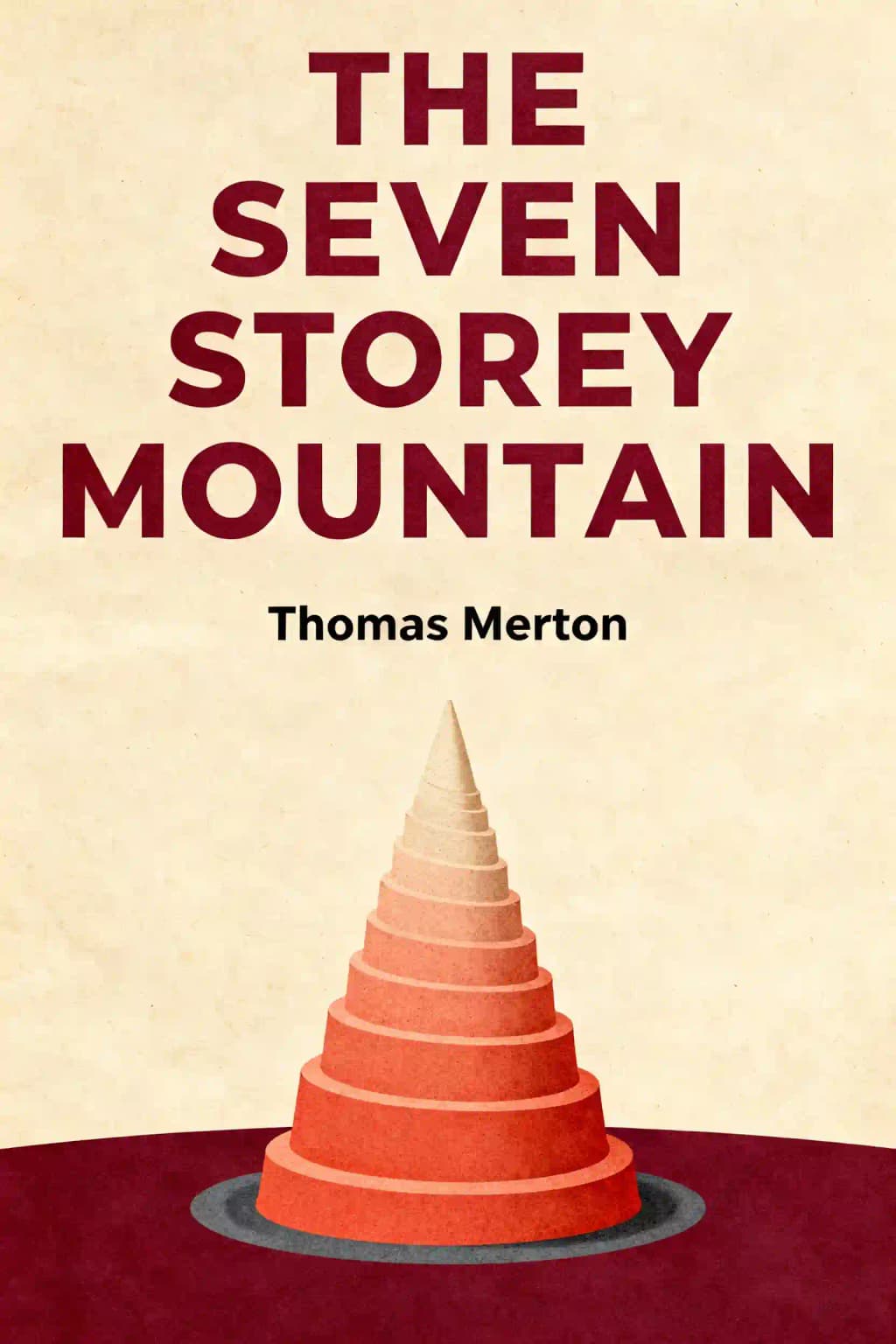
Thomas Merton (1915–1968) is the author of The Seven Storey Mountain, a bestselling spiritual autobiography and one of the most influential religious memoirs of the twentieth century. Born in France and raised in the United States, Merton converted to Roman Catholicism at age 23 before entering the Abbey of Gethsemani as a Trappist monk in 1941. His deeply personal account of spiritual transformation and monastic life resonated with readers seeking meaning in the post-war era, inspiring countless individuals to explore contemplative spirituality.
Over 27 years, Merton wrote more than 50 books on spirituality, social justice, and interfaith dialogue, pioneering conversations with Eastern religious leaders including the Dalai Lama and Zen master D.T. Suzuki. His work bridged Catholic monasticism with global spiritual traditions.
The Seven Storey Mountain sold over 600,000 copies in hardcover, with paperback sales exceeding three million by 1984. Translated into more than 20 languages, it remains continuously in print and appears on National Review's list of the 100 best nonfiction books of the century.
The Seven Storey Mountain is Thomas Merton's spiritual autobiography chronicling his journey from a restless, aimless youth to becoming a Trappist monk at the Abbey of Gethsemani in Kentucky. Published in 1948, the book details his childhood losses, struggles with materialism and identity, conversion to Roman Catholicism, and ultimate commitment to monastic life. The narrative follows Merton's quest to find both his true self and God, suggesting these searches are intrinsically connected.
The Seven Storey Mountain resonates with readers seeking spiritual transformation, those questioning faith, and anyone navigating life's purpose amid modern distractions. The autobiography particularly appeals to individuals interested in religious conversion narratives, contemplative living, and Catholic monasticism. Following World War II, the book inspired countless veterans, students, and teenagers to explore monastic offerings across the United States. It speaks to those experiencing restlessness and searching for deeper meaning beyond material pursuits.
The Seven Storey Mountain is widely recognized as one of the most influential religious works of the 20th century, appearing on National Review's list of the 100 best nonfiction books of the century. Translated into more than twenty languages, Merton's autobiography has touched millions of lives with its honest portrayal of spiritual struggle and transformation. The book offers profound insights into the ordinary pathways through which grace operates—through friendships, books, and everyday experiences. However, some critics note an unresolved bitterness pervading the narrative.
Thomas Merton was a prominent 20th-century Catholic writer, mystic, and Trappist monk who authored over 50 books during 27 years, focusing on spirituality, social justice, and pacifism. Born in France in 1915, he entered the Abbey of Gethsemani at age 26 and became a pioneering voice in interfaith dialogue. Merton engaged deeply with Eastern religions, conversing with the Dalai Lama, D.T. Suzuki, and Thich Nhat Hanh. His writings on contemplation and social engagement profoundly influenced spiritual seekers worldwide.
The Seven Storey Mountain explores several interconnected themes: Merton's conversion to Roman Catholicism and theological awakening, the discovery of God through self-discovery, and the critique of Western materialism that creates spiritual voids. The autobiography examines monastic life in the 20th century and the significance of ordinary experiences—friendships, books, places—as vehicles for divine grace. Merton emphasizes that true spiritual growth requires not just good deeds but living in proximity to God, portraying faith as an ongoing journey rather than a destination.
Thomas Merton structured The Seven Storey Mountain to mirror Dante's Divine Comedy, dividing his narrative into three parts representing Inferno, Purgatorio, and Paradiso. The title references Dante's Mount Purgatory with seven tiers corresponding to sins purged during the spiritual journey toward earthly paradise. Merton labels his childhood as "Hell"—a period when God seemed absent—his awakening as "Purgatory," and his entrance into monastic life as reaching an earthly paradise. This allegorical structure emphasizes that spiritual transformation is a continuous ascent.
The Seven Storey Mountain refers to Mount Purgatory in Dante's Divine Comedy, featuring seven tiers representing sins to be purged during the Christian spiritual journey. For Thomas Merton, the mountain metaphor symbolizes his ongoing spiritual ascent toward God, acknowledging he remains "in via"—still on the path. The title conveys that while Merton found faith and vocation, his spiritual development continues beyond the book's pages. He concludes with "Sit finis libri, non finis quarendi"—"Let this be the end of the book, not the end of the searching".
Thomas Merton portrays his conversion to Catholicism as a gradual awakening facilitated by friendships, books, and everyday experiences rather than dramatic visions or extraordinary phenomena. He emphasizes that "all our salvation begins on the level of common and natural and ordinary things". Merton describes becoming Catholic as being reborn spiritually—like a newborn in the religious realm who must learn to walk. His conversion narrative reveals stumbles and continued struggles, acknowledging that finding faith doesn't mean achieving spiritual perfection but beginning an ongoing journey of transformation.
The Abbey of Gethsemani, a Trappist monastery in Kentucky, represents Thomas Merton's entrance into his earthly paradise and the fulfillment of his spiritual calling. Despite fearing his past would disqualify him, Merton found the Abbey welcomed his devotion to God. He describes the monastery as "the four walls of my new freedom," where he committed to one of the most demanding Catholic orders. At Gethsemani, monks encouraged Merton to write, believing he could help many souls, launching his prolific literary career.
Thomas Merton criticizes the West's obsession with materialism and superficial desires, which he identifies as creating a spiritual void filled by money worship. Reflecting on his own "debauchery" during college years in England and the United States, Merton recognizes how Western society's emphasis on material pursuits left him spiritually adrift. This critique of materialism served as a catalyst for his spiritual awakening and conversion. Merton suggests that escaping this emptiness requires redirecting focus from external possessions to inner transformation and proximity to God.
"Sit finis libri, non finis quarendi" translates to "Let this be the end of the book, not the end of the searching," the concluding line of The Seven Storey Mountain. This Latin phrase epitomizes Thomas Merton's understanding that spiritual growth never reaches completion—even upon finding faith and vocation, the journey continues. The statement reflects Merton's humility in recognizing he remains in process, still climbing the metaphorical mountain despite his monastic commitment. These words capture the essence of Merton's life and writings: faith as perpetual seeking rather than final arrival.
Thomas Merton describes his journey as simultaneously discovering his true self and finding God, suggesting these quests are intrinsically related. He portrays spiritual transformation not as abandoning the self but as uncovering one's authentic identity through proximity to the divine. Merton emphasizes that grace works through ordinary materials—friendships, ideas, places—revealing God's presence in everyday incarnational experiences. The autobiography demonstrates that finding one's true vocation and surrendering to God's will are unified processes, requiring self-abandonment while paradoxically leading to genuine self-discovery.
Erlebe das Buch durch die Stimme des Autors
Verwandle Wissen in fesselnde, beispielreiche Erkenntnisse
Erfasse Schlüsselideen blitzschnell für effektives Lernen
Genieße das Buch auf unterhaltsame und ansprechende Weise
Pride makes us artificial and humility makes us real.
If you want to identify me, ask me not where I live, or what I like to eat, or how I comb my hair, but ask me what I am living for, in detail, ask me what I think is keeping me from living fully for the thing I want to live for.
Every moment and every event of every man's life on earth plants something in his soul.
For me to be a saint means to be myself.
Zerlegen Sie die Kernideen von The seven storey mountain in leicht verständliche Punkte, um zu verstehen, wie innovative Teams kreieren, zusammenarbeiten und wachsen.
Destillieren Sie The seven storey mountain in schnelle Gedächtnisstützen, die die Schlüsselprinzipien von Offenheit, Teamarbeit und kreativer Resilienz hervorheben.

Erleben Sie The seven storey mountain durch lebhafte Erzählungen, die Innovationslektionen in unvergessliche und anwendbare Momente verwandeln.
Fragen Sie alles, wählen Sie die Stimme und erschaffen Sie gemeinsam Erkenntnisse, die wirklich bei Ihnen ankommen.

Von Columbia University Alumni in San Francisco entwickelt
"Instead of endless scrolling, I just hit play on BeFreed. It saves me so much time."
"I never knew where to start with nonfiction—BeFreed’s book lists turned into podcasts gave me a clear path."
"Perfect balance between learning and entertainment. Finished ‘Thinking, Fast and Slow’ on my commute this week."
"Crazy how much I learned while walking the dog. BeFreed = small habits → big gains."
"Reading used to feel like a chore. Now it’s just part of my lifestyle."
"Feels effortless compared to reading. I’ve finished 6 books this month already."
"BeFreed turned my guilty doomscrolling into something that feels productive and inspiring."
"BeFreed turned my commute into learning time. 20-min podcasts are perfect for finishing books I never had time for."
"BeFreed replaced my podcast queue. Imagine Spotify for books — that’s it. 🙌"
"It is great for me to learn something from the book without reading it."
"The themed book list podcasts help me connect ideas across authors—like a guided audio journey."
"Makes me feel smarter every time before going to work"
Von Columbia University Alumni in San Francisco entwickelt

Erhalten Sie die The seven storey mountain-Zusammenfassung als kostenloses PDF oder EPUB. Drucken Sie es aus oder lesen Sie es jederzeit offline.
The world was burning when Thomas Merton entered it in 1915. Born near the French-Spanish border during World War I, he arrived in what he would later describe as "a place resembling Hell." His early years were marked by constant movement-France, England, America-as his artist father sought inspiration and his mother succumbed to cancer when Thomas was just six. By fifteen, he was an orphan, untethered and adrift. This rootlessness would define his youth but also prepare him for his remarkable transformation. What makes Merton's journey so compelling is not just where he ended-behind monastery walls-but how thoroughly he had embraced the world he would eventually renounce. Before becoming a monk, he had tasted everything modern life offered: intellectual ambition at Cambridge and Columbia, political radicalism, artistic pursuits, and sensual indulgence. His was not a sheltered soul who fled to religion out of fear, but one who had drunk deeply from modernity's well and found it desperately wanting.