Kapitel 1
The Dance of Connection: Unveiling Our True Selves
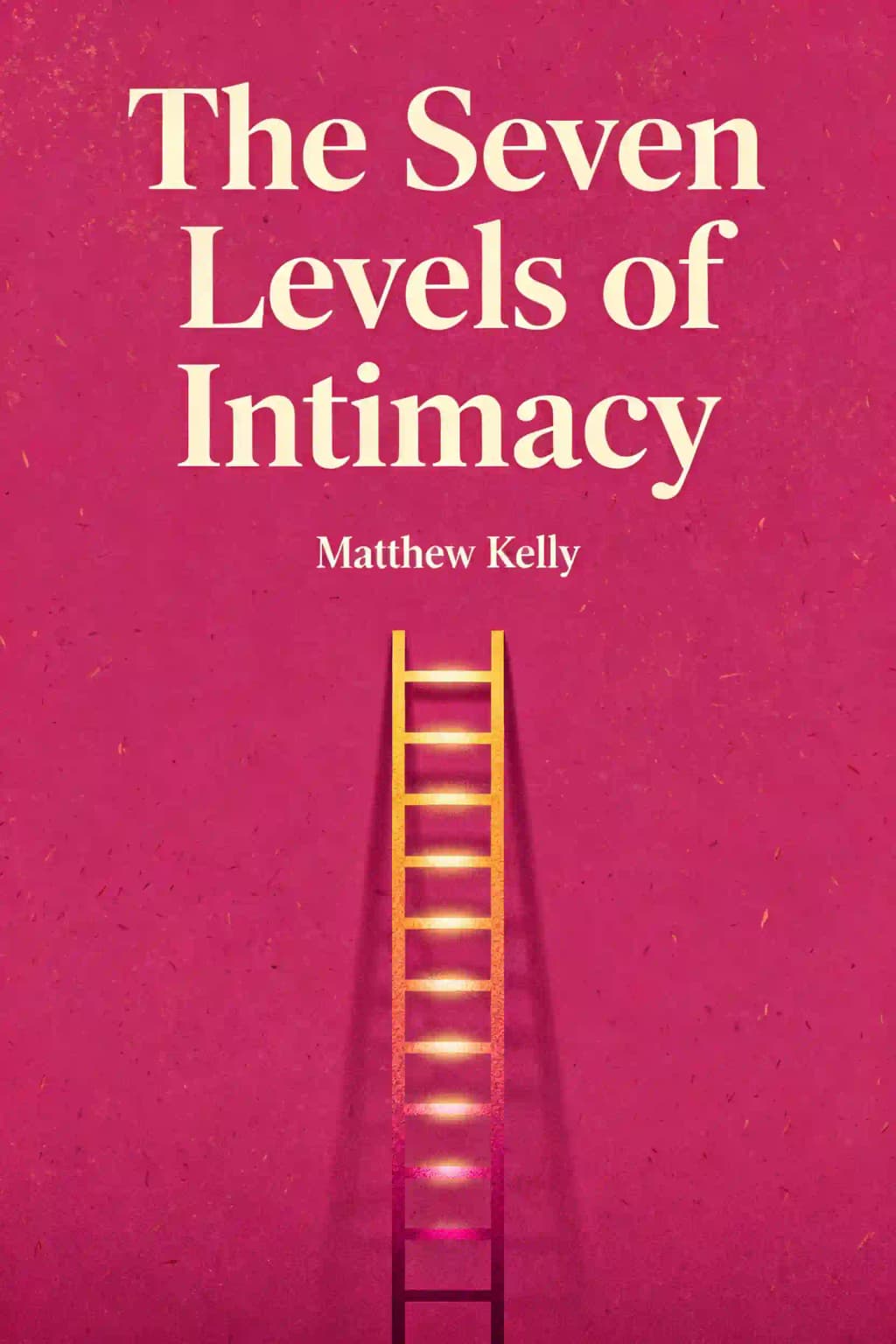
When David Anderson decided to be fully present during a family vacation, he transformed into an attentive husband and father overnight-bringing breakfast in bed, taking beach walks, and putting aside work completely. His dramatic change was so striking that his wife tearfully asked if she was dying and he was keeping it from her. "No, honey," he responded emotionally. "You're not dying. I'm just starting to live!" This poignant story from Matthew Kelly's "The Seven Levels of Intimacy" illustrates how small choices to love can profoundly impact relationships.
Kelly's book has become a relationship bible for countless readers, including celebrities like Oprah Winfrey who has recommended it on her book club list. Its cultural impact extends beyond self-help circles into corporate training programs and religious communities alike. What makes this work particularly powerful is how it addresses the paradox of modern life: we're more connected than ever through technology, yet experiencing an epidemic of loneliness. Kelly's framework offers a roadmap through this contradiction, guiding readers toward authentic connection in a world of superficial interactions.
Kapitel 2
Beyond the Sex Myth: What Intimacy Really Means
Our culture has fundamentally confused sex with intimacy, but they aren't the same thing. Sex doesn't guarantee intimacy, nor is it required for intimacy. The truly happy people in life have genuine intimacy-authentic connections where they can share their lives with others. While we can survive without luxury cars or dream homes, we cannot thrive without intimacy. It's a legitimate human need that satisfies our hearts in ways material possessions never can.
Intimacy is the process of mutual self-revelation that enables us to love completely. Life itself is a continuous self-revelation, yet in relationships we often hide our true selves. We simultaneously yearn for and avoid intimacy because it requires exposing our secrets, dreams, fears, and flaws to another imperfect human being. True intimacy means allowing someone to see us exactly as we are-with all our strengths and weaknesses, sharing what shapes and directs our lives.
We each have a deep need to be known through sharing our personal stories. This sharing helps us remember who we are and where we've come from-keeping us sane and grounded. Mental patients have often forgotten their own stories, losing the thread that connects their past to their present. Similarly, couples who forget their shared story-how they met, fell in love-risk their relationship going "mad." The enthusiasm with which new couples tell their story often diminishes over time to terse responses, reflecting how we become immune to our story's power.
Relationships serve as mirrors that reflect our true selves, keeping us honest and grounded in reality rather than illusion. When we interact with others, they draw us out of imaginary worlds and shatter sanitized self-perceptions. What annoys us in others often reflects qualities we possess ourselves. People introduce us to ourselves, revealing the truth that we are interdependent rather than independent.
We fear revealing ourselves because we believe people wouldn't love us if they truly knew us. This creates the great deception where we put our best foot forward, hiding our flaws and pretending all is well. Yet paradoxically, we can only be truly loved by revealing ourselves completely. When we share our weaknesses, people often respond with connection rather than rejection, as everyone has their own dark side.
The sensation that nobody really knows us creates profound loneliness. We yearn for intimacy yet run from it, creating a void we try to fill with addictions-alcohol, shopping, drugs, sex, or serial relationships. These addictions disconnect us from reality while maintaining our self-delusion that we're the center of the universe.
Kapitel 3
Common Purpose: The Foundation of Lasting Connection
While common interests can bring people together initially, they provide a false foundation for lasting relationships. Interests change over time, and if shared activities are your strongest bond, the relationship may falter when those interests shift. What truly keeps people together in dynamic relationships is a common purpose. Understanding this purpose requires first understanding our individual purpose: to become the-best-version-of-ourselves. This principle brings clarity to every aspect of life and relationships.
Modern culture portrays life as merely a pleasure-seeking exercise-"if it feels good, do it"-creating confusion between sex and intimacy. But there's nothing more depressing than purposelessness. Our essential purpose is to become the-best-version-of-ourselves, a principle that brings clarity to everything. Good friends, books, movies, and work all serve this purpose. This understanding provides the ultimate decision-making tool: Which option will help me become my best self?
Relationships only make sense in relation to our overall life purpose. The purpose of relationships is mutual growth-helping others become their best selves while they help us become ours. Good relationships challenge and encourage our development; troubled ones lead us away from our essential purpose. Every relationship, whether lasting or fleeting, offers an opportunity to further our essential purpose through mutual growth and development. When we place our essential purpose at the center of our relationships, other things naturally fall into place.
The biggest problem in relationships is the betrayal of self. Our true self is the custodian of our honor, integrity, and dignity-more valuable than pleasure, money, or status. When we behave contrary to our values and principles, we create inner conflict and shame, leading to either correction or flight. Shakespeare's wisdom rings true: "To thine own self be true... Thou canst not then be false to any man." If someone compromises their principles in a relationship, they will eventually resent their partner and leave-if not physically, then emotionally-to reconnect with their true self.
Kapitel 4
Building Strong Roots for Life's Storms
Every relationship will face storms. The question isn't if a storm will come, but when. And when it arrives, you either have strong roots to weather it, or you don't. Different people respond differently: some run away, others frantically try to establish roots during the crisis, while some foolishly pull up the roots they've spent years cultivating.
A tree with strong roots can weather any storm. In relationships, when crisis hits, you've either established the foundation or you haven't. The roots that strengthen relationships are numerous: communication, appreciation, respect, willingness to serve, and regular time together. Like diets, almost any relationship approach works if you commit to it. The problem isn't the method-it's our neglect of basic principles.
Strong relationship roots include exercising together, regular date nights, vacations, and praying together. Activities that help both partners achieve their essential purpose create powerful attunement. One-on-one time requires valuing your partner above other priorities and making deliberate choices. Praying together-not just attending church separately but openly sharing spirituality-puts relationships in "a whole different stratosphere" despite potential differences in spiritual approaches.
Happiness requires making gratitude part of your daily emotional diet. Most people complain constantly-Hal Urban's classroom experiment found only four people out of seventy thousand could go 24 hours without complaining. Our complaints poison relationships. The antidote is deliberate gratitude: listing things, people, and intangibles we appreciate. When we focus on what's right instead of what's wrong, life improves dramatically. Joy doesn't come from having, but from appreciating what we have.
True reverence means recognizing the profound value in someone or something. We often lose our childlike ability to experience wonder and reverence in our busy lives. Taking time to reflect on the extraordinary nature of human beings cultivates the respect essential for relationships. Respect builds trust and encourages openness. We should show respect for others simply because they are human beings, while expecting to earn others' respect.
Discipline isn't about controlling teachers or parents, but rather a gift we give ourselves. Every aspect of human life thrives on discipline-it's the price life demands for happiness. When we eat well, exercise, prioritize relationships, read good books, and pray, we feel more fully alive, but each requires discipline. Discipline doesn't enslave us; it sets us free. Freedom isn't doing whatever you want-it's having the strength of character to choose what is good and right. To love, we must be free, and to be free requires self-possession through discipline.
Kapitel 5
The Seven Levels: A Map to Deeper Connection
The seven levels of intimacy will transform how you view relationships. Each level helps recognize signs in relationships and empowers you to embrace intimacy. The journey through these levels moves from shallow to deep, from irrelevant to relevant, from illegitimate desires to legitimate needs, from judgment to acceptance, from fear to courage, from false self to true self, from loneliness to companionship, and from isolation to unity.
The seven levels of intimacy is a model-imperfect but powerful. Like all effective models, it simplifies complex situations to provide clarity. The model follows several key rules: relationships rarely stay at one level but move between levels daily; the levels aren't tasks to complete in order; not all relationships are meant to experience all levels; and intimacy cannot be rushed.
The first level of intimacy involves casual interactions that reveal little about each person, relying on fleeting and superficial exchanges. While useful for becoming acquainted and conducting daily affairs, cliches can destroy a relationship's soul if they're the only form of communication. When relationships become trite, transactional, overly familiar, or commonplace, they've become cliches themselves.
We use cliches for both simple and complex reasons. They help make initial connections and maintain relationships at a basic level. "How are you?" can start conversations, but genuine interest in the answer is key to intimacy. Conversely, cliches can kill conversations when used by those who are indifferent, selfish, or afraid. Teenagers often use cliches like "Whatever!" to avoid deeper communication with adults, often because they fear judgment or criticism. Adults use cliches for similar reasons-fear of rejection, feeling misunderstood, shame, laziness, or self-absorption.
Carefree timelessness-spending significant time together without an agenda-is the most effective way to move beyond the cliche level of intimacy. Unlike our fragmented attempts at connection through quick calls or messages, carefree timelessness allows relationships to genuinely thrive. Teenagers excel at this, talking for hours about "nothing" and losing track of time together. We must schedule this time, though without planning its content. Two hours weekly, one day monthly, and a weekend quarterly can transform our relationships.
Kapitel 6
From Facts to Opinions: The First Major Obstacle
The second level of intimacy involves focusing on facts about our lives and the world. These facts-from daily happenings to news events-are mundane and self-evident, creating little conflict while keeping us safe from true intimacy. Relationships confined to this level feature staccato conversations about weather, sports, or daily activities with brief questions and answers. While useful for forming initial acquaintances, remaining at this impersonal fact level eventually makes relationships stale and monotonous.
Facts have the redeeming quality of potentially stimulating our intellect and natural curiosity. The best facts are those that help us become the-best-version-of-ourselves. A conversation about someone's affair offers little growth, while discussing Picasso's art and life could be intellectually stimulating. Every conversation either moves us toward or away from our essential purpose, giving us responsibility in what we choose to discuss.
Speech is one of our most powerful gifts, capable of raising people up or pulling them down. Words carry either positive or negative charges, affecting everyone we encounter. When we lose the ability to speak, we realize how precious this gift truly is and how wasteful it is when people refuse to use their words for love.
We're more likely to speak out when things go wrong than when they go right, taking positive experiences for granted. Emotionally mature people understand everyone needs encouragement. When we catch people doing something right and praise them, we energize them in powerful ways.
We often rush to judge others from our limited perspective, not seeing their full circumstances. After confronting a mother with unruly children in an ice cream shop, I learned they had just left the hospital where their father died. Judgment easily becomes a habit that creates inner restlessness and destroys honest communication. The practice of non-judgment-giving people the benefit of the doubt and seeing situations from their perspective-fosters intimacy.
Opinions represent the first major intimacy obstacle. While cliches and facts are noncontroversial, opinions often lead to controversy. Most relationships briefly enter this level before retreating to safer ground. When someone expresses a challenging opinion, people either argue or employ "surfacing techniques"-changing the subject, making jokes, using sarcasm-to return to comfortable territory. These techniques gradually condition others to avoid certain topics, keeping relationships shallow.
Having a common goal provides a reference point for navigating disagreements. When two people mutually agree to pursue becoming the-best-version-of-themselves, many arguments can be avoided. Without this shared purpose, even simple disagreements can spiral into ego battles that never resolve. Most relationships lack this shared goal, so disagreements quickly deteriorate into power struggles.
Kapitel 7
Dreams and Vulnerability: The Heart of Intimacy
Dreams reveal our deepest selves-our hopes, fears, fantasies, and desires. While dream interpretation has always fascinated humanity, the fourth level of intimacy isn't about our sleeping dreams but about our aspirations for life, relationships, and future. Sharing these dreams requires vulnerability, which is why we must first master the third level of intimacy through acceptance. We typically reveal our dreams only to people who accept us, not to those who are judgmental or critical.
When pursuing dreams, the first question is whether you're willing to delay gratification. If not, relationships aren't for you, and worthwhile dreams will elude you. Our culture demands instant gratification, breeding generations with little patience or self-discipline. Yet success in any field-business, sports, investing, relationships-requires delayed gratification. Consider Michael Jordan playing through illness in the 1997 NBA finals, or Lance Armstrong enduring pain to win seven Tour de France titles. They succeeded by keeping their dreams in mind while enduring present pain for future reward.
Dreams don't just happen to come true-people make them come true. The more you define your dreams, the more likely you are to achieve them. Goals drive us, bring out our best, and flood our lives with passion and purpose. When setting goals, choose ones that are challenging but attainable. Take a "dream weekend" with your partner to identify goals for the next twelve months. Write down your plan, make copies, and review progress monthly. If you have children, encourage them to dream too-get them dream books and discuss dreams as a family.
The fifth level of intimacy involves sharing our emotional reactions-the raw nerve endings that reveal our humanity and vulnerability. While previous levels asked if we could move beyond cliches, reveal opinions, and set aside instant gratification, this level asks: "Are you willing to make yourself vulnerable?" This is the price of true intimacy. The reward for this vulnerability is mental health. At the core of successful therapy is a relationship where one can reveal everything, just as a child tells their mother everything. When people reveal themselves with honesty and acceptance, they free each other from isolation.
Expressing feelings healthily requires considering several factors. The "why" determines everything else-whether you just need to say something aloud or seek understanding from someone specific. Your primary relationship is usually the best place for complex, intimate feelings. When expressing feelings, use "I" statements focused on facts: "I am angry because you came home late and missed family dinner." This addresses your feeling, the reason, and the impact.
Kapitel 8
The Deepest Levels: Faults and Legitimate Needs
The sixth level of intimacy involves exposing our vulnerabilities-our faults, fears, and failures. This emotional nakedness is usually appropriate only in our primary relationship. Here we finally let down our guard, take off our masks, and humbly say "I need help," "I am afraid," or "I messed up." This level requires great maturity, both in admitting our weaknesses and accepting those of our partner.
Taking ownership of our faults, fears, and failures prevents us from becoming their victims. Acknowledging these aspects puts us in the position of being dynamic choice makers rather than victims of our past. While our experiences have wounded us and shaped our reactions, we possess the extraordinary human ability to change and grow. Excellence in any field comes from making dynamic choices, while mediocrity often accompanies attitudes of entitlement and victimhood.
We all have a dark side-thoughts and behaviors inconsistent with our values and the person we're trying to become. The key word is "trying"-we're striving to be our best selves, not claiming perfection. This journey involves moments of both success and failure. Most people pretend they don't have a dark side, living in self-deception that distorts their character. The more we hide our darkness, the more power it gains over us, like an addiction. Intimacy liberates us by bringing our darkness into the light of a loving relationship, where it loses its power.
Unforgiveness is like drinking poison and expecting the other person to die. It enslaves our spirit and robs us of our future. The key to forgiving others lies in recognizing that we've all needed forgiveness ourselves. As we become more aware of our own limitations, we naturally become more tolerant of others'. The ability to forgive and ask for forgiveness shows spiritual and emotional maturity.
The seventh level of intimacy transforms our quest to know and be known into dynamic collaboration focused on meeting each other's legitimate needs. When our needs go chronically unmet, we become irritable and frustrated. This final level involves not just identifying each other's needs but actively helping fulfill them. Through understanding each other's opinions, hopes, feelings, and fears from previous levels, we can now build a lifestyle that helps each person become their best self.
Modern culture constantly tells us to "get what you want from life," but this philosophy dooms relationships from the start. True relationships are built on giving and receiving, not selfish fulfillment at another's expense. The critical shift required is from pursuing illegitimate wants to focusing on legitimate needs. We can never get enough of what we don't really need, yet we chase our wants relentlessly.
Kapitel 9
Creating a Relationship That Thrives
The happiest people on the planet are those with dynamic relationships. This universal truth transcends education, wealth, and circumstances. Like John Wooden observed about sports winners working harder, great relationships come from people who invest more effort. In relationships, either both win or both lose-the outcome is a choice within our control. Positive relationships affect every aspect of our lives-people in good primary relationships are more effective at work, more involved in communities, and better in all their roles. Conversely, troubled relationships spill negative effects into all areas of life.
Your primary relationship-typically with a significant other-is your emotional home. It should be a place where you can relax and unwind, though it will require maintenance and emotional chores. This relationship should provide a comfortable space to be yourself and reveal your true self, serving as your first source and opportunity for intimacy. Three crucial questions to ask about your partner: Do you trust them? Do they have your best interests at heart? Are they helping you become the-best-version-of-yourself?
Energy, not time, is our most valuable resource. While everyone gets twenty-four hours each day, some accomplish far more with their time because of how they manage their energy. Understanding what types of people energize us is crucial for building strong relationships. We must recognize which people energize us and which drain us, being careful not to confuse people with their environments. Often, our primary relationships suffer because we're already drained by lower-level interactions throughout the day.
Napoleon wrote, "Those who fail to plan can plan to fail." Everyone wants great relationships, but millions find themselves in mediocre ones, starved for intimacy. Throughout this book, I've emphasized placing our essential purpose at the center of our lives and relationships as the first critical success factor. The second is formulating a plan. Just as Michael Jordan visualized the player he wanted to become and Ralph Lauren sketches designs before cutting material, successful relationships require vision and planning.
To build a truly great relationship, make a list of what's important to both of you, ranking items from 1-3 by importance. Acknowledge that your primary relationship should be your highest priority, though daily life often doesn't reflect this. Schedule regular review sessions-weekly for the first month, then monthly, with an annual retreat-to assess your progress. Learn to hold each other accountable with love rather than manipulation, understanding when to challenge and when to encourage.
Kapitel 10
The Decision to Love Completely
Intimacy extends far beyond physical love, encompassing closeness with yourself in solitude and with others in company. It's about knowing, understanding, and accepting ourselves and others exactly as we are today. Our purpose is to love and be loved-to celebrate our best selves while helping others become their best versions. Though we possess the power to make others feel completely loved, it remains one of our least used abilities. When we focus on loving others, we develop a certain glow that energizes us.
After losing his father to cancer, Kelly reflects on their relationship with poignant regret. Though he considers his father extraordinary in ordinary ways-as a husband, father, employee, friend, and citizen-he wishes they had known each other better. Daily, he ponders what his father would do in various situations and feels sadness that his future wife and children will never meet him. Despite treasuring the memories they made together, Kelly wishes he knew more about his father's childhood, parents, feelings, and wisdom. His father's death taught him a final lesson: take time to know deeply those you love, because when they're gone, we'll wish we had known them better.
Peter, an ordinary guy who occasionally wondered if he'd ever have a great relationship, witnessed a life-changing scene at San Francisco airport. A man returning from just two days away greeted his family with extraordinary love and attention-embracing his young sons individually with heartfelt words, cradling his baby daughter, and passionately reuniting with his wife of twelve years. Stunned by their connection, Peter awkwardly commented he hoped his future marriage would be that passionate. The stranger's powerful response-"Don't just hope, friend, decide!"-transformed Peter, who later told his arriving friend he had been watching "my future." Great relationships don't come to those who merely hope; they belong to those who decide to make them a priority.
Love is a choice, not a feeling. When Stephen Covey was approached by a man whose marriage was failing because "the feeling isn't there anymore," Covey wisely responded: "Love her. If the feeling isn't there, that's a good reason to love her." Love as a verb produces love as a feeling. Our culture deceives us by equating intimacy with sex and love with feelings, but sex is only the shadow of intimacy, and feelings are just the aroma of love.
Life isn't about material possessions, status, achievements, or appearances. It's not about what shoes you wear, what car you drive, what college you attended, or how much money you have. It's not about power, fame, or vacation destinations. It's not even about grades in school. Life is fundamentally about love-whom you love and whom you hurt, how you love yourself and how you hurt yourself. It's about how you treat the people close to you and those who briefly cross your path. Everything else we chase-pleasures, possessions, achievements-leaves us with a dissatisfied aftertaste because you can never get enough of what you don't really need. What we truly need is intimacy.