Kapitel 1
A Legacy of Secrets: Unraveling the Truth
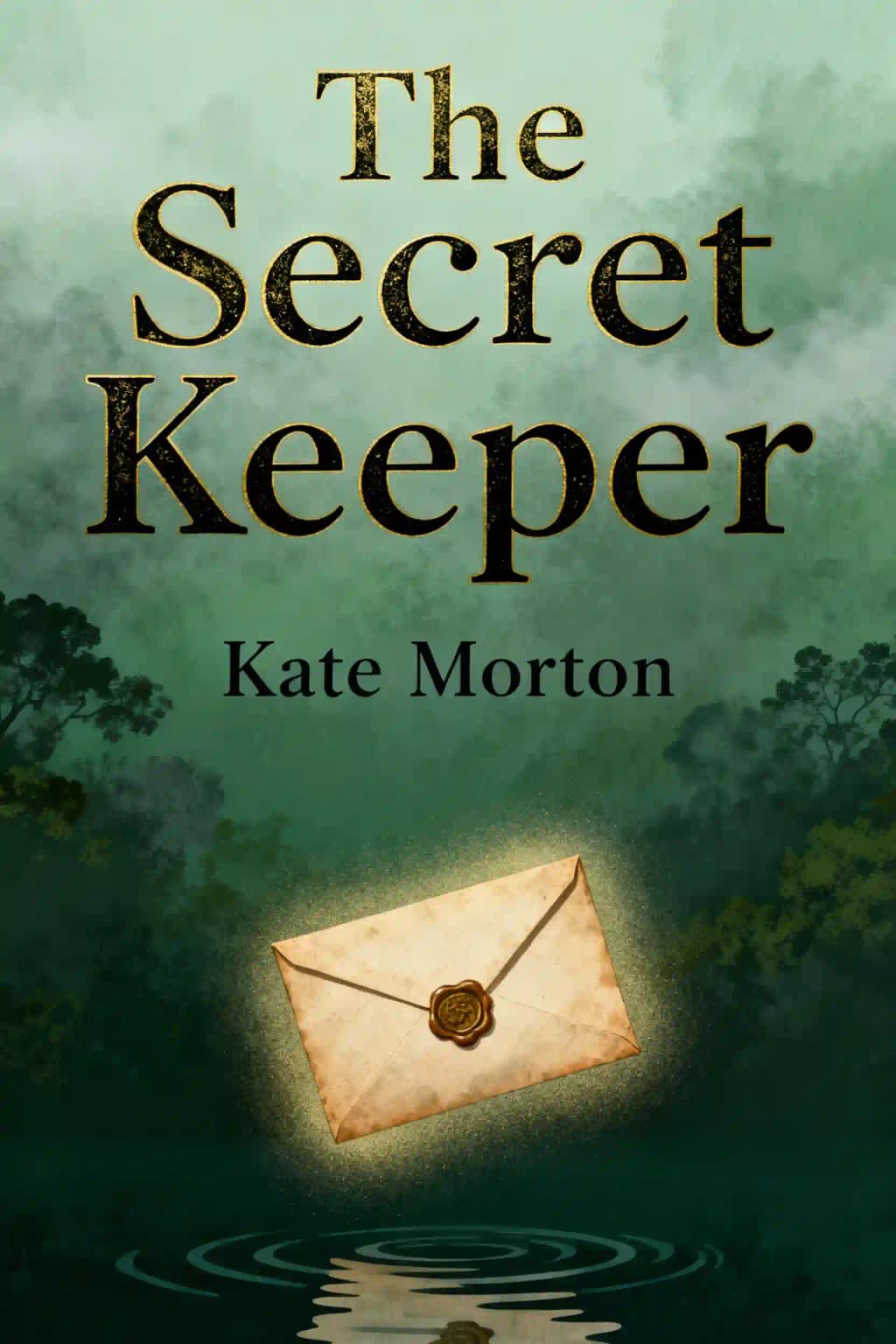
Kate Morton's "The Secret Keeper" has captivated millions of readers worldwide since its 2012 publication, becoming a #1 international bestseller translated into 38 languages. The novel has been praised by critics for its masterful interweaving of past and present, with The Guardian calling it "a rich and satisfying mystery with enough twists to keep readers guessing until the very end." Even Michelle Obama included it in her summer reading recommendations, noting its "brilliant exploration of how the past shapes who we become." This spellbinding tale of family secrets begins with a shocking crime witnessed by a teenage girl and unfolds across decades as she seeks to understand what really happened that summer day.
Kapitel 2
The Burden of Witnessing: A Childhood Forever Changed
On a sweltering summer day in 1961, sixteen-year-old Laurel Nicolson seeks refuge in her family's weathered tree house, a sanctuary perched high in an ancient oak tree overlooking their Suffolk farmhouse. She lies on her stomach, chin propped on her hands, daydreaming about her future while the wooden planks beneath her still hold the day's heat. Her thoughts drift to her planned escape to London's Royal Academy of Dramatic Art, where she envisions herself transformed into a sophisticated actress far removed from her rural roots. She contemplates her upcoming secret midnight motorcycle ride with Billy Baxter - a working-class boy who opened her eyes to contemporary theater, introducing her to Harold Pinter's plays and the revolutionary concept of the "generation gap" that was beginning to define their era.
As Laurel waits in her elevated hideaway, she observes her mother Dorothy approaching the farmhouse through the kitchen garden, pushing baby Gerald in his pram. Dorothy's floral dress catches the late afternoon light, and she hums a familiar tune - a scene of such ordinary domestic tranquility that its impending disruption seems all the more shocking. Without warning, a stranger materializes at their garden gate: a well-dressed man carrying a leather suitcase, his appearance jarringly out of place in their rural setting. To Laurel's mounting horror, the man calls out "Dorothy" with unmistakable familiarity, and in a moment that splinters her world forever, her mother reacts with lightning speed, driving a cake knife - meant for Laurel's birthday celebration that very evening - into the stranger's chest.
The aftermath of this violent act reverberates through Laurel's life like ripples in a poisoned pond. When questioned by local police, she constructs a careful narrative of self-defense, describing how the mysterious man had made threatening moves toward her mother and baby brother. Her testimony, delivered with the conviction of a natural actress, helps authorities rule the killing as justified. But Laurel carries the weight of her deliberate omission - that single word, her mother's name, spoken with such recognition - which suggests a hidden history she dare not contemplate.
This unspoken truth creates an invisible but impenetrable barrier between Laurel and her family, particularly her mother. The incident becomes their shared ghost, haunting family gatherings and festive occasions while her younger siblings - Iris, Rose, and Daphne - remain untouched by its shadow, their innocence preserved by their absence that day. The burden of knowledge drives Laurel toward her London ambitions with increased urgency. She immerses herself in the theater world, building an acclaimed acting career that provides both physical and emotional distance from her family's farmhouse and its secrets. Yet despite her success on stage and screen, despite the critical acclaim and the comfortable Hampstead life she creates, the mystery of that summer day continues to gnaw at her consciousness. It leaves her perpetually questioning not just the events of that afternoon, but the very nature of her mother's identity - who was Dorothy before she became the warm, cake-baking mother of Laurel's childhood? The question follows her through decades, an unsolved mystery that demands resolution.
Kapitel 3
Uncovering Dorothy's Secret Past
Fifty years later, Laurel returns to her childhood home as her ninety-year-old mother Dorothy approaches death. The farmhouse remains largely unchanged - a time capsule of memories both cherished and haunting. During this visit, while sorting through her mother's belongings in the attic, Laurel discovers a photograph tucked away in an old book. It shows her mother with another young woman, both dressed in 1940s fashion, smiling on a London street. The inscription on the back reads "For Dorothy. A true friend is a light in the dark. Vivien." The name triggers disturbing memories for Laurel, connecting to the violent incident she witnessed decades earlier in the garden - that sunny afternoon when her mother stabbed a stranger with a birthday cake knife.
When Dorothy experiences moments of confusion, her guard drops, and she begins speaking about her past in fragmented recollections. Laurel, now a successful actress, uses her practiced patience to draw out these stories. She learns her mother worked for the Women's Voluntary Service during the London Blitz, delivering meals to bomb shelters and assisting with evacuee children. Dorothy later served as a companion to an elderly aristocrat named Lady Gwendolyn Caldicott in her Kensington mansion, a position that introduced her to London's upper-class society. Most shockingly, during one particularly lucid moment, Dorothy admits she "wouldn't have liked" her younger self, confessing she collected regrets like others collected trinkets and made decisions that cost her "everything I loved."
This confession shatters the carefully constructed image Laurel held of her parents' marriage - the idyllic union between a charming market gardener and a devoted wife. It also gives new meaning to a cryptic comment from her grandmother years earlier, who had bitterly suggested Dorothy had "bewitched" Laurel's father and married him as an "escape." The grandmother had always maintained Dorothy wasn't who she claimed to be, but Laurel had dismissed these words as jealousy.
Through meticulous research at the Imperial War Museum archives, local libraries, and newspaper collections, Laurel pieces together her mother's wartime life. She conducts lengthy conversations with her brother Gerry, who remembers different details from their childhood, and tracks down elderly neighbors and acquaintances who knew Dorothy during the war years. Gradually, a disturbing picture emerges. The man her mother killed was Henry Jenkins, a moderately successful novelist whose wife Vivien - the same woman from the photograph - had reportedly died in a bombing raid in 1941. Yet inconsistencies in the official record raise troubling questions. The more Laurel uncovers about her mother's close friendship with Vivien and her connection to Henry Jenkins, the more she fears a terrible truth: that her beloved mother might have orchestrated or been directly responsible for Vivien's death, explaining the violent confrontation that Laurel witnessed as a child.
Kapitel 4
Dolly: Ambition, Deception and Desperate Longing
Dorothy Smitham-known as Dolly during the war-emerges as a complex character driven by fierce ambition and a desperate desire to escape her mundane origins. As a seventeen-year-old, she becomes convinced she was stolen as a baby, the only explanation for why she feels so different from her painfully proper family. Her father Arthur obsesses over budgets and propriety, her mother Janice is perpetually apologetic, and her younger brother Cuthbert is growing into a miniature version of their father. Dolly dreams of a glamorous life far removed from the secretarial position at her father's bicycle factory.
During a family holiday in Bournemouth, Dolly meets Jimmy Metcalfe, a talented photographer with dreams of his own. They fall in love, but when Jimmy receives a job offer in London with Picture Post magazine, Dolly feels betrayed that he prioritizes career over marriage. This rejection fuels her determination to reinvent herself in London on her own terms.
In wartime London, Dolly secures a position as companion to Lady Gwendolyn Caldicott, an elderly aristocrat. She secretly tries on Lady Gwendolyn's expensive clothes and fabricates stories about her importance to impress Jimmy when they reunite. Dolly becomes obsessed with Vivien Jenkins, the beautiful, wealthy wife of novelist Henry Jenkins who lives across the street. She fantasizes about befriending Vivien and entering her sophisticated world, even volunteering with the Women's Voluntary Service just to be near her.
Dolly's character reveals a troubling pattern of deception and social climbing. When Lady Gwendolyn dies without leaving Dolly the inheritance she expected, Dolly concocts a scheme to blackmail Vivien by staging compromising photographs suggesting an affair. This plan reveals the depths of Dolly's moral flexibility and desperation to achieve the life she believes she deserves.
Kapitel 5
Jimmy: The Moral Compass in a World at War
Jimmy Metcalfe provides a stark contrast to Dolly's ambitious scheming. A talented photographer with genuine artistic vision, Jimmy documents the human impact of the London Blitz with sensitivity and purpose. Unlike Dolly, who constantly reinvents herself, Jimmy remains grounded in authentic values, caring tenderly for his confused elderly father despite his own modest circumstances.
When Jimmy proposes marriage to Dolly, offering his mother's ring and his honest love, she rejects him, unable to see the value in his genuine affection without wealth or status. This rejection creates the first fracture in Jimmy's heart, though his love for Dolly initially persists.
Jimmy reluctantly agrees to Dolly's blackmail scheme, primarily out of concern for her increasingly desperate state. However, when he follows Vivien to gather compromising evidence, he discovers something unexpected-Vivien volunteering with orphaned children at a hospital, directing them in a production of Peter Pan. Rather than photographing her in a compromising position, Jimmy offers to help with the production.
As Jimmy spends time with Vivien and the children, he discovers her true nature-kind, compassionate, and suffering in an abusive marriage to Henry Jenkins. Jimmy's moral compass reasserts itself as he tries to convince Dolly to abandon the blackmail plan. When she refuses, he begins to see her true character more clearly, noting how her schemes have changed her into someone he barely recognizes.
Jimmy's growing feelings for Vivien create an impossible situation. His loyalty to Dolly conflicts with his recognition of her moral failings, while his attraction to Vivien is complicated by her marriage and his own engagement. This ethical dilemma reveals Jimmy's character as fundamentally decent in a world where desperation and war have compromised many people's moral boundaries.
Kapitel 6
Vivien: Tragedy, Resilience and Secret Identities
Vivien Longmeyer's story begins with profound childhood trauma. At eight years old in Australia, she loses her entire family in a car accident-a tragedy she believes she caused by misbehaving and delaying their departure from a picnic. Sent to live with her cold Aunt Ada, who blames her for the accident, Vivien retreats inward, making herself as small and unobtrusive as possible.
When arrangements are made for her to travel to England to live with relatives, Vivien develops a coping mechanism-believing she's living in a dream world after falling asleep by an enchanted creek in Australia. She presses her ear to the ground upon arriving in England, trying to hear "the wheels turning" that would take her home through an imagined tunnel. This poignant detail reveals how a child processes overwhelming grief through magical thinking.
As an adult, Vivien marries Henry Jenkins, a novelist who initially seems to adore her but reveals himself to be violently abusive. Unable to have children of her own, Vivien finds purpose working with orphaned children at Dr. Tomalin's hospital. Despite her outward appearance of wealth and privilege, she lives in constant fear of her husband's jealous rages.
When Vivien discovers Dolly's blackmail scheme through a letter and photograph left for her husband, she makes a desperate decision to warn Dolly. Learning that Henry has murdered Jimmy and thrown his body in the Thames, Vivien rushes to Dolly's boarding house during an air raid. In their final conversation, Vivien urges Dolly to flee London immediately and start a new life at a seaside boarding house Jimmy had found for her.
In the novel's most shocking twist, when a bomb strikes the building and Dolly is killed, Vivien makes an instantaneous decision to switch identities with the dead woman. She places her wedding ring on Dolly's finger, takes Dolly's employment letter, and identifies herself to rescuers as Dorothy Smitham. This act of identity exchange allows Vivien to escape her abusive husband while giving meaning to Dolly's death-a second chance at life that Dolly herself would never experience.
Kapitel 7
The Tangled Web of Relationships
The relationships between Dolly, Jimmy, and Vivien form a complex triangle of love, deception, and missed connections that unfolds against the backdrop of post-war London. Dolly's passionate love for Jimmy manifests in an obsessive desire to create a perfect life together, yet she paradoxically rejects his marriage proposal, blinded by dreams of wealth and social status that he cannot immediately provide. Jimmy's initial devotion to Dolly runs deep, but her increasingly manipulative behavior and materialistic schemes gradually erode his affection, leading him to discover a more authentic connection with Vivien. Meanwhile, Vivien - trapped in a marriage to Henry marked by psychological abuse and controlling behavior - recognizes in Jimmy the kind of genuine love and respect she's never known, yet feels bound by duty and shame to her existing marriage.
This web of relationships is further complicated by a series of devastating misunderstandings and false assumptions that drive the narrative forward. Dolly's jealous imagination transforms Dr. Tomalin, a kindly retired physician who assists Vivien with her charitable work at the orphanage, into a suspected lover. This misreading speaks to Dolly's tendency to view all relationships through a lens of potential romantic rivalry. Jimmy labors under the misapprehension that building his accounting practice into a successful business will eventually win Dolly's hand, while she interprets his focus on career advancement as a lack of romantic passion. Vivien carries the crushing weight of survivor's guilt from a wartime bombing that killed her parents and younger sister - a tragedy she believes she could have prevented, leading her to accept Henry's abuse as deserved punishment.
The novel masterfully explores how people can fundamentally misread others, projecting their own desires and fears onto relationships with devastating consequences. Dolly's fabricated friendship with Vivien represents the most dangerous of these projections. She constructs an elaborate fantasy of intimate connection based on nothing more than passing encounters and observed details of Vivien's life, building an imaginary bond that exists solely in her mind. When this illusion shatters during a chance meeting where Vivien naturally fails to recognize her, Dolly's profound humiliation curdles into a vengeful obsession that drives her to orchestrate an increasingly dangerous blackmail scheme.
Perhaps most poignantly, the novel illustrates how timing and circumstance conspire to prevent potential happiness through a series of "what if" scenarios that haunt the characters. Had Jimmy proposed marriage immediately upon returning from war instead of focusing on his career, Dolly might have accepted while her love remained untainted by bitterness. Had Vivien encountered Jimmy before her hasty wartime marriage to Henry, they might have recognized their natural compatibility and shared values. Had Dolly been able to see beyond surface appearances to recognize the genuine worth of Jimmy's love, she might have found the happiness she desperately sought. Instead, the constraints of social class, the lingering effects of wartime trauma, and fundamental character flaws create a tragic sequence of events that ultimately leads to a dramatic exchange of identities and the possibility of reinvention - though at tremendous cost to all involved.
Kapitel 8
The Transformation: Dorothy's Second Chance
After assuming Dolly's identity, Vivien - now Dorothy - begins a new life at the Sea Blue boarding house, a weathered Victorian building perched on the Sussex coast. She spends the war years working methodically as a housekeeper, developing routines that help mask her constant vigilance. Every new guest brings a flutter of anxiety, every unexpected knock causes her heart to race as she fears Henry Jenkins will discover her carefully constructed deception. Her days are marked by quiet efficiency, her nights by restless dreams of her past life.
Her only thread of connection to her former existence is a single carefully worded postcard to her childhood chaperone Katy Ellis, containing the deceptively casual message "The weather's glorious here. Everybody well. Please destroy upon receipt." This brief communication - perhaps her riskiest act - serves as both farewell and protection, ensuring Katy won't worry while maintaining the secrecy vital to her survival.
Dorothy's carefully controlled existence transforms when she meets Stephen Nicolson, the thoughtful and gentle son of the boarding house owner. Unlike her relationship with Henry, which was built on his obsessive control and psychological manipulation, or Jimmy, which was complicated by layers of deception and competing loyalties, Dorothy's connection with Stephen blossoms naturally from shared moments and genuine understanding. He notices how she arranges flowers with particular care, how she remembers every guest's preferred breakfast, how she hums quietly while working. He makes her laugh for the first time since arriving at Sea Blue - a sound that surprises even herself - and they fall in love during evening walks and dances on the pier, where the music and sea air seem to wash away her past.
Their marriage represents Dorothy's true second chance - an opportunity to build an authentic life based on love rather than ambition or fear. Stephen's quiet strength lies in his patience and respect for her privacy about her past. He never pushes for explanations about her occasional nightmares or moments of distant sadness, creating space for Dorothy to heal gradually and become the warm, nurturing mother Laurel and her siblings will later know. Though Dorothy occasionally thinks of Jimmy and what might have been, especially on rainy afternoons when the weather mirrors her melancholy, she finds genuine contentment with Stephen, building a life filled with small joys and honest affection.
This transformation from Vivien to Dorothy, from victim to protector, reaches its dramatic culmination in the novel's opening scene when Henry Jenkins finally tracks her down in 1961. When he threatens her family - the authentic life she has built over sixteen years - Dorothy acts with the fierce instinct of a mother protecting her cubs. She kills him with a decisive blow, ending the cycle of violence that began with Henry's abuse of Vivien. While this act horrifies her daughter Laurel to witness, it represents Dorothy's ultimate transformation from victim to defender - a mother who will do anything to protect the sanctuary she has created for her children.
Kapitel 9
The Power of Truth and Reconciliation
As elderly Dorothy approaches death in 2011, the novel explores how uncovering long-buried truths can lead to healing and reconciliation. When Laurel finally pieces together her mother's extraordinary past, she experiences not condemnation but compassion. Understanding the circumstances that led to Dorothy's desperate act on that summer day allows Laurel to see her mother as a complete person-flawed, complex, and ultimately heroic in her determination to protect those she loved.
The revelation that Dorothy was actually Vivien Jenkins, who assumed Dolly's identity after her death, transforms Laurel's understanding of her mother's occasional melancholy and her fierce protectiveness toward her children. Dorothy's instruction to "take care of your sisters" takes on new meaning when Laurel realizes her mother lived in constant fear that Henry would someday find her and destroy her hard-won happiness.
In a touching scene, Jimmy Metcalfe-who survived Henry's attack and was drafted into service from prison-visits Greenacres in 1953. Eight-year-old Laurel meets him while chasing escaped hens, unaware of his connection to her mother. When Jimmy sees Dorothy's wedding photograph and whispers "Vivien," he realizes she survived and built a new life. Rather than disrupting her happiness, he leaves after confirming that Dorothy and Stephen have a loving marriage filled with laughter and dancing.
This moment of grace-Jimmy choosing Dorothy's happiness over his own potential claim on her-echoes through the decades. When Laurel meets Jimmy's grandson Martin in 2011, the final pieces fall into place. The photograph Laurel had always believed showed her mother with Vivien actually depicted Vivien (now Dorothy) with the real Dolly Smitham, whose identity she assumed.
The novel concludes with the Nicolson family surrounding Dorothy in her final days, playing Ray Noble's "By the Light of the Silvery Moon"-the song Dorothy and Stephen danced to when they fell in love. This image of family unity, with Dorothy finally at peace with both her past and present identities, offers a powerful testament to the healing power of truth and forgiveness across generations.
Kapitel 10
The Enduring Legacy of Choices Made
"The Secret Keeper" ultimately explores how the choices we make in moments of crisis define our lives and reverberate through generations. Dorothy's decision to assume Dolly's identity after the bombing creates a ripple effect that shapes not only her own destiny but also the lives of her children and grandchildren. Her choice to kill Henry Jenkins when he threatens her family similarly echoes through decades, creating the mystery that Laurel must eventually unravel.
The novel suggests that understanding the context of these choices is essential to forgiveness and healing. When Laurel finally comprehends the full story-the abuse Dorothy suffered as Vivien, the murder of Jimmy (who miraculously survived), the bombing that killed Dolly, and Henry's eventual threat to her family-she can place her mother's shocking act of violence within a framework of protection rather than malice.
Perhaps most profoundly, the novel explores how identity itself can be both inherited and chosen. Dorothy successfully reinvents herself after assuming Dolly's identity, becoming someone fundamentally different from either Vivien or the original Dolly. She creates a new self defined by love, nurturing, and protection rather than fear, ambition, or victimhood. This transformation suggests that while we cannot escape our past entirely, we can choose which aspects of our history define our future.
As Laurel reflects on her mother's extraordinary journey from abused wife to protective mother, from Vivien Jenkins to Dorothy Nicolson, she recognizes that the truth, however complicated, offers more comfort than uncertainty. The secrets kept for protection ultimately yield to the healing power of understanding, allowing both Dorothy and Laurel to find peace with the past and embrace the complex legacy of choices made in desperate times.