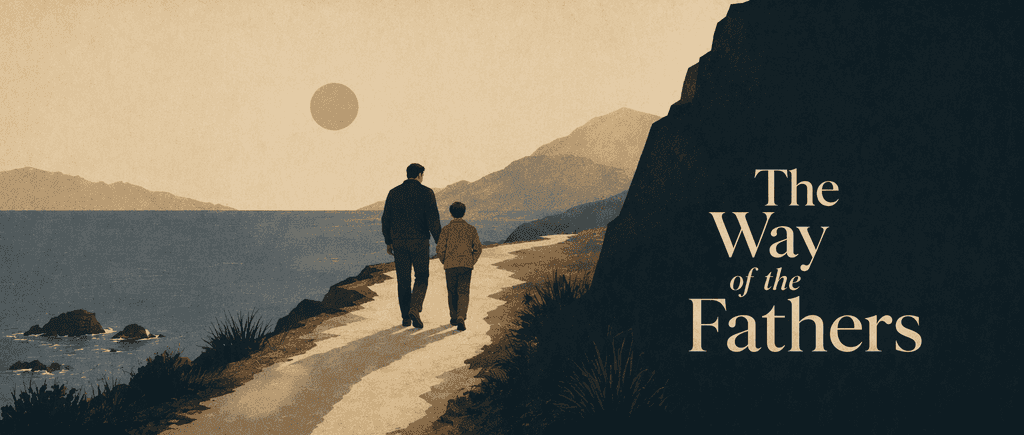
In a desolate post-apocalyptic world, a father and son journey through ash-covered America. Pulitzer Prize-winning masterpiece that captivated Oprah Winfrey, "The Road" asks: How far would you go to protect hope when humanity has fallen? Cormac McCarthy's haunting love letter to his son.
Cormac McCarthy (1933–2023) was the Pulitzer Prize-winning author of The Road, celebrated for his mastery of bleak, lyrical prose and unflinching examinations of humanity’s darkest and most resilient corners. A luminary of the Southern Gothic and Western genres, McCarthy wove themes of survival, morality, and existential dread into his iconic works, including the National Book Award-winning All the Pretty Horses and the harrowing modern classic Blood Meridian.
Born in Rhode Island and raised in Tennessee, his stark narratives often drew from the American South and Southwest, reflecting his deep connection to landscapes steeped in myth and violence.
McCarthy’s oeuvre, including the acclaimed Border Trilogy and the Oscar-winning film adaptation of No Country for Old Men, cemented his reputation as a titan of contemporary literature. His final novels, The Passenger and Stella Maris, further showcased his philosophical depth.
The Road, a haunting post-apocalyptic tale of a father and son’s journey, has sold millions of copies worldwide, been translated into over 40 languages, and remains a cornerstone of modern dystopian fiction.
The Road follows an unnamed father and son navigating a post-apocalyptic wasteland ravaged by an unspecified cataclysm. Their journey south to the coast explores survival, morality, and the enduring bond between parent and child amidst environmental decay and roving cannibals. McCarthy’s sparse prose underscores themes of hope (“carrying the fire”) and humanity’s fragility in a lawless world.
Fans of dystopian fiction, literary minimalism, and philosophical explorations of ethics will appreciate this Pulitzer Prize-winning novel. Its grim tone appeals to readers examining human resilience, parental love, and moral choices in extreme conditions. Note: Graphic scenes of violence and despair make it unsuitable for sensitive audiences.
Yes—it’s critically acclaimed for its emotional depth and stark realism. While relentlessly bleak, the novel’s focus on hope (“the fire”) and the father-son dynamic offers profound insights into love and survival. Its lyrical style and timeless themes make it a modern classic.
Key themes include:
This recurring phrase represents the ethical imperative to preserve compassion and civilization. For the protagonists, it’s a mantra affirming their identity as “good guys” who reject cannibalism and cruelty, even when survival tempts them otherwise. The fire also alludes to Prometheus’s myth, linking hope to human ingenuity.
Cannibalism serves as a motif for societal collapse and moral degradation. While most survivors resort to eating humans, the father and boy view it as an unforgivable taboo, distinguishing their “goodness” from the “bad guys”. This contrast highlights McCarthy’s exploration of ethics in extremis.
After the father dies, the boy meets a family who invites him to join them, implying hope persists. The ambiguous ending avoids confirming survival but emphasizes the boy’s retained humanity—a testament to the father’s teachings.
Like No Country for Old Men and Blood Meridian, The Road features McCarthy’s signature bleakness and moral ambiguity. However, its focus on paternal love and sparse dialogue distinguishes it from his more violent, ensemble-driven narratives.
Critics note its unrelenting grimness and lack of plot resolution. Some argue the boy’s idealism feels unrealistic in a world devoid of societal structures. Others praise its emotional impact despite these choices.
The road represents both literal survival (a path to warmer climates) and metaphysical uncertainty. It reflects the characters’ search for purpose in a meaningless world, echoing existential themes.
Its themes of environmental collapse, ethical resilience, and familial bonds resonate amid climate crises and societal fragmentation. The novel’s warning about humanity’s fragility remains urgent.
McCarthy’s minimalist prose—fragmented sentences, no quotation marks—mirrors the barren setting and primal struggle. This stylistic choice intensifies the emotional weight of dialogue, particularly the father-son interactions.
Erlebe das Buch durch die Stimme des Autors
Verwandle Wissen in fesselnde, beispielreiche Erkenntnisse
Erfasse Schlüsselideen blitzschnell für effektives Lernen
Genieße das Buch auf unterhaltsame und ansprechende Weise
What makes a father and son continue their journey when all hope seems lost?
We're still the good guys.
Childhood itself is a luxury they cannot fully afford.
How do you maintain humanity when inhumanity surrounds you?
Because we're the good guys.
Zerlegen Sie die Kernideen von The Road in leicht verständliche Punkte, um zu verstehen, wie innovative Teams kreieren, zusammenarbeiten und wachsen.
Destillieren Sie The Road in schnelle Gedächtnisstützen, die die Schlüsselprinzipien von Offenheit, Teamarbeit und kreativer Resilienz hervorheben.

Erleben Sie The Road durch lebhafte Erzählungen, die Innovationslektionen in unvergessliche und anwendbare Momente verwandeln.
Fragen Sie alles, wählen Sie die Stimme und erschaffen Sie gemeinsam Erkenntnisse, die wirklich bei Ihnen ankommen.

Von Columbia University Alumni in San Francisco entwickelt
"Instead of endless scrolling, I just hit play on BeFreed. It saves me so much time."
"I never knew where to start with nonfiction—BeFreed’s book lists turned into podcasts gave me a clear path."
"Perfect balance between learning and entertainment. Finished ‘Thinking, Fast and Slow’ on my commute this week."
"Crazy how much I learned while walking the dog. BeFreed = small habits → big gains."
"Reading used to feel like a chore. Now it’s just part of my lifestyle."
"Feels effortless compared to reading. I’ve finished 6 books this month already."
"BeFreed turned my guilty doomscrolling into something that feels productive and inspiring."
"BeFreed turned my commute into learning time. 20-min podcasts are perfect for finishing books I never had time for."
"BeFreed replaced my podcast queue. Imagine Spotify for books — that’s it. 🙌"
"It is great for me to learn something from the book without reading it."
"The themed book list podcasts help me connect ideas across authors—like a guided audio journey."
"Makes me feel smarter every time before going to work"
Von Columbia University Alumni in San Francisco entwickelt

Erhalten Sie die The Road-Zusammenfassung als kostenloses PDF oder EPUB. Drucken Sie es aus oder lesen Sie es jederzeit offline.
In "The Road," the sun no longer shines. Perpetual gray twilight shrouds a landscape where nothing grows and nothing lives. Trees stand blackened and bare, their branches reaching skyward like desperate, pleading hands. The air tastes of ash, and even snow falls gray through the poisoned atmosphere. Father and son trudge through this wasteland, their breath forming clouds in the frigid air, their feet wrapped in rags and plastic bags. The cold is relentless, seeping through layers of scavenged clothing, challenging their every step with bone-deep hostility. What makes this setting so profoundly disturbing is its terrifying plausibility. McCarthy never explains what caused this apocalypse, but the result feels hauntingly possible. When the pair discovers a single withered apple or a patch of mushrooms growing in some damp corner, the moment becomes almost sacred-a glimpse of life's tenacity amid universal death. These tiny remnants remind us what we take for granted: the simple miracle of growing things, of seasons changing, of life perpetuating itself. The landscape mirrors the characters' stripped-down existence. Just as the world has been reduced to ash and memory, human concerns have distilled to their most fundamental level: survival, protection, love. In one moving scene, the father finds a can of Coca-Cola-perhaps the last one on earth-and gives it to his son. The boy's simple joy as he tastes this relic becomes a powerful symbol of lost civilization and the endurance of human connection.