Kapitel 1
The Power of Perfectionism: Embracing Your Drive Without Losing Yourself
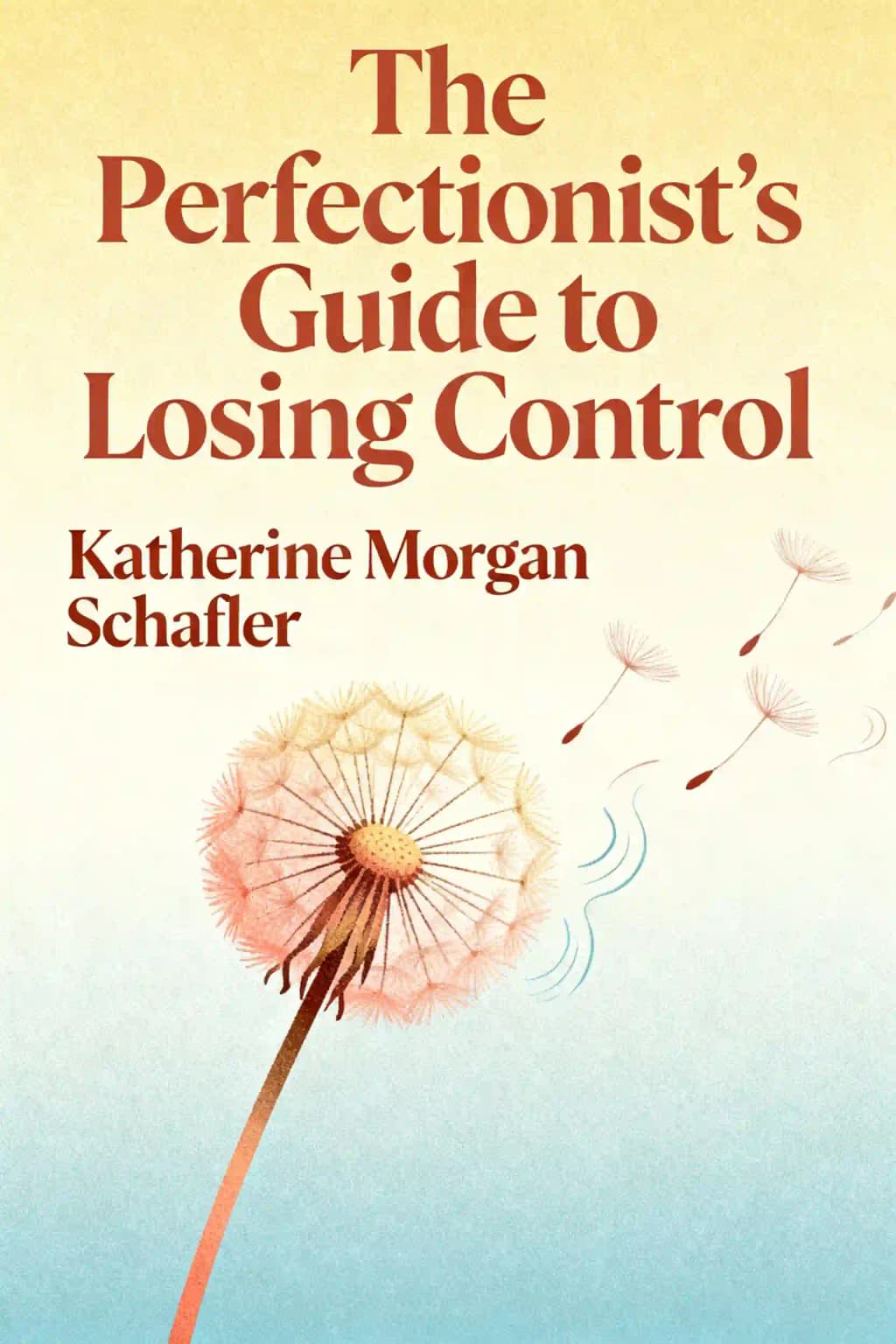
Katherine Morgan Schafler's "The Perfectionist's Guide to Losing Control" has become a cultural phenomenon, landing on bestseller lists and earning praise from celebrities like Reese Witherspoon, who featured it in her book club. The book challenges conventional wisdom about perfectionism, particularly for women who have been told their entire lives that their drive for excellence is problematic. Unlike typical self-help books that suggest abandoning perfectionism entirely, Schafler offers a revolutionary perspective: perfectionism isn't your enemy-it's a power that can be harnessed when you understand how to direct it properly.
As someone who spent the night before her own wedding working, exercising, and editing vows until 2 a.m., Schafler writes from lived experience. Her approach resonates deeply in our achievement-oriented culture, where the double standard is clear: when men like Steve Jobs demand perfection, they're "geniuses," but women are told to be "perfectly imperfect." This book has struck a chord precisely because it gives permission to be ambitious while offering practical tools to prevent burnout-a balancing act that resonates with millions of high-achieving individuals seeking sustainable success.
Kapitel 2
The Five Perfectionist Types: Finding Your Pattern
Perfectionism isn't monolithic-it manifests in five distinct patterns, each with unique strengths and challenges. Understanding your type is the first step toward harnessing your perfectionist energy productively.
Classic perfectionists present themselves with crisp precision, making everything around them cleaner by proximity. Think of the person whose desk is immaculately organized, who arrives precisely on time, and whose appearance is always polished. While they might seem unapproachable, their orderliness reflects reverence for structure rather than creating distance. They're transparent about their preferences and take pride in their perfectionism. Their strengths include reliability, patience, and strong work ethic, but they struggle with spontaneity and schedule changes. Despite their external reliability, they often feel misunderstood and underappreciated because their systematic approach can hinder flexibility and deep connection.
Parisian perfectionists desperately want to be liked while appearing not to care. Unlike classic perfectionists who openly embrace their perfectionism, Parisians hide theirs, wanting to appear effortless while secretly craving approval. Their carefully crafted message-"I'm not trying hard because I don't need your approval"-masks their true desire for validation. This strategy often backfires when their easy-breezy facade prevents them from articulating their actual needs. Despite this challenge, they excel at making others feel included and creating warm environments. When they learn to articulate how much they care and implement boundaries, they become truly magnetic.
Procrastinator perfectionists wait for perfect conditions before starting anything. They meticulously prepare but struggle to begin or restart projects, especially those requiring longer commitments. The issue isn't executing tasks but accepting that real-world implementation can't be perfect. Unlike Parisian perfectionists who question their worthiness, procrastinator perfectionists know they're talented, making it particularly painful to watch less-capable people surpass them. When they finally understand that persistence trumps mere talent and that not changing involves deeper loss than changing, they become unstoppable.
Messy perfectionists are in love with beginnings. They enthusiastically launch countless projects simultaneously but abandon them when the initial excitement fades. Their Instagram bios often feature half a dozen unrelated occupations: "interior decorator, chef, photographer, author, entrepreneur, historic tour guide." When they crash into their blind spots, they turn it into negative self-narratives: they're not persistent enough, their ideas aren't good enough. However, when they learn to channel their enthusiasm into single, intentional missions, they truly excel.
Intense perfectionists fixate on perfect outcomes and experience shock when things don't go their way. They're effortlessly direct and transparent, cutting through social niceties to get straight to the point-a quality that works professionally but often harms personal relationships. Their off-the-charts work ethic takes a steep toll on wellbeing, and they define success solely by outcomes. When they don't reach their goal perfectly, they consider the entire endeavor a failure. However, when they learn to manage their perfectionism, the transformation is "nothing short of miraculous"-their intensity becomes infused with openness and vulnerability, creating magnetic leadership.
Kapitel 3
The Adaptive Advantage: Perfectionism as Strength
Research consistently shows that adaptive perfectionism correlates with higher self-regard, better work engagement, psychological well-being, and solution-oriented approaches to stress. Adaptive perfectionists demonstrate higher motivation, less worry, more optimism about future performance, and greater likelihood of experiencing "flow" states than their maladaptive counterparts or non-perfectionists. These individuals often excel in challenging environments, showing remarkable resilience and ability to maintain high standards while managing stress effectively.
Studies by Dr. Joachim Stoeber and Dr. Kathleen Otto reveal that adaptive perfectionists demonstrate the highest levels of self-esteem, cooperation, meaning, subjective happiness, and life satisfaction compared to both maladaptive perfectionists and non-perfectionists. In workplace settings, adaptive perfectionists consistently show superior performance metrics, better team collaboration, and higher leadership potential. They also show the lowest levels of procrastination, defensiveness, self-criticism, anxiety and depression. Their research indicates that adaptive perfectionism can serve as a protective factor against anxiety and depression, particularly in high-pressure environments like academia and competitive sports.
Unfortunately, mainstream discourse reduces all perfectionism to its negative iteration, ignoring this adaptive spectrum entirely. Popular media often portrays perfectionism as universally harmful, failing to acknowledge its potential benefits when properly channeled. The wellness industry's attempt to eradicate perfectionism fundamentally misunderstands its nature-perfectionism is an enduring identity marker, not an episodic condition. Perfectionists never stop noticing the gap between reality and the ideal, and never stop longing to bridge that gap. This persistent drive, when properly directed, can lead to remarkable achievements and innovations.
Perfectionism is a power, not a disorder. Like all powers (love, wealth, beauty, intelligence), it contains an inherent dichotomy of potential. When harnessed consciously to help and heal, it becomes adaptive perfectionism, driving positive change and personal growth. When harnessed to limit and hurt, it becomes maladaptive perfectionism, leading to self-doubt and paralysis. Managing perfectionism requires mitigating risks while emphasizing protective factors from an informed, emotionally aware perspective. This includes developing healthy coping mechanisms, setting realistic goals, and maintaining balanced self-assessment practices.
The concept that you're already perfect is foreign to perfectionists taught to experience themselves as broken or inadequate. However, research shows that self-acceptance is crucial for transforming maladaptive patterns into adaptive ones. True power comes from accepting your wholeness rather than seeking control. When you use perfectionism adaptively, you access your inner power instead of chasing superficial control. This looks like maintaining self-awareness, freely giving yourself access to goodness regardless of outcomes, and establishing boundaries around people and things that undermine your worth. Successful adaptive perfectionists often develop specific strategies, such as setting challenging but achievable goals, celebrating incremental progress, and maintaining perspective on what truly matters in their pursuit of excellence.
Kapitel 4
The Balance Myth: Why Women Are Set Up to Fail
Women like Rupa pursue "balance" as a cure for perfectionism, only to find emptiness. Despite outward perfection, many women feel dissatisfied with their supposedly ideal lives. They're trapped between their authentic desires and society's expectations, feeling they must be "pathologically grateful" for their balanced lives while silently questioning "What's wrong with me?"
The author challenges the myth of balance, stating bluntly: "I don't know one balanced woman." Instead, she sees women perpetually chasing balance like gamblers at a blackjack table. We pursue balance believing two false promises: that life is generally static with occasional disruptions, and that all our complex needs and obligations can be simultaneously satisfied. In reality, life consists of constant disruption and change.
Our modern concept of "balance" has been reduced from its original meaning of energetic equilibrium to simply "being good at being busy"-a pie-eating contest where the prize is more pie. Women feel liberation with age not because they've achieved balance but because they've abandoned the pursuit entirely. Balance doesn't exist; it's always "around the corner" while women blame themselves for failing to achieve it.
Women who fail to maintain the appearance of balance are labeled "hot messes"-a term exclusively applied to women and effeminate people. The visibility of struggle is what matters; if a woman looks put together while struggling, she escapes the label. What's culturally incentivized is appearing healthy for others, not actually being healthy for oneself.
Being a hot mess is punishment for not appearing balanced, but the true opposite of the balanced woman is the perfectionist. While any power without boundaries can be destructive, perfectionism is uniquely singled out as negative for women. Men aren't taught to "recover" from perfectionism but to integrate their drive to excel into their identity and pursue ambition unapologetically.
Female perfectionism is only celebrated when deployed in traditionally feminine domains. Martha Stewart can build an empire on perfectionism because her interests (entertaining, decorating, weddings) stay within acceptable female ambition, despite her Wall Street background. We love perfectionism when expressed in the "right context"-improving homes, hosting gatherings, and tidying up-which serves as both reward and signal for appropriate female behavior.
Not leading a balanced life doesn't mean something's wrong with you. You can be angry and loving, grateful yet wanting more. The author urges women to reject the double standard where female ambition is pathologized while male ambition is celebrated. "A woman who wants more is ungrateful, a man who wants more is a visionary."
Kapitel 5
Understanding Perfectionism's Inner Workings
Perfectionists live with a constant internal tension that never fully dissipates-like a humming light that's always on. This tension emerges from the gap between ideal vision and reality. While not always comfortable, tension serves valuable purposes: it energizes, creates awareness, catalyzes action, and makes life interesting.
Perfectionism isn't simply wanting everything perfect all the time-it's deeply personalized. The tension emerges from the clash between being "a full-of-flaws human with significant limitations" and "a perfect being with unlimited potential." Many people mistakenly think they can't be perfectionists because they're messy or chronically late, but perfectionism manifests differently based on individual priorities.
Perfectionists compulsively notice gaps between reality and ideals and feel driven to bridge them. This compulsion isn't inherently dysfunctional-in adaptive perfectionism, these strivings are value-driven and fulfilling. The solution isn't eliminating the drive to excel but aligning it with personal values rather than external expectations.
Self-worth differs fundamentally from self-esteem. While self-esteem is cognitive ("we think self-esteem"), self-worth is about what you believe you deserve. This explains why perfectionists with high self-esteem can still feel deeply insecure. Adaptive perfectionists connect with their inherent self-worth, understanding they're "already whole and complete," operating from abundance. Maladaptive perfectionists feel broken, operating from deficit-their striving compensates for perceived inadequacy.
Power and control may look identical but are fundamentally different. Control is limited and transactional-if you give someone control, you lose it. Power is unlimited and can be shared without diminishing. True power comes from understanding the immutability of your worth, which liberates you from desperately needing specific outcomes. When connected to your power, you take risks more easily because your self-worth isn't on the line.
The most devastating heartache for perfectionists comes when they achieve their goals. Even when maladaptive perfectionists reach everything they wanted-the fancy title, perfect house, ideal body, prestigious award-they're still struck with "a thousand daggers at once." This phenomenon contradicts decades of research on reinforcement, as studies show achieving goals often makes perfectionists feel worse. The reason? Winning forces the realization that there are no substitutes for self-worth or presence.
Kapitel 6
Breaking the Self-Punishment Cycle
Self-punishment-consciously or unconsciously returning to something harmful or denying yourself something helpful-creates a destructive cycle that many perfectionists struggle to break. This pattern manifests in various ways, from harsh self-criticism to deliberately sabotaging opportunities for success. While many believe that self-punishment leads to growth and improvement, research consistently shows it achieves the opposite effect. When punished, people don't develop better habits or understanding; instead, they learn avoidance behaviors. This often leads to numbing through various escapist behaviors: overeating, compulsive shopping, excessive working, substance abuse, or endless social media scrolling.
Each perfectionist type exhibits distinct self-punishment patterns that become deeply ingrained over time. Procrastinator Perfectionists get trapped in endless cycles of rumination, replaying past mistakes and imagining future failures. Classic Perfectionists tend to dissociate from their emotions, becoming increasingly disconnected from their authentic selves. Parisian Perfectionists exhaust themselves through constant people-pleasing, sacrificing their own needs for others' approval. Intense Perfectionists generate chaos in their relationships, creating conflicts that confirm their negative self-image. Messy Perfectionists remain stuck in patterns of arrested development, unable to progress despite their potential.
Dr. Barbara Fredrickson's groundbreaking "broaden-and-build" theory provides crucial insight into breaking this cycle. Her research demonstrates that positive emotions don't just feel good-they fundamentally expand our cognitive and behavioral repertoire. When experiencing positive emotions, we literally see more options and possibilities. This creates a powerful upward spiral: positive emotions lead to positive actions, which generate more positive emotions. For instance, feeling confident might lead to taking on a new challenge, which builds competence, leading to greater confidence and willingness to grow further.
Conversely, negative emotions and self-punishment create a narrowing effect, constraining our perceived options and abilities. This explains why harsh self-criticism often leads to paralysis rather than progress. Self-compassion serves as the antidote by expanding our perspective and creating psychological safety. Studies of recovery programs consistently show that individuals who develop self-compassion achieve more sustainable progress than those who maintain punitive approaches.
The most damaging form of self-punishment is negative self-talk, which acts like an internal poison. When you repeatedly tell yourself you're inadequate, lazy, or broken, these messages become self-fulfilling prophecies. Chronic guilt transforms into deep-seated shame, creating a false core identity built around deficiency. This triggers a devastating downward spiral: as emotional pain intensifies, you shift from pursuing growth to avoiding discomfort at all costs. Unlike self-compassion, which provides energy and motivation for genuine improvement, self-punishment depletes psychological resources and perpetuates destructive patterns.
The revolutionary question for perfectionists becomes: What if you redirected your perfectionist tendencies toward mastering self-acceptance and self-love? This paradigm shift involves reframing identity around possibilities rather than perceived flaws, recognizing the universality of human struggle and mistake-making, and cultivating genuine self-compassion. Success in recovery from perfectionism paradoxically comes not from perfect execution, but from perfectly accepting our imperfect journey of growth.
Kapitel 7
The Path to Adaptive Perfectionism
Healing requires letting go of predictability and control. While humans naturally gravitate toward familiarity and convenience for survival, thriving demands taking risks and embracing uncertainty. For perfectionists, this proves especially challenging as the brain prefers the "devil you know" over uncertainty, even when familiar patterns cause harm.
Our lives oscillate between two fears: never getting what we want and losing what we have. Both fears fixate on future outcomes we cannot control. This fear-based approach creates a perpetual scramble that can only be escaped by entering the present moment. Letting go of outcomes doesn't mean abandoning goals, but rather unhooking joy from future achievements.
When failure becomes a commentary on who you are rather than just an event, growth becomes impossible. But when you refuse to give failure power over your identity, you can simply step over it "like a napping dog" and continue forward. Failing forward means growing from setbacks and trying again, engaging in the process for its own sake rather than fixating on future glory.
Perfectionists focus on outcomes, believing achievement will bring happiness. The harsh truth is that outcomes alone don't create happiness-building meaning does. Celebration isn't merely indulgent but essential. The micro-rituals of celebrating-invitations, dressing up, clinking glasses, taking pictures-serve as anchors connecting us to joy and momentum. Without these anchors, we drift aimlessly through life's achievements without fully experiencing them.
Self-compassion is the primary solution for perfectionists, not just a supplementary tool. It means carrying safety with you wherever you go. According to Dr. Kristen Neff, self-compassion involves being warm and understanding toward ourselves when we suffer or fail, rather than ignoring our pain or resorting to self-criticism. This powerful practice changes your life by helping you recognize that your pain, not your mistake, is the primary issue requiring attention.
Self-kindness begins with recognizing you're hurting and acknowledging your pain. Even if your choices contributed to your pain, blame is merely a distraction. Paradoxically, giving yourself permission to feel pain alleviates it. Common humanity means recognizing that suffering and personal inadequacy are universal experiences, not something that happens to you alone. Mindfulness involves feeling your feelings while recognizing you're more than what you feel.
Kapitel 8
Practical Strategies for Perfectionist Liberation
Cognitive habits, like behavioral habits, can be helpful, neutral, or unhealthy. Rather than controlling thoughts individually, which requires constant monitoring, perspective shifts allow you to see things in a new way that automatically changes multiple thoughts at once. Here are some powerful perspective shifts:
1. Recognize counterfactual thinking as a cognitive reflex where we create alternative scenarios for events that have already occurred. Perfectionists can learn to exploit these thoughts for increased satisfaction and motivation by consciously choosing elaborative counterfactuals that focus on progress, skills gained, and relationships developed rather than only what was missed.
2. Understand that support comes in many forms beyond traditional therapy-tangible, emotional, physical, financial, community, and informational. Support doesn't add up; it compounds-get any amount you can and build from there.
3. Remember that maintenance is a triumph. Most people mistakenly view change as a simple one-step process. In reality, change follows five stages: precontemplation, contemplation, preparation, action, and maintenance. Regression is natural in growth, not failure.
4. Swap "better or worse" for "different." We waste energy making hierarchical comparisons when we should embrace differences. This applies to how we view ourselves too. Self-comparison traps us in limiting beliefs. What truly matters is living by your values, not how you measure up to others.
5. Recognize that happiness and stress occur in three stages: anticipation, event, and recall. We often focus only on the event itself, but we extract happiness from all three stages. Through intentional planning and boundaries, we can extend pleasure and minimize distress.
6. Embrace incremental change. Healing unfolds through tiny evolutions from seemingly negligible daily choices. These "nothing" moments are where the magic happens. Incrementalism-accessing just a feather's-weight more consistently-is more effective than "radical" approaches.
7. Understand that the difference between a struggle and a challenge is connection. Challenges energize us because even while doing something difficult, we feel guided and understood. Struggles exhaust us because we're isolated.
8. Remember that simple isn't easy. When perfectionists conflate "simple" with "easy," we deny ourselves patience and self-compassion when approaching basic tasks. Recognizing that simple isn't always easy allows for self-compassion and helps identify strengths.
9. Prioritize energy management over time management. Most people aren't truly time-poor; they're bandwidth-poor. Arrange your schedule like artwork on a wall, considering whether activities conceptually fit together rather than merely squeezing them in.
10. Accept that closure is a fantasy. When we say we want closure, what we really want is control. Mental health isn't a door you walk through; experiences swirl in spheres with no sides or finish lines.
Kapitel 9
Embracing Your Freedom and Power
Giving yourself permission to enjoy life means rejecting the idea that pleasure must be earned. When we treat pleasure as conditional "rewards" or "treats," we communicate to ourselves that feeling good depends on performance rather than existence. Pleasure is an essential energy source, not a luxury, and joyful people are actually more productive long-term because they don't burn out.
Without self-trust, you move through life trying to memorize the "right" things to do rather than trusting your intuition. You interpret setbacks as failures because you lack the security to see the bigger picture. Self-trust doesn't come from achievements or accolades-it's a choice supported through consistent action over time.
The fundamental question for building self-trust is "What do I want?" When we connect with our desires, they often appear first as images, like waking dreams, before we can articulate them in words. Surrender is paradoxically the ultimate loss of control and the greatest form of power. It means conceding not to defeat but to possibilities beyond your imagination.
Meaning doesn't require gravity or righteousness-it can be found in simple things like eye contact, public libraries, or bringing good snacks. You have the power to assign meaning to whatever you choose and bring it to life through personal policy. Without animating what's meaningful to you, you risk a "death-by-papercut life" where you're never your authentic self.
Rebuilding trust with yourself starts with forgiving past versions of yourself. This isn't binary-you can trust or forgive yourself a little, a lot, or somewhere in between. Self-forgiveness means detaching from the idea that your worth connects to past mistakes and making room for new versions of yourself to emerge.
What you think will take six months often takes five years because life enters the room with real constraints-financial needs, family obligations, health issues, trauma histories. Your desires will remain intangible for a painful amount of time, but remember: your worst day actively working toward what you truly want will be better than your best day denying your truest desire.
Through thousands of hours as both a casual and professional listener, I've discovered that every human want distills down to one thing: connection. What I've never once heard in all my listening are people valuing others for their achievements, perfect bodies, or professional success. The energy you bring into a room is more valuable than anything you could ever do. Everything you need to be present, powerful, and to enjoy your life, you already have.