Kapitel 1
Finding the Sacred in Parenthood: Ancient Wisdom for Modern Parents
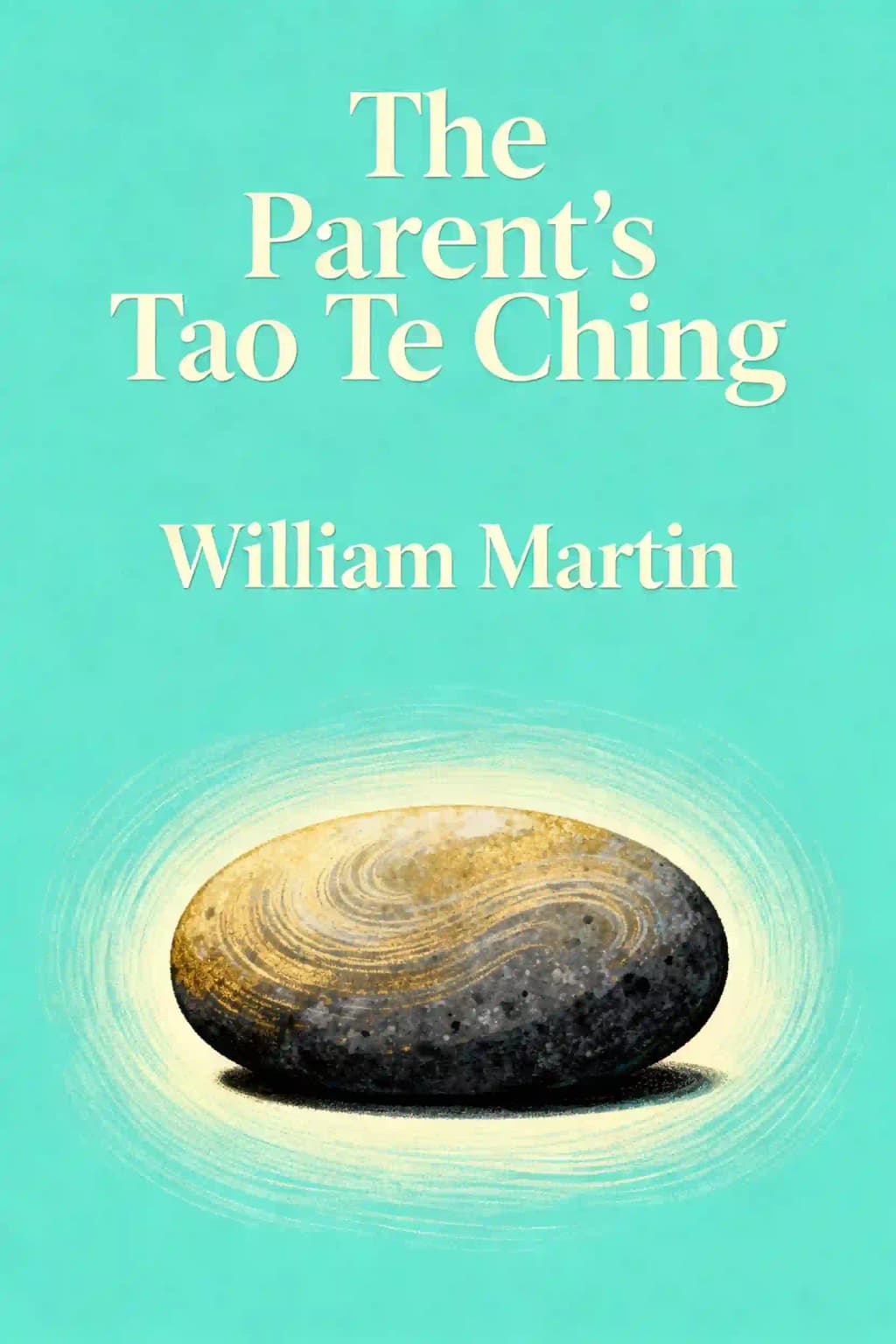
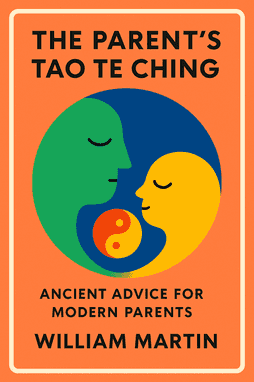
The Parent's Tao Te Ching has quietly become a treasured guide for parents seeking a more mindful approach to raising children. While not as widely known as bestsellers like "What to Expect When You're Expecting," this gem has developed a devoted following among celebrities like Oprah Winfrey and mindfulness advocates like Jon Kabat-Zinn. William Martin's adaptation of the ancient Chinese classic speaks to the modern parenting dilemma: How do we raise children authentically in a world obsessed with achievement and consumption? The book's enduring appeal lies in its counter-cultural message-that parenting isn't about shaping children into what we want them to be, but about creating space for them to become who they truly are. In a society where "tiger parenting" and helicopter parenting dominate headlines, Martin's approach offers a radical alternative that has resonated across cultural and religious boundaries.
Kapitel 2
The Tao and Modern Parenting: A Natural Partnership
The Tao Te Ching, written over twenty-five hundred years ago and attributed to the legendary Chinese sage Lao Tzu, has become the second most widely published book in the world after the Bible. Though originally intended as a guide for leaders and philosophers, its wisdom translates remarkably well to the parent-child relationship. Its enduring influence spans cultures and centuries, offering timeless insights that resonate particularly deeply with the challenges of contemporary parenting.
The Tao itself might be understood as "The Way Things Naturally Work"-a concept broader than sectarian notions of God, yet pointing toward the same ultimate reality. It represents the natural order and flow of life that exists beyond human manipulation. This universal principle manifests in countless ways: a flower naturally turning toward the sun, a child naturally learning to walk, or communities naturally forming bonds. When applied to parenting, this perspective invites us to see our children not as projects to be managed but as natural beings to be respected, each following their unique developmental path.
Modern parenting culture often pushes us toward constant intervention-scheduling every moment, directing every activity, and managing every outcome. Parents today face unprecedented pressure to optimize their children's experiences, from selecting the perfect preschool to ensuring participation in enrichment activities to monitoring academic performance. The Tao, by contrast, suggests that our children already possess an innate wisdom and natural goodness that requires not our constant direction but our respectful nurturing. This doesn't mean abandoning guidance altogether, but rather shifting from control to collaboration, from forcing to flowing.
The Parent's Tao Te Ching isn't about adding more techniques to your parenting toolbox. Instead, it invites a fundamental shift in perspective-seeing your children as already complete rather than as works in progress. This subtle but profound difference changes everything about how we interact with our children. It encourages parents to recognize and honor their child's inherent nature, much like a gardener who understands that a seed contains within it everything needed to become a magnificent tree.
When we parent from this perspective, we stop trying to "fix" our children and start appreciating them. We move from anxious management to curious observation, from rigid expectations to flexible acceptance. We trust more and worry less, understanding that setbacks and struggles are as natural and necessary as growth itself. And paradoxically, by loosening our grip, we often achieve the very outcomes we most desire-children who are confident, compassionate, and capable. This approach allows children to develop resilience through natural consequences, self-awareness through autonomous exploration, and authentic self-esteem through genuine accomplishment rather than constant praise.
The Taoist approach to parenting offers a refreshing alternative to our culture's achievement-oriented, anxiety-driven parenting models. It reminds us that our role is not to shape our children into what we think they should be, but to support them in becoming who they truly are.
Kapitel 3
Beyond Words: Teaching Through Being
Words alone cannot give our children life or wisdom. Though we naturally want to tell them everything we know, our constant talking often creates more confusion than clarity. Children learn most powerfully not from what we say but from who we are and how we live. This truth becomes evident in everyday moments - when a toddler mimics our phone habits, when a child adopts our tone of voice, or when they naturally pick up our attitudes toward challenges.
Consider how often we contradict ourselves as parents. We tell our children to be kind while speaking harshly to them. We lecture about patience while rushing them through their activities. We preach about honesty while telling "white lies" in their presence. We might insist on healthy eating while secretly snacking on junk food, or emphasize the importance of exercise while spending evenings glued to screens. These contradictions aren't lost on our children-they're absorbing our actual values, not our stated ones. They notice when we say "please" to strangers but bark orders at family members, when we praise sharing but hoard our own possessions.
The Tao teaches that the wordless truths children learn from us matter most. When we genuinely delight in ordinary wonders-a sunset, a bird's song, the taste of fresh fruit-they learn joy. When we face life's mysteries without fear, they learn courage. When we treat others with respect regardless of status, they learn dignity. When we apologize sincerely for our mistakes, they learn humility and accountability. When we maintain calm in challenging situations, they learn emotional regulation. These lessons require no lectures, only our authentic presence.
This doesn't mean abandoning verbal communication. Rather, it means recognizing its limitations and complementing it with embodied teaching. A parent who spends five quiet minutes truly noticing a flower with their child teaches more about beauty than hours of explanation could convey. The way we handle daily frustrations - a traffic jam, a spilled drink, a broken dish - becomes their template for managing emotions.
The simple act of a slow, mindful walk-noticing what catches both your eyes and theirs-becomes a profound lesson in awareness. Sitting together in comfortable silence teaches the value of stillness in a noisy world. Responding to a mistake with calm acceptance demonstrates resilience more powerfully than any motivational speech. When we show genuine curiosity about their interests, we teach the value of engagement and respect for others' perspectives.
What if we spoke half as much and listened twice as deeply? What if we trusted that our children are already learning constantly, not just when we're deliberately teaching? The Tao suggests that this shift alone would transform our relationships with our children and their relationship with the world. Our presence, actions, and reactions create the emotional atmosphere in which they grow. By focusing on our own growth and authenticity, we create the most powerful teaching environment possible - one where learning happens naturally through observation, experience, and shared presence.
Kapitel 4
The Danger of Labels: Beyond Good and Bad
When we teach children that certain things are "good," they inevitably learn to label different things as "bad." When we declare some things "beautiful," they see others as "ugly." These binary distinctions, while seemingly harmless, actually limit our children's perception and create unnecessary suffering.
Consider how often we unconsciously reinforce these labels. "Good job!" we say when they comply with our wishes. "Bad choice" when they don't. "Beautiful drawing!" when they create something that pleases our aesthetic sense. These casual evaluations teach children to seek external validation rather than internal satisfaction, to divide the world into acceptable and unacceptable categories.
The Tao suggests an alternative approach: describe reality without imposing value judgments. Instead of labeling experiences as good or bad, we can simply acknowledge that some things are difficult and others easy-without avoiding one and seeking the other. This teaches self-confidence rather than dependency on others' opinions.
When children spill milk, we needn't label it a "bad" thing or them as "clumsy." We can simply observe: "The milk spilled. Let's clean it up." When they struggle with math, rather than labeling it a "problem," we might say: "This is challenging for you right now. That's how we learn."
By describing results without labeling them as success or failure, children learn freedom from fear. They discover that outcomes are information, not judgments of their worth. When we speak of birth and death, joy and sorrow without assigning moral values, our children become at home with the full spectrum of life itself.
This doesn't mean abandoning all guidance or allowing harmful behavior. Rather, it means shifting from judgment-based discipline to observation-based guidance. Instead of "You're being bad," we might say, "When you hit your sister, she feels hurt." This focuses on impact rather than character and invites growth rather than shame.
Notice how your children label things without immediately correcting them, and consider how they learned these patterns. Begin teaching a different lesson through your own example-one that embraces life's complexity rather than reducing it to simplistic categories of good and bad, right and wrong, success and failure.
Kapitel 5
Contentment Before Achievement: The Path to True Success
Our culture worships achievement. We compare our children to celebrities and prodigies, push them to acquire and achieve, and fill their schedules with resume-building activities. But this approach often backfires, teaching children to cheat, steal, or manipulate to meet expectations they never chose for themselves.
The Tao offers a counterintuitive insight: teaching achievement breeds discontent, while teaching contentment naturally leads to achievement. When children learn to find joy in the process rather than fixating on outcomes, they develop intrinsic motivation that far outlasts external rewards and punishments.
Consider the child pushed to practice piano through bribes and threats versus the child who discovers the inherent pleasure of creating music. The first may achieve technical proficiency but often abandons the instrument when the external pressure eases. The second develops a lifelong relationship with music, improving naturally through the joy of practice.
This principle applies across domains. Children pressured to excel academically often develop anxiety and aversion to learning. Those encouraged to follow their curiosity typically develop deeper understanding and greater academic resilience. Athletes pushed toward trophies frequently burn out, while those who play for love of the game continue improving year after year.
The most powerful lesson we can offer our children is showing them something that genuinely makes us happy. Our happiness is contagious, and they learn the art from watching us. When they see us taking pleasure in simple activities-reading, gardening, cooking, walking in nature-they absorb the profound truth that joy doesn't require expensive possessions or extraordinary achievements.
This doesn't mean abandoning ambition or excellence. Rather, it means reordering our priorities: contentment first, achievement second. When children feel secure in their inherent worth, not contingent on performance, they're free to take risks, make mistakes, and persist through difficulties-the very qualities that lead to meaningful achievement.
What brings you genuine joy? How might you share that with your children today? Your authentic happiness teaches more than any lecture on success ever could.
Kapitel 6
Seeing Beyond Behavior: Looking to the Heart
Parents naturally react to their children's behavior-praising what seems "good" and correcting what appears "bad." We respond to the surface while often missing the deeper reality beneath. The Tao invites us to look deeper, to see behavior as a mask and look beneath to the heart.
This perspective doesn't mean ignoring problematic behavior. Rather, it means responding to it with wisdom rather than reaction. When a child lashes out in anger, the behavior itself might deserve correction, but the feelings beneath-perhaps fear, frustration, or hurt-deserve understanding. By addressing both levels, we help children integrate their experiences rather than simply suppressing unacceptable behaviors.
Consider a child who lies about completing homework. The conventional approach focuses solely on the dishonesty: "Lying is wrong. You're grounded." The Taoist approach acknowledges the behavior while seeking to understand: "I notice you said you finished when you hadn't. I'm wondering what made telling the truth feel difficult." This creates space for addressing both the behavior and its underlying causes.
This deeper seeing requires us to stay centered rather than reactive. When we're triggered by our children's behavior-perhaps because it reminds us of our own struggles or fears-we lose the clarity needed to respond wisely. Meditation and mindfulness help us develop the capacity to pause between stimulus and response, creating space for wisdom to emerge.
Looking to the heart doesn't mean excusing harmful behavior. When children act in ways that hurt themselves or others, clear boundaries remain essential. But even while addressing dangerous behaviors directly, we can express concern with the behavior without attacking the child's essential worth.
The Tao teaches that beneath all behavior, no matter how troubling, lies the child's fundamental goodness. This isn't naive optimism but profound insight. When we maintain faith in our children's inherent worth, even during their most difficult moments, we give them something invaluable-the chance to reconnect with their own goodness rather than identifying with their worst behaviors.
How might you look beyond your child's challenging behaviors today to glimpse the heart beneath? What might you discover there that could transform your response?
Kapitel 7
Relaxing Your Grip: Trust in Something Greater
The weight of parental responsibility can feel overwhelming. We worry about keeping our children safe, ensuring their education, protecting them from harmful influences, and securing their future. These concerns, while natural, can transform parenting from a joy into an anxiety-filled burden.
The Tao offers a liberating perspective: we are not the ultimate source of our children's well-being. The Tao-what some might call God, the Universe, or the Great Mother-continually gives birth to our children and to us. This greater reality holds resources beyond our imagination and love beyond our comprehension.
When we recognize that our children belong to something greater than ourselves, we can relax our desperate grip. This doesn't mean abandoning responsibility, but rather carrying it with a lighter touch. We do our best while trusting that we're not alone in caring for these precious beings.
Consider how differently we parent when operating from fear versus trust. Fear-based parenting manifests as control, overprotection, and anxiety. Trust-based parenting appears as guidance, appropriate freedom, and peace. The first exhausts both parent and child; the second nourishes both.
This trust extends to our children themselves. By detaching from their apparent successes and failures, we become truly present with them as people rather than projects. When we don't live vicariously through our children, they become free to find their own fulfillment rather than carrying the burden of our unfulfilled dreams.
Can you encourage without overemphasizing outcomes? Can you attend your child's game and appreciate good plays from both sides? Can you offer encouragement to anyone who makes a mistake? These small shifts signal to your child that your love doesn't depend on their performance.
If the universe has spaciousness enough for any difficulty they may face, perhaps we can relax our grip on controlling outcomes. We can guide, support, and love our children while trusting that they-and we-are held by something greater than our anxious planning could ever provide.
Kapitel 8
Creating Space for Authenticity: Less Is More
Modern childhood often resembles a high-pressure race-packed schedules, academic pressure, constant stimulation, and material excess. In this environment, children struggle to discover who they truly are beneath the noise and expectations.
The Tao teaches that overfilling your children's lives leaves no room for them to be themselves. Constant pushing will break their spirit. Burdening them with material possessions teaches possessiveness rather than appreciation. Always trying to please them makes you their prisoner, not their parent.
Creating space-physical, emotional, and temporal-allows children to develop authentically. A room with fewer toys encourages deeper play and creativity. A schedule with unstructured time permits self-directed exploration and the development of interests that arise from within rather than being imposed from without.
This approach requires swimming against powerful cultural currents. While society pushes for more-more activities, more achievements, more possessions-the Tao whispers "less." Less scheduling allows more presence. Less stuff creates more appreciation. Less direction enables more self-discovery.
Consider how you might create more space in your child's life:
Physical space: Could their environment be simplified? Might fewer, higher-quality toys or books encourage deeper engagement?
Emotional space: Do you allow room for all feelings, even uncomfortable ones? Can you listen without immediately trying to fix or change their experience?
Temporal space: Does their schedule include genuine downtime? Are there moments when nothing in particular is expected of them?
Mental space: Are they free from constant evaluation and comparison? Can they try new things without pressure to excel immediately?
Creating this space requires trust-trust that your child naturally moves toward growth when given appropriate freedom. It means seeing them not as "problems to be solved" but as people to be loved, not as empty vessels to fill but as fires to be kindled.
What's one small way you might create more space for your child's authentic self to emerge today? What might you remove rather than add?
Kapitel 9
Natural Learning: Following Children's Lead
Children are born learners, naturally curious about everything around them. Before formal education begins, they master complex skills-walking, talking, social interaction-through self-directed exploration. Yet when "learning" becomes institutionalized, this natural curiosity often diminishes, replaced by external motivation and standardized expectations.
The Tao suggests that children plan their own education whether we like it or not. Our role isn't to force knowledge into them but to cooperate with their natural learning process. When drawing makes them artists, we provide quality materials and appreciation. When reading captivates them, we offer books and conversation. When investigating makes them scientists, we support their experiments and questions.
This approach doesn't mean abandoning guidance or structure. Rather, it means becoming attuned to your child's natural interests and learning style, then creating conditions that support their development. It means recognizing that motivation that comes from within produces deeper, more lasting learning than motivation imposed from without.
Consider how differently children engage with activities they choose versus those forced upon them. The child reading for pleasure often loses track of time, absorbing vocabulary and concepts effortlessly. The same child required to read for a school assignment may watch the clock, retaining little. The difference isn't in the activity itself but in the ownership of it.
Schools rarely have the flexibility to fully honor each child's natural learning path. You may be the only one who can fan the spark of their creativity into a flame of joy. This doesn't necessarily mean homeschooling or rejecting conventional education, but it does mean remaining attentive to your child's authentic interests and creating space for them alongside formal learning.
Can you refrain from judging your children's interests as frivolous or impractical? Can you give them room to explore paths that wouldn't have been your choice for them? Can you trust that their natural curiosity, if nurtured rather than redirected, will lead them toward meaningful growth and development?
What genuine interest has your child expressed recently that you might support more fully? How might you create conditions that allow that interest to flourish?
Kapitel 10
The Parent's Journey: Finding Your Own Path
Perhaps the most profound insight of the Parent's Tao Te Ching is that effective parenting begins not with techniques for changing our children but with transformation within ourselves. Our children learn primarily from who we are, not what we say. Our own journey toward authenticity, peace, and wisdom becomes their most important education.
If you look to your children to provide meaning for your life, your life will be meaningless. If you need their success to feel successful yourself, you will always fail. Your children weren't born to complete your life but to complete their own. When you look inside and discover you have everything you need, you'll find your freedom-and give your children theirs.
The lessons we most want to teach our children are often the ones we have not yet learned ourselves. We try to teach patience while struggling with our own impatience, kindness while battling our own irritability, confidence while wrestling with our own insecurities. This disconnect creates confusion rather than clarity.
The Tao invites us to a different approach: to refrain from excessive talking and instead look carefully at ourselves. What behavior in your children makes you anxious? What does that tell you about your own unresolved issues? What qualities do you most want them to develop that you might need to cultivate more fully in yourself?
This self-examination isn't about perfectionism or self-criticism. Rather, it's about honest awareness that allows for genuine growth. When we acknowledge our own struggles and commit to our own development, we model for our children the most important skill of all-the capacity to learn, change, and evolve.
Your mistakes and failures are not obstacles to good parenting but opportunities for your best teaching. How do children learn to correct their mistakes? By watching how you correct yours. How do children learn to overcome their failures? By watching how you overcome yours. How do children learn to treat themselves with forgiveness? By watching you forgive yourself.
The happier you allow yourself to be, the happier your children are likely to become. The more you become yourself-authentic, grounded, and present-the more they will do the same. This may be the greatest gift you can offer them: the example of a parent engaged in their own growth, committed to their own joy, and at peace with their own humanity.
What one small step might you take today toward greater authenticity, peace, or joy in your own life? That step, more than any parenting technique, may be your most important contribution to your child's development.