Discover how eight maverick CEOs outperformed the market through radical capital allocation. Endorsed as #1 on Warren Buffett's reading list, "The Outsiders" reveals why frugal, analytical leaders who avoided spotlight created extraordinary shareholder value while defying Wall Street conventions.
William N. Thorndike Jr. is the acclaimed author of The Outsiders: Eight Unconventional CEOs and Their Radically Rational Blueprint for Success and a seasoned authority in corporate leadership and value-centric investing. A Harvard and Stanford MBA graduate, Thorndike founded Housatonic Partners, a Boston-based private equity firm, where he honed his expertise in identifying exceptional management strategies and capital allocation practices.
His book, a foundational text in business literature, analyzes visionary CEOs who achieved extraordinary results through contrarian approaches—a theme reflecting Thorndike’s own career steering acquisitions, restructurings, and boardroom decisions across diverse industries.
A frequent lecturer at Harvard and Stanford business schools, Thorndike combines decades of investment experience with insights into organizational efficiency. He serves on multiple corporate and nonprofit boards, including College of the Atlantic and social impact initiative FARM. Praised for its rigorous analysis and actionable frameworks, The Outsiders has become essential reading in MBA curricula and a reference for executives seeking to replicate its profiled leaders’ success. The work cemented Thorndike’s reputation as a thought leader in bridging operational excellence with long-term shareholder value.
The Outsiders analyzes eight unconventional CEOs who achieved extraordinary shareholder returns through radical capital allocation strategies. William Thorndike identifies leaders like Warren Buffett and Henry Singleton, who prioritized per-share value, cash flow, and contrarian investing over traditional growth metrics. Their focus on rational decision-making and opportunistic stock buyouts led to outperforming the S&P 500 by 20x+ in some cases.
Investors, business leaders, and finance professionals seeking insights into capital allocation mastery will benefit most. The book appeals to those interested in contrarian leadership, value investing frameworks, or case studies of CEOs who outperformed markets through disciplined resource management. It’s also relevant for MBA students studying corporate strategy.
Yes—it’s a seminal work on capital allocation with actionable lessons for decision-makers. Thorndike’s data-driven analysis of outlier CEOs provides timeless principles for maximizing long-term value. The book’s focus on cash flow rationality over short-term earnings makes it a standout in business literature.
It shifts the metric from revenue growth to per-share value creation. Thorndike argues CEOs should act as capital allocators first, using cash flow to fund buybacks, dividends, or strategic acquisitions only when returns justify them. This approach generated compound annual returns of 20%+ for decades among featured companies.
This concept emphasizes reducing outstanding shares through buybacks when stock prices are low—directly boosting value per share. Outsider CEOs like Henry Singleton repurchased 90% of Teledyne’s shares over 14 years, turning each remaining share into a concentrated claim on growing earnings.
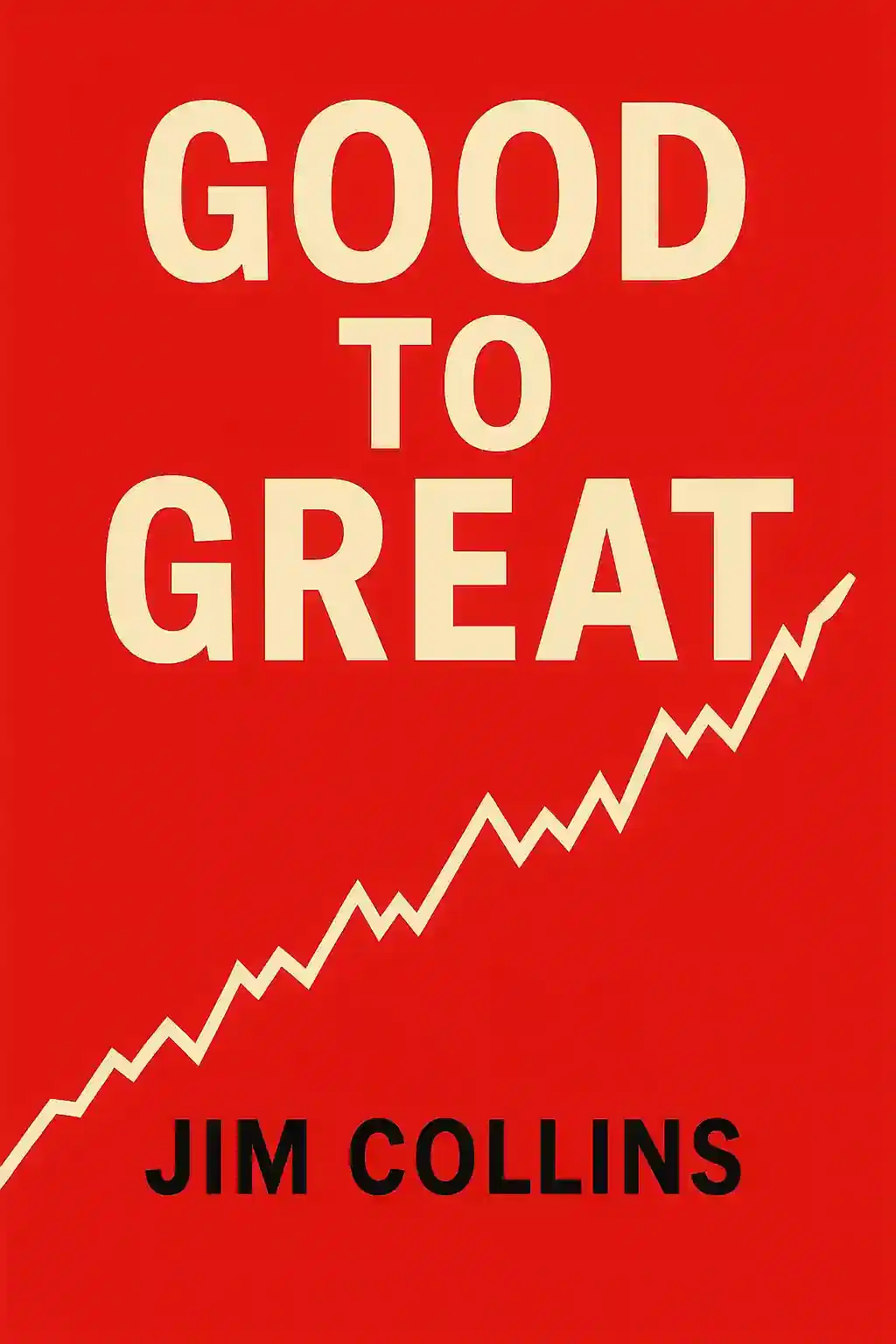
While Jim Collins focuses on operational excellence, Thorndike highlights capital stewardship as the superior driver of returns. The Outsiders argues legendary CEOs excel at financial engineering over product innovation—a contrarian view compared to traditional leadership books.
Yes—the focus on cash flow discipline and incremental ROI calculations scales to any size. Thorndike’s examples (e.g., Katharine Graham’s Washington Post) show how even modest companies compounded value through opportunistic capital decisions.
Some argue it oversimplifies success to financial engineering, underweighting operational excellence. Others note the case studies predate modern tech ecosystems—though principles like rational buyback policies remain relevant.
Buffett is highlighted as the archetypal outsider CEO, with Berkshire Hathaway’s returns (21.6% annualized from 1965-2024) attributed to his capital allocation rigor. Thorndike details how Buffett’s avoidance of dividends and focus on cash-generating acquisitions mirror other outsiders.
Yes—firms like Constellation Software and AutoZone emulate outsider tactics. They prioritize stock buybacks during market dips, maintain decentralized operations, and evaluate all investments through strict ROI frameworks.
Erlebe das Buch durch die Stimme des Autors
Verwandle Wissen in fesselnde, beispielreiche Erkenntnisse
Erfasse Schlüsselideen blitzschnell für effektives Lernen
Genieße das Buch auf unterhaltsame und ansprechende Weise
Buying undervalued stock is often the highest-return investment.
My idea is to stay flexible.
Hire the best people you can and leave them alone.
Delegates to the point of anarchy.
Murphy handled all acquisition decisions personally.
Zerlegen Sie die Kernideen von Outsiders in leicht verständliche Punkte, um zu verstehen, wie innovative Teams kreieren, zusammenarbeiten und wachsen.
Erleben Sie Outsiders durch lebhafte Erzählungen, die Innovationslektionen in unvergessliche und anwendbare Momente verwandeln.
Fragen Sie alles, wählen Sie Ihren Lernstil und gestalten Sie Erkenntnisse, die wirklich zu Ihnen passen.

Von Columbia University Alumni in San Francisco entwickelt
"Instead of endless scrolling, I just hit play on BeFreed. It saves me so much time."
"I never knew where to start with nonfiction—BeFreed’s book lists turned into podcasts gave me a clear path."
"Perfect balance between learning and entertainment. Finished ‘Thinking, Fast and Slow’ on my commute this week."
"Crazy how much I learned while walking the dog. BeFreed = small habits → big gains."
"Reading used to feel like a chore. Now it’s just part of my lifestyle."
"Feels effortless compared to reading. I’ve finished 6 books this month already."
"BeFreed turned my guilty doomscrolling into something that feels productive and inspiring."
"BeFreed turned my commute into learning time. 20-min podcasts are perfect for finishing books I never had time for."
"BeFreed replaced my podcast queue. Imagine Spotify for books — that’s it. 🙌"
"It is great for me to learn something from the book without reading it."
"The themed book list podcasts help me connect ideas across authors—like a guided audio journey."
"Makes me feel smarter every time before going to work"
Von Columbia University Alumni in San Francisco entwickelt

Erhalten Sie die Outsiders-Zusammenfassung als kostenloses PDF oder EPUB. Drucken Sie es aus oder lesen Sie es jederzeit offline.
Warren Buffett, Bill Gates, and Charlie Munger all keep the same book on their shortlist of favorites. It's not a tome on technology or innovation. It's a study of eight CEOs you've probably never heard of-leaders who quietly outperformed the S&P 500 by over twenty times and crushed Jack Welch's celebrated tenure at GE. Henry Singleton, the MIT mathematician who ran Teledyne, turned every dollar invested in 1963 into $180 by 1990. Yet he avoided the spotlight so completely that colleagues nicknamed him "the Sphinx." These executives weren't flashy founders building from scratch. They were disciplined, analytical thinkers who mastered capital allocation-the CEO's most important yet least taught responsibility. Their secret? They treated running companies like investing, not managing.
Henry Singleton revolutionized corporate finance quietly. After building Teledyne through 130 acquisitions, he reversed course when markets shifted: between 1972 and 1984, he repurchased 90% of Teledyne's stock through eight tender offers. Wall Street was baffled-buybacks signaled limited growth, didn't they? Singleton understood what many miss: buying undervalued stock often beats any acquisition or expansion. His operational philosophy was equally radical. Minimal corporate staff, extraordinary autonomy for division managers, zero day-to-day involvement. On strategic planning: "We're subject to tremendous outside influences that cannot be predicted. My idea is to stay flexible." When Teledyne's television manufacturing faced permanent disadvantage against Japanese competitors, he immediately shut it down-the first American manufacturer to exit. Others followed a decade later, after bleeding millions. His board would horrify today's governance experts: just six directors, half insiders-but collectively owning nearly 40% of the company. This alignment enabled rational, long-term decisions. Many of Buffett's distinctive approaches at Berkshire Hathaway were pioneered by Singleton at Teledyne.
Tom Murphy transformed Capital Cities from a tiny broadcaster into a media powerhouse that outpaced giants. When he became CEO in 1966, CBS was sixteen times larger. Thirty years later, Capital Cities was three times more valuable than CBS. Buffett called it "a rowboat racing the QE2 across the Atlantic and winning." Murphy's journey began at a 1954 cocktail party where someone convinced him to run a struggling UHF station in Albany-despite zero broadcasting experience. Murphy's formula was simple: improve operations while maintaining ferocious cost discipline. In 1961, he hired Dan Burke, creating a partnership with clear division-Burke handled operations, Murphy tackled acquisitions and capital allocation. This freed Murphy to pursue the 1986 acquisition of ABC Network for $3.5 billion-the largest non-oil deal in history. Under Burke's oversight, ABC's transformation was swift: TV station staff dropped from sixty to eight, WABC headcount fell from 600 to 400, and margins jumped from low thirties to over 50%. The company's decentralization became legendary. Capital Cities operated with skeletal headquarters-no functional VPs, no corporate counsel, no PR department. Murphy's philosophy: "Hire the best people and leave them alone." When Burke sent weekly memos as a new general manager, Murphy never responded. After months of silence, Burke stopped, realizing Murphy "delegates to the point of anarchy." This autonomy was balanced by Burke's rigorous annual budgeting, where every manager presented line-by-line plans for scrutiny.
John Malone joined TCI as CEO in 1973 at age 32, inheriting a company near bankruptcy with debt seventeen times revenues. With degrees from Yale and Johns Hopkins, he saw what others missed: cable's predictable utility-like revenues combined with explosive growth potential and favorable tax treatment. Malone's central insight was that size created a virtuous cycle. More subscribers meant lower programming costs, increasing cash flow and allowing more leverage to buy more systems. He pioneered focusing on cash flow metrics, introducing EBITDA to business vocabulary while minimizing reported earnings and taxes. Between 1973 and 1989, TCI closed 482 acquisitions - one every other week. While competitors bid expensively for urban franchises, Malone targeted cheaper rural and suburban subscribers, then acquired collapsed urban franchises at fractions of original cost. He also functioned as venture capitalist, taking minority stakes in Turner Broadcasting, Discovery, QVC, and BET by offering TCI's distribution scale. Despite twentyfold growth in cash flow, TCI never paid significant taxes.
Katharine Graham assumed control of The Washington Post Company after her husband's 1963 suicide, transforming from uncertain homemaker into one of America's most formidable business leaders. From the 1971 IPO to her 1993 retirement, she delivered 22.3% annual returns-crushing the S&P's 7.4% and industry peers' 12.4%. Her secret was disciplined learning. Under Buffett's mentorship, she mastered capital allocation: minimal dividends, strategic debt for key acquisitions only, and patient delays on expensive printing technology until costs dropped. Her acquisition strategy prized patience over activity. While competitors chased deals during the 1980s boom, she made selective purchases at attractive prices-Stanley Kaplan test prep and Capital Cities cable systems. During the early 1990s recession, she snapped up undervalued rural cable and education businesses while overleveraged rivals sat paralyzed. The Post's investment hurdle-11% cash returns over ten years-prevented the value destruction plaguing newspaper peers. While the Post diversified intelligently and repurchased stock aggressively, the Times overpaid for acquisitions and built a lavish Manhattan headquarters, losing nearly 90% of its value. Not one outsider CEO profiled here built elaborate headquarters-illustrating the "Edifice Complex," where architectural grandeur correlates inversely with investor returns.
These eight CEOs shared a distinctive mindset rooted in radical rationality. They performed their own analysis using conservative assumptions and simple arithmetic, avoiding complex spreadsheets. They understood that the denominator matters - focusing intensely on maximizing value per share through disciplined financing and opportunistic repurchases. They maintained fierce independence, creating what Munger called "an odd blend of decentralized operations and highly centralized capital allocation," acting with minimal input from outside advisers. Charisma proved overrated. These CEOs were distinctly unpromotional, spending little time on investor relations and avoiding earnings guidance and Wall Street conferences. They displayed crocodile-like temperament - patient yet occasionally bold. Most waited extended periods for the right opportunities, some like Dick Smith waiting entire decades, then acted with speed and conviction when finding compelling returns. Their long-term perspective meant willingly investing to build value while ignoring quarterly pressures. When corporate America froze in 2008, the two remaining active outsider CEOs - Buffett and Malone - went on offense. Buffett deployed over $80 billion, including the $26.5 billion Burlington Northern acquisition, embodying his dictum of being greedy when others are fearful.
The outsider approach works for organizations of any size and personal decisions alike. It demands evaluating qualitative factors beyond numbers and resisting social proof-the magnetic pull toward conformity. Diverging from peers feels risky, especially during crises, yet this is precisely when the outsider mindset delivers most: clarity to see economic reality and act decisively. Consider your own choices. How often do you follow convention because it feels safe? The outsider CEOs weren't smarter than peers-they were more disciplined, more patient, and more willing to stand alone when logic supported it. In a business world obsessed with quarterly performance and constant motion, these quiet rationalists offer a different path. They demonstrate that humility outperforms hubris, patience beats frenzy, and doing your own math matters more than following experts. Their legacy isn't just extraordinary returns-it's a blueprint for clear thinking in a world designed to cloud judgment. The question isn't whether you can apply their principles. It's whether you have the courage to think differently when everyone around you thinks the same.