Kapitel 1
A Deadly Dance of Secrets and Survival
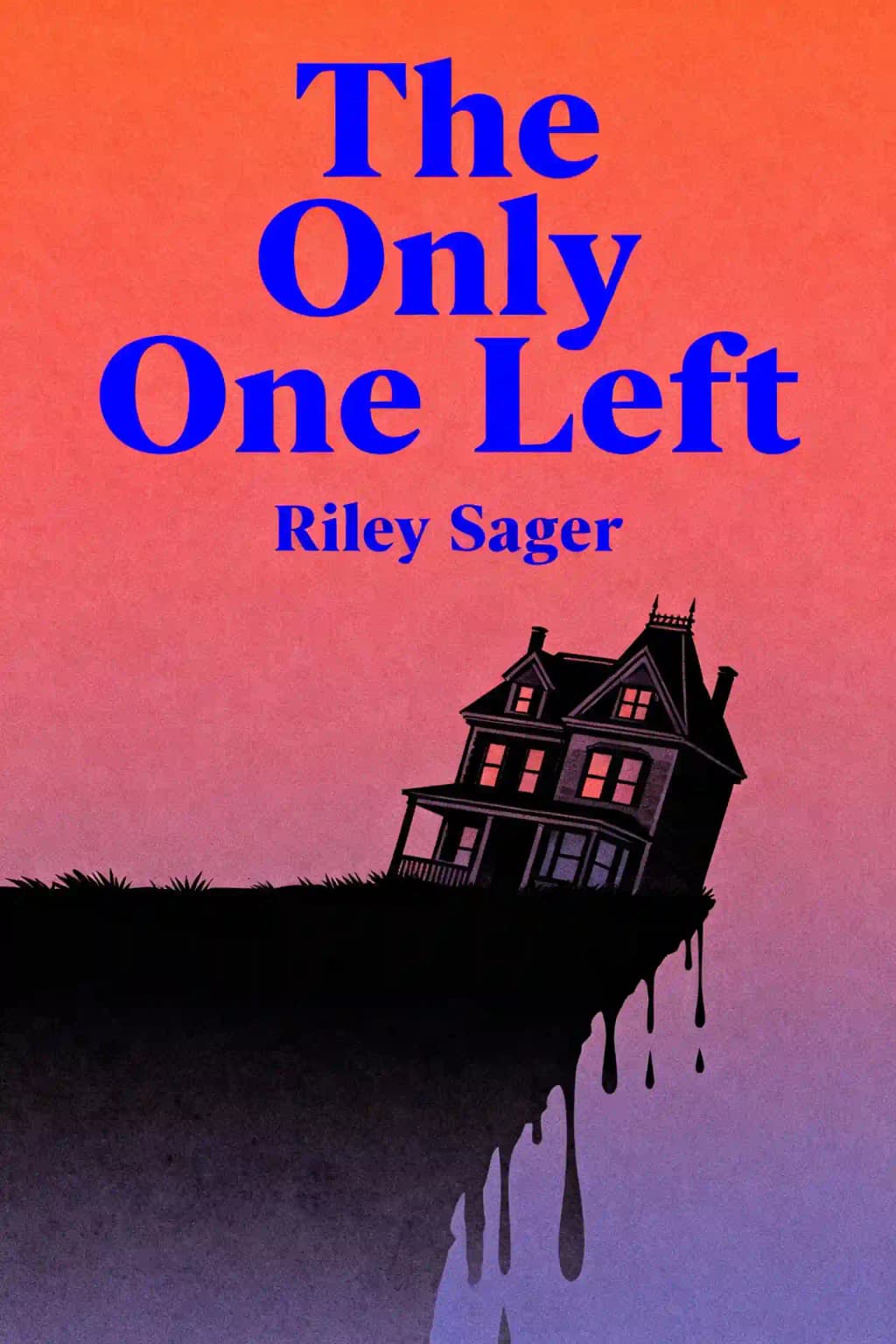
The Only One Left by Riley Sager has captivated readers since its 2023 release, becoming an instant New York Times bestseller and TikTok sensation. This gothic thriller masterfully blends elements of classic mysteries with modern psychological suspense, earning comparisons to Daphne du Maurier's Rebecca and Agatha Christie's best works. Stephen King himself praised Sager's storytelling as "addictively readable," while celebrities like Reese Witherspoon have featured his previous novels in their book clubs. Set against the backdrop of a crumbling mansion perched on treacherous cliffs, this tale of murder, identity, and long-buried secrets explores how trauma shapes our perceptions of truth and the lengths we'll go to protect ourselves from the past.
Kapitel 2
A Disgraced Caregiver and an Infamous Patient
Kit McDeere arrives at Gurlain Home Health Aides with her nursing career in tatters. After a devastating six-month suspension following the suspicious death of her mother - a terminal cancer patient who overdosed on fentanyl while under Kit's care - she's desperate for any position that will accept her credentials. The investigation cleared her name officially, but the whispers persist in break rooms and the sidelong glances from former colleagues speak volumes. Her once-pristine reputation at Boston General, built over twelve years of dedicated service, evaporated overnight.
When Mr. Gurlain, a thin man with wire-rimmed glasses and perpetually pursed lips, offers her a live-in position caring for an elderly stroke patient, Kit's initial relief quickly turns to apprehension. The location - a remote mansion called Hope's End perched on the Massachusetts coastline - raises immediate red flags. The salary, however, is triple the standard rate, and with mounting legal bills and a mortgage in arrears, Kit finds herself backed into a corner.
The patient's identity makes the position even more problematic: Lenora Hope, the notorious sole survivor of the 1929 "Hope Family Massacre." The brutal murder of her parents and younger sister shocked the nation - her father found dismembered in his study, her mother and sister discovered in pools of blood with multiple stab wounds. Though seventeen-year-old Lenora was never convicted, the circumstantial evidence was damning: her alibi had holes, her clothing was burned the night of the murders, and she inherited the entire Hope shipping fortune. Now 71 and reportedly paralyzed by a series of devastating strokes, she requires constant care that few are willing to provide.
Mr. Gurlain makes the subtext of the job offer crystal clear during their meeting. "Let's be frank, Ms. McDeere - we're offering you this position because your... particular situation aligns with our needs. Given your history, no one would raise too many questions if something unfortunate were to happen to Lenora Hope under your watch." His words hang in the air like a noose.
The parallels between Kit and Lenora are impossible to ignore - two women marked by tragedy and suspicion, both living under clouds of perpetual judgment, both trapped by circumstances that seem to tighten around them like a vice. As Kit drives her weathered Honda Civic along the coastal road toward Hope's End, she passes fresh graffiti spray-painted on a stone wall: "ROT IN HELL LENORA HOPE." The stark red letters serve as a reminder that in small towns with long memories, some crimes - whether proven or not - become permanent stains on both the accused and their families. The mansion looms ahead through the fog, its Victorian turrets piercing the gray sky like accusatory fingers.
Kapitel 3
Hope's End: A Mansion of Secrets and Shadows
Hope's End stands as a physical manifestation of decay and faded glory-a once-magnificent Gilded Age mansion now crumbling at the edge of a cliff. The house itself seems to be slowly dying, with missing window panes, damaged marble, and a compromised foundation that causes the entire structure to tilt precariously toward the ocean below. This architectural instability mirrors the psychological instability of those who dwell within its walls.
Inside, Kit discovers an environment frozen in time since the 1920s. Marble tiles, velvet drapes, and cloud-painted ceilings create an atmosphere both grand and decrepit-like an abandoned four-star hotel where luxury and neglect coexist in uncomfortable harmony. The grand staircase splits into symmetrical wings beneath a stained-glass window that casts rainbow light across the foyer, creating a deceptively beautiful setting for the darkness that lurks within.
The small household staff maintains rigid hierarchies and traditions. Mrs. Baker, the severe housekeeper who's been with the Hope family since 1928, rules with iron authority. Jessica, a young maid with neon-streaked hair, provides a jarring modern contrast to the mansion's antiquated atmosphere. Archie, the elderly chef, has worked at Hope's End for nearly sixty years, while Carter, the handsome groundskeeper, maintains the crumbling exterior.
Most unsettling are the family portraits in the main hall-Lenora's teenage image hangs alongside three identical frames covered in black silk crepe, hiding the faces of her murdered family members. In the library, three urns contain the remains of Winston, Evangeline, and Virginia Hope, a macabre reminder of the violence that defines the mansion's legacy.
When Kit first meets Lenora Hope, she finds a frail woman in a wicker wheelchair facing the ocean, her head lolled forward in apparent helplessness. But when Lenora lifts her head, Kit is startled by her blazing green eyes that burn with unexpected intensity amid her otherwise gray appearance. This first encounter establishes the central tension of their relationship-is Lenora truly as helpless as she appears, or does something more calculating lurk behind those piercing eyes?
Kapitel 4
The Mysterious Case of the Missing Nurse
Kit's unease deepens when she discovers her predecessor, Mary Milton, left suddenly and without explanation, abandoning all her belongings - books, clothes, even her medical bag with expensive equipment and personal mementos. The hasty departure becomes even more suspicious when Kit finds Mary's diary entries abruptly end mid-sentence, and her morning coffee cup still sits on the bedside table, lipstick stains preserved on its rim. This suggests a departure driven by immediate fear rather than planned choice, leaving Kit to wonder what could terrify someone enough to abandon everything they own.
The staff's explanations about Mary's absence grow increasingly contradictory. Mrs. Blackwood, the housekeeper, claims Mary left for a family emergency in Bristol, while the groundskeeper insists she mentioned plans to travel abroad. Most intriguingly, Kit discovers that Mary and Lenora developed an unusual bond, spending hours together in the library using an old Underwood typewriter for communication - a detail that seems deliberately omitted from the staff's accounts of Mary's time at Hope's End.
The mystery takes a horrifying turn when Kit, walking along the beach during low tide, discovers Mary's body partially buried in the sand beneath the mansion's terrace. The corpse shows signs of having been in the water, but the position suggests it was deliberately concealed rather than washed up naturally. Detective Marcus Vick - the same detective who investigated the suspicious circumstances of Kit's mother's death fifteen years ago - quickly declares it a suicide based on a handwritten note found in Mary's waterlogged pocket. The note, written in what appears to be Mary's handwriting, reads simply: "I'm sorry. I'm not the person you thought I was." However, the paper's condition raises questions about its authenticity.
This discovery transforms Kit's role from caregiver to amateur detective as she begins methodically questioning everyone at Hope's End. She creates detailed timelines of Mary's last known movements, noting that several staff members have gaps in their alibis for the night Mary disappeared. The question of whether Mary jumped or was pushed becomes increasingly complex as Kit uncovers evidence of arguments between Mary and several household members in the days before her disappearance.
Kit's investigation is severely hampered by her own credibility issues. When she attempts to demonstrate Lenora's ability to communicate through typing to Detective Vick, Lenora sits motionless, refusing to acknowledge the typewriter - making Kit appear either delusional or deliberately deceptive. This pattern of Lenora revealing detailed information during private sessions while maintaining a completely helpless facade in front of others becomes increasingly sinister, suggesting she possesses far more agency - and possibly malice - than she lets on.
As Kit methodically searches through Mary's abandoned belongings, she uncovers a hidden notebook containing encrypted notes about Lenora's past. The partial decryptions suggest Mary had uncovered something significant - possibly relating to other deaths at Hope's End - that made her a threat to someone in the household. The parallels to Kit's own troubled history create a psychological pressure cooker as she realizes she might be following in Mary's doomed footsteps, especially when she begins receiving anonymous warnings to stop asking questions about the past.
Kapitel 5
Lenora's Confession: A Story Within a Story
The narrative takes a compelling turn when Lenora begins sharing her life story with Kit through a typewriter, creating a story-within-a-story structure that gradually reveals the truth behind the Hope family murders. Lenora's account begins with her seventeenth birthday in 1929, describing her stifling life at Hope's End with her drug-addled mother, philandering father, and oblivious sister Virginia.
On a night when Lenora contemplated suicide on the mansion's terrace, she met Ricardo "Ricky" Mayhew, the handsome groundskeeper with wild hair and a wolfish smile. Their forbidden romance blossomed into a passionate affair, with Lenora dreaming of escaping to Paris while Ricky shared stories of his difficult upbringing. When Lenora became pregnant, Ricky was overjoyed about becoming a father, giving her new purpose and hope for the future.
However, Lenora's typed confession takes an ominous turn when she mentions her sister Virginia noticing changes in her behavior. Though Virginia initially misidentified Lenora's love interest as Archie rather than Ricky, the revelation created tension between the sisters. Virginia declared her own intention to marry the family portrait artist Peter and "never leave this place"-a statement Lenora notes came true in an unexpected way, as Virginia's ghost supposedly still roams the halls of Hope's End.
This ghostly element introduces a supernatural dimension to the mystery. Kit begins experiencing unexplained phenomena-creaking noises from Lenora's room at night, shadows passing doorways, and mysterious typing on the typewriter. When Kit investigates a late-night disturbance, she finds a page in the typewriter with the same sentence repeated: "It's all your fault." When asked who typed it, Lenora indicates her long-dead sister Virginia-an impossible answer that deepens the mansion's sinister atmosphere.
The psychological tension escalates as Kit questions whether Lenora might be faking her paralysis. Could she be mobile at night, creating these disturbances herself? Kit's test-dropping Lenora's cherished Eiffel Tower snow globe to provoke a reflexive catch-ends in heartbreak when the irreplaceable gift shatters on the floor while Lenora watches with panicked eyes, suggesting her physical limitations are genuine.
Kapitel 6
Unraveling Family Secrets
Carter, the groundskeeper, reveals he took the job at Hope's End to investigate his own connection to the Hope family. He shows Kit a photograph from 1929 showing Lenora visibly pregnant-evidence that she gave birth to a child who was taken away. This revelation connects to Lenora's typed confession about her pregnancy with Ricky's baby and raises questions about what happened to the child.
Kit discovers Mrs. Baker has been making monthly payments to Berniece Mayhew-Ricardo's wife-since 1929, totaling over $600,000. When confronted, Berniece reveals she witnessed Lenora in the kitchen with bloody hands the night of the murders, holding a knife while screams echoed from upstairs. Berniece believes Ricardo helped Lenora commit the murders before Lenora killed him too, pushing him off the terrace. She's been extorting money to keep silent about what she saw.
However, Detective Vick complicates this theory by revealing details from the original police investigation. The police received a call reporting only two deaths at Hope's End that night-the caller was Lenora herself. Most shockingly, Virginia Hope didn't die immediately with her parents but lingered for six months after being hanged. This timeline contradiction leads Kit to question everything she's been told about the murders.
The investigation takes a dramatic turn when Kit examines the family portraits hidden behind black fabric. She tears through each covering, revealing Winston Hope-ruddy and smug; Evangeline Hope-beautiful but fragile; and finally Virginia-haughty with icy blue eyes. This detail strikes Kit as significant, remembering Berniece's comment about Lenora's "big blue eyes." Moving to the library, she examines the three urns on the mantel. The first two contain ashes, but the third-supposedly Virginia's-is completely empty.
This shocking discovery leads to the most devastating revelation: the woman Kit knows as Mrs. Baker is actually Lenora Hope, while the paralyzed patient she's been caring for is Virginia Hope-the sister everyone believed died decades ago.
Kapitel 7
The Truth Behind the Hope Family Massacre
In a stunning confession, Lenora (the real Lenora, formerly known as Mrs. Baker) reveals what really happened the night of the murders. She had been upstairs in her room, listening to records and hiding from family troubles, when she discovered her mother dead on the Grand Stairs, her father slumped over the pool table, and Virginia hanging from a chandelier in the ballroom.
After calling the police, she screamed on the terrace until they arrived. The police suspected her immediately but then discovered Virginia was still alive, though severely injured from the hanging attempt. Dr. Walden declared Virginia brain dead, but she survived-paralyzed and unable to speak but mentally aware.
In a breathtaking act of cruelty and opportunism, Lenora bribed the doctor to declare Virginia legally dead, allowing her to inherit both their fortunes. She then assumed a new identity as Mrs. Baker and forced her sister to become "Lenora Hope" while she escaped to Europe for years, living the Parisian life Virginia had dreamed of while condemning her sister to imprisonment at Hope's End.
The full horror of Virginia's past continues to unfold as Lenora reveals the cruel circumstances of her sister's childbirth. Virginia had delivered her baby boy on the bedroom floor with only Lenora and the real Miss Baker to help. In a moment of unimaginable cruelty, Winston Hope ordered Lenora to take the newborn away before Virginia could even hold him. Despite Miss Baker's protests that it was "barbaric," Winston refused to allow "another bastard" in the family.
Virginia's own typed account reveals that after giving birth and having her baby taken away, she found the knife used to cut the umbilical cord. Pain-wracked but determined, she left her room and descended the Grand Stairs, where Lenora spotted her. Virginia ignored her sister's concerned question, continuing toward the billiard room where she heard her father arguing with someone-Ricky. With grim determination, knife in hand, she entered the billiard room, intent on taking her baby and leaving Hope's End forever-"even if I had to kill to do it."
Kapitel 8
The Final Shocking Revelation
As Kit pieces together the truth about the Hope family murders, she makes a devastating personal discovery. The mysterious "Ricky" from Virginia's account-the father of her child-is none other than Kit's own father, Patrick "Ricky" McDeere. This explains why Kit was specifically chosen for the assignment at Hope's End; Virginia recognized her as potentially her own granddaughter.
When Kit confronts her father at Hope's End, Lenora appears with a shotgun, recognizing him as "Patrick" from Virginia's past. Their struggle sends Lenora tumbling down the Grand Stairs just as the entire house begins to collapse. Despite her father's protests, Kit insists on rescuing Virginia as the mansion crumbles around them.
Outside on stable ground, Kit's father kisses her goodbye before returning to the house. In a poetic final act, he joins Lenora on the stairs, the two of them clasping hands as the doors swing shut and Hope's End slides into the ocean-burying their shared secrets forever.
In a final twist, Virginia reveals in a letter that she gradually regained control of her body in secret, starting with wiggling fingers and eventually walking around her room at night. She stayed at Hope's End partly out of fear of the changed outside world, but mostly to punish her sister Lenora and to remain in place should her son ever come looking for her.
The maid Jessie turns out to be Virginia's granddaughter-her son Marcel had lived a happy life with Miss Baker, becoming an artist and father before passing away in 1982. Virginia and Jessie flee to Paris, with Virginia sending Kit and Archie plane tickets to join them. A newspaper clipping reveals Virginia died at 101 in Italy, having become a celebrity who traveled the world with Kit as her companion.
Kapitel 9
The Masks We Wear and the Truths We Hide
At its core, The Only One Left explores how trauma shapes identity and the masks we wear to protect ourselves from painful truths. Every character in the novel constructs elaborate facades, each serving as a shield against their haunting pasts. Lenora's masquerade as Mrs. Baker isn't simply an alias - it's a complete reinvention born from desperate necessity. Virginia's exaggerated disability becomes both a defensive strategy and a form of penance, while Kit's studied nonchalance about her mother's death masks deep-seated guilt. Patrick's seemingly innocent presence in the household conceals layers of connection to the Hope family's bloody history, making him both observer and participant in the unfolding drama.
The novel delves deep into the murky waters of moral ambiguity, presenting complex scenarios that defy easy judgment. Virginia's horrific act of killing her parents emerges as a response to their cruel theft of her child - a crime of passion born from maternal desperation. Kit's role in her mother's death, leaving pills within reach, exists in a gray area between tragic accident and subconscious intent. Lenora's imprisonment of her sister represents perhaps the most morally complex situation: a decades-long act of cruelty that somehow also reads as self-preservation, raising questions about whether survival itself can justify such extreme measures.
Hope's End serves as both setting and symbol, its deteriorating structure providing a masterful metaphor for the fragility of deception. The mansion's slow collapse into the sea mirrors the inevitable erosion of long-held secrets. Each creaking floorboard, each widening crack in the foundation, corresponds to another truth threatening to surface. The house's architectural instability perfectly reflects the psychological state of its inhabitants - grand facades hiding rotting foundations, rooms full of shadows and whispered confessions, and corridors that seem to lead nowhere but circle back to past sins.
Sager weaves these elements into a broader meditation on inheritance - both literal and psychological. The weight of family history bears down on each character like the heavy New England atmosphere, shaping their choices and reactions. The stories passed down through generations become prisons of their own making, with each character struggling to break free from predetermined narratives while simultaneously being bound by them. The novel suggests that our attempts to escape the past often lead us directly back to it, creating cycles of revelation and concealment that span generations.
In the end, The Only One Left transcends typical thriller conventions to become a nuanced study of human nature under pressure. It demonstrates how survival instincts can morph into monstrous behaviors, how truth and lies can become so intertwined that separating them becomes impossible, and how the stories we construct to protect ourselves can ultimately become our undoing. The real horror lies not in supernatural elements but in the very human capacity for self-deception and the lengths to which people will go to preserve their carefully constructed realities.
Kapitel 10
Escaping the Prison of the Past
The novel's conclusion weaves together multiple threads of redemption as Virginia finally breaks free from the physical and psychological confines of Hope's End. Her poignant letter to Kit - urging her to "live a life that belongs only to yourself" - emerges as the story's central thesis, crystallizing decades of hard-won wisdom. After thirty years of confinement, Virginia discovers that true freedom involves not just physical escape but a profound reclamation of identity. Through her relationship with Kit, she finds herself reconnecting not only with her family legacy but with the person she might have become had circumstances been different.
The parallel journeys of grandmother and granddaughter create a powerful symmetry. Kit's process of confronting her mother's death reveals layers of complexity she'd never considered - from her father's calculated manipulations to her own unconscious role in the tragedy. She discovers that her childhood memories, once seemingly concrete, were shaped by others' careful orchestration. Through painstaking investigation and emotional excavation, Kit pieces together a new understanding of her past, one that allows her to forge ahead rather than remain trapped in grief and guilt.
The dramatic collapse of Hope's End into the ocean serves multiple narrative purposes. On a literal level, it provides closure to the physical site of so much suffering. Metaphorically, the waters washing over the structure suggest both cleansing and burial - nature itself participating in the elimination of this monument to human cruelty. The building's submersion mirrors the way family secrets often sink beneath the surface, yet continue to influence those above. Even as the structure disappears, its impact reverberates through three generations of women, demonstrating how trauma creates ripples that expand far beyond its original source.
Sager elevates the thriller genre by crafting a sophisticated exploration of narrative construction and truth. The story reveals how power dynamics influence whose version of events becomes "official," and how institutional authority can be wielded to reshape reality itself. Through Virginia's decades of imprisonment and Kit's journey of discovery, we see how easily truth can be distorted by those with the means and motivation to do so. The novel suggests that true healing requires not just uncovering facts but understanding how and why they were hidden.
The story's resolution emphasizes that surviving tragedy is only the beginning - the greater challenge lies in how we choose to live with its aftermath. Some characters retreat into denial or perpetuate deceptions, while others, like Virginia and Kit, choose the harder path of confronting painful truths. Their ultimate freedom comes not from forgetting the past but from finally understanding it fully enough to move beyond its constraints. In choosing to travel together, they demonstrate how shared understanding can transform family trauma into a foundation for genuine connection and renewal.