Kapitel 1
The Call to True Masculinity in a World of Confusion
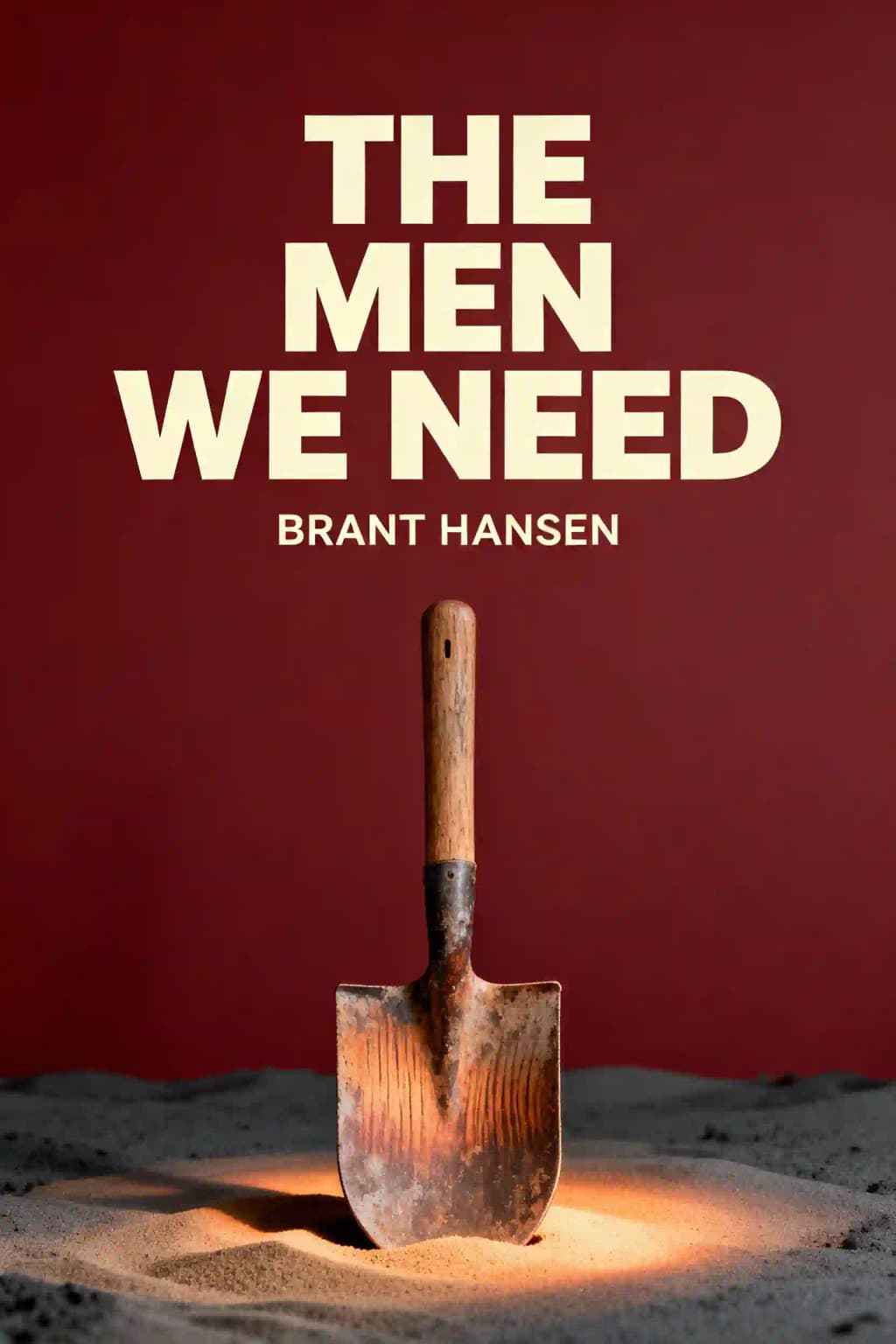
Have you ever wondered what it truly means to be a man in today's world? In a culture where traditional masculinity is often labeled "toxic" while passivity and self-indulgence run rampant, Brant Hansen offers a refreshing and challenging perspective. "The Men We Need" has become a cultural phenomenon, resonating with both men and women seeking authentic masculinity. Endorsed by figures ranging from bestselling authors to medical professionals, the book has sparked conversations across America about what men are truly designed to be. Hansen, known for his self-deprecating humor and profound insights as a radio personality, doesn't fit stereotypical masculine ideals-he plays accordion and flute rather than hunts, and calls himself an "avid indoorsman." Yet his message about men as protectors and cultivators has struck a chord in a society desperate for men who take responsibility rather than avoid it.
Kapitel 2
The Poster That Revealed What Women Really Want
In college, Hansen encountered a fascinating phenomenon: a bestselling poster that dominated women's dorm rooms across campus. The image featured a shirtless man tenderly holding a baby against his chest. While conventional wisdom might suggest the poster's popularity stemmed from the model's physical appeal, Hansen's curiosity led him to a deeper truth. When he questioned a female student about the poster's widespread appeal, her response was unexpected and illuminating. She focused not on the man's muscular build or facial features, but on how carefully he supported the baby's head, creating an unmistakable sense of security and protection.
Through extensive research and controlled experiments, Hansen has consistently demonstrated how women respond more positively to men displaying protective behaviors than to those merely possessing conventional attractive features. His studies included showing women photographs of various scenarios: firefighters rescuing people from burning buildings, soldiers helping elderly citizens cross busy streets, teachers defending bullied students, and ordinary men assisting families during natural disasters. The results were striking - women consistently rated these protective actions as significantly more attractive than images of conventionally handsome men in neutral situations.
Personal experiences reinforced these findings. Hansen recalls how his wife's perception of him notably shifted after an incident where he calmly but firmly confronted a group of rowdy teenagers who were disturbing their neighborhood's peace. Similarly, he documented cases where women reported feeling more attracted to their partners after witnessing them stand up for others in challenging situations - whether defending a coworker from unfair criticism or helping a stranger with car trouble in bad weather.
This attraction to protective behavior runs deeper than surface-level preferences. It taps into evolutionary psychology, where women's survival and that of their offspring historically depended on choosing partners who could provide security and protection. Modern studies show that while women certainly appreciate physical attractiveness, they consistently rank character traits like reliability, emotional stability, and protective instincts higher when evaluating potential long-term partners. In speed dating experiments, women were twice as likely to agree to a second date with men who demonstrated protective behaviors during their brief interaction, such as offering their jacket or ensuring their date's comfort.
The insight extends beyond romantic relationships. Women report feeling more secure in professional environments where male colleagues demonstrate protective behaviors toward team members, regardless of gender. This isn't about physical strength or aggressive posturing - it's about creating an environment where vulnerability is met with support and protection. Recent surveys indicate that 78% of women rank a man's ability to make others feel safe and protected as a top-five attribute in both personal and professional relationships, far outweighing factors like income or physical appearance.
Kapitel 3
Masculinity Is Taking Responsibility, Not Dominance
At its core, masculinity means taking responsibility. This concept traces back to Adam's original role in Eden, where the Hebrew word "shamar" meant to "guard," "protect," and "watch over." The garden represented a place of peace where things could thrive but needed tending. True masculinity isn't about bodybuilding or sexual conquests but about being "humble, consistent, dedicated keepers of the garden." This role extends beyond physical protection to emotional, spiritual, and social guardianship.
This understanding challenges both toxic aggression and passive withdrawal. Adam's failure in Eden wasn't excessive masculinity but passivity-standing silently while Eve was tempted rather than protecting the garden as commanded. When they sinned, God called out "Where are you, Adam?"-seeking the one charged with protection. This moment illustrates how masculine responsibility isn't about control but about active engagement and protective presence.
Modern society presents numerous examples of both passive and aggressive distortions of masculinity. Consider "Jake," a hypothetical 19-year-old who spends his days playing video games and watching porn while his parents provide for him. Though some might argue Jake isn't hurting anyone, he harms himself and others by failing to be who he was created to be. The world needs his strength, intelligence, and creativity, but while he immerses himself in fake accomplishments and images of women, real work needs doing and real women yearn for mature men. Similarly, "Mike," a successful executive who dominates his family through anger and control, represents the opposite distortion - confusing masculinity with domination rather than protection.
Marriage counselors Paul and Virginia Friesen confirm that passive men are a far more common problem in their practice than overbearing ones. While passivity might seem benign-a husband mentally checking out or saying "Yes, dear" to keep peace-it ultimately leads to the home's downfall. They observe that marriages often suffer not from active conflict but from male emotional absence. When men withdraw from family leadership, their wives often shoulder both emotional and practical burdens alone.
True masculine responsibility manifests in various ways: fathers who actively engage in their children's lives, husbands who initiate difficult but necessary conversations, men who mentor younger colleagues, and community leaders who stand up for the vulnerable. When men fulfill their purpose as protectors, vulnerable people flourish around them, and spaces become safer. This protection extends beyond physical safety to creating environments where others can grow, express themselves, and reach their full potential.
The call to masculine responsibility doesn't diminish women's capabilities or independence; rather, it complements them. In healthy relationships and communities, men's protective instincts work alongside women's strengths, creating balanced environments where everyone thrives. This understanding of masculinity focuses not on power over others but on power used in service to others.
Kapitel 4
The Fake Life Versus the Real One
Modern men face unprecedented challenges from "supernormal stimuli"-exaggerated fakes that hijack our natural responses. Nobel Prize winner Nikolaas Tinbergen demonstrated this with birds preferring artificial eggs with exaggerated markings and male butterflies attempting to mate with cardboard cutouts while ignoring real females. Humans suffer the same vulnerability, but with more devastating consequences.
When we choose the exaggerated fake over the real, we become less human ourselves. Psychologist Deirdre Barrett explains how people now prefer virtual farms to real duties and screen images to willing partners. As Kurt Vonnegut wisely wrote when a character is shown a bikini photo: "That's not a girl. That's a piece of paper."
This applies beyond sexuality. Junk food exaggerates natural flavors, distorting our tastes away from what our bodies need. Psychologist Susan Weinschenk explains that dopamine doesn't bring pleasure but creates seeking behavior without satiety, trapping us in endless loops of wanting without satisfaction.
The consequences are severe. Pornography isn't just morally problematic-it's destroying men's ability to function sexually with real women. The Italian Society for Andrology and Sexual Medicine reports that "Internet porn is killing young men's sexual performance," with a 600% increase in high school teenagers reporting low sexual desire between 2004-2013-coinciding with smartphone proliferation.
Video games present a similar challenge-they're genuinely too awesome, and that's precisely the problem. In games, you can be a Navy SEAL without doing a single push-up or experience adventures without mundane work. The consistent dopamine hits make regular life seem pale and boring by comparison.
The good news? Recovery can happen quickly. The 700,000-member Reddit community dedicated to quitting porn shares countless stories of transformation-from introversion to extroversion, improved family relationships, decreased anger, and increased motivation. The key isn't guilt but developing a bigger vision for life-wanting something more than the momentary dopamine hit.
Kapitel 5
Protectors, Not Predators: Men as Defenders of the Vulnerable
Dishal Sooku, a quiet 38-year-old restaurant owner with martial arts training, demonstrated heroic action when he tackled a kidnapper attempting to snatch a little girl from outside his establishment. His story went viral because people hunger for tales of someone defending the vulnerable. This incident exemplifies how ordinary men can rise to extraordinary occasions when protection is needed. Sooku later explained that his martial arts training had taught him not just fighting skills, but the responsibility that comes with strength.
The author argues that people in your neighborhood should be safer because you're there, even if they don't know it. Despite young men being statistically more likely to commit violent crimes, this same physical capability should be channeled toward protection, not threat. This might mean walking an elderly neighbor's dog, helping someone change a flat tire, or simply being vigilant while out for an evening walk. The author points to historical examples where societies flourished when men embraced their protective role, from ancient city guards to modern first responders.
This protective instinct extends particularly to children. While our culture may suggest sheltering children is negative, Hansen argues it's a father's essential responsibility. A good father provides shelter physically, emotionally, psychologically, and spiritually-protecting children, shielding them, and filtering the world for them as they gradually grow into maturity. This includes age-appropriate exposure to life's challenges, much like a greenhouse that provides optimal conditions for growth while protecting from harsh elements.
The ultimate betrayal occurs when men become threats to those they should protect. Whether through Adam-like passivity, flirtation with others, explosive temper, or subtle indifference, men can become the very danger they're supposed to guard against. In marriage, a woman pins her hopes on a man as defender and garden-keeper. When he undermines her instead of supporting her, that's betrayal. The author provides examples: the father who consistently breaks promises to his children, the husband who belittles his wife in public, or the man who abandons his family's emotional needs for career advancement.
A father also sets the emotional tone for his entire household, creating what the author calls the "atmospheric pressure" of the home. If you're consistently gentle and respectful with your wife, your family will tend toward gentleness and respect. If you're passive or disengaged, chaos will fill your home like weeds choking a neglected garden. The author compares this influence to a composer scoring a movie-if you write something orderly and beautiful, those around you will play their parts accordingly. This extends beyond mere behavior to creating an environment where family members feel secure enough to grow, take risks, and develop their own strengths. Studies show that children from homes with engaged, protective fathers show higher levels of emotional security and social confidence.
Kapitel 6
Ambition Redirected: Pursuing What Truly Matters
You'll inevitably feel meaningless when investing in meaningless activities. This isn't about your job-even seemingly trivial work matters. It's about activities that add no value to anyone's life.
We're created to improve conditions for others and take responsibility. When we spend days playing video games or pursuing entertainment, we enjoy it momentarily but end up feeling listless-what the French call "ennui," a dissatisfaction from not doing anything meaningful.
In our affluent culture where survival isn't our daily concern, ennui is common. It's no coincidence that Ecclesiastes, expressing profound meaninglessness, was written by Solomon, the Bible's richest man. People actively serving others rarely struggle with meaninglessness.
Being ambitious about the right things rarely earns applause. Do something self-controlled and honorable, and likely no one notices. The strength of humility isn't celebrated. But what you're ambitious about makes all the difference. Your wife will need you to be ambitious-not necessarily about wealth or status, but about getting things done. Keeper-of-the-garden things.
Even terrible jobs are wonderful because they make us serve people-that's what you're being paid to do. Whether stocking shelves, accounting, or flipping burgers, you're helping someone important to God. Your perspective transforms your work. You can view making ice cream cones as a stupid task or as creating something delightful for a seven-year-old after a tough day.
One of the most freeing, countercultural thoughts you can adopt is: "Wow, that's beautiful! And I don't have to have it." This mental maneuver applies to possessions, relationships, or experiences. In America, we're taught to pursue everything we desire, which drives our economy. But contentment brings freedom while discontentment makes you dependent.
Kapitel 7
Creating Safety Rather Than Threat
What does being a garden protector look like in practice? Sometimes the youngest males show us. Six-year-old Bridger became a viral sensation in 2020 after stepping between his four-year-old sister and a charging German shepherd. His face severely lacerated, requiring 90 stitches, he simply told his father: "I thought if someone should have to die, it should be me."
The story resonated deeply-it made national news, was shared millions times, and even prompted the Avengers cast to send gifts (Chris Evans sent his Captain America shield). When people see men doing what they're made to do-even six-year-old ones-they sense it's deeply right.
As Jesus' apprentice, studying how he treated women provides a master class:
1. Jesus respects women. When Mary sat at his feet with his male disciples-shocking in that culture-Jesus defended her right to be there, saying she'd "chosen what is better."
2. Jesus actively listens to women. He engaged the Samaritan woman at the well-despite her being both female and from a despised ethnic group.
3. Jesus defends women. When religious leaders brought him a woman caught in adultery, planning to stone her, Jesus challenged them: only those without sin should cast stones. Where Adam failed by letting a woman face an enemy alone, Jesus defended her.
Real love means wanting the best for someone. If you don't desire that, you don't love them-regardless of what you say or think. The word "love" gets misused constantly. When someone says "I love this woman," they often mean "she attracts me," "she makes me laugh," or "she makes me feel important." This can be distilled to: "I love how I feel" or simply "I love me."
Gentleness isn't just about avoiding physical harm. A gentle gardener knows he can easily kill a new growth but chooses not to. A gentleman is more than capable of hurting the weak but doesn't. Jesus exemplifies this: "A bruised reed he will not break, and a smoldering wick he will not snuff out."
Kapitel 8
Choosing Your Future Self Deliberately
Who we become is within our control-it's a direct result of what we pay attention to. As Dallas Willard wrote, "What is in our 'heart' matters more than anything else for who we become and what becomes of us."
Our attention is a limited resource we must manage carefully. When we "pay" attention to something, we're buying a ticket for our brain to attend. Marketers understand this, knowing that repeated exposure to advertisements makes consumers view products as "high quality" simply through familiarity.
What kind of man do you want to be in your old age-a secure, peaceful source of wisdom and hope, or a cranky old guy who attacks people with shopping carts at Walmart? This isn't just a thought exercise; it's a real choice that happens decision by decision.
"Every man over 40 is responsible for his face," Lincoln reportedly said. We create ourselves over time. People don't suddenly become bitter at seventy-they've been working on it for decades through their attitudes and reactions. Small deviations in trajectory lead to massive differences over time-like a rocket missing the moon by 4,100 miles due to being just one degree off at launch.
Most men are ruled by neediness-a desperate hunger for attention and affirmation that never gets satisfied. Larry Crabb estimates 70-80% of men fall into this category. We understand the yearning for significance, but unless we overcome it, we'll never truly focus on others. This neediness is ugly, especially as men age. Even high achievers, wealthy or famous men often remain deeply unsatisfied, constantly seeking more admiration.
The alternative is joy-a permanent sense of well-being from pursuing God that persists even during hardship, grief, or depression. Ironically, our neediness costs us respect. Nothing is more grotesque than aging men still desperately seeking significance. Instead, we need men who can listen, root for others, and affirm without seeking payoff.
Kapitel 9
Taking Responsibility for Your Spiritual Life
Growing up in American church culture, I struggled with the question: What does God actually want from me? The answer seemed like an endless list-evangelism, Bible reading, prayer, giving to the poor, activism, church volunteering, worship, communion, fasting, confession, and on and on.
To my great relief, I've realized God really wants one thing: loyalty. A believing, trusting loyalty to Him specifically, through everything, no matter what. Loyalty doesn't get discussed enough in church circles, but the Hebrew word hesed (steadfast loyalty) appears 246 times in the Old Testament. God doesn't want a scrubbed-up life-He could force that. He wants the real you to be loyal to the real Him.
Being "spiritual" doesn't mean being emotional. If you don't get emotional about God or worship music, nothing's wrong with you. Jesus rarely discusses emotions but constantly emphasizes obedience. Our culture is feelings-driven, letting emotions determine reality. But Jesus focused on loyalty and obedience from his disciples.
Is it possible you already know enough to act? My brilliant friend Sy observed that most American Christians with abundant resources don't need more knowledge. We often use lack of knowledge as an excuse to delay action. Learning about Jesus is important, but it's not the same as following him.
The popular moral guideline "As long as what I'm doing doesn't hurt someone else, it's okay" seems nonjudgmental and simple, but it's actually a dangerous lie. It pretends we can act as autonomous individuals in a disconnected world when in reality, nothing we do is truly private. Everything we do-and don't do-has consequences that ripple outward.
Self-control is simply self-governing-deciding something is important and being able to do it regardless of feelings. Self-controlled people are often considered boring, but they're actually the ones who become successful, influential, respected, and admired.
Kapitel 10
Embracing Your Identity as a Son of God
We started with Adam and we'll end with him. We talked about how he blew it-given a job and failing. I can relate to failure. I presume you can too. Whether it's broken relationships, missed opportunities, or moments of weakness, we all carry the weight of our shortcomings. Like Adam, we often find ourselves hiding, ashamed of our failures.
But there's more to the story. Adam isn't just in the beginning of the Old Testament. He shows up in the New Testament too, in Luke 3's genealogy of Jesus. After listing seventy-seven generations, the genealogy ends with "the son of Seth, the son of Adam, the son of God." This placement is significant - it shows that even after the fall, after all the mistakes and missteps, Adam's primary identity remained unchanged. He was, first and foremost, a son of God.
Sometimes the Christian story confuses me. Why would God make that sacrifice for us? Why the cross? Then I see Adam on this list as "the son of God" and realize: God didn't make that sacrifice for just any reason. We only make that kind of sacrifice for family. The cross wasn't just about sin management - it was about family reconciliation. It was a father doing whatever it took to bring his children home.
We're called to do Adam's job-keepers of the garden, protectors and defenders, coworkers in God's kingdom. This calling manifests differently for each of us - in our workplaces, homes, communities, and relationships. Some tend literal gardens, others cultivate minds through teaching, heal bodies through medicine, or build businesses that create value for others. But if you've failed like Adam (and you have, as have I), note this: if there's an epitaph for Adam, and for you and me, it remains "a son of God."
God still claims us. He knows us better than we know ourselves-beyond our accomplishments, failures, and roles. He sees past our professional titles, bank accounts, and social status. He sees the raw us and isn't walking away. He sees every hidden struggle, every private battle, every secret shame - and stays. Knowing that, we can journey forward with confidence. Be a blessing to those around you, not from a place of trying to earn love, but from the security of already being loved. A man who knows whose he is isn't afraid. He laughs a lot. He takes risks. He loves freely. He knows how it ends-that despite our mistakes, God is making all things new.
And just as God described the beginning, the end-for those who want him-will be very, very good. This isn't just optimistic thinking; it's the promise of restoration, of everything broken being made whole, of sons finding their way home to their Father who has been waiting all along.