Kapitel 1
The Arcane Grimoire That Fascinated Centuries of Occultists
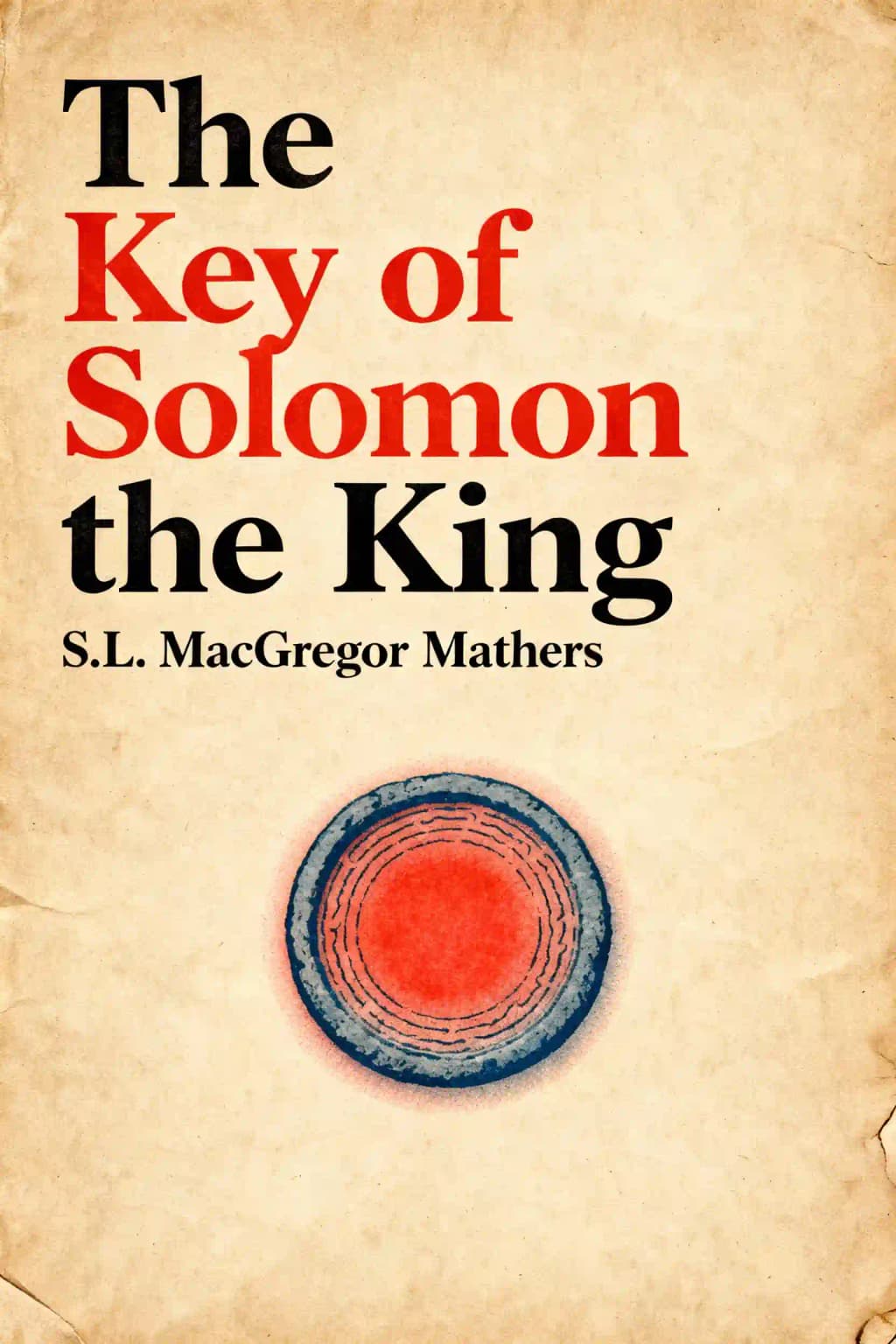
The Key of Solomon stands as perhaps the most influential grimoire in Western occult tradition, a work shrouded in mystery yet wielding tremendous influence across centuries. This ancient text-claimed to contain the magical wisdom of King Solomon himself-has captivated everyone from medieval magicians to modern ceremonial practitioners. When Aleister Crowley, the notorious 20th-century occultist, was building his magical system, he drew heavily from this text's ritual frameworks. Even Sir Arthur Conan Doyle, creator of Sherlock Holmes and spiritualist enthusiast, owned a copy and referenced its symbolism in his personal writings. The manuscript remained largely hidden in private collections until S.L. MacGregor Mathers, co-founder of the Hermetic Order of the Golden Dawn, meticulously translated it from ancient manuscripts in the British Museum, finally bringing this secretive knowledge into the public sphere in 1889. What makes this grimoire so enduring? It presents a complete system of ceremonial magic that promises not just supernatural power but a structured pathway to communicate with the divine-a spiritual technology that continues to fascinate seekers in our technological age.
Kapitel 2
The Divine Foundation of Solomon's Magical System
The Key of Solomon begins with a profound premise: true magical power flows not from demonic pacts or dark forces, but from divine connection. Solomon himself addresses his son Roboam, explaining that his legendary wisdom came through divine channels. After praying for wisdom rather than wealth or long life, Solomon received a visitation from the Angel Homadiel, who bestowed upon him knowledge of all natural things and celestial secrets. This divine origin story establishes the grimoire's central philosophy-that magical operations require spiritual preparation and divine authorization.
This emphasis on divine connection permeates every aspect of the magical system. Before any operation, the practitioner must "fear God, adore Him with contrition of heart, and invoke Him in all matters." The text insists that without this spiritual foundation, no magical work can succeed. Think of it as establishing the proper spiritual bandwidth-without the right connection to divine power, the magical "signal" simply won't transmit.
The grimoire presents humanity as occupying a unique position in the cosmos-possessing both divine and terrestrial qualities. This dual nature gives humans the capacity to communicate with angels and command natural forces, but only when operating from a place of spiritual alignment. As Solomon tells Roboam, celestial and terrestrial creatures will obey "through this knowledge, which works through natural things and pure angels."
What's particularly fascinating is how this spiritual framework transforms potentially problematic magical practices into sanctified operations. Rather than summoning demons through dark pacts, the magician invokes divine names and angels to compel spirits into service. The extensive prayers, confessions, and purification rituals aren't just ceremonial window dressing-they're the essential mechanism through which the magician establishes the spiritual authority necessary for magical efficacy. In essence, the grimoire presents magic not as rebellion against divine order, but as working within it through proper authorization.
Kapitel 3
The Cosmic Clock: Timing in Magical Operations
The Key of Solomon places extraordinary emphasis on astrological timing, presenting a sophisticated system where each operation must align with specific planetary hours, days, and lunar phases. This isn't mere superstition but reflects a fundamental principle-that magical work taps into cosmic currents that wax and wane according to celestial movements.
The text details how the twenty-four hours of each day are governed by the seven planets in sequence: Saturn, Jupiter, Mars, Sun, Venus, Mercury, and Moon. Each planet rules its namesake day, beginning with the day's first hour. For example, Saturn rules Saturday's first hour, followed by Jupiter for the second hour, and so forth. This creates a complex matrix of temporal influences that the magician must navigate.
Different operations require different planetary alignments. Need to summon souls of the deceased or create discord? Work during Saturn's hours. Seeking wealth or honors? Jupiter's hours are ideal. Love operations flourish under Venus, while Mercury governs eloquence and divination. Even the Moon's position in specific zodiacal signs matters-use terrestrial signs for spirit invocation, fiery signs for love operations, and airy signs for unique experiments.
This system reveals a worldview where time isn't uniform but qualitatively different at various moments. Consider how this contrasts with our modern conception of time as a neutral, mechanical progression. In Solomon's magical universe, 3:00 PM on a Tuesday carries fundamentally different energetic properties than 3:00 PM on a Friday-not just conventionally, but cosmically.
The grimoire also emphasizes lunar phases, warning never to begin work during the Moon's conjunction with the Sun (new moon), but rather when it increases in light. This principle of working with waxing energies appears throughout the text-magical implements are created during increasing light, herbs gathered at sunrise, and operations timed to align with growing forces.
What emerges is a magical practice deeply embedded in cosmic rhythms. The magician doesn't impose will against nature's currents but rather skillfully navigates these currents, choosing the precise moment when cosmic forces naturally align with the intended outcome. This explains why the grimoire insists that perfect timing is essential-without it, the magician attempts to swim against cosmic currents rather than with them.
Kapitel 4
The Sacred Circle: Protection and Power in Ritual Space
The construction of the magical Circle represents one of the grimoire's most elaborate and essential operations. Far more than just drawing a line on the ground, creating this sacred space involves precise measurements, divine names, symbolic elements, and ritual purification-all designed to establish a protected realm where the magician can safely interact with spiritual forces.
The Circle begins with two concentric circles drawn one foot apart using a consecrated knife, sickle, or sword. Within this space, the magician traces the Sacred Symbol of Tau toward the Four Quarters and places four hexagonal pentacles between them, each inscribed with tremendous divine names: IHVH (Tetragrammaton), AHIH (Eheieh), ALIVN (Elion), and ALH (Eloah). Two squares are then drawn around the circles, with the centers of the outer square's angles forming four circles containing additional divine names.
This geometric complexity serves multiple purposes. First, it creates a barrier against hostile forces-spirits cannot cross these boundaries unless expressly permitted. Second, it establishes a microcosm reflecting macrocosmic order, with the four directions corresponding to elemental powers and divine attributes. Third, it concentrates magical energy within a defined space, intensifying the practitioner's connection to spiritual realms.
The Circle's construction is accompanied by specific Psalms and prayers that activate its protective properties. Once completed, the Master positions his Disciples at the four quarters, each armed with a new Sword, while censers with appropriate incense burn at strategic points. This arrangement isn't merely ceremonial but creates a balanced field of forces-the four human participants anchoring the cardinal directions while the incense creates an atmosphere conducive to spirit manifestation.
What's particularly striking is how the Circle transforms ordinary space into sacred space. The grimoire recommends performing operations in isolated locations-desolate regions, forests, abandoned houses, or crossroads at night-but acknowledges that one's home or chamber may suffice if properly consecrated. This suggests that the Circle's power lies not in the location itself but in the ritual transformation of that space through divine names and ceremonial actions.
The Circle also serves psychological purposes. Standing within this elaborately constructed sacred space, surrounded by divine names and symbols, the magician experiences a profound shift in consciousness. Ordinary awareness gives way to magical awareness, where communication with spiritual entities becomes not just possible but expected. The Circle thus functions as both physical protection and psychological technology, creating the conditions for altered states of consciousness necessary for magical operations.
Kapitel 5
The Magician's Arsenal: Tools and Their Consecration
The Key of Solomon presents an extensive catalog of magical implements, each requiring specific materials, timing, and consecration rituals. These tools aren't merely symbolic props but essential conduits for magical forces, their efficacy depending on precise construction and spiritual charging.
Consider the white-handled knife, which must be made during Mercury's hour when Mars is in Aries or Scorpio, dipped in gosling blood and pimpernel juice during a full or waxing moon, with specific characters engraved on the hilt. The black-handled knife, used specifically for Circle-making, requires creation during Saturn's hour and immersion in black cat's blood and hemlock juice. Each tool corresponds to particular planetary influences and serves distinct magical functions.
The consecration process transforms ordinary objects into magical instruments. Take the pen used for writing divine names-a gosling feather plucked during an invocation to banish deceit, sharpened with the Knife of Art, perfumed, sprinkled with consecrated water, and stored in silk. This elaborate preparation ensures the pen becomes a worthy instrument for inscribing sacred names and characters.
Even seemingly mundane items like candles undergo extensive consecration. Made from virgin wax during Mercury's hour, with wicks crafted by a young girl during the moon's increase, these candles bear engraved characters and undergo exorcisms invoking divine names to "illuminate the hearts of summoned spirits, compelling them to appear without deception."
What's the underlying principle here? The grimoire operates from the premise that material objects can be spiritually charged through proper preparation, timing, and invocation. Each implement becomes a specialized conductor for specific magical energies-the sword for commanding, the wand for directing, the pen for inscribing, the incense for attracting or repelling.
This approach reflects a worldview where the material and spiritual realms aren't separate but interpenetrating. Physical objects, properly consecrated, become anchoring points for spiritual forces. The extensive preparation requirements ensure that nothing in the magical operation remains ordinary or profane-every element becomes sacred through deliberate consecration.
Modern practitioners might question whether such elaborate preparations are truly necessary. Could a store-bought candle work just as well as one handcrafted during specific planetary hours? The grimoire's answer would be unequivocal: magical efficacy depends on these precise preparations. Each step in creating a magical tool aligns it with specific cosmic forces and purifies it from contrary influences. The magician who shortcuts these preparations attempts to conduct subtle energies through unsuitable instruments-like trying to perform delicate electrical work with uninsulated tools.
Kapitel 6
The Power of Names: Divine Words and Characters
At the heart of Solomon's magical system lies the extraordinary power of names-particularly divine names that, when properly invoked, compel spiritual forces to manifest and obey. The grimoire presents an extensive catalog of these names, each with specific powers and applications, drawn from Hebrew tradition, angelic hierarchies, and cosmic principles.
The most sacred of these is the Tetragrammaton-IHVH (Yod, He, Vau, He)-the ineffable four-letter name of God. Other powerful names include EHEIEH (I Am), ELOHIM (Divine Ones), ADONAI (Lord), AGLA (a notariqon for "Thou art mighty forever, O Lord"), and dozens more. These names aren't merely labels but contain intrinsic power-when properly pronounced by a purified practitioner, they vibrate with the creative forces they represent.
The conjurations demonstrate how these names function in magical operations. When commanding spirits to appear, the magician invokes not personal authority but the power of divine names through biblical history: "I conjure you by EHEIEH (invoked by Adam), by IOD (invoked by Abel), by TETRAGRAMMATON ELOHIM (invoked by Noah)..." Each name connects to a biblical figure who received divine protection, creating a lineage of authority that the magician temporarily accesses.
Beyond spoken names, the grimoire emphasizes written characters and sigils-particularly in the creation of Pentacles. These sacred medals contain Hebrew letters, divine names, verses from Psalms, and magical symbols arranged in specific patterns. When properly constructed and consecrated, they "strike terror into Spirits, forcing their obedience through fear" and protect the bearer against "all elemental perils, poisons, infirmities, sorcery, and fear."
What's the underlying principle? In Solomon's magical worldview, names contain essence-to know and properly pronounce a name is to access the power of what is named. This reflects the Hebrew concept where naming something establishes relationship and authority with it. When God allowed Adam to name the animals, this represented dominion; similarly, when the magician correctly invokes divine and angelic names, this establishes temporary authority over corresponding spiritual forces.
The grimoire's emphasis on correct pronunciation and writing of these names is telling. It laments how Hebrew words have been "mangled through transcribers' ignorance" and notes that Mathers spent years "correcting the Hebrew and Magical characters in the Pentacles." This precision matters because these names function like cosmic access codes-one wrong letter potentially alters or nullifies the effect.
This system presents magic not as imposing personal will upon the universe, but as properly aligning oneself with divine hierarchies. The magician doesn't command through individual power but channels divine authority through proper invocation of sacred names. This explains why spiritual preparation is so essential-only a purified vessel can properly transmit these potent forces without distortion or harm.
Kapitel 7
The Pentacles: Solomon's Seals of Power
Among the most distinctive elements of Solomon's magical system are the Pentacles-sacred medals containing divine names, Hebrew characters, and mystical symbols that serve as powerful magical tools. These aren't merely symbolic tokens but concentrated repositories of spiritual power, each designed for specific magical purposes.
The grimoire presents forty-four Pentacles organized by planetary correspondence: seven for Saturn (Black), seven for Jupiter (Blue), seven for Mars (Red), seven for the Sun (Yellow), five for Venus (Green), five for Mercury (Mixed Colors), and six for the Moon (Silver). Each Pentacle contains specific divine names, verses from scripture, and magical symbols aligned with its planetary nature and intended function.
Consider the First Pentacle of Saturn, which "strikes terror into Spirits making them submit," or the Second Pentacle of Jupiter, designed for "acquiring glory, honors, riches and tranquility." The Fifth Pentacle of the Sun enables "rapid transportation between distant places," while the Third Pentacle of Venus "attracts love" through the verse "Place me as a signet upon thine heart."
These Pentacles must be meticulously crafted during the proper planetary hours, ideally on metal corresponding to their planetary nature (lead for Saturn, tin for Jupiter, iron for Mars, etc.), though virgin paper or parchment may substitute when necessary. The creation process involves elaborate preparation, precise inscription of characters, and ritual consecration through incense, prayers, and divine invocation.
What makes these Pentacles so powerful? The grimoire explains they contain "the Ineffable Names originally written by God's finger on Moses's tablets and revealed to Solomon through angelic ministry." They function as physical anchors for specific divine and cosmic forces, concentrating these energies into portable tools the magician can deploy at will.
The practical applications are extensive. When shown to spirits during conjuration, they compel obedience "through fear." When carried on the person, they protect against "elemental perils, poisons, infirmities, sorcery, and fear." Some attract love or wealth, others grant invisibility or power over natural forces, and still others open locked doors or enable communication with spirits.
This system reveals a sophisticated understanding of talismanic magic, where physical objects become charged with specific spiritual energies through proper creation and consecration. The Pentacles represent perhaps the most complete system of magical talismans in Western esoteric tradition, covering the entire spectrum of human needs and magical operations.
What's particularly notable is how these Pentacles integrate multiple magical traditions. They combine Hebrew divine names with astrological correspondences, Psalmic verses with geometric symbols, creating a syncretic system that draws power from multiple spiritual streams. This reflects Solomon's legendary wisdom-not just depth of knowledge in one tradition, but the ability to synthesize diverse spiritual technologies into a coherent, powerful system.
Kapitel 8
The Qabalistic Framework: Cosmic Hierarchies and Correspondences
While the practical instructions form the grimoire's core, an underlying Qabalistic framework provides its theoretical foundation. This becomes explicit in the "Ancient Fragment" and "Qabalistical Invocation," which reveal how Solomon's magic operates within a comprehensive cosmic system of hierarchies and correspondences.
The fragment explains that spiritual forces are organized in a precise hierarchical structure: "three command three through three," with spirits divided into those Above, Below, and of the Center. This reflects the Qabalistic Tree of Life with its ten Sephiroth (divine emanations) arranged in three pillars. Each Sephira represents a specific divine attribute and contains corresponding angels, human faculties, and even opposing demonic forces.
The system begins with Kether (Crown/Unity) at the summit, representing divine will, and descends through Chokmah (Wisdom), Binah (Understanding), and the remaining Sephiroth to Malkuth (Kingdom) at the base, representing the material world. Each level contains specific angelic choirs-from the Chaioth Ha-Qadosch (Holy Living Creatures) at Kether to the Ishim (Souls of Fire) at Malkuth.
This hierarchical structure explains why magical operations must invoke forces in proper sequence. The "Qabalistical Invocation of Solomon" demonstrates this, systematically calling upon each Sephira from Malkuth upward to Kether, then invoking each angelic choir with its corresponding divine names. This creates a complete circuit of divine energy flowing from the highest spiritual realms down to the magician's physical operation.
The correspondence system extends beyond spiritual hierarchies to include planetary associations, colors, metals, herbs, and times. Saturn corresponds to lead, black, and Saturday; Jupiter to tin, blue, and Thursday; Mars to iron, red, and Tuesday; and so forth. These correspondences aren't arbitrary but reflect an integrated cosmic system where each level of reality resonates with corresponding elements on other levels.
This explains why specific materials, colors, and timing are so crucial in magical operations. When crafting a Solar Pentacle from gold during Sunday's hours while wearing yellow garments and burning solar incense, the magician creates a complete resonant circuit with Solar forces across multiple planes of reality. Every element vibrates at the same "frequency," amplifying the connection to that specific cosmic energy.
The Qabalistic framework also clarifies why spiritual preparation is essential. The magician must ascend the Tree of Life through purification and prayer before attempting to direct its forces. Without this ascension, one lacks the spiritual authority to command angels or spirits associated with higher Sephiroth. The extensive confessions, prayers, and purification rituals establish the magician's position within this cosmic hierarchy, enabling legitimate access to its powers.
This system presents magic not as arbitrary superstition but as a precise spiritual science operating according to cosmic laws. Just as modern technology manipulates physical laws to achieve specific outcomes, Solomon's magic manipulates spiritual laws through proper understanding of cosmic correspondences and hierarchies.
Kapitel 9
The Ethical Dimension: Magic's Purpose and Limitations
Despite its reputation as a grimoire of commanding spirits, the Key of Solomon presents a surprisingly nuanced ethical framework governing magical practice. The text repeatedly emphasizes that magical operations must serve legitimate purposes and avoid harmful applications, with divine powers ultimately determining what operations succeed.
The preface explicitly warns against Black Magic, particularly "the use of blood, as evil will recoil on those who practice it." Mathers notes having omitted experiments "verging on Black Magic" from his translation, suggesting ethical boundaries within the tradition itself. When blood is mentioned in remaining operations, the editor cautions that such practices "are associated with Black Magic" and should be avoided.
Solomon instructs Roboam to use these secrets only for good purposes, warning that "angels will punish those with evil intent." This establishes a crucial principle-magical power doesn't exempt one from cosmic justice but rather increases accountability for its use. The extensive purification rituals and confessions before operations serve not just technical purposes but ethical ones, ensuring the magician approaches work with proper intentions.
The grimoire distinguishes between legitimate magical goals and inappropriate ones. Operations for protection, finding lost items, gaining knowledge, attracting love or favor, and spiritual communication receive detailed instructions. Conversely, operations causing harm or manipulating others against their will appear limited or absent, suggesting ethical boundaries within the tradition.
Even when commanding spirits, the magician invokes divine authority rather than personal power. The conjurations emphasize that spirits must obey not the individual practitioner but the divine names and symbols presented. This places magical operations within a cosmic order where divine will ultimately determines what manifestations occur.
This ethical framework reflects a sophisticated understanding of magical causality. Rather than viewing magic as unlimited power to impose personal will, the grimoire presents it as working within cosmic laws that include moral dimensions. Actions contrary to divine order generate consequences for the practitioner-not as punishment but as natural results of violating cosmic principles.
The emphasis on proper timing, materials, and procedures serves both technical and ethical purposes. These requirements ensure not just magical efficacy but appropriate use. The difficulty of performing operations correctly creates natural limitations preventing casual misuse, while the spiritual preparations cultivate qualities that discourage harmful applications.
Perhaps most significantly, the grimoire presents magic not as an alternative to religion but as operating within a religious framework. The practitioner doesn't rebel against divine order but works within it through proper authorization. This integration of magical practice with spiritual devotion creates an ethical container guiding how these powerful techniques should be employed.
Kapitel 10
Legacy of Solomon's Key: From Ancient Wisdom to Modern Practice
The Key of Solomon represents far more than a historical curiosity-it stands as a living magical tradition that has profoundly influenced Western esotericism across centuries. Its impact extends from medieval grimoires through Renaissance magic to modern ceremonial traditions, with principles still actively practiced today.
When Mathers published his translation in 1889, he brought this previously hidden knowledge into public circulation, profoundly influencing the magical revival of the late 19th and early 20th centuries. The Hermetic Order of the Golden Dawn, which Mathers co-founded, incorporated numerous elements from the Key of Solomon into its magical system, particularly its pentacle designs, divine name invocations, and ritual structures.
Aleister Crowley, initially trained in Golden Dawn techniques, adapted Solomon's methods in developing his own magical system of Thelema. Even as he rejected conventional religious frameworks, Crowley maintained the grimoire's emphasis on precise timing, proper tool consecration, and systematic invocation. Modern traditions like Wicca and Chaos Magic similarly draw from Solomon's techniques, often adapting them to contemporary spiritual frameworks while maintaining core principles.
What makes this grimoire so enduringly influential? Unlike many magical texts that offer specific spells without theoretical foundation, the Key of Solomon presents a complete magical system integrating theory and practice. Its comprehensive approach covers every aspect of magical operation-from spiritual preparation to tool creation, from circle construction to spirit communication. This systematic completeness allows practitioners to adapt its principles across diverse contexts.
The grimoire's emphasis on divine connection rather than demonic pacts also contributed to its lasting influence. By presenting magic as working within divine order rather than against it, Solomon's system offered a spiritually acceptable framework for magical practice that could be integrated with conventional religious devotion. This helped preserve these techniques through periods of religious persecution when more explicitly transgressive magical systems were suppressed.
Perhaps most significantly, the Key of Solomon presents magic not as superstition but as spiritual technology-a precise system for interacting with subtle forces through specific procedures. This approach resonates with both traditional religious sensibilities and modern systematic thinking, allowing the grimoire to maintain relevance across radically different cultural contexts.
Today, Solomon's magical system continues to influence spiritual seekers worldwide. Some practice its methods directly, carefully observing planetary hours and constructing tools according to original specifications. Others adapt its principles within contemporary frameworks, applying its systematic approach to magical timing, tool consecration, and invocation within modern spiritual contexts. Either way, the Key of Solomon remains what it has always been-a comprehensive manual for those seeking to interact with subtle forces through precise spiritual technology.