Kapitel 1
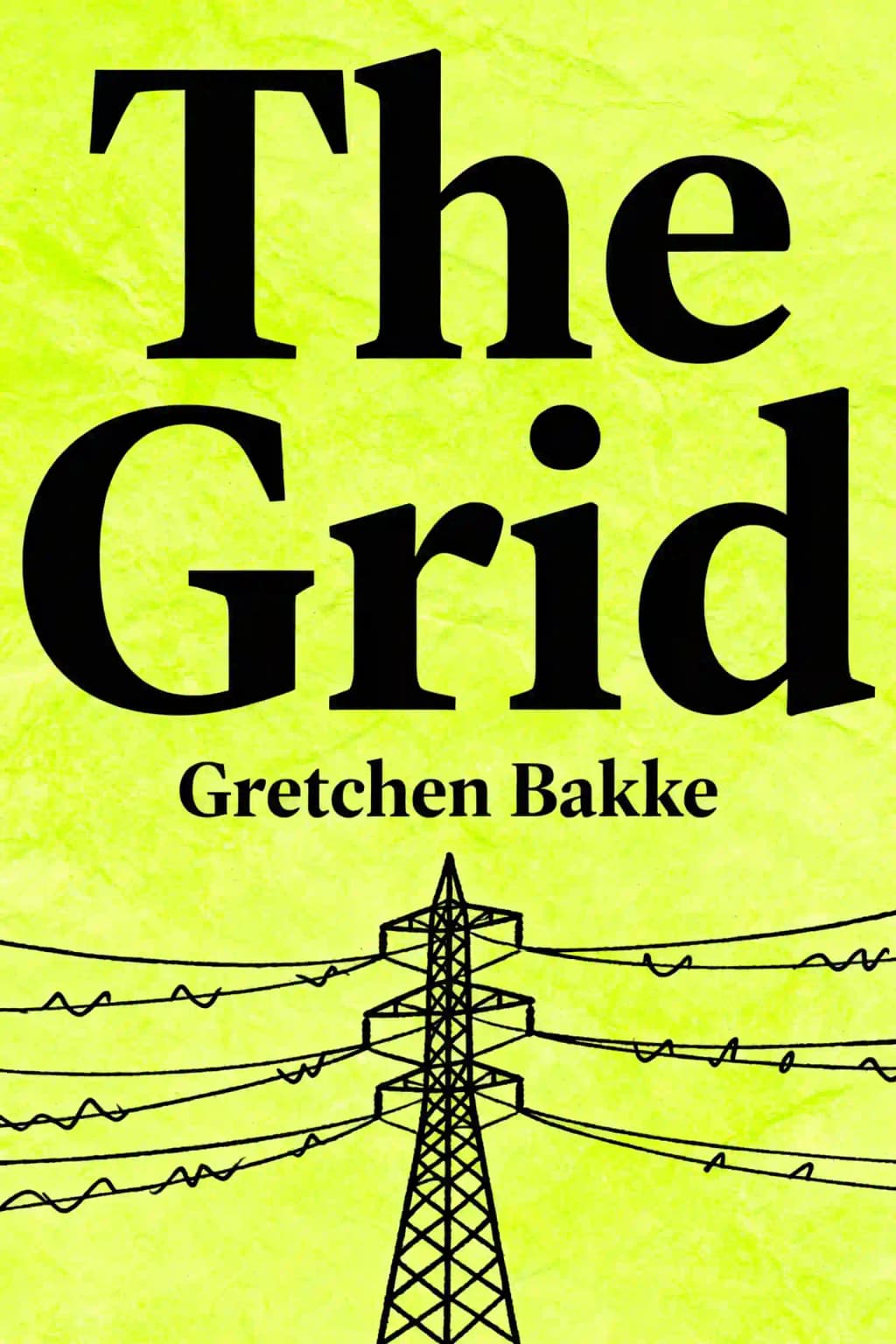
The Grid: America's Fragile Lifeline
Imagine waking up to discover that the entire Eastern Seaboard has gone dark. No internet, no refrigeration, no traffic lights, no hospital equipment. This isn't science fiction-it happened in 2003 when a massive blackout affected 50 million Americans and cost the economy $6 billion. Despite being the world's largest machine and the twentieth century's greatest engineering achievement, America's electrical grid remains largely invisible to us until it fails. The book "The Grid" by anthropologist Gretchen Bakke has become required reading in Silicon Valley boardrooms and energy policy circles, as tech giants like Apple and Google seek independence from this increasingly unreliable system. Elon Musk called it "essential reading for understanding our electricity-dependent future," while Bill Gates praised its accessible explanation of our most critical infrastructure. As climate change intensifies extreme weather and renewable energy transforms how we generate power, this cultural analysis of our electrical infrastructure couldn't be more timely.
Kapitel 2
The Invisible Machine That Powers Modern Life
Energy may dominate political discourse, but what's often overlooked is that America doesn't run on raw fuels-it runs on electricity. Our information age has transformed everything from communication to healthcare into electricity-dependent processes. Yet the infrastructure delivering this essential power remains largely invisible despite being the world's largest machine.
The American grid is actually three interconnected systems spanning the continent, but these impressive networks hide a troubling reality: our electrical infrastructure is aging and increasingly unreliable. Over 70% of transmission lines and transformers are twenty-five years old, and power plants average thirty-four years in service. We maintain twice as many power plants as needed due to systemic inefficiencies. Outages are increasing dramatically-from 15 in 2001 to 307 in 2011-with Americans experiencing six hours of blackouts annually compared to mere minutes in countries like Japan and Germany.
These failures aren't just inconvenient; they're economically devastating. Even brief outages of five minutes can cause extensive damage to industrial processes. Meanwhile, our transition to renewable energy introduces new challenges. Unlike the steady power from fossil fuels, wind and solar produce variable electricity that our grid wasn't designed to handle. And these renewables are most effective in remote locations far from population centers, requiring transmission infrastructure that doesn't yet exist.
The problem isn't just where renewables generate power, but how they integrate with our existing grid. Our electrical infrastructure was built around centralized power plants, not distributed generation. Home solar installations are being deployed rapidly-in Hawaii, 12% of homes have panels, sometimes producing more electricity than the state needs. But our grid wasn't designed to take power from everywhere and distribute it everywhere else. This creates local challenges-in windy Iowa, where 30% of electricity comes from wind, utilities sometimes pay customers to use excess power when supply exceeds demand.
Electricity itself defies conventional market logic-unlike bananas or other commodities, it can't be stored or shipped, and is always used the instant it's made. Consumers rarely understand what they're buying or using. And because electricity cannot be separated from its infrastructure, we cannot reform our energy system without transforming our grid-a jury-rigged system that "works in practice, but not in theory," with no one able to see, grasp, or plan for the whole of it.
Kapitel 3
From Edison's Pearl Street to America's Power Network
Electricity is a unique force-neither solid, liquid, gas, light, nor heat-that can be lethal even in its domesticated form. In the grid's earliest days, people didn't fully understand what electricity was, even as they harnessed and deployed it. What became clear was electricity's remarkable ability to power things at a distance instantaneously, divorcing space from time like other 19th-century innovations: telegraph, telephone, radio, and phonograph.
The fundamental challenge of electricity is that it's unlike anything else we manage. To understand voltage, we must resort to metaphors: electrons "desire" to reunite with atoms after being forcibly separated during generation. The grid creates pathways (wires) for this reunion, and as electrons travel, they encounter resistance in devices like lightbulbs, where their potential becomes heat and light.
Voltage-the measure of electrical "desire" or potential-is critical. Different applications require specific voltages: 110 volts for bulbs, 220 for razors, 500 for streetcars, and millions for lightning. Maintaining constant voltage isn't merely theoretical but practical-our machines, unlike humans, cannot tolerate variation. Sagging voltage causes brownouts where lights dim and clocks slow, while excessive voltage damages equipment.
Contrary to our assumptions about electricity as a public utility, private power plants were initially more popular than central stations. Edison sold 1,200 private plants between 1882-1887 compared to just 121 central station grids. DC's one-mile transmission limit made it perfect for mansions, factories and office buildings. Even by 1907, only 8% of American homes had electricity, most from private plants.
This historical path not taken-a world of small private plants rather than centralized grids-has renewed relevance today. As solar power enables individual generation in places like Arizona and Hawaii, we face a potential return to private plants. This threatens universal access to quality electricity-a modern necessity that should be available equally to all citizens regardless of wealth.
The breakthrough toward a universal grid came with alternating current (AC) in 1887. Unlike direct current, AC could be "stepped up" to higher voltages via transformers, allowing it to travel much farther than DC's one-mile limit. By 1891, AC had been transmitted 108 miles at 40,000 volts in Germany, and by 1894, 80% of new grid installations in America used alternating current.
The Niagara Falls power plant, completed in 1895, marked the transition to our modern grid model. After considering mechanical power transmission methods (compressed air, water pressure, or manila rope), engineers chose two-phase AC at 25 cycles per second. By 1896, it was transmitting power to Buffalo, attracting industries like aluminum manufacturing that required consistent, abundant electricity.
Despite this foundation, electricity was far from universal in 1900. Only one factory in thirteen used electric motors, and just one in twenty domestic lights was electric. Rural areas had virtually no access until the Rural Electrification Act of 1936. This slow adoption reflected not just technological lag but social structures and business thinking-nobody yet grasped that electricity could be a mass product or that manufacturing appliances could be as profitable as distributing current.
Kapitel 4
The Birth of Electrical Monopolies
The birth of electric lighting in 1882 coincided with the creation of the Standard Oil Trust, which brought 90% of world oil production under Rockefeller's control. While electricity began as a chaotic diversity of competing systems, other industries were rapidly consolidating. By 1904, just 1% of American companies controlled 45% of manufactured products, with giants like U.S. Steel, American Tobacco, DuPont, and AT&T dominating their sectors.
Initially, electricity seemed immune to monopolization. DC technology's limitations naturally created decentralized, small-scale operations with multiple competing providers in any municipality. Small towns typically had municipal grids run by local governments or entrepreneurs, while larger cities hosted numerous competing companies. In 1902, America had 815 city-owned power companies, growing to over 1,000 by 1907 and providing about 30% of the nation's electricity.
Yet remarkably, within just twenty years, the eight largest utility holding companies would control three-quarters of the electricity market. By 1925, almost everyone in the industry believed monopoly was the only viable model for electric power. The monopoly concept became so entrenched that advocates of municipal networks, public power projects, and electricity cooperatives all agreed on monopolistic structure, differing only on who should control it.
Samuel Insull, Edison's former secretary, drove much of this transformation. As electricity shifted from inventors to businessmen, Insull emerged from Edison's shadow after the inventor's defeat in the AC/DC battle. Unlike Edison, Insull was neither inventor nor ideologue but a shrewd businessman who recognized that electricity's fractious industry needed consolidation.
At 32, Insull rejected a lucrative position at General Electric to become boss of Chicago Edison, a minor player in a crowded market. Upon arrival in 1892, he found Chicago Edison operating a single 3,200-kilowatt DC power plant serving about 5,000 customers, competing with eighteen other central station providers downtown and five hundred private plants. The fundamental problem: their Adams Street plant operated at full capacity only during early evenings when offices needed lighting, sitting idle or underutilized the rest of the day-a mere 5.5% utilization that threatened bankruptcy.
Insull's revolutionary insight was that electricity's economics were inverted from normal business logic. With enormous fixed costs in infrastructure and relatively minor variable costs in production, the more electricity he sold, the more money he made, regardless of price. His strategy was twofold: acquire diverse customers to balance load throughout the day (streetcars at dawn/dusk, businesses in afternoons, homes in evenings, streetlights at night, and crucially, factories during midday), and dramatically lower prices to attract them all.
This "grow and build" strategy-luring customers with low prices while constructing ever-larger, more efficient plants-became the utility industry's blueprint until the 1960s. Insull's greatest coup was securing government regulation that protected his interests from competition while ensuring low-interest construction loans.
By the late 1920s, ten holding companies controlled 75% of American electricity, each following Insull's model of working with government regulators to create protected service territories-monopolies that never competed with each other. Unlike traditional trusts, these utilities operated as government-sanctioned territorial monopolies, similar to street gangs with borders enforced by political apparatus rather than violence.
Kapitel 5
When the Growth Model Collapsed
For seventy years, the logic of ever-larger, more efficient power plants held true. Until 1969, American utilities could seemingly produce unlimited electricity at ever-decreasing costs. But when this paradigm finally broke, it devastated the industry, particularly the electrical engineers who knew nothing but grow-and-build economics.
The first blow came in the early 1960s when technological improvements hit the ceiling of physics. The second law of thermodynamics and Carnot's theorem dictate that heat engines can never exceed about 50% efficiency. A power plant-which converts fuel to heat, heat to steam, steam to mechanical energy, and finally to electricity-will always waste half its potential energy. By the 1960s, engineers realized that plants operating at just over 30% efficiency offered the optimal balance between performance and reliability.
The second blow came with the 1973 OPEC oil embargo, which sent fuel prices skyrocketing 70% overnight. Utilities that had recently converted from coal to oil were devastated, while even coal-burning plants suffered as industries nationwide switched back to coal, driving up its price. For the first time ever, utilities had to raise electricity prices.
Meanwhile, the environmental movement gained political traction, adding regulatory burdens that dramatically increased construction costs and timelines. Power plant costs rose 120% between 1970-1979 (versus 23% the previous decade), while completion times stretched from five to seven years. Simultaneously, conservation efforts reduced consumption growth, while nuclear power plants became lightning rods for public protest.
The fundamental business model-that electricity prices would always fall, plant efficiency would always rise, and consumption would always grow-collapsed completely. But most devastating was the breakdown of the regulatory compact between utilities and government. This arrangement had protected utilities from competition while guaranteeing profits on infrastructure investments. When deregulation began under Carter and accelerated under Reagan, it undermined the very foundation of the industry's stability.
This regulatory framework had created America's peculiar patchwork of utility territories-3,306 companies in total, with 189 massive investor-owned utilities serving two-thirds of Americans, alongside roughly 3,000 tiny municipal utilities. Both types operate as protected monopolies within their service areas, with territorial boundaries enforced by law.
Kapitel 6
The Grid's Breaking Points
The 2003 blackout revealed the fatal communication breakdown at FirstEnergy during the crisis. When small municipal providers called reporting dangerous voltage fluctuations, FirstEnergy representatives admitted they were "in the dark" about what was happening. The culprit was a software bug called XA/21-not malware but a programming error that created a "busy signal" when multiple systems tried to access it simultaneously. This caused data to accumulate rather than process, eventually crashing both the main server and its backup. For a critical hour and thirty minutes, control room operators remained unaware of the crisis as their screens showed normal conditions while the grid deteriorated.
This failure demonstrates how minor errors can cascade into catastrophic failures. One line of code in a program of a million lines created a loop that prevented alarms from sounding. Just as three trees contacting three power lines led to fifteen overloaded lines tripping, a microsecond software glitch mushroomed into frozen control systems and complete information blackout.
The incident highlights the limitations of the "Swiss Cheese Model" for preventing industrial accidents. Rather than attempting perfect control through perfect information, this approach assumes small failures will occur but prevents them from aligning into catastrophe. However, the grid exists within regulatory, business, cultural and natural environments that aren't always conducive to stability.
The Energy Policy Act fundamentally transformed electricity from a utility service into a tradable commodity, with profound effects on grid stability. The Act introduced market forces to grid management, changing how electricity moves (farther) and how much we use (less). This created a critical problem: too much electricity traveling too far on lines not designed for such loads.
The grid's predictability, once based on local consumption patterns and monthly meter readings, was upended by long-distance wheeling and electricity arbitrage. Companies like Enron exploited this new system, manipulating transmission capacity for profit. Meanwhile, utilities began treating operational information as proprietary, no longer sharing critical data that might help maintain grid stability.
Today's utilities make money by transporting and trading electricity rather than generating it. While they remain responsible for reliability, their incentive is to sell power to the highest bidder regardless of distance. This benefits traders and plant owners but stresses the aging grid. Investment has flowed to "smartening" transmission systems but neglected distribution networks where 90% of outages now occur. Critical components like vars (reactive power) that stabilize voltage remain underfunded because they can't be commodified and sold. The physics and economics of our electrical system now work at cross-purposes, creating a fantastically unstable system where innovation and instability coexist.
Kapitel 7
Building Resilience into the System
Superstorm Sandy struck the mid-Atlantic states on October 29, 2012, with less raw power than the Great Coastal Gale but far greater impact due to its location and timing. A post-tropical cyclone wrapped in a Nor'easter "fully coupled to the jet stream," Sandy hit at high tide across the nation's most densely populated region. While its 80 mph winds were milder than the Pacific Northwest storm, Sandy affected 50 million people compared to the Gale's 100,000. Its fourteen-foot storm surge flooded subway tunnels and overwhelmed seawalls, leaving some without power for a month.
After both Sandy and the Great Gale, "resiliency" replaced "independence" as the watchword for grid reform. Resiliency means designing systems that can bend without breaking, blackouts that bounce back quickly rather than cascade across regions, and backup systems seamlessly integrated with primary ones. This approach differs from the traditional "Hard Path" of infrastructural hardening, which focuses on building bigger, stronger systems to withstand specific stressors.
In Sandy's aftermath, the Northeast witnessed the return of tiny grids reminiscent of Edison-era private plants but with crucial modern differences. Unlike their historical counterparts, these microgrids can connect and disconnect from the macrogrid as needed, functioning perfectly well in "island" mode during blackouts. During Sandy, SUNY Stony Brook's microgrid kept 7,000 students housed with just one hour of outage compared to ten days suffered by surrounding areas. South Oaks Hospital on Long Island and NYU in Manhattan similarly remained operational thanks to cogeneration-powered microgrids.
The military has embraced microgrids with particular urgency, driven by battlefield vulnerabilities and operational inefficiencies. In Afghanistan, 80% of supply convoys transport fuel and face frequent attacks, while dismounted soldiers carry up to 95 pounds of equipment-nearly half being electronic devices or batteries. A single brigade consumes seven tons of batteries in a 72-hour mission at a cost of $700,000, with 80% of energy coming from disposable batteries. The Department of Defense is addressing these challenges through systems like the Tactical Alternating Current System (TACS), combining solar arrays with battery storage and minimal generator backup, reducing fuel needs by 90%.
Kapitel 8
The Storage Challenge and Solar Revolution
For decades, nuclear fusion has been electricity's holy grail-always promised to be "thirty years away." In 2014, Lockheed Martin's Skunk Works claimed to have shrunk this timeline to ten years, causing a stir in energy circles. Despite fusion's theoretical appeal as a clean energy source using water as fuel with no radiation or meltdown risks, it remains a zero-net-energy machine, consuming as much electricity as it produces.
Today's holy grail has shifted from power generation to power storage. Despite 150 years of electricity use, we still lack effective grid-scale storage. Unlike oil or coal that can be warehoused indefinitely, electricity must be used immediately. Our capacity to integrate renewables becomes complicated beyond 15% of peak power. Currently, we balance renewable fluctuations by using fossil fuel plants inefficiently, running at just 2% capacity to smooth out solar or wind variations.
Hawaii exemplifies both the promise and challenges of renewable integration. With electricity rates more than twice that of any other state due to oil dependence, Hawaiians have embraced rooftop solar, which pays for itself in just four years. Over 12% of residents have installed panels, and on bright days, these privately owned systems often produce more than 100% of the state's electricity needs. This solar revolution forces us to reimagine electricity use patterns rather than simply extending current ones.
The national statistic that solar provides only 0.6% of America's electricity masks local realities where solar already meets or exceeds daytime demand in places like Hawaii and Phoenix. These tiny rooftop power plants feed into the public grid, creating a system where homeowners produce power by day and draw from the grid at night. Panel companies have revolutionized the market by offering fixed monthly payments that replace utility bills, driving a 1,500% jump in solar installations since 2009.
As more customers adopt solar, utilities face a revenue crisis while still bearing grid maintenance costs. Their attempts to impose access fees have been blocked by suspicious state legislatures. The situation worsens as solar leasing programs (now 75% of Southern California installations) make panels accessible to those who couldn't afford to buy them outright. This leaves an ever-shrinking pool of traditional customers bearing the infrastructure costs that everyone still uses. The irony is that distributed solar depends entirely on the grid it's financially undermining.
The search for electricity storage solutions has become the holy grail of grid transformation. The most successful storage technologies are those that either remain invisible or mimic familiar forms. The Ice Bear system-essentially a modern icebox that makes ice at night using off-peak electricity and cools buildings during peak hours-has gained widespread adoption. Meanwhile, in Long Beach, California, the world's largest electrochemical battery is being disguised as an office building, capable of generating 400 MW for four hours.
Kapitel 9
Reimagining Our Electrical Future
Grid reformers see electric vehicles not as transportation but as "great big batteries on wheels"-mobile storage that doesn't rely on geological features like pumped hydro or compressed air. With vehicle-to-grid (V2G) technology, parked cars could smooth peak loads and balance variable generation, especially solar's jitter from passing clouds. Electric cars would support the grid whenever parked and plugged in, with algorithms managing power flow and owners receiving payment for grid services. Since cars are used only 3-5% of their lives, they could function as grid assets the remaining 95%, with their mobility perfectly matching demand shifts as people move between work and home.
Despite its elegant theory, vehicle-to-grid storage faces significant hurdles. Denmark offered massive incentives-halving effective car prices through tax exemptions and providing free battery replacements-yet consumers still rejected electric vehicles. The cars themselves aren't ready: ranges remain too short, prices too high, and charging times too long. Infrastructure presents another massive challenge-how do you install charging stations in every parking spot without rebuilding entire structures?
While V2G faces challenges at grid scale, it's proving feasible in microgrids, particularly military installations. The Department of Defense is converting its 200,000 non-tactical vehicles to electricity with built-in V2G capabilities, starting with Los Angeles Air Force Base's 42-vehicle fleet. Thirty-six of these vehicles can provide 700 kilowatts to the grid when needed-enough to power 150 homes. These military microgrids, designed to maintain operations during crises like Superstorm Sandy, benefit the larger grid during normal operations.
A promising approach to grid reform is developing integrative platforms-computer programs rather than gadgets-that can accommodate both innovative new technologies and legacy infrastructure. These platforms would use digital systems to solve analog problems, similar to how Uber organizes existing drivers into transportation for non-drivers, or how social media platforms create functional networks across vast social distances.
A curious driver in grid reform is the growing affinity with zero-valuing what isn't used and not needed. This builds on conservation and efficiency movements from the 1960s and 70s, but now extends to wireless systems and immaterial infrastructure. Renewables embody this trend: once built, they use no fuel, produce no waste, and release nothing to thicken the atmosphere. Engineers favor systems that maximize power from minimal resources, corporations appreciate removing fuel costs from spreadsheets, and consumers who get information and entertainment wirelessly increasingly resist materially invasive infrastructure.
By networking energy-saving capabilities with distributed generation, we can create "virtual power plants"-not facilities making virtual power, but platforms connecting diverse resources to function collectively like a power plant. These systems can link traditional generation, microgrids, cogeneration plants, rooftop solar, battery storage, and electric vehicles, using each resource's capabilities to balance demand with production by the millisecond.
We want a grid that moves us less, pollutes less, adapts more, and proves more reliable. We want system changes that respond to future needs rather than maintaining entrenched interests. We want control over power generation and transparency in usage. Despite our cultural preference for invisible, wireless, and portable technologies, we still desire a shared electrical infrastructure. The grid's future will need to balance these seemingly contradictory desires-invisibility and communality-into something beautiful and minimally invasive that "shines rather than glowers" as we step into a new century.