Kapitel 1
The Deadly Shadow: A Hunt for the Invisible Assassin
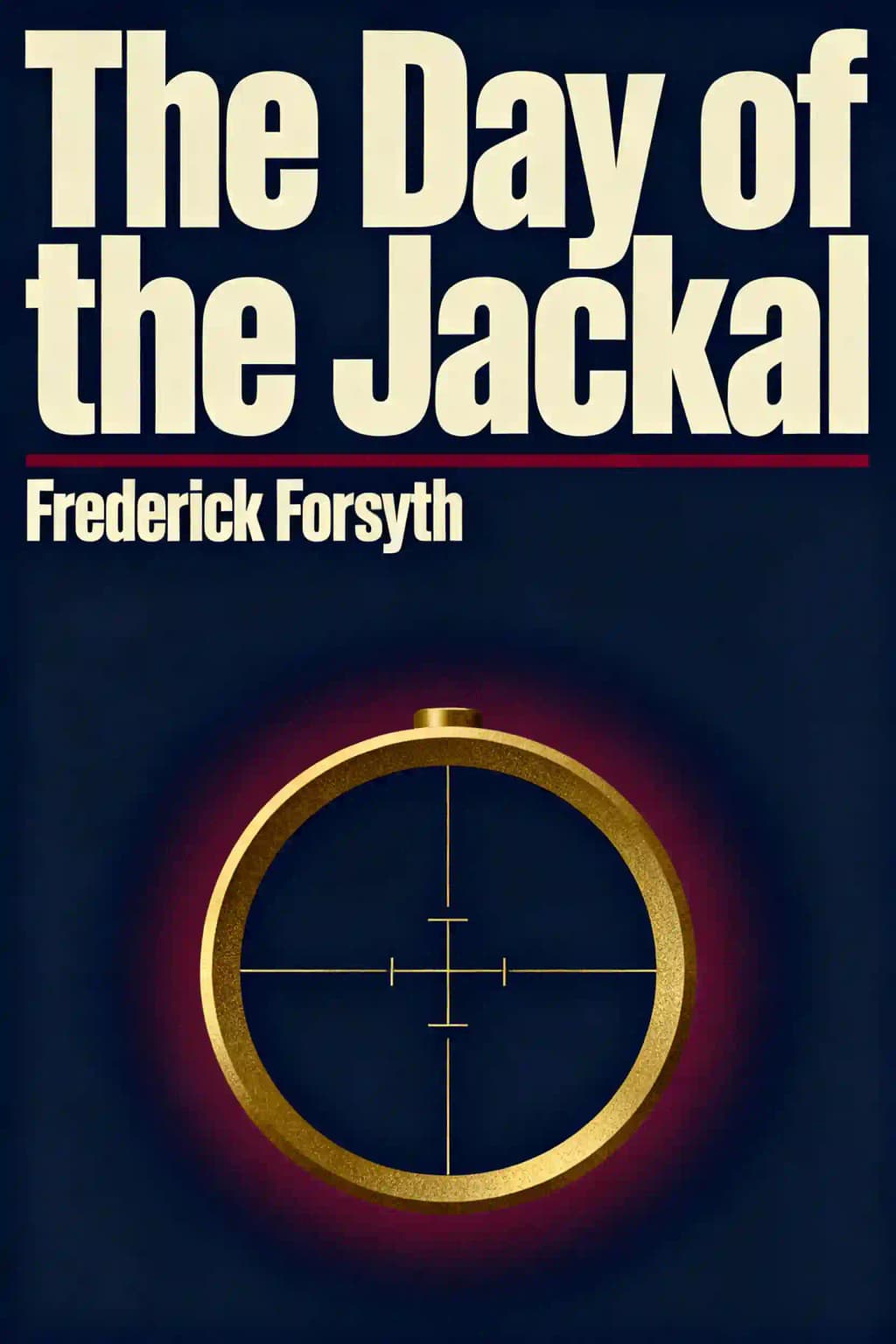
In the summer of 1963, as tensions simmered in post-colonial France, Frederick Forsyth crafted what would become one of the most influential thrillers ever written. "The Day of the Jackal" revolutionized the assassination thriller genre with its meticulous attention to detail and cold, clinical precision. The novel's impact was so profound that real-world terrorist Carlos the Jackal adopted his nickname from it, and British intelligence agencies reportedly use it as a training manual on assassination techniques. When published in 1971, the book was an immediate sensation, selling over 50 million copies worldwide and spawning two major film adaptations. What makes this work particularly fascinating is Forsyth's journalistic approach-he spent three years researching professional killers and security services, creating a thriller so technically accurate that British intelligence officials were reportedly concerned about its publication. As we dive into this masterclass of suspense, prepare to enter a world where the hunter becomes the hunted in a deadly game of cat and mouse.
Kapitel 2
The Birth of a Deadly Plot
The story begins in the aftermath of a failed assassination attempt on French President Charles de Gaulle. The French police launch their largest manhunt in history following the Petit-Clamart incident, capturing most of the conspirators except Georges Watin. As the captured plotters stand trial, a vicious underground war rages between the OAS (Secret Army Organization) and the French Secret Service (SDECE). The Action Service-SDECE's elite force of highly-trained operatives-fights ruthlessly against OAS terrorists, infiltrating their ranks and sometimes executing wanted men who couldn't be legally apprehended.
After another failed plot is uncovered in February 1963, an enraged de Gaulle demands action. The Action Service kidnaps Colonel Antoine Argoud, the OAS operations chief, from Munich and delivers him bound and gagged to Paris police headquarters. This paves the way for Lieutenant-Colonel Marc Rodin to take command of OAS operations. On March 11th, despite de Gaulle's belief that "no squad of Frenchmen will raise their rifles against me," Claude Bastien-Thiry is executed by firing squad. This execution sets in motion a chain of events that would bring the French President closer to death than ever before.
The OAS leadership-Rodin, Montclair, and Casson-meets with a mysterious Englishman in Vienna, seeking a professional assassin who could succeed where their own operatives had failed. The Englishman coolly demands half a million dollars for the assassination-half in advance, half upon completion. When Montclair protests the exorbitant fee, the assassin calmly explains this is a "once-in-a-lifetime job" requiring enough money to live comfortably afterward and acquire protection against Gaullist revenge.
The assassin rejects their offer of future rewards when they control France, demanding cash upfront. When questioned about his integrity, he explains he has no incentive to abscond with the deposit, as he would spend more protecting himself from vengeful ex-paratroopers than he would gain. After agreeing to his conditions-complete secrecy, autonomous planning, minimal contact-the Englishman chooses the codename "the Jackal." The stage is set for what would become the most sophisticated assassination attempt in French history.
Kapitel 3
The Meticulous Mind of a Professional Killer
What makes the Jackal such a formidable adversary is his extraordinary attention to detail and methodical approach to his craft. Following his meeting with the OAS leaders, he returns to London and begins an exhaustive research process on Charles de Gaulle. He acquires and studies numerous books about the French President, seeking to understand not just biographical details but character traits and personal habits.
After weeks of painstaking research at the British Museum through back issues of Le Figaro, the Jackal finally determines the perfect day when de Gaulle would predictably appear in public, regardless of weather or security concerns. With the "when" and "where" established, he spends hours contemplating the "how," rejecting numerous approaches before settling on his final plan. He recognizes that de Gaulle is the most heavily guarded figure in the Western world-even more difficult to assassinate than President Kennedy would prove to be.
The Jackal's preparation extends to every conceivable detail. He visits Paul Goossens, a disgraced Belgian gunsmith known as "L'Armurier" who supplies illegal weapons to Europe's criminal underworld. The Englishman explains his requirements for a specialized assassination rifle with extraordinary constraints: slim working parts, no protruding bolt handle, a detachable trigger, lightweight construction, a short barrel, and complete disassemblability. The weapon would need to fire accurately at 130 meters, use mercury-filled explosive bullets, and include both a silencer and telescopic sight.
Goossens enthusiastically accepts the challenge, calling it "a work of art" that only he could execute perfectly. The Jackal pays him 500 pounds as an advance, promising the remaining 700 pounds upon collection. Before leaving, the assassin delivers a chilling warning: any attempt to discover his identity or contact the police would result in Goossens' death.
Next, the Jackal seeks a forger to create false identification papers. Through his contact Louis, he meets a skilled document maker who examines his genuine driving license and passport. The forger explains they would need to create documents with photographs showing the Jackal as a much older man. Through an ingenious session in the forger's photography studio, they create images of the Englishman transformed into a tired, grey-haired man in his fifties.
Imagine trying to become someone else entirely-not just changing your name on paper, but transforming your very essence. This is the Jackal's genius. He doesn't merely disguise himself; he inhabits different identities completely, from mannerisms to physical appearance. Wouldn't we all be terrified of someone who could walk past us wearing a different face each time?
Kapitel 4
The Hunt Begins: A Nation Mobilizes
While the Jackal prepares, France experiences an unprecedented crime wave throughout June and July 1963. Banks, jewelers' shops, and post offices are violently robbed across the country. Two bank clerks are shot, leading authorities to deploy armed CRS anti-riot squads. Despite increased police vigilance, the robberies continue in broad daylight.
Three captured robbers are identified as OAS-affiliated criminals, but interrogation reveals they are merely low-level operatives unaware of the broader purpose behind the crimes. Commissaire Maurice Bouvier of the Brigade Criminelle tracks the stolen money and gems, calculating a total exceeding two million new francs (approximately $400,000)-the exact amount needed for the Jackal's advance payment.
Meanwhile, SDECE intelligence reports that Rodin, Montclair, and Casson have taken the top floor of an expensive Rome hotel, surrounding themselves with eight ex-Foreign Legion bodyguards and never venturing outside. General Guibaud initially dismisses this as paranoia following Argoud's kidnapping, failing to recognize its true significance.
The plot is discovered when Viktor Kowalski, a giant ex-Foreign Legion corporal working as courier for the OAS leaders, receives a letter claiming his daughter Sylvie is sick with leukemia. This is actually a trap set by Colonel Rolland of the SDECE Action Service. When Kowalski travels to Marseilles to see his daughter, he's ambushed by six Corsican agents. Though he fights ferociously, even shooting one attacker in the knee, he's eventually subdued and subjected to brutal interrogation.
Under torture, Kowalski reveals that the OAS leaders met with a blond foreign assassin codenamed "The Jackal" at the Pension Kleist in Vienna. Colonel Rolland realizes the recent wave of bank robberies had been to finance this assassin's mission-clearly targeting President de Gaulle. He writes an urgent report stating that this plot constitutes "the most dangerous single conception" terrorists could devise against the President's life.
Interior Minister Roger Frey convenes a meeting of fourteen top security officials to address this unprecedented threat. After debating their limited options-kidnapping the OAS leaders from Rome is deemed impossible due to their heavy security-they turn to Commissaire Maurice Bouvier for advice. Bouvier calmly observes that France's entire security apparatus is powerless for want of a name. "The first task," he concludes, "is to give this man a name. With a name we get a face, with a face a passport, with a passport an arrest. But to find the name, and do it in secret, is a job for pure detective work."
When asked who is the best detective in France, Bouvier replies without hesitation: "My own deputy, Commissaire Claude Lebel." And thus begins one of the most intense manhunts in literary history.
Kapitel 5
The Invisible Adversary
Claude Lebel approaches his impossible task with methodical determination. He establishes direct communication links with the heads of Homicide Divisions in seven countries: the United States, Britain, Belgium, Holland, Italy, West Germany, and South Africa. Speaking with his counterparts, Lebel carefully frames his inquiries as unofficial requests rather than formal investigations, providing the limited description they have and explaining they are seeking "one of the world's top professional contract-hire assassins"-not a gangland trigger, but a political assassin with several successful kills.
In London, Assistant Commissioner Anthony Mallinson immediately understands the gravity of Lebel's request. He orders a discreet check of Criminal Records but keeps the matter out of the morning heads-of-department conference. When Records report no matching suspects among known contract killers, Mallinson prepares a confidential memorandum for the Commissioner and passes the inquiry to Special Branch.
The investigation takes a dramatic turn when Superintendent Bryn Thomas of Special Branch learns from a Secret Intelligence Service contact about a rumor from when Dominican dictator Rafael Trujillo was assassinated in 1961-his armored car had been stopped by a remarkable sniper shot from 150 yards, rumored to be the work of an Englishman. Through passport records, Thomas identifies six men named Charles Calthrop, eventually narrowing his focus to Charles Harold Calthrop, who had worked for a British arms manufacturer and had been in Ciudad Trujillo in January 1961-precisely when General Trujillo was assassinated.
One of Thomas's French-speaking detectives makes a crucial connection: the code name "Jackal" in French is "Chacal" (C-H-A-C-A-L), which contains the first three letters of both Charles and Calthrop's names. Thomas immediately telephones Paris with this revelation, giving the French authorities their first solid lead.
Meanwhile, the Jackal has already entered France under the false identity of Alexander Duggan. He crosses the border at Ventimiglia, where customs officials inspect his luggage but fail to discover the rifle components hidden in steel tubes welded to his car's chassis. By mid-morning, he's cruising into Cannes, where he makes an urgent call to his OAS contact in Paris. The news is alarming: the French police have learned of the assassination plot through Kowalski, who has been captured and killed.
After considering his position, the Jackal decides to continue with his mission despite his contact's suggestion to abandon it. He reasons that he has significant advantages: he's traveling under the legitimate passport of Alexander Duggan with three separate sets of false papers and disguises. The French are looking for Charles Calthrop, not him. This highlights one of the novel's most chilling aspects-the Jackal's cold calculation and unwavering determination in the face of mounting obstacles.
Kapitel 6
A Game of Shadows and Disguises
The Jackal's journey through France becomes a masterclass in evasion and deception. While staying at the Hotel du Cerf in Gap, he encounters Colette de la Chalonniere, an attractive baroness in her late thirties. Their passionate encounter provides him with an unexpected opportunity-access to her remote chateau as a potential hiding place.
When police discover his presence at the Hotel du Cerf, the Jackal has already fled. In a secluded woodland path, he spends two hours repainting his white Italian Alfa Romeo a deep midnight blue and changing its license plates to show a false French registration. He narrowly evades a police checkpoint in Die, as officers are preoccupied with a convoy of police vehicles rushing toward Gap.
At the Baroness's chateau, disaster strikes when she discovers his true purpose. After overhearing his morning call to his OAS contact and finding his disassembled sniper rifle, she tries to flee but is swiftly killed by the Jackal, who arranges her body to appear sleeping. Working methodically, he transforms himself into Pastor Per Jensen-cutting and dyeing his hair iron-grey, inserting blue contact lenses, donning clerical clothes with dog collar, and packing his equipment.
The police search closes in, with Commissaire Valentin establishing roadblocks in a twenty-kilometer radius around Egletons. The Jackal narrowly evades capture, dumps his English clothes and Duggan passport in a ravine outside Tulle, then catches the 11:50 train to Paris, easily passing inspection by a young CRS officer who barely glances at his Danish passport.
In Paris, the Jackal transforms again, this time from Pastor Jensen into American student Marty Schulberg, changing his hair color from gray to chestnut-brown and switching his attire to casual American clothes. He stashes his equipment in left-luggage lockers and disappears into the Latin Quarter.
When this identity is compromised, the Jackal enters a gay bar shortly before midnight, deliberately attracting the attention of an older homosexual named Jules Bernard. After rejecting a wealthy fat man's advances, he accepts Bernard's invitation to stay at his flat. The Jackal cleverly applies makeup to appear as a flamboyant homosexual, successfully evading police checkpoints where officers, disgusted by their appearance, barely glance at their papers.
Haven't we all wondered how different our lives would be if we could simply become someone else? The Jackal doesn't just wonder-he executes this transformation repeatedly with surgical precision. His chameleon-like ability to shed identities reveals how thin the veneer of personality truly is, how much of what we consider "identity" is merely costume and performance.
Kapitel 7
The Security Leak: Betrayal from Within
As the manhunt intensifies, Claude Lebel begins to suspect a security leak within the highest levels of French intelligence. Despite implementing strict protocols and compartmentalized information sharing, the Jackal consistently manages to stay one step ahead of the investigation - displaying an almost prescient knowledge of police movements and security measures. Lebel's methodical nature leads him to analyze every possibility until DST engineers present him with a breakthrough: a recorded phone conversation between a woman named Jacqueline and an unknown contact code-named Valmy, revealing systematic intelligence breaches that threaten to undermine the entire operation.
The trail leads to Jacqueline Dumas, mistress to Colonel Saint-Clair de Villauban, whose position on the President's security council makes him privy to the investigation's most sensitive details. Jacqueline's path to betrayal follows a tragic trajectory that begins in the blood-soaked streets of Algeria. Her younger brother Jean-Claude, a passionate young soldier, was killed in a brutal ambush in 1959. In her grief, she found solace in an unexpected quarter - Francois, Jean-Claude's charismatic platoon commander, who not only helped her process her loss but also introduced her to a seductive worldview that painted de Gaulle as France's great betrayer.
Their romance blossomed against the backdrop of mounting political tension, with Francois carefully cultivating Jacqueline's growing resentment toward de Gaulle's negotiations with the FLN. Their relationship deepened until the fateful April 1961 military mutiny, where Francois met his death in a firefight with government forces. Pregnant with their child, Jacqueline attempted suicide in her despair, resulting in the loss of her unborn baby - the final thread connecting her to a normal life snapped.
The OAS underground recognized in Jacqueline the perfect recruit: educated, presentable, and driven by an unshakeable conviction that de Gaulle had betrayed France. She began small - carrying messages between cells, hiding weapons in her apartment, offering safe harbor to fugitive OAS members. Her handlers gradually increased her responsibilities until presenting her with what they called a "special assignment" - the seduction of Colonel Saint-Clair. Her natural elegance and carefully crafted backstory made her the perfect choice to penetrate de Gaulle's inner security circle through one of its most vulnerable members.
The security breach represents more than just a tactical setback - it exemplifies how personal tragedy can be methodically transformed into political extremism. Jacqueline's progression from grieving sister to committed operative follows a pattern familiar to intelligence services worldwide: the exploitation of personal loss to create unshakeable loyalty to a cause. Her handlers in the OAS understood that her grief over Jean-Claude and Francois, combined with her lost child, created the perfect foundation for radicalization. They offered her not just a mission, but a new identity defined by resistance to de Gaulle - a purpose that gave meaning to her accumulated losses and justified any action in service of their cause.
Kapitel 8
The Final Confrontation: Liberation Day
By August 24th, the exhausted Minister summons Lebel, admitting they can't find the Jackal despite unprecedented efforts. The assassin has "disappeared off the face of the earth" with neither police nor underworld able to locate him. Lebel insists the killer remains in Paris, preparing to strike.
The Minister details elaborate security measures for Liberation Day: extended crowd barriers, building searches, armed watchers on rooftops, special identification badges for security personnel, bullet-proof windows secretly installed in the President's car, and thorough frisking of anyone approaching de Gaulle. Despite these precautions, Lebel warns that the Jackal must have conceived some unprecedented method, likely involving a rifle rather than a bomb, and will emerge the following day.
Liberation Day dawns scorching hot on August 25th, 1963. Despite Paris being in holiday mood, 75,000 security personnel work frantically to protect the ceremonies. The morning ceremonies proceed without incident. At the Arc de Triomphe, snipers watch from rooftops. At Notre Dame Cathedral, even the clergy are searched and armed men hide in the organ loft.
CRS officer Pierre Valremy stands guard at a crowd barrier on Rue de Rennes, sweating and disgruntled. He lets through an old war veteran with one leg and a crutch who claims to live at 154 Rue de Rennes. The veteran, displaying his Mutile de Guerre card and Liberation Medal, hobbles past the barrier.
Once inside a building, the "veteran"-actually the Jackal-knocks out the concierge Madame Berthe, unties his strapped-up leg, and breaks into an empty sixth-floor apartment. There he assembles his rifle from components hidden in the aluminum crutch: barrel, stock, silencer, telescopic sight, and three shells. From the window, he can see directly into the station forecourt where de Gaulle will soon present medals.
Commissaire Lebel, terrified despite the scorching heat making his mouth dry, prowls the crowd barriers around Place du 18 Juin, questioning every officer. When he reaches a young CRS officer guarding a barrier on Rue de Rennes, the man mentions letting through "only the old cripple" who lived down the street. As the Marseillaise begins playing in the square, Lebel suddenly realizes the danger and takes off running down the street with the CRS man.
The National Anthem ends as de Gaulle emerges to inspect the war veterans. Lebel and the CRS officer find the right building, discovering the concierge tied up inside. Racing up six flights of stairs, they reach two doors on the top floor. Hearing a soft "phut" from behind one, Lebel orders the CRS man to shoot off the lock.
The Jackal, no longer disguised as a cripple, fires from the hip, killing the young officer instantly. Lebel faces the assassin, who recognizes him by name. As the Jackal reloads his rifle, Lebel grabs the fallen officer's carbine and fires, riddling the assassin with bullets as the band plays "Mon Regiment et Ma Patrie" below.
Kapitel 9
The Enigma Remains: Who Was the Jackal?
After the Jackal's death, Superintendent Thomas in London receives an urgent call from Paris that sets in motion the final, perplexing chapter of this extraordinary manhunt. When police arrive to search Charles Calthrop's London flat-expecting to find evidence confirming their prime suspect-they're startled by the appearance of Calthrop himself, very much alive and thoroughly indignant about the intrusion into his home. His alibi proves ironclad: detailed receipts, eyewitness accounts, and photographs confirm he's been fishing in Scotland for the past three weeks, definitively establishing he couldn't have been the assassin stalking de Gaulle through France.
"If the Jackal wasn't Calthrop," Thomas asks his inspector in growing frustration, "then who the hell was he?" The question echoes through the halls of power in both London and Paris, creating diplomatic tension between the two nations.
The Commissioner of Metropolitan Police, acutely aware of the political implications, later insists there can be no question of officially admitting the Jackal was English. The matter becomes an exercise in careful diplomatic language-officially, they would only acknowledge that an assassin had traveled under various false identities, including English, Danish, American, and French papers. The British government's reluctance to claim the Jackal as one of their own speaks volumes about the political sensitivities surrounding the case.
The Jackal's final resting place proves as anonymous as his life. He's buried in an unmarked grave in a quiet corner of a Paris cemetery, his death certificate bearing the sparse designation of an unnamed foreign tourist killed in a hit-and-run accident-one final layer of obscurity for a man who made invisibility his trademark. Claude Lebel alone attends the burial, a solitary figure paying last respects to his worthy adversary before returning home to his wife and children, carrying with him the weight of questions that would never be answered.
This final twist stands as perhaps the novel's most brilliant stroke. After hundreds of pages following this meticulous killer-learning his precise methods, witnessing his ruthless efficiency, watching him move through Europe like a ghost-we never discover his true identity. He remains what he always was-a shadow, a professional so dedicated to anonymity that even in death he has no name. The mystery of his identity makes him all the more terrifying, suggesting that such men exist in the shadows of our world, invisible until they choose to act, then vanishing again without trace.
Forsyth's masterpiece endures not just as a thrilling tale of assassination and pursuit, but as a meditation on identity itself. In an era when surveillance cameras track our movements and digital footprints mark our every transaction, "The Day of the Jackal" reminds us how fragile these systems of identification can be when confronted with someone who truly understands their weaknesses. The novel's clinical precision and journalistic style create a chilling verisimilitude that blurs the line between fiction and reality, leaving readers to wonder if somewhere, even now, another Jackal waits in the shadows, preparing for his moment to emerge.
The unanswered question of the Jackal's true identity serves as a haunting reminder that some mysteries are meant to remain unsolved-that perhaps the not knowing is more powerful than any revelation could be. His anonymity becomes his legacy, a warning that in the shadowy world of international intrigue, the most dangerous players are often those who leave no trace at all.