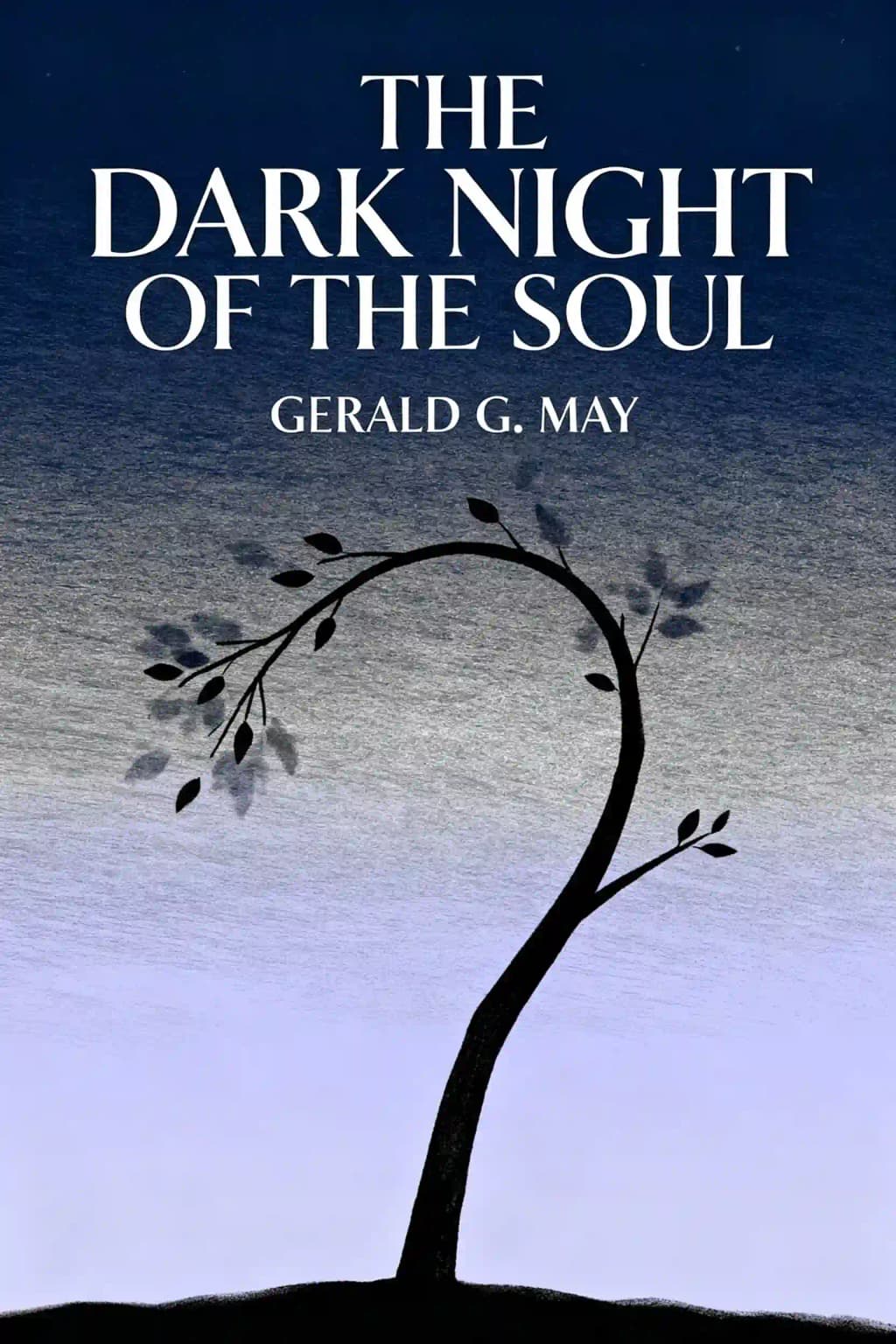
The dark night of the soul
a psychiatrist explores the connection between darkness and spiritual growth
Überblick über The dark night of the soul
Explore spiritual darkness as a pathway to growth in Gerald G. May's profound blend of psychology and spirituality. Embraced by spiritual leaders worldwide, this transformative work reveals why our deepest struggles - what mystics call "the dark night" - hold the key to authentic liberation.
Kernthemen in The dark night of the soul
- spiritual transformation
- contemplative mysticism
- divine surrender
- psychological attachment
- sacred suffering
Zitate aus The dark night of the soul
The darkness ultimately reveals itself as the very path to light.
The spiritual journey isn't about getting closer to God.
The night is God, 'an inflow of God into the soul.'
Our own certainty is precisely what causes us to stumble.
All liberation involves relinquishment and loss.
Personen in The dark night of the soul
- Gerald G. MayAuthor and psychiatrist who bridges medicine and mysticism
- John of the Cross16th-century Spanish mystic and Carmelite friar
- Teresa of AvilaSpanish mystic and reformer who mentored John
Über den Autor
Über den Autor von The dark night of the soul
Gerald Gordon May (1940–2005) was a psychiatrist and a pioneer in contemplative theology. He authored The Dark Night of the Soul: A Psychiatrist Explores the Connection Between Darkness and Spiritual Growth, blending his clinical expertise with spiritual wisdom.
May, a graduate of Wayne State University’s medical school, dedicated over 30 years to the Shalem Institute for Spiritual Formation. There, he mentored thousands in the integration of psychological health with faith practices.
His bestselling works, including Addiction and Grace and Will and Spirit, established him as a leading voice in addiction recovery and contemplative psychology, merging Christian mysticism with modern psychiatry. May’s writings, praised for their poetic depth and clinical insight, remain foundational in pastoral care and therapeutic circles. The Dark Night of the Soul has been translated into multiple languages and is frequently cited in academic studies on spirituality and mental health.
Zusammenfassung von The dark night of the soul herunterladen
Erhalten Sie die The dark night of the soul-Zusammenfassung als kostenloses PDF oder EPUB. Drucken Sie es aus oder lesen Sie es jederzeit offline.
FAQ zu diesem Buch
The Dark Night of the Soul explores the spiritual journey through periods of existential darkness, framed as a transformative process toward liberation and deeper divine connection. Gerald May blends psychology and Christian mysticism, drawing on St. John of the Cross and Teresa of Ávila to argue that spiritual "dark nights" are not crises but opportunities for ego surrender and grace.
This book is ideal for seekers navigating spiritual dryness, mental health professionals exploring faith integration, or anyone interested in mystical Christianity. May’s psychological lens makes it accessible for modern readers unfamiliar with 16th-century mysticism.
Yes, for its unique synthesis of psychiatry and spirituality. While some find its abstract concepts challenging, reviewers praise its insights into suffering’s redemptive role and its practical guidance for embracing spiritual uncertainty.
May describes it as a mysterious, divine-led process where attachments to ego and control dissolve, creating space for unconditional love. It’s not a depressive episode but a surrender to God’s hidden work, leading to liberation.
Suffering is reframed as a catalyst for spiritual growth—a "hidden grace" that dismantles illusions of self-sufficiency. May emphasizes it’s not punitive but a path to deeper trust and freedom.
May merges clinical psychiatry with mystical theology, analyzing emotional struggles through St. John of the Cross’s framework. He links neurotic patterns to spiritual stagnation and contemplative practices to psychological healing.
Three key signs:
- Dissatisfaction with former spiritual practices
- Inability to meditate conventionally
- Persistent longing for God amid feelings of abandonment
While symptoms may overlap, the dark night is a voluntary surrender to divine mystery, whereas depression involves involuntary mental anguish. May notes they can coexist but require distinct responses.
He warns against idolizing spiritual experiences (e.g., prayer consolations), which can hinder true union with God. Liberation comes through releasing outcomes, not accumulating virtues.
May parallels Teresa’s metaphor of soul-as-castle to describe progressing through self-discovery layers. Each chamber reveals deeper divine intimacy, yet the journey feels increasingly obscure.
Some find May’s reliance on ancient mystics limits originality, and his abstract style may confuse readers seeking concrete steps. Others note repetitive sections.
As a psychiatrist and Shalem Institute senior fellow, May bridges clinical expertise with contemplative wisdom. His work with addicts and personal spiritual struggles inform the book’s compassionate tone.