In "The Curious Advantage," three experts reveal how curiosity drives innovation in the digital age. Microsoft's transformation under Nadella exemplifies their 7C's framework. What if the greatest competitive edge isn't technology or talent, but simply asking better questions than everyone else?
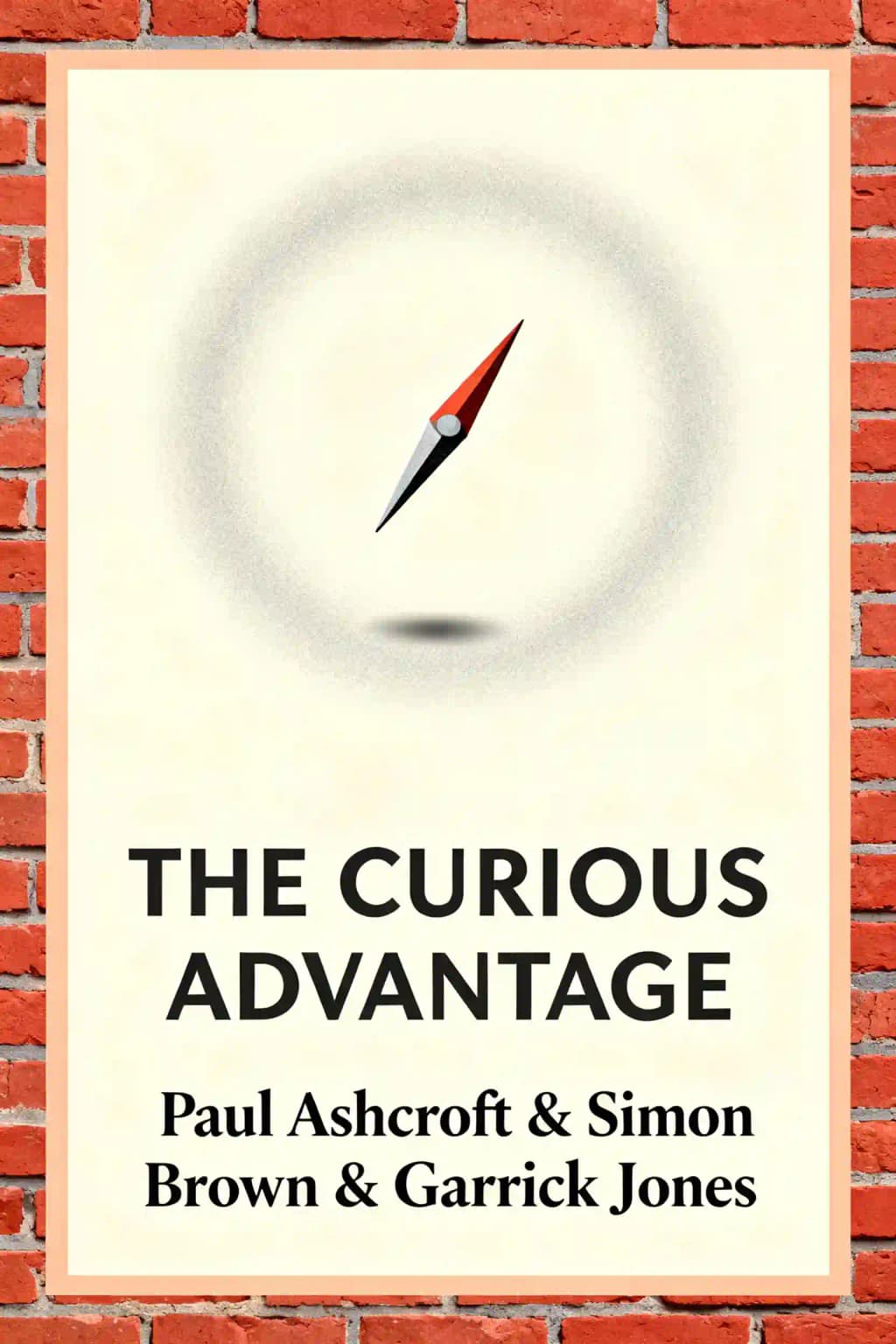
Paul Ashcroft, Simon Brown, and Garrick Jones, co-authors of The Curious Advantage: The Greatest Driver of Value in the Digital Age, are renowned experts in digital transformation, organizational learning, and curiosity-driven innovation.
Ashcroft, a Ludic Group co-founder with a mathematics and strategic consulting background, specializes in scaling digital change for Fortune 500 companies. Brown, Novartis’s Chief Learning Officer and Brightwave co-founder, bridges cutting-edge learning strategies with corporate growth. Jones, an LSE Fellow and Ludic Group partner, combines academic rigor with entrepreneurial insight.
Their book, a business and self-help staple, explores curiosity as a critical skill for navigating technological disruption, informed by their work with global enterprises and SMEs. The trio also hosts The Curious Advantage Podcast, extending their research on organizational agility.
Ashcroft and Jones previously collaborated on ALIVE: Digital Humans and Their Organizations, examining workforce evolution in hyperconnected environments. Jones’s interdisciplinary work includes Good Smell/Makeup Tree, blending art and music.
Recognized for actionable frameworks like the “7Cs of Curiosity,” their methodologies are applied by leaders worldwide to foster innovation cultures. The Curious Advantage has been widely endorsed for its pragmatic approach to lifelong learning in the AI era.
The Curious Advantage explores curiosity as the critical driver of innovation and adaptability in the digital age. Blending neuroscience, anthropology, and business case studies, it argues curiosity fuels personal growth, organizational resilience, and societal progress. The book introduces the 7C’s of Curiosity framework—a tool for fostering curiosity in individuals and teams—and uses examples like Microsoft’s cultural revival under Satya Nadella to demonstrate its transformative power.
Leaders, entrepreneurs, and professionals navigating digital transformation will gain actionable strategies from this book. It’s equally valuable for educators, lifelong learners, and anyone seeking to harness curiosity for problem-solving. The blend of historical context (e.g., the Great Library of Alexandria) and modern business applications makes it relevant across industries.
Yes—it combines actionable frameworks like the 7C’s model with real-world examples (e.g., Microsoft’s turnaround) to show how curiosity drives success in uncertain environments. Its interdisciplinary approach (neuroscience, anthropology, leadership) offers fresh insights for both personal and professional growth.
The 7C’s model—Context, Community, Curation, Creativity, Critical Thinking, Communication, and Confidence—provides a roadmap for cultivating curiosity. For example, “Context” emphasizes understanding historical patterns, while “Community” focuses on collaborative learning. This framework helps organizations like Microsoft build adaptive cultures.
The book positions curiosity as essential for thriving in digital environments, where rapid change demands continuous learning. Case studies like Satya Nadella’s focus on a “learn-it-all” culture at Microsoft illustrate how curiosity-driven leadership can revitalize organizations and drive innovation.
It references milestones like the Great Library of Alexandria as hubs of curious inquiry, showing how curiosity has propelled human progress. These examples anchor the argument that curiosity is not just a modern skill but a timeless survival mechanism.
The book explains how curiosity triggers dopamine release, enhancing focus and motivation. This biological response makes curiosity a self-reinforcing trait, crucial for learning and adaptation—key themes for navigating digital disruption.
Co-author Paul Ashcroft’s expertise in digital strategy and transformation (via Ludic Group) grounds the book in practical business applications. His work with Fortune 500 companies informs real-world frameworks for embedding curiosity in organizations.
Absolutely. The book emphasizes “conscious curiosity”—deliberate practices like asking probing questions or seeking diverse stimuli—to enhance creativity and decision-making. It provides tools to turn everyday challenges into growth opportunities.
Unlike generic leadership guides, it specifically links curiosity to digital-age survival, using multidisciplinary research and the 7C’s framework. This approach blends theoretical depth (e.g., neuroplasticity) with actionable organizational strategies.
Humor and surprise are highlighted as catalysts for curiosity, breaking mental patterns and making learning more engaging. This aligns with brain science showing playful environments boost creative problem-solving.
While not explicitly focused on remote work, its principles—like fostering curiosity through “Community” and “Communication”—apply directly to maintaining innovation in distributed teams. The emphasis on continuous learning is particularly relevant for hybrid environments.
Erlebe das Buch durch die Stimme des Autors
Erfasse Schlüsselideen blitzschnell für effektives Lernen
Curiosity drives us to explore the unknown.
Staying curious is no longer just an option – it's a necessity.
Curiosity thrives in community.
Curiosity sparks creative thinking.
Asking questions is deeply connected to being curious.
Zerlegen Sie die Kernideen von Curious Advantage in leicht verständliche Punkte, um zu verstehen, wie innovative Teams kreieren, zusammenarbeiten und wachsen.
Destillieren Sie Curious Advantage in schnelle Gedächtnisstützen, die die Schlüsselprinzipien von Offenheit, Teamarbeit und kreativer Resilienz hervorheben.

Fragen Sie alles, wählen Sie die Stimme und erschaffen Sie gemeinsam Erkenntnisse, die wirklich bei Ihnen ankommen.

Von Columbia University Alumni in San Francisco entwickelt
"Instead of endless scrolling, I just hit play on BeFreed. It saves me so much time."
"I never knew where to start with nonfiction—BeFreed’s book lists turned into podcasts gave me a clear path."
"Perfect balance between learning and entertainment. Finished ‘Thinking, Fast and Slow’ on my commute this week."
"Crazy how much I learned while walking the dog. BeFreed = small habits → big gains."
"Reading used to feel like a chore. Now it’s just part of my lifestyle."
"Feels effortless compared to reading. I’ve finished 6 books this month already."
"BeFreed turned my guilty doomscrolling into something that feels productive and inspiring."
"BeFreed turned my commute into learning time. 20-min podcasts are perfect for finishing books I never had time for."
"BeFreed replaced my podcast queue. Imagine Spotify for books — that’s it. 🙌"
"It is great for me to learn something from the book without reading it."
"The themed book list podcasts help me connect ideas across authors—like a guided audio journey."
"Makes me feel smarter every time before going to work"
Von Columbia University Alumni in San Francisco entwickelt

Erhalten Sie die Curious Advantage-Zusammenfassung als kostenloses PDF oder EPUB. Drucken Sie es aus oder lesen Sie es jederzeit offline.
Context is about understanding the world that surrounds an idea, question, or individual. It's being aware of what lies in your peripheral vision and noticing the connections that give things meaning. The broader the context you expose yourself to, the more likely you are to find new ideas that stimulate you to explore further. For instance, when Steve Jobs dropped in on a calligraphy class at college, he had no idea how it would later influence the design of the first Macintosh computer. By exposing himself to a seemingly unrelated field, he gained insights that would later revolutionize digital typography.